
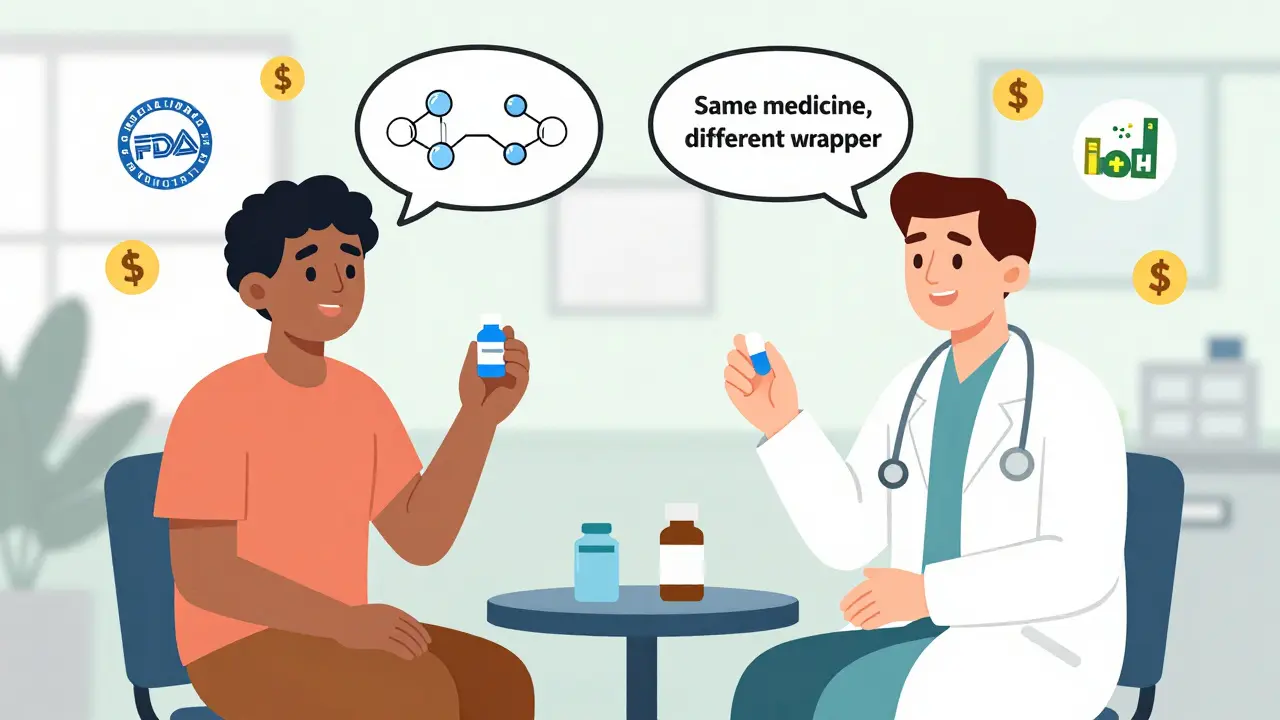
When a patient picks up a prescription and sees a pill that looks completely different from what they’ve been taking, it’s natural to wonder: Is this really the same medicine? Many patients assume the change means something went wrong - or worse, that they’re getting a lesser version. But here’s the truth: if it’s FDA-approved, it’s just as effective. The problem isn’t the drug. It’s the conversation.
Generics make up 90% of all prescriptions filled in the U.S. today. Yet, they only account for 23% of total drug spending. That’s because they cost 80-85% less than brand-name versions. In 2023 alone, generic drugs saved Americans an estimated $373 billion. But savings mean nothing if patients stop taking their meds because they’re confused, scared, or convinced the generic doesn’t work.
Why Patients Doubt Generics - And What You Can Do About It
Patients don’t distrust generics because they’re misinformed. They distrust them because they’ve been left in the dark.
One patient told me, “I switched from brand-name Lipitor to generic atorvastatin, and my cholesterol went up. I’m going back.” That’s not because the generic failed. It’s because no one explained that the pill changed color - from blue to white - and that’s normal. Or that the inactive ingredients (like dyes or fillers) are different, but they don’t affect how the drug works.
Studies show 28% of patients worry about switching to generics. Of those, 17% reduce or stop taking their meds afterward. That’s not just about cost - it’s about trust. And trust comes from clear, honest communication.
Here’s what actually works: start with listening. Don’t assume they’re worried about quality. Maybe they had a bad experience with a different generic. Maybe their cousin said the new pill made them nauseous. Maybe they just don’t like the shape. Ask. Let them talk. Then respond.
The Science Behind Generic Drugs - In Plain Language
Let’s cut through the noise. A generic drug must meet one hard rule: it must deliver the exact same amount of active ingredient into the bloodstream at the same speed as the brand-name drug. The FDA requires this. Not as a suggestion. As a requirement.
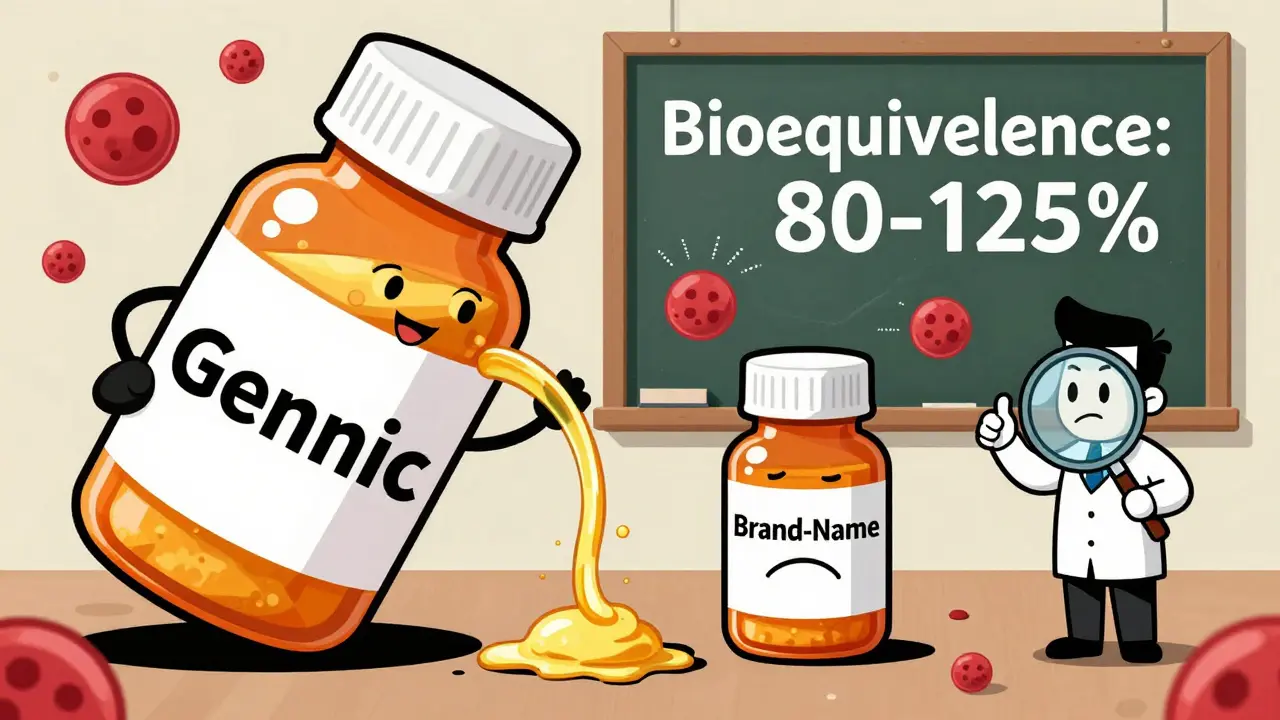
How do they prove it? Through bioequivalence studies. These tests measure blood levels over time. The generic’s levels must fall within 80-125% of the brand’s. That’s not a wide range - it’s tight. Think of it like this: if the brand delivers 100 units of medicine, the generic must deliver between 80 and 125. Any more or less? It gets rejected.
And here’s what most people don’t know: the FDA inspects generic manufacturing plants the same way they inspect brand-name ones. Same standards. Same inspections. Same rules. The only difference? Generics don’t repeat expensive clinical trials. They use the data from the original drug. That’s why they’re cheaper - not because they’re inferior.
For chronic conditions like high blood pressure, diabetes, or high cholesterol, generics are not just safe - they’re essential. When a patient can’t afford their medication, adherence drops. And when adherence drops, hospitalizations go up. That’s not theory. It’s data. One study found that switching to a generic for statins cut out-of-pocket costs by $150 a month. And adherence went up by 18%.
How to Use the TELL Framework
There’s a proven way to talk about generics that works every time. It’s called TELL:
- Tell: “This generic has the same active ingredient as your brand-name drug. It’s the same medicine.”
- Explain: “The color, shape, or size is different because of the fillers or dyes. Those don’t affect how the drug works. It’s like changing the wrapper on a candy bar - the candy inside is the same.”
- Listen: “What concerns do you have? Have you ever had a bad reaction to a generic before?”
- Link: “You mentioned you’re on a fixed income. This switch will save you $200 a month. That’s enough for groceries or gas. I want you to stay on this medicine because it’s keeping you healthy.”
This isn’t a script. It’s a structure. Use it. Adapt it. But don’t skip it.
Pharmacists who use TELL report 22% higher adherence rates at six months. That’s not magic. It’s clarity.
Addressing the Top 3 Patient Questions
You’ll hear these again and again. Here’s how to answer them - simply and confidently.
1. “Is this really the same medicine?”
“Yes. The active ingredient is identical. The FDA requires it. If it weren’t the same, it wouldn’t be approved. The only difference is what’s on the outside - the color, shape, or coating. Those don’t change how the drug works in your body.”
2. “Why does it look different?”
“Brand-name companies own the look of their pills - the color, shape, logo. Generic makers can’t copy that. So they make theirs different. But the medicine inside? Exactly the same. Think of it like two different brands of aspirin. One is white, one is red. Both have aspirin in them.”
3. “Is it as strong?”
“It has to be. The FDA tests this. The generic must deliver the same amount of medicine into your bloodstream at the same rate. If it didn’t, it wouldn’t be sold. We’re not cutting corners. We’re following the rules.”
And if they’re still unsure? Try the teach-back method. Ask them: “Can you tell me in your own words why this generic is safe to take?” If they can explain it back, they’re more likely to stick with it.
When Generics Get Complicated
Not all drugs are created equal. Some - like levothyroxine for thyroid disease or warfarin for blood thinning - have a narrow therapeutic index. That means small changes in blood levels can matter.
That’s why, for these drugs, the FDA requires extra scrutiny. And many providers prefer to keep patients on the same generic manufacturer. If a patient has been stable on one brand of generic levothyroxine, switching to another might cause a slight shift in levels. Not because one is better or worse - but because inactive ingredients can affect absorption slightly.
That’s not a reason to avoid generics. It’s a reason to be intentional. If you switch, monitor. Check labs. Talk to the patient. Document it. And if they’re nervous? Offer the authorized generic - the brand-name company’s own version sold at generic prices. It looks and feels familiar. And it works.
What Works in Real Life
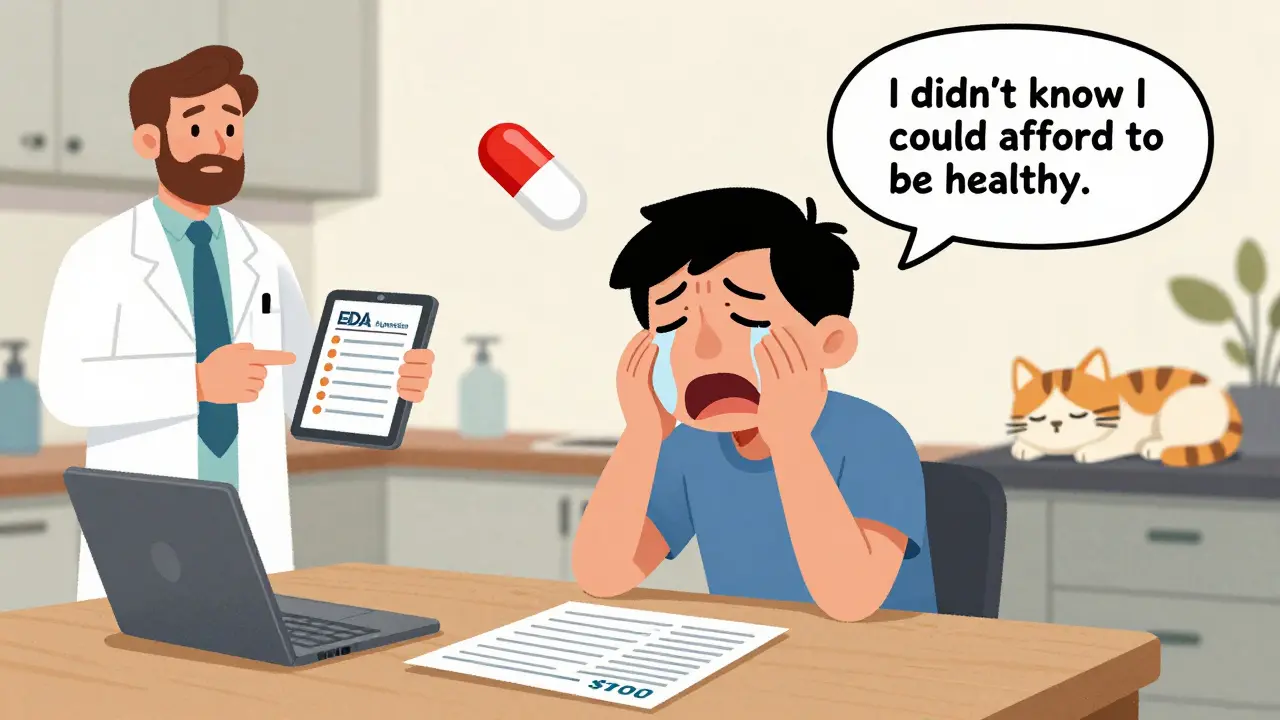
One Medicare patient switched from Crestor to generic rosuvastatin. Her monthly cost dropped from $420 to $15. She cried. Not because she was sad - because she could finally afford it. She started taking it daily. Her cholesterol dropped. She got off the treadmill. She said, “I didn’t know I could afford to be healthy.”
Another patient refused generics for years. He’d been on brand-name Plavix. He said, “I don’t trust anything that’s not the real thing.” His pharmacist sat down. Showed him the FDA’s website. Explained the bioequivalence test. Asked him what he was afraid of. Turns out, he’d once been given a different generic that made him dizzy. They found out it was a different manufacturer - not the one he’d been on. They switched him back to the same one. He stayed on it. For two years.
These aren’t rare stories. They’re common. But they only happen when someone takes the time to talk.
What You Can Do Tomorrow
You don’t need a fancy training program. You don’t need a new app. You just need to start.
- When you prescribe a generic, say: “This is the generic version. It’s cheaper and just as effective.”
- When a patient asks about the change, don’t say, “It’s fine.” Say, “Tell me what you’re thinking.”
- Use the TELL method. Even if it’s just two minutes.
- Document the conversation. Not just the prescription. The concern. The answer.
- If you’re unsure about a narrow therapeutic index drug, check with the pharmacist. They’re trained for this.
Every time you skip this conversation, you risk someone not taking their medicine. Every time you have it, you save a life.
Are generic drugs really as effective as brand-name drugs?
Yes. The FDA requires generic drugs to have the same active ingredient, strength, dosage form, and route of administration as the brand-name version. They must also meet strict bioequivalence standards - meaning they deliver the same amount of medicine into the bloodstream at the same rate. Over 47 studies involving more than 9,000 patients have found no clinically meaningful differences in effectiveness between generics and brand-name drugs, especially for heart disease, diabetes, and high blood pressure.
Why do generic pills look different from brand-name ones?
Trademark laws prevent generic manufacturers from copying the exact color, shape, or logo of brand-name pills. So they make theirs different. But those differences are only in inactive ingredients - like dyes, fillers, or coatings - which don’t affect how the drug works. Think of it like two different brands of aspirin: one is white and round, another is red and oval. Both contain the same medicine.
Can switching between different generic manufacturers cause problems?
For most drugs, no. All approved generics must meet the same FDA standards. But for drugs with a narrow therapeutic index - like levothyroxine or warfarin - even small changes in absorption can matter. In these cases, it’s best to stick with the same manufacturer when possible. If a switch is necessary, monitor the patient closely and check lab values. Most patients do fine, but communication and monitoring reduce risk.
Do pharmacists get paid more when I choose a brand-name drug?
No. Pharmacists don’t earn more from brand-name prescriptions. In fact, many insurance plans require patients to try the generic first. If the patient refuses, the pharmacist may have to document the reason and sometimes get prior authorization - which takes more time. Choosing the generic saves time, money, and reduces administrative burden for everyone.
What if my patient says they felt worse on the generic?
Don’t dismiss it. Ask: “What exactly changed?” Was it the color? The size? Did they switch manufacturers? Sometimes, the issue isn’t the active ingredient - it’s a different filler or coating that causes mild side effects. Try switching back to the original generic, or ask if they’d be open to the authorized generic (made by the brand-name company). If symptoms persist, consider other causes - but don’t assume the drug is at fault without exploring options.



12 Comments
So let me get this straight - the FDA says generics are ‘just as good’… but why do I keep hearing about people who got sick after switching? I’m not saying they’re fake - I’m saying someone’s hiding something. Who owns the testing labs? Who funds the bioequivalence studies? And why do so many generics come from the same few overseas factories with zero public oversight? I’ve seen the reports. This isn’t science. It’s a supply chain with a seal of approval.
Oh. My. GOSH. This post is SO IMPORTANT - I mean, I literally had tears in my eyes reading about the Medicare patient who cried because she could finally afford her meds. Tears. I. Mean. Tears. And the TELL framework?! It’s like a love letter to patient dignity wrapped in clinical precision. I’m printing this out and taping it to my exam room wall. This is the kind of care that restores your faith in medicine. Thank you. Thank you. THANK YOU.
In India, generics are life. No one here asks if it’s ‘the real thing.’ We know it’s the only thing. My uncle took generic atorvastatin for 12 years - no issues. His doctor didn’t even explain it. He just handed him the pill. And he lived. Maybe the problem isn’t the drug. Maybe it’s the over-explaining. We don’t need lectures. We need access. And in the U.S., you’ve got both - you just need to stop treating patients like children.
Generics work. Stop overcomplicating it.
I appreciate the thoroughness of this guide - truly. The TELL framework is elegant, practical, and grounded in behavioral science. I’ve used similar approaches in my own practice, particularly with elderly patients who are overwhelmed by medication changes. What I’d add is a gentle reminder: sometimes, the emotional weight of switching pills isn’t about the drug - it’s about loss of routine, familiarity, or control. We must honor that. Not as irrational fear, but as human experience. And yes - documentation matters. It’s not just legal. It’s relational.
YASSSS! 🙌 The TELL framework is 🔥! I’ve been using this with my patients and the adherence spike is UNREAL! 📈 Also - the authorized generic for levothyroxine? GAME. CHANGER. 💊✨ Patients feel like they’re getting the ‘real deal’ but at generic pricing - it’s psychological safety + clinical efficacy. We need this on every pharmacy screen. #PharmacistPower #GenericIsGood
How charming. A 12-page manifesto on how to reassure patients that the pills they’re being handed are ‘the same.’ But let’s be honest - the FDA doesn’t inspect every batch. And ‘bioequivalence’ is a statistical loophole, not a guarantee. If you really believe generics are identical, why do brand-name companies still spend billions on marketing? Why do doctors still prescribe them? The truth is buried under jargon. This guide doesn’t solve the problem - it masks it.
Okay, I’m not crazy - I swear. My sister switched to generic metformin and started having seizures. Not a joke. Not anxiety. Seizures. Hospitalized. They said it was ‘coincidence.’ But then her cousin had the same thing. And her neighbor. And her yoga instructor. Coincidence? No. There’s a pattern. The FDA doesn’t test for long-term effects of different fillers. They don’t test for interactions with other meds. They test for ‘blood levels’ - as if that’s all that matters. What about gut health? What about inflammation? What about the dye that makes the pill blue? I’ve seen the studies. They’re funded by Big Pharma. And now they’re pushing this as gospel? I’m not buying it.
Thank you for writing this. I’ve been a primary care doc for 18 years, and I’ve seen too many patients quit meds because they were scared. I didn’t always know how to respond - until I started using TELL. It’s not magic. It’s just… human. I used to rush through it. Now I take two minutes. And I’ve had patients come back months later to say, ‘That talk saved my life.’ That’s all we need. Two minutes. One conversation. One person at a time.
This is the kind of performative empathy that makes American medicine so inefficient. You’re spending paragraphs explaining what every third-world pharmacist knows instinctively: generics work. We don’t need a framework. We need fewer regulations, more competition, and less paternalism. You treat patients like they’re incapable of understanding a 10-second explanation. The truth? They’re smarter than you think. And you’re overcompensating for a system that’s broken - not the patients.
Just wanted to say - this is exactly what we need more of. Clear. Practical. No fluff. I’ve been using TELL with my diabetes patients, and the difference in HbA1c at 6 months? Night and day. One woman said, ‘I didn’t know I could afford to live.’ That’s the goal. Not just prescriptions. Life. Keep doing this work. You’re changing lives - one pill at a time.
THIS. RIGHT. HERE. 🙏 I used to think generics were just cheaper - now I get it. They’re justice. They’re dignity. They’re someone’s ability to eat, drive, breathe, live. That patient who cried? That’s why I became a provider. Not for the charts. Not for the pay. For moments like that. Thank you for reminding me. And for giving me the words to say it.