

Most people think of cold sores when they hear "herpes." But the virus behind those little blisters - herpes simplex virus - does far more than just appear on your lips. It can cause painful genital outbreaks, blindness, brain infections, and even life-threatening complications in newborns. And while it’s incredibly common, many don’t know the difference between the two main types, how they spread, or what actually works to control them.
Two Viruses, One Name: HSV-1 and HSV-2
Herpes simplex virus isn’t one thing. It’s two distinct viruses: HSV-1 and HSV-2. They look nearly identical under a microscope - both are enveloped, double-stranded DNA viruses about 180-200 nanometers wide. But their behavior couldn’t be more different.
HSV-1 traditionally caused oral herpes: cold sores around the mouth, fever blisters, or gingivostomatitis in kids. But over the last 20 years, that’s changed. Today, HSV-1 causes 30-50% of new genital herpes cases in high-income countries, according to CDC data from 2021. It’s now the leading cause of genital herpes in younger adults under 30.
HSV-2, on the other hand, still dominates genital herpes. It causes 70-80% of genital outbreaks and is responsible for most recurrent episodes. People with HSV-2 have outbreaks four to five times a year on average, while HSV-1 genital infections recur less than once a year in 75% of cases.
Both types hide in nerve ganglia after the first infection. HSV-1 settles in the trigeminal ganglion near your ear, waiting to reactivate and cause a lip sore. HSV-2 hides in the sacral ganglia at the base of your spine, ready to trigger genital symptoms. Once you’re infected, the virus stays for life. There’s no cure - but there are ways to manage it.
What Do the Outbreaks Look Like?
Outbreaks follow a pattern. First comes the warning - a tingling, burning, or itching sensation in the affected area. This prodrome lasts less than six hours in recurrent HSV-1 cases, but can linger longer in first-time infections. Then, clusters of small, fluid-filled blisters appear. They’re usually 0.5 to 1.5 cm wide, on red, inflamed skin.
In primary orolabial HSV-1 (common in kids), symptoms are severe: fever up to 40°C, painful mouth ulcers, bad breath, trouble swallowing. About 5-10% of these cases require hospitalization. In adults, primary genital HSV-2 outbreaks are equally intense: 93% report painful ulcers, 78% have burning during urination, 65% have swollen lymph nodes in the groin, and 40% feel feverish or achy.
The blisters break open, turn into shallow ulcers, then crust over. Healing takes 7-21 days. Scarring is rare - 98% of cases heal without marks. But the pain? That’s real. Reddit users describe pain levels of 7 out of 10 during first outbreaks. Some can’t urinate without numbing gel.
Recurrent outbreaks are milder. Pain drops to 4 out of 10. Blisters are fewer. Healing takes 5-10 days. Many people learn to recognize the early signs - a slight itch behind the ear or a twitch in the groin - and start treatment before the blisters even form.
Asymptomatic Shedding: The Silent Spread
One of the biggest reasons herpes spreads so easily is that most transmission happens when there are no symptoms. This is called asymptomatic shedding.
HSV-2 sheds from the skin on 10-20% of days in infected people, even when they feel fine. HSV-1 genital shedding happens on 5-10% of days. That means someone can pass the virus without knowing it. Studies show 85% of new genital herpes infections come from partners who never had a visible outbreak.
This is why testing matters. Many people think they’re negative because they’ve never had sores. But serologic tests - blood tests that detect antibodies to HSV-1 or HSV-2 - can reveal infection. The HerpeSelect ELISA test, though discontinued in 2022, was 97-98% accurate. Newer alternatives like EUROIMMUN’s recomLine HSV IgG test now fill that gap with 96.5% accuracy.
PCR testing of lesion swabs is the gold standard for active outbreaks. It detects the virus with 95-98% sensitivity - far better than old-school viral cultures, which missed up to 30% of cases.
Antiviral Therapy: What Actually Works
There are three main antivirals used for herpes: acyclovir, valacyclovir, and famciclovir. They don’t kill the virus. They slow it down.
For a first-time genital outbreak, the CDC recommends acyclovir 400mg three times daily for five days. This cuts healing time from 19 days to 10 and reduces pain from 12 to 8 days. Valacyclovir (500mg twice daily) and famciclovir (250mg three times daily) work just as well - and are easier to take.
For recurrent outbreaks, taking antivirals within 24 hours of the first tingling can reduce outbreak duration by half. A study in the Annals of Internal Medicine showed people who started treatment early healed in 5 days instead of 10.
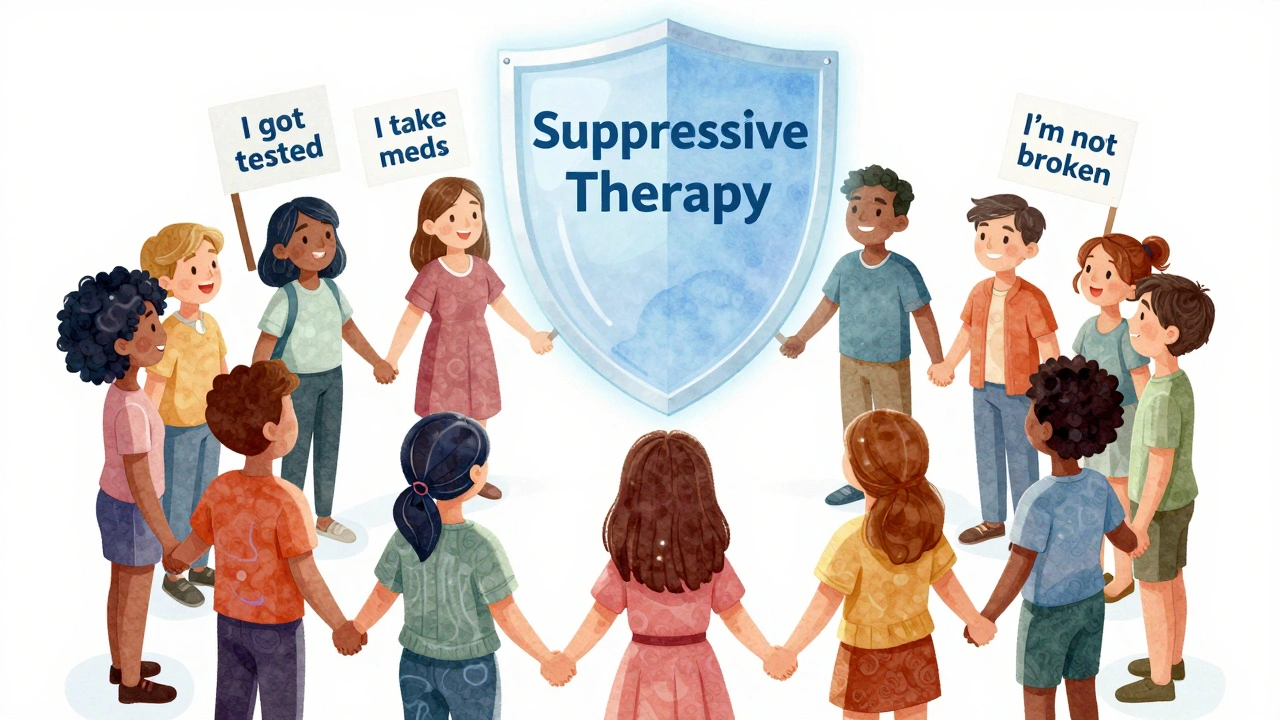
For people with frequent outbreaks (six or more a year), daily suppressive therapy is the most effective option. Valacyclovir 500mg once daily reduces transmission to uninfected partners by 48%. In one landmark study, it cut outbreaks from 4-5 per year to 1-2. And for couples where one partner has HSV-2, daily therapy reduces transmission risk by up to 70%.
For HSV-1 oral outbreaks, antivirals are optional. Most heal on their own. But if you’re in a high-risk job - teacher, nurse, childcare worker - or you get frequent cold sores, daily valacyclovir can help.
For herpes in the eye (herpes keratitis), topical trifluridine drops are used hourly. They reduce healing time from 21 days to 14. For herpes encephalitis - a rare but deadly brain infection mostly caused by HSV-1 - high-dose IV acyclovir (10mg/kg every 8 hours) is life-saving.
Resistance, Side Effects, and Real-World Challenges
Antivirals aren’t perfect. About 10% of HSV isolates in HIV-positive patients with low CD4 counts are resistant to acyclovir. In transplant patients, resistance is rising - 15% now show resistance, according to Transplantation (2022). When that happens, doctors switch to foscarnet or the newer drug pritelivir, approved by the FDA in 2023 for resistant cases.
Side effects are usually mild: headache (22%), nausea (15%). But people with kidney problems need lower doses. Acyclovir can cause kidney damage if not adjusted properly.
Cost is a barrier. Without insurance, valacyclovir 500mg can cost $300-$400 a month. With insurance, it’s $35-$60. Many skip doses because of price. Only 65% of patients stick with daily therapy for a full year, according to Kaiser Permanente data.
And then there’s stigma. A 2023 survey by the American Sexual Health Association found 74% of people with herpes feel anxious about being judged. 45% say it’s hurt their relationships. 32% waited over six months to tell a partner.
What’s Next for Herpes Treatment?
Research is moving fast. New drugs like amenamevir and pritelivir - which target different parts of the virus - are showing promise. In trials, pritelivir suppressed viral shedding by 87% in 48 hours, compared to 52% for foscarnet.
Therapeutic vaccines are also in development. GEN-003 and Simplirix reduced viral shedding by 50% in phase II trials. While not yet approved, they could one day help people have fewer outbreaks and spread the virus less.
The WHO is now recommending universal HSV-2 screening for pregnant women with a history of outbreaks. If adopted, it could prevent 1,200 cases of neonatal herpes in the U.S. each year.
But until then, the tools we have work. Antivirals reduce transmission. They shorten outbreaks. They prevent complications. And knowing your status - whether you have HSV-1, HSV-2, or both - is the first step to taking control.
Can you get herpes from sharing a towel or toilet seat?
No. Herpes simplex virus doesn’t survive long outside the body. It dies quickly on dry surfaces like towels, toilet seats, or doorknobs. Transmission happens through direct skin-to-skin contact - kissing, oral sex, genital contact - during active outbreaks or asymptomatic shedding. You can’t catch it from surfaces.
Is herpes dangerous during pregnancy?
It can be, but only if a woman gets infected for the first time late in pregnancy. The risk of passing HSV to the baby during delivery is 30-50% in that scenario. But if she’s had herpes before, her body has antibodies that protect the baby. Most women with recurrent herpes deliver vaginally without issue. Doctors may recommend a C-section if an outbreak is active at delivery. Daily suppressive therapy with valacyclovir in the last month of pregnancy reduces outbreak risk by 75% and lowers the chance of needing a C-section.
Do antivirals cure herpes?
No. Antivirals like acyclovir, valacyclovir, and famciclovir don’t eliminate the virus from your body. They suppress its activity. Once you’re infected, HSV hides in nerve cells for life. Antivirals stop it from multiplying during outbreaks and reduce shedding between them. They’re not a cure - but they’re the best tool we have to manage symptoms and lower transmission risk.
Can you have herpes and never have an outbreak?
Yes. Up to 90% of people with HSV-2 don’t know they have it because they’ve never had noticeable symptoms. Some people have such mild outbreaks they mistake them for a pimple or irritation. Others never have any symptoms at all. But even without outbreaks, they can still shed the virus and pass it to others. That’s why testing is important - especially if you’ve had unprotected sex or have a partner with herpes.
Which is worse: HSV-1 or HSV-2?
Neither is "worse" - they’re just different. HSV-2 causes more frequent genital outbreaks and is more likely to be transmitted sexually. But HSV-1 is more likely to cause serious complications like encephalitis and herpes keratitis (eye infection), which can lead to blindness. HSV-1 genital infections recur less often and shed less frequently than HSV-2. The real issue isn’t the type - it’s knowing your status, managing symptoms, and reducing transmission risk.
What to Do Next
If you think you’ve been exposed, get tested. Don’t wait for symptoms. Blood tests can detect antibodies even if you’ve never had an outbreak.
If you have herpes, talk to your doctor about treatment options. Daily suppressive therapy isn’t for everyone - but if you’re having frequent outbreaks or are in a relationship, it can make a huge difference.
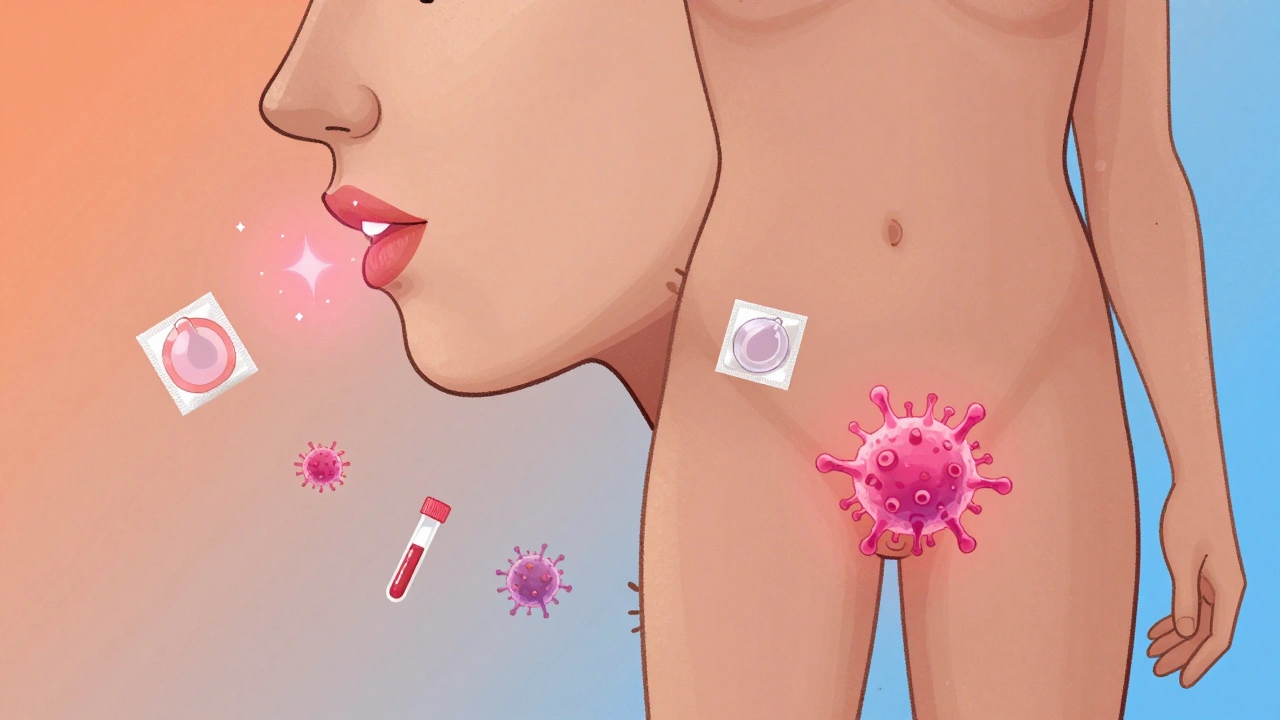
Use condoms. They reduce transmission risk by about 30%, but they don’t eliminate it - the virus can be present on skin not covered by a condom.
And if you’re feeling alone or ashamed, reach out. The American Sexual Health Association runs a free hotline. Online communities like Reddit’s r/Herpes offer real stories from people living with it. You’re not the only one. And you’re not broken. Herpes is a common, manageable virus - not a moral failing.


11 Comments
lol why is this so long? I got herpes once and it went away. Stop overcomplicating it. 😴
Asymptomatic shedding is real. I didn't know I had it until my partner got outbreaks.
The way we pathologize HSV-2 while romanticizing HSV-1 is a linguistic and cultural tragedy. It's the same virus, just socially stratified. We've weaponized stigma to turn a biological reality into a moral failing. And yet, here we are - debating whether one is 'worse' like it's a damn wine tasting. 🍷
Let's not forget that HSV-1 encephalitis kills 30% of untreated patients. But no one cries when someone gets a cold sore before a presentation. Meanwhile, a woman with genital HSV-2 is told she's 'dirty' for having sex. The irony is so thick you could spread it on toast - and yes, I'm aware that's an inappropriate metaphor. But so is the entire discourse.
I just want to say - if you're reading this and you're scared or ashamed, you're not alone. I was diagnosed five years ago and thought my life was over. I cried for a week. I avoided dating. I felt broken.
But here’s the truth: I’ve had amazing relationships. I’ve traveled, kissed people, had sex, and never passed it on because I used suppressive therapy and was open. It’s not a death sentence. It’s a condition. And like high blood pressure or diabetes, it’s manageable.
Also - if you’re reading this and you’re a partner of someone with herpes? Please don’t treat them like a walking biohazard. Ask questions. Learn. Be kind. You’re not saving them - you’re just being human.
Fascinating how the virology here mirrors the epistemological crisis of modern medicine - we treat symptoms, not ontological presence. The virus isn't a pathogen to be eradicated, but a symbiotic shadow of our neural architecture. 🤓
Also, valacyclovir costs more than my monthly Spotify subscription. Capitalism turned herpes into a subscription service. How poetic.
Anyone know if pritelivir is available outside clinical trials yet? The phase 3 data on shedding reduction is insane - 87% in 48 hours. That’s next-level. Wonder if insurance will cover it or if it’ll be another $10k/year drug.
They say it's not spread by towels... but I bet the CDC is lying. I read on a forum that hospitals use it to track people. You think they want you to know the truth?
It’s funny how we treat viruses like villains. HSV doesn’t want to hurt you. It just wants to survive. It’s not evil - it’s evolutionary. We’re the ones who built the shame around it. The real infection isn’t the virus - it’s the fear. And fear? That’s the thing that keeps people from getting tested, from talking to partners, from living fully.
Maybe the cure isn’t in the pill. Maybe it’s in the conversation.
In India, many still believe herpes is a punishment for immoral behavior. I’ve seen people refuse testing because they think it’ll ruin their marriage prospects. It breaks my heart. This article is a quiet revolution - factual, compassionate, and unflinching. Thank you for writing this. We need more science that speaks to the soul, not just the lab report.
I got HSV-1 from my ex who swore he never had a cold sore. 😒 Now I have them every time I’m stressed. Thanks, dude. 🙃
I’ve been living with HSV-2 for 12 years. Took me 8 to tell my first partner. I was terrified they’d think I was ‘dirty’ or ‘reckless.’ Turns out? They were just relieved I told them. We’ve been together 10 years now. We use condoms. I take valacyclovir. We talk openly. And honestly? It’s just… part of life now. Like allergies or needing glasses. Not a tragedy. Not a scandal. Just a thing.
So if you’re reading this and you’re scared - breathe. You’re not broken. You’re just human. And humans? We’re all a little messy. The virus doesn’t define you. What you do with the knowledge? That’s where your strength lives.