
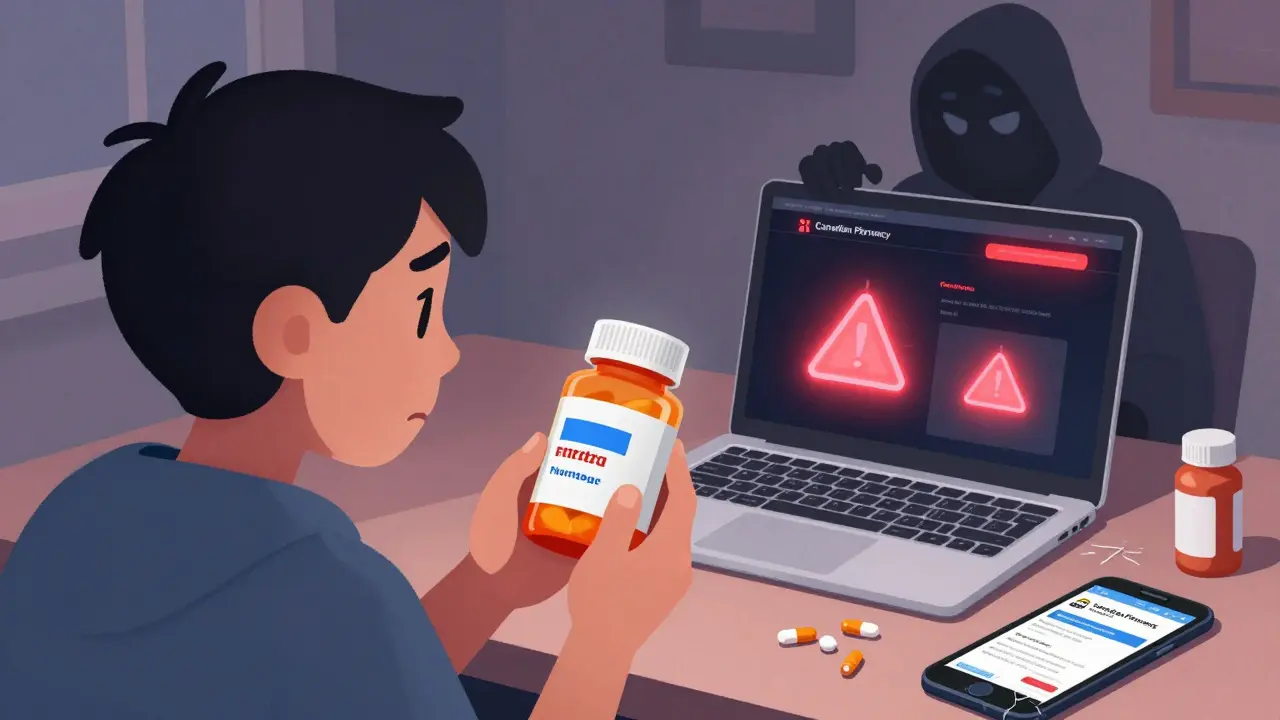
Every year, millions of people around the world buy generic medications to save money. They trust that these pills are just as safe and effective as the brand-name versions-because they’re supposed to be. But what if the bottle you bought wasn’t real at all? What if the medicine inside had no active ingredient-or worse, something toxic? This isn’t science fiction. It’s happening right now, and it’s getting worse.
What Exactly Are Counterfeit Generics?
Counterfeit generics are fake versions of off-patent drugs. They look like the real thing-same color, same shape, same packaging. But inside? They’re dangerous. Some have no active ingredient at all. Others have too little. Some contain chemicals that can damage your liver, kidneys, or heart. A 2024 report from the Pharmaceutical Security Institute found over 6,400 cases of counterfeit drugs seized globally. That’s up 38% since 2020.Unlike real generics-which must pass strict tests to prove they work the same as the original drug-counterfeits slip in through illegal channels. They’re sold on shady websites, through unlicensed social media sellers, or even in pharmacies that don’t follow the rules. In some parts of Africa and Southeast Asia, up to 70% of medicines may be fake. Even in the U.S., the FDA intercepted nearly 200 illegal shipments of weight-loss drugs like Ozempic in just four months in 2024.
Why Are Counterfeits So Common Now?
The rise of online pharmacies and global supply chains made it easier than ever to hide illegal drugs. During the pandemic, demand for treatments skyrocketed-and so did the criminals. Fake versions of antivirals, antibiotics, and insulin flooded the market. Today, the most common targets are high-demand drugs: weight-loss medications like semaglutide (Ozempic, Wegovy), erectile dysfunction pills like Viagra, and even Botox and dermal fillers.Why? Because they’re expensive. A real Ozempic pen costs over $1,000 without insurance. A fake one? You can buy it online for $150. And if you’re desperate for results, you might not ask too many questions. But here’s the catch: if your fake Ozempic has no semaglutide, your blood sugar won’t drop. Your weight won’t budge. And you’ll keep thinking the medicine isn’t working-when it’s the pill that’s broken.
How to Tell If Your Medicine Is Real
You can’t always tell by looking. Some fakes are so good, even pharmacists get fooled. But there are red flags you can check:- Check the packaging. Look for spelling mistakes, blurry logos, or mismatched colors. Real packaging is precise. Counterfeits often have tiny errors.
- Verify the NDC number. Every U.S. drug has a National Drug Code. Type it into the FDA’s database. If it doesn’t match, don’t take it.
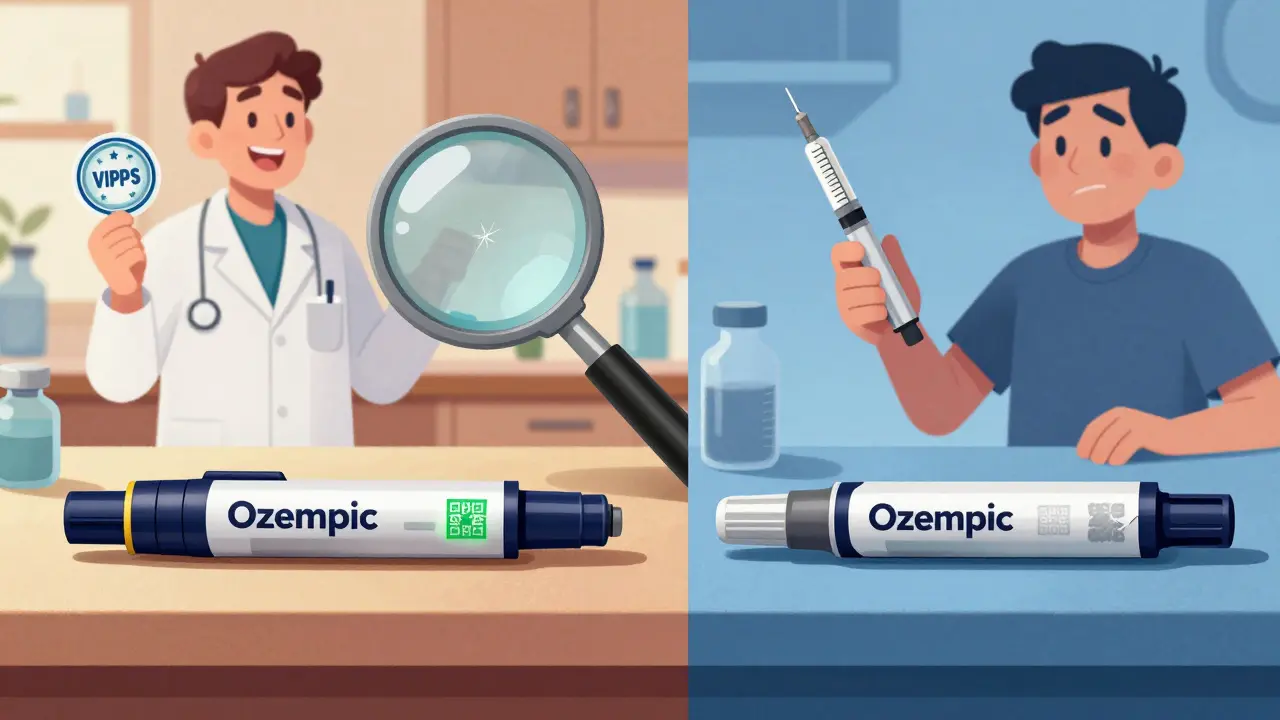
- Look for the VIPPS seal. Only buy from pharmacies that display the Verified Internet Pharmacy Practice Sites seal. That means they’re licensed and inspected.
- Use manufacturer verification tools. Novo Nordisk, maker of Ozempic, has a free app called “Verify Your Pen.” Scan the code on the box. If it says “counterfeit,” stop. Report it.
- Check the pill itself. Real generics have consistent size, texture, and imprint. If your pills look different from the last batch-especially if they’re crumbling, discolored, or smell odd-don’t use them.
One Reddit user, ‘MedSafety42,’ bought what they thought was Ozempic from a Canadian website. After three months of no weight loss and no blood sugar improvement, they sent the pen to a lab. It contained zero semaglutide. The packaging looked perfect. The price was too good to be true. And the result? A wasted year-and a health risk.
Where Are You Most at Risk?
The biggest danger comes from websites that hide their physical address. The FDA says 50% of online pharmacies without a street address sell fake drugs. Even worse? 89% of them don’t require a prescription. That’s illegal in the U.S. and many other countries.Interpol’s 2025 operation shut down 13,000 illegal websites and social media accounts selling fake meds. Many of them used fake “Canadian” or “UK” branding to look legit. But if a site doesn’t let you call them, visit them, or verify their license, walk away.
Even brick-and-mortar pharmacies aren’t always safe. In August 2025, an Iowa pharmacy was fined $25,000 for selling fake Ozempic. How? They bought it from a distributor who didn’t check its origin. That’s why you should only buy from pharmacies you know and trust-especially for high-risk drugs.
What Happens If You Take a Fake?
Taking a counterfeit generic isn’t just a waste of money. It can kill you.- Antibiotics with no active ingredient can lead to untreated infections-and help create drug-resistant superbugs. The Review on Antimicrobial Resistance estimates 10 million deaths a year by 2050 could come from ineffective antibiotics.
- Diabetes meds with no metformin can cause dangerous spikes in blood sugar, leading to nerve damage, kidney failure, or diabetic ketoacidosis.
- Heart medications with wrong chemicals can trigger arrhythmias or strokes.
- Weight-loss drugs with stimulants like amphetamines or sibutramine (banned in the U.S.) can cause heart attacks.
In Nigeria, counterfeit malaria drugs caused liver damage in dozens of patients. In South Africa, police seized R2.2 million worth of fake meds-including insulin and HIV treatments-meant for hospitals. These aren’t isolated cases. They’re symptoms of a global crisis.
How to Protect Yourself
You don’t need to be a scientist to spot a fake. Here’s what to do:- Only buy from licensed pharmacies. Use the VIPPS seal to verify U.S. pharmacies. In the UK, check the GPhC register. In Canada, use the CPhA directory.
- Avoid websites that sell without a prescription. If they don’t ask for your doctor’s note, they’re breaking the law.
- Use manufacturer verification tools. Novo Nordisk, Pfizer, and others offer free apps or hotlines to check your meds. Use them.
- Report suspicious products. In the U.S., file a report with FDA’s MedWatch program. In the UK, use the MHRA’s Yellow Card system. Your report could save someone’s life.
- Don’t trust prices that seem too good. If a generic is 70% cheaper than the legitimate version, it’s probably fake.
There are also new tools helping. Blockchain tracking systems have cut counterfeit rates by 22% in pilot programs across 15 countries. QR codes on packaging-now required in India and the EU-are making it easier to trace drugs back to the manufacturer. But these systems aren’t everywhere yet. You still need to be your own first line of defense.
What’s Being Done About It?
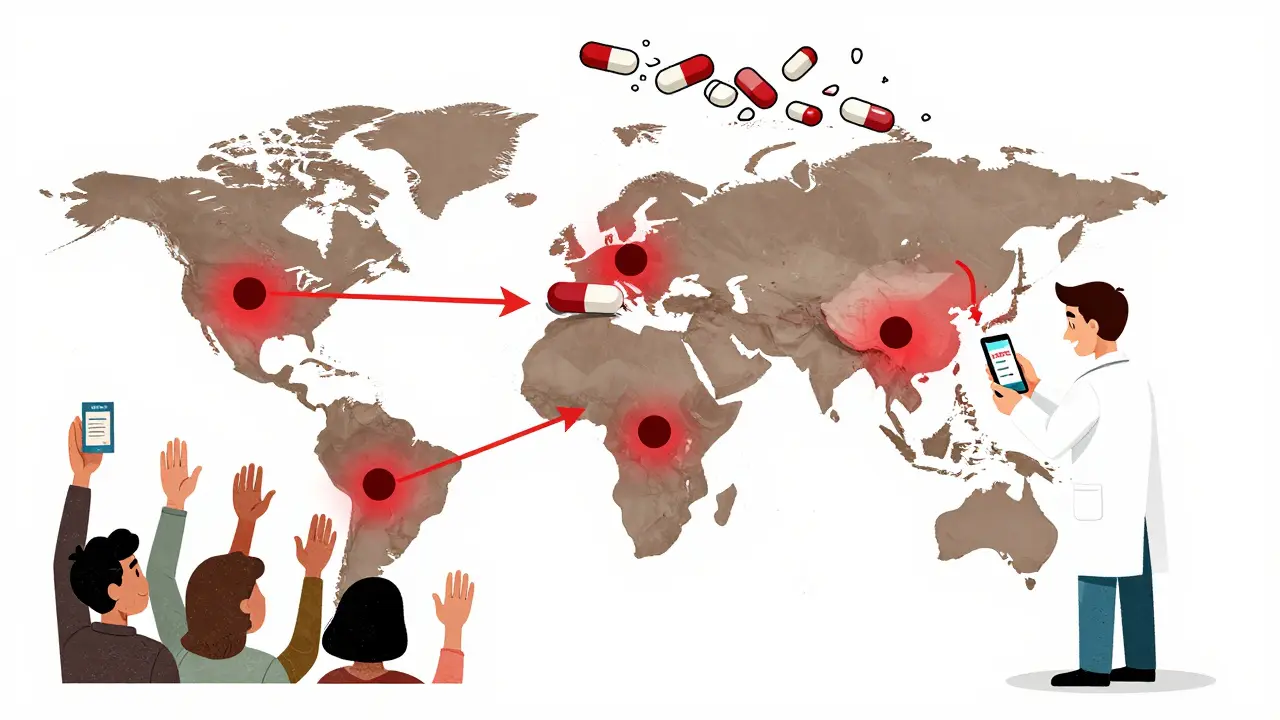
Governments and drug companies are fighting back. The EU’s Falsified Medicines Directive, launched in 2019, requires safety features on all prescription drugs. India now requires QR codes on every active ingredient container. The FDA issued new guidance in November 2025 requiring stricter checks on weight-loss and diabetes drugs.But enforcement is uneven. Low-income countries often lack the resources to test drugs or shut down illegal labs. Criminal networks are adapting-using AI to design better fake packaging, hiding behind encrypted apps, and shipping through multiple countries to avoid detection.
Interpol’s Operation Pangea XVI in March 2025 seized over 50 million fake doses. That sounds like a win. But experts say it’s like mopping the floor while the tap is still running. Without more funding, global regulatory agencies won’t catch up.
What Should You Do If You Suspect a Fake?
Don’t throw it away. Don’t take it. Don’t tell your friends to buy it.Take these steps:
- Stop using the medication immediately.
- Save the packaging, receipt, and any remaining pills.
- Contact your pharmacist or doctor.
- Report it to your country’s health authority (FDA, MHRA, etc.).
- Call the manufacturer’s anti-counterfeiting hotline. Pfizer’s is 1-800-593-5685.
One woman in the UK reported a fake version of her cholesterol drug. The manufacturer traced it to a warehouse in Bulgaria. That report led to a raid, the arrest of three people, and the shutdown of a network supplying 12 countries.
Your report matters. Even one call can break a chain.
Final Thoughts
Generic drugs are a lifeline for millions. They make treatment affordable. But counterfeit versions turn that lifeline into a trap. You don’t need to be an expert to protect yourself. You just need to be careful.Check the packaging. Verify the source. Don’t trust the cheapest price. Use the tools manufacturers provide. Report what you find. And never, ever buy prescription meds from a website that doesn’t ask for your prescription.
Medicine isn’t a gamble. Your health isn’t worth the risk.
How can I tell if my generic medication is fake?
Look for spelling errors on the packaging, check the National Drug Code (NDC) in the FDA’s database, and compare the pill’s color, size, and imprint to previous batches. Use manufacturer verification tools like Novo Nordisk’s “Verify Your Pen” app. If the price is far below market rate, it’s a red flag.
Can fake medications be dangerous?
Yes. Fake meds can contain no active ingredient, too little of the right ingredient, or toxic substitutes like rat poison, chalk, or banned stimulants. This can lead to treatment failure, organ damage, drug resistance, or death. In 2024, over 6,400 counterfeit incidents were recorded globally.
Are online pharmacies safe for buying generics?
Only if they’re licensed. Look for the VIPPS seal in the U.S., the GPhC logo in the UK, or equivalent national certifications. Avoid any site that doesn’t require a prescription or hides its physical address. Over 50% of online pharmacies without a street address sell fake drugs.
What should I do if I think I bought a counterfeit drug?
Stop using it immediately. Save the packaging and any remaining pills. Contact your pharmacist or doctor. Report it to your country’s health authority-like the FDA’s MedWatch program in the U.S. or the MHRA in the UK. Call the drug manufacturer’s anti-counterfeiting hotline. Your report can help shut down illegal operations.
Why are counterfeit generics so common now?
Global supply chains, the rise of online sales, and high demand for expensive drugs like Ozempic and Viagra have created a perfect storm. Criminals exploit weak regulation, especially in low-income countries, and use AI to create convincing fake packaging. The global counterfeit drug market is now worth $200 billion annually.
Can I trust generics from countries like India or China?
Many legitimate generics are made in India and China and are safe when distributed through regulated channels. The issue isn’t the country-it’s the supply chain. Buy only from licensed pharmacies that source from verified manufacturers. Avoid direct online sellers claiming to ship from those countries without proper documentation.
11 Comments
Just bought some metformin from a site that looked legit. Turned out the bottle had a slightly off shade of blue. Didn't think much of it until my sugar spiked. Now I check every pill. Don't be like me.
Let me be brutally honest-this isn't just about counterfeit generics, it's about the collapse of pharmaceutical oversight in a neoliberal dystopia. The commodification of health has created a vacuum where profit supersedes human life. The FDA, WHO, and Interpol are all playing whack-a-mole with AI-generated counterfeit packaging while Big Pharma patents life-saving molecules and prices them into oblivion. The real villain isn't the scammer in Bulgaria-it's the system that makes people desperate enough to buy $150 Ozempic off a Telegram bot. We need structural reform, not just QR codes.
My cousin took fake Viagra and ended up in the ER with a heart arrhythmia he never had before. No one warned him. He thought it was just cheaper. Now he's on beta blockers. Don't be that guy.
India makes 80 of the world’s generics and you’re calling us dangerous We produce life saving meds for Africa and Latin America while you Americans pay 10x for the same pill The problem is not us its your greedy pharma corporations and your corrupt distributors
HOW DARE YOU IMPLY INDIAN MEDS ARE FAKE I WORK IN A PHARMACY IN PUNE AND WE SHIP TO 15 COUNTRIES EVERY DAY AND NOT ONE OF OUR PILLS IS COUNTERFEIT YOU PEOPLE IN THE WEST JUST WANT TO BLAME THE GLOBAL SOUTH FOR YOUR OWN BROKEN HEALTHCARE SYSTEM I’M SO SICK OF THIS RACIST NARRATIVE
So if I buy from a CVS or Walgreens with a VIPPS seal I’m good right But what if the distributor they use is shady How do I know the pills didn’t get swapped in transit
Just scanned my Ozempic pen with the Novo app 😱 It said COUNTERFEIT. I cried. I’ve been on it for 6 months and thought I was just not seeing results. Thank god I checked. I reported it to the FDA. Please everyone-scan yours. 🙏
Let’s not romanticize the supply chain. The fact that you need a blockchain-tracked QR code to verify a pill meant to regulate your blood sugar is a sign of systemic failure. The pharmaceutical industry has outsourced accountability to consumers. You’re expected to become forensic chemists just to avoid poisoning yourself. This isn’t consumer safety-it’s survival capitalism.
It is imperative to underscore that the proliferation of counterfeit pharmaceuticals constitutes a direct affront to public health governance. The absence of verifiable provenance in online transactions undermines the entire regulatory architecture of the Medicines and Healthcare products Regulatory Agency. One must insist upon the use of licensed entities, and the rejection of any vendor lacking a verifiable physical address and regulatory certification. Failure to do so constitutes negligence.
There’s a quiet tragedy here: we’ve turned medicine into a commodity that must be hunted, verified, and scrutinized like a rare artifact. But medicine was never meant to be a gamble. It was meant to be a promise-from doctor to patient, from manufacturer to consumer. When that promise is broken by greed and neglect, we don’t just lose pills-we lose trust. And trust, once broken, is harder to rebuild than any supply chain.
Let me be perfectly clear: the fact that you even have to question whether your medication is real is a moral indictment of the entire American healthcare system. The pharmaceutical industry, in collusion with private insurers and regulatory capture, has engineered a scenario where the most vulnerable populations-those who cannot afford brand-name drugs-are forced into predatory markets where counterfeiters thrive. This is not a failure of consumer vigilance; it is a failure of policy, of ethics, of corporate responsibility, and of collective societal will. The solution is not to scan QR codes-it is to demand universal access to affordable, regulated pharmaceuticals. Until then, every time you buy a generic, you are participating in a system that treats your life as a line item on a balance sheet. And that, more than any fake pill, is what should keep you up at night.