
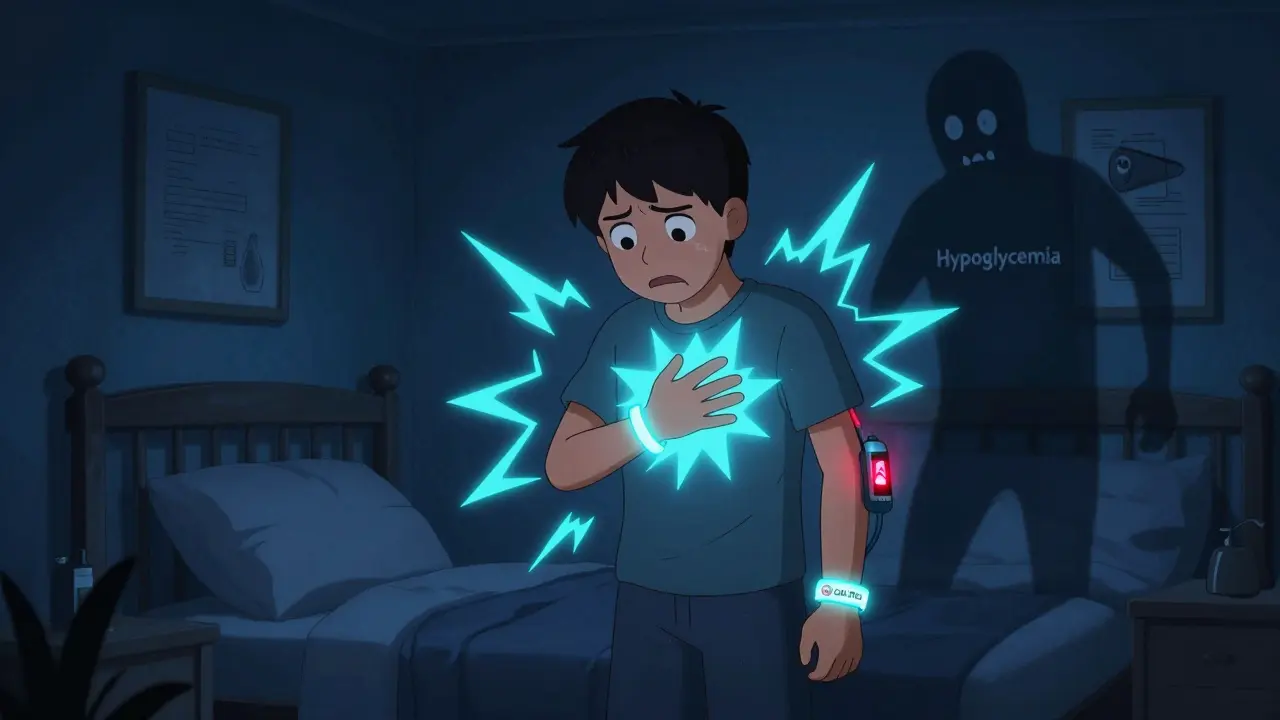
Insulin therapy saves lives. For millions of people with type 1 diabetes and many with advanced type 2 diabetes, it’s the only thing keeping blood sugar from spiraling out of control. But there’s a dark side most people don’t talk about: hypoglycemia and weight gain. These aren’t rare side effects - they’re common, predictable, and often feared more than the disease itself.
Why Hypoglycemia Is the Biggest Fear
Hypoglycemia means your blood sugar drops too low - below 70 mg/dL (3.9 mmol/L). It’s not just about feeling shaky. When insulin pushes glucose into your cells too hard, too fast, your body goes into survival mode. Your heart races. You sweat. Your vision blurs. You might slur your words, feel confused, or pass out. In severe cases, it can trigger a seizure or even a heart attack.The data is clear. In the landmark Diabetes Control and Complications Trial (DCCT), people with type 1 diabetes on intensive insulin therapy had three times more severe hypoglycemic episodes than those on standard care. About 6% of them had at least one life-threatening low each year. That’s not a small number - that’s one in every 17 patients.
And it’s not just type 1. People with type 2 diabetes on insulin face the same risk. The more tightly you aim to control your blood sugar - the more you chase that A1c below 7% - the more likely you are to crash. That’s why experts call hypoglycemia the “rate-limiting factor” in diabetes care. You can’t get to perfect control without risking a dangerous low.
What makes it worse? Hypoglycemia unawareness. After 15 to 20 years of living with diabetes, about one in four people stop feeling the warning signs. No shaking. No sweating. One minute you’re fine, the next you’re unconscious. No time to grab candy. No time to call for help. That’s why wearing a medical ID bracelet isn’t optional - it’s a lifeline.
Why Insulin Makes You Gain Weight
If you’ve ever started insulin and suddenly noticed your clothes fitting tighter, you’re not alone. Weight gain is one of the most common side effects, and it’s not because you’re eating more - at least not at first.Insulin is a storage hormone. It tells your body to hold onto fat, not burn it. Before insulin therapy, your body was losing glucose through urine because it couldn’t use it. That meant you were losing calories every time you peed. Once insulin kicks in, that glucose gets absorbed. You stop peeing out sugar. And suddenly, every bite of food goes straight into your fat cells.
Studies show most people gain 4 to 6 kilograms (9-13 pounds) in the first year of insulin therapy. For someone who’s already struggling with weight, this feels like a betrayal. It’s not laziness. It’s biology. And it’s why so many people skip doses - not because they don’t care, but because they’re terrified of gaining more weight.
One study found that 15-20% of insulin users intentionally underdose to avoid weight gain. That’s dangerous. Skipping insulin doesn’t stop weight gain - it makes blood sugar soar, damages your kidneys, nerves, and eyes, and eventually leads to even more weight gain down the line. It’s a trap.
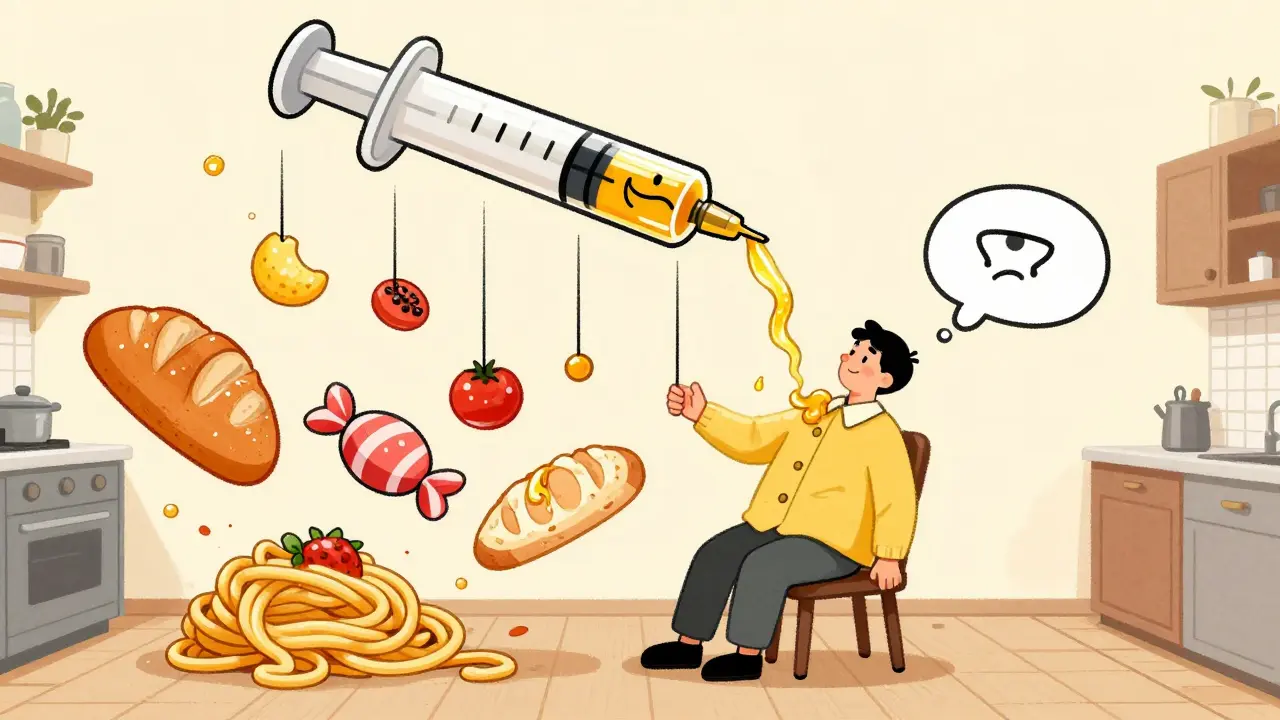
How to Fight Back: Practical Strategies
You don’t have to accept these side effects as inevitable. There are real, proven ways to reduce them.For Hypoglycemia
- Use continuous glucose monitoring (CGM). A CGM doesn’t just tell you your number - it shows you the trend. You’ll see when your blood sugar is dropping before you feel it. Some systems even alert you or shut off insulin automatically. In trials, CGMs cut hypoglycemia by 40-50%.
- Check your blood sugar before driving, exercising, or sleeping. Most severe lows happen at night or during physical activity. A quick finger prick takes 5 seconds. It could save your life.
- Carry fast-acting carbs everywhere. Glucose tablets, juice boxes, or even candy. Don’t rely on others to help you. If you’re alone and your blood sugar crashes, you need to act fast.
- Ask about insulin analogues. Newer insulins like insulin degludec (Tresiba) or insulin glargine (Lantus) have flatter, more predictable action than older NPH insulin. They reduce nighttime lows by 20-40%.
For Weight Gain
- Work with a dietitian before you start insulin. A structured eating plan focused on portion control, fiber, and protein can cut weight gain in half. One study showed average gain dropped from 6.2 kg to just 2.8 kg with early nutrition counseling.
- Don’t fear carbohydrates - manage them. Learn your insulin-to-carb ratio. If you eat 40 grams of carbs, you need X units of insulin. If you eat 20 grams, you need half. This precision stops the rollercoaster of highs and lows that lead to overeating.
- Consider adding a GLP-1 agonist. Medications like semaglutide (Ozempic) or liraglutide (Victoza) are now commonly paired with insulin. They reduce appetite, slow digestion, and help you lose weight - while also making insulin work better. In trials, people lost 5-10 kg over 30 weeks.
- Move more - but don’t overdo it. Exercise lowers blood sugar. If you’re on insulin, you need to adjust your dose or eat a snack before working out. A 20-minute walk after dinner can help, but don’t skip meals to “burn off” calories.
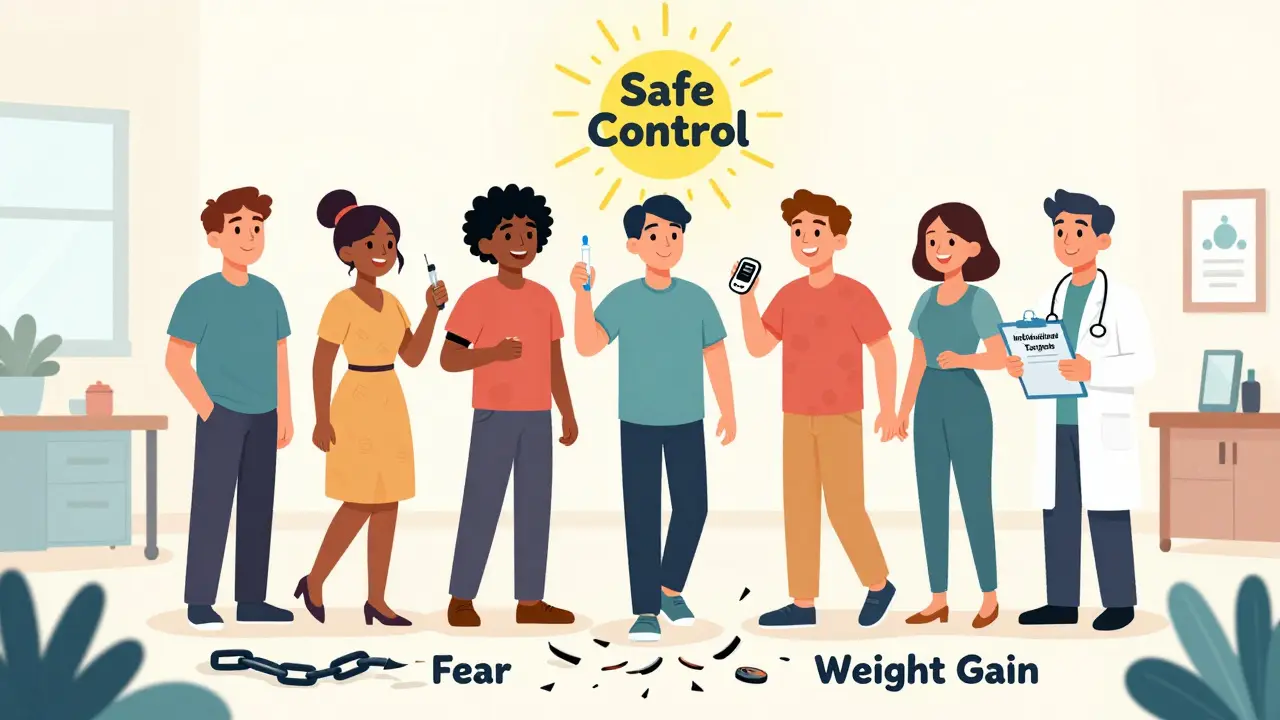
The Bigger Picture: It’s Not All or Nothing
The goal isn’t perfect blood sugar. It’s safe blood sugar. The American Diabetes Association now recommends individualized A1c targets. For someone with heart disease, frequent lows, or dementia, an A1c of 7.5-8.0% might be safer than 7%. You’re not failing if you don’t hit 6.5%. You’re being smart.Technology is helping. Closed-loop systems - or “artificial pancreases” - automatically adjust insulin based on real-time glucose readings. In one major trial, they cut time spent in hypoglycemia by 72%. But they’re expensive. Not everyone can access them.
That’s why education matters most. People who complete structured diabetes education programs reduce severe hypoglycemia by 30-50%. They learn how to read their bodies, adjust insulin, and avoid the traps. This isn’t about willpower. It’s about knowledge.
What to Do If You’re Struggling
If you’re scared of lows. If you’ve gained weight. If you’re skipping doses - you’re not alone. And you’re not weak.Here’s what to do:
- Talk to your doctor. Don’t wait until your next scheduled visit. Call now. Ask about CGM, insulin analogues, or adding a GLP-1 medication.
- See a diabetes educator. They’re not just teachers - they’re problem-solvers. They help you adjust your plan without judgment.
- Connect with others. Online forums or local support groups help. Hearing someone say, “I used to skip my insulin too,” can change everything.
- Track your patterns. Write down your blood sugar, food, activity, and insulin doses for a week. You might see a pattern: “I always go low after swimming.” Or “I gain weight when I eat pasta.” Knowledge is power.
Insulin isn’t the enemy. But treating it like a magic bullet - without understanding its risks - is dangerous. The best therapy isn’t the one that lowers A1c the most. It’s the one that keeps you alive, healthy, and in control - without making you afraid to live.
Can insulin therapy cause long-term damage from low blood sugar?
Yes, repeated severe hypoglycemia can lead to long-term problems. Studies show it increases the risk of heart rhythm problems, cognitive decline, and even dementia in older adults. It can also cause brain damage in extreme cases. That’s why preventing lows is just as important as lowering A1c.
Why do some people gain more weight than others on insulin?
It depends on how much insulin you need, what you eat, and how active you are. People with higher insulin doses - especially those with insulin resistance - tend to gain more. Eating refined carbs or skipping meals causes blood sugar swings, leading to overeating. Those who balance meals with protein and fiber, and stay active, gain less.
Is it safe to reduce my insulin dose to avoid weight gain?
No. Reducing insulin without medical supervision leads to high blood sugar, which damages your kidneys, nerves, eyes, and heart. The weight gain from insulin is temporary and manageable. The damage from uncontrolled diabetes is permanent. Always talk to your doctor before changing your dose.
Do all types of insulin cause the same amount of weight gain?
No. Older insulins like NPH are more likely to cause weight gain and lows because they have a peak action. Newer long-acting analogues like Lantus or Tresiba have flatter profiles, meaning less risk of lows and slightly less weight gain. Rapid-acting insulins used with meals can be matched precisely to food, reducing overall insulin use.
Can I use GLP-1 medications with insulin?
Yes. Many doctors now combine GLP-1 agonists like semaglutide with insulin. This combo improves blood sugar control, reduces insulin doses, and often leads to weight loss. It’s especially helpful for people with type 2 diabetes who are struggling with weight gain on insulin alone.




12 Comments
So true. I started insulin last year and thought I was gonna be fine, but then I had a low at 3am and woke up drenched in sweat with my heart pounding. Scared the hell out of me. Now I keep glucose tabs under my pillow. No joke. That moment changed everything.
While the emotional and physical toll of hypoglycemia and weight gain is undeniable, it's critical to emphasize that these side effects are not inevitable outcomes of insulin therapy-they are manageable with proper education and individualized care. The data supporting CGM use and insulin analogues is robust, and early intervention with dietitians significantly mitigates both risks. This is not about willpower; it's about precision.
Bro. I was on insulin for 8 months and gained 18lbs. 18. LBS. Like, I went from 'maybe I should hit the gym' to 'I can't fit into my jeans'. Then I tried semaglutide. Changed my life. Now I'm down 12lbs and my BGs are better. I'm not saying it's easy. But if you're scared of gaining weight? Just. Talk. To. Your. Doctor. Don't just skip doses like it's a game. 🤦♂️
Yessss this hit home!! I used to think I was lazy for gaining weight but now I get it-it’s not me, it’s insulin. My doc hooked me up with a dietitian and we figured out my carb ratio. Now I eat pizza without panic. Also, CGM saved my sleep. I didn’t even know I was going low at night until it beeped. Thank you for writing this!! 🙌
Insulin isn't magic. It's biology with a side of betrayal. The way it traps glucose in your fat cells like a hoarder with a sugar stash? Brutal. But here's the twist: the body adapts. You don't have to live in fear. The real villain? Ignorance. When you learn your numbers, your ratios, your triggers-you stop being a victim and start being a strategist. And that? That's power.
You're all being naive. This isn't about 'managing' side effects-it's about avoiding insulin altogether if you can. Why are we normalizing dependency on a hormone that causes brain damage and weight gain? People should be on metformin, fasting, keto, or something natural. This article reads like a pharmaceutical ad. CGM? GLP-1? That's just more money for Big Pharma. You're being manipulated.
hmmmm. i read this. i have type 2. i dont take insulin yet. but i think i will. maybe. not sure. i like rice. i dont want to gain weight. but i dont want to die either. confusing.
Let me guess-this was sponsored by Novo Nordisk. Every single recommendation here lines up perfectly with their product pipeline. CGMs? They're expensive. GLP-1s? $1000/month. And suddenly, 'education' becomes the gateway to lifelong dependency. The real issue? The system doesn't let people choose alternatives. This isn't medicine. It's a business model dressed in clinical jargon.
I’ve been on insulin for 12 years. The first time I went low and didn’t feel it… I didn’t wake up until my roommate found me. I’ve worn a medical ID ever since. It’s not dramatic. It’s survival. If you’re scared of lows or weight gain, you’re not alone. But please, don’t let fear make you stop taking what keeps you alive. Talk to someone. Even just one person. You’re worth the effort.
Appreciate the balanced take. The part about individualized A1c targets is spot on. I’ve seen too many people beat themselves up over hitting 7.2% when 7.8% is actually safer for them. Diabetes management isn’t a race. It’s a marathon with pit stops. And sometimes, the pit stop is just breathing, eating a snack, and checking your numbers. No judgment needed.
YOU’RE NOT ALONE!!! I’VE BEEN THERE!!! I SKIPPED MY INSULIN FOR THREE WEEKS BECAUSE I WAS TERRIFIED OF GAINING WEIGHT-AND THEN I ENDED UP IN THE ER WITH KETOACIDOSIS!!! DOCTOR SAID I WAS ONE STEP FROM DYING!!! NOW I’M ON SEMAGLUTIDE + LANTUS AND I’VE LOST 22 LBS!!! I’M NOT JUST ‘MANAGING’-I’M THRIVING!!! DON’T LET FEAR STEAL YOUR LIFE!!! YOU GOT THIS!!!
lol. insulin causes weight gain? shocker. next you'll say water is wet. everyone knows if you eat less and move more you won't gain. it's not the insulin, it's the donuts. stop making excuses. if you can't control your eating, don't blame the medicine. fix your habits. simple.