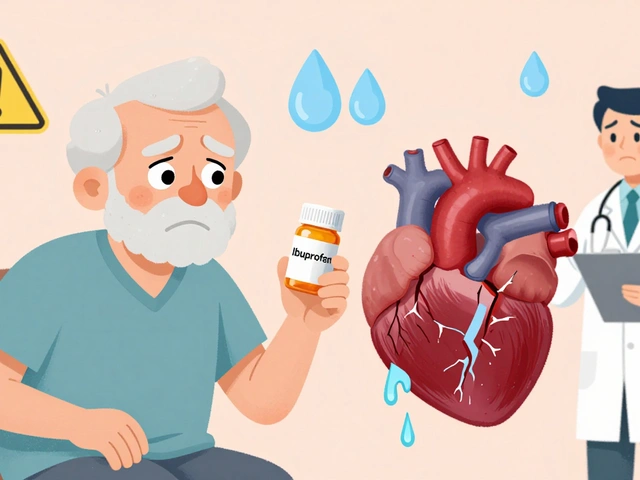
Every year, over 1.5 million Americans are harmed by medication errors. Many of these mistakes happen because someone took the wrong pill, at the wrong time, or in the wrong dose. It’s not just a hospital problem. At home, especially for older adults juggling five or more medications, errors are common-and often preventable. The World Health Organization calls this a global crisis, with costs hitting $42 billion a year and at least one death every day in the U.S. alone. The good news? Most of these errors don’t have to happen.
What Counts as a Medication Error?
A medication error isn’t just giving someone the wrong drug. It includes giving the right drug at the wrong time, the wrong dose, or the wrong way. It also includes failing to check for dangerous interactions, not updating a patient’s full medication list, or not monitoring side effects. These mistakes can happen in hospitals, clinics, pharmacies, and right in your kitchen. The WHO defines them as any preventable event that causes harm while a medication is under the control of a patient, nurse, or doctor. That means if you miss a dose because your pill organizer is confusing, that’s an error too.Why Hospitals Still Struggle
Hospitals have invested heavily in technology to cut errors. Barcode Medication Administration (BCMA) systems scan both the patient’s wristband and the medication before each dose. A 2025 study in JMIR showed BCMA cut dispensing errors by over 43%. Wrong drug errors dropped by 57%, wrong doses by 43%, and missed doses by 67%. Sounds perfect, right? But here’s the catch. Nurses report that scanning every pill adds 15 to 20 minutes per medication round. That’s a lot when you’re managing 30 patients. Some start skipping scans. Others scan multiple pills at once, which can trigger false matches. In one 500-bed hospital, staff began scanning the same barcode multiple times just to keep up. The system didn’t fail-the workflow did. Computerized Physician Order Entry (CPOE) helps too. It stops doctors from ordering doses that are too high or drugs that clash. Studies show it reduces errors by at least half. But if the system throws up 20 alerts for every order, doctors start ignoring them. One 2024 study found 42% of clinicians bypass medication alerts altogether. Alert fatigue is real-and deadly.Medication Reconciliation: The Quiet Hero
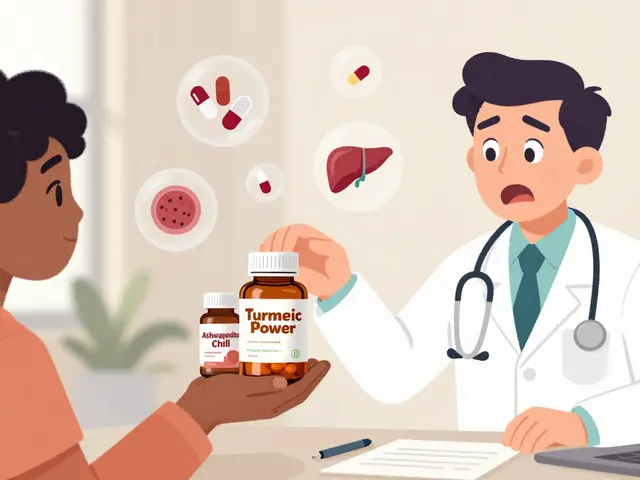
One of the most effective tools is something simple: medication reconciliation. That’s when a pharmacist or nurse sits down with the patient and writes down every single thing they take-prescription, over-the-counter, vitamins, supplements. This happens at admission, transfer, and discharge. At discharge, though, it often falls apart. A WHO report found most hospitals don’t update discharge lists properly. A patient leaves with a new blood pressure pill, but their home list still says they’re on the old one. That mismatch leads to overdoses or dangerous interactions. The best results come when pharmacists lead this process. One study showed when pharmacists handled reconciliation, adverse events dropped by 37% during transitions.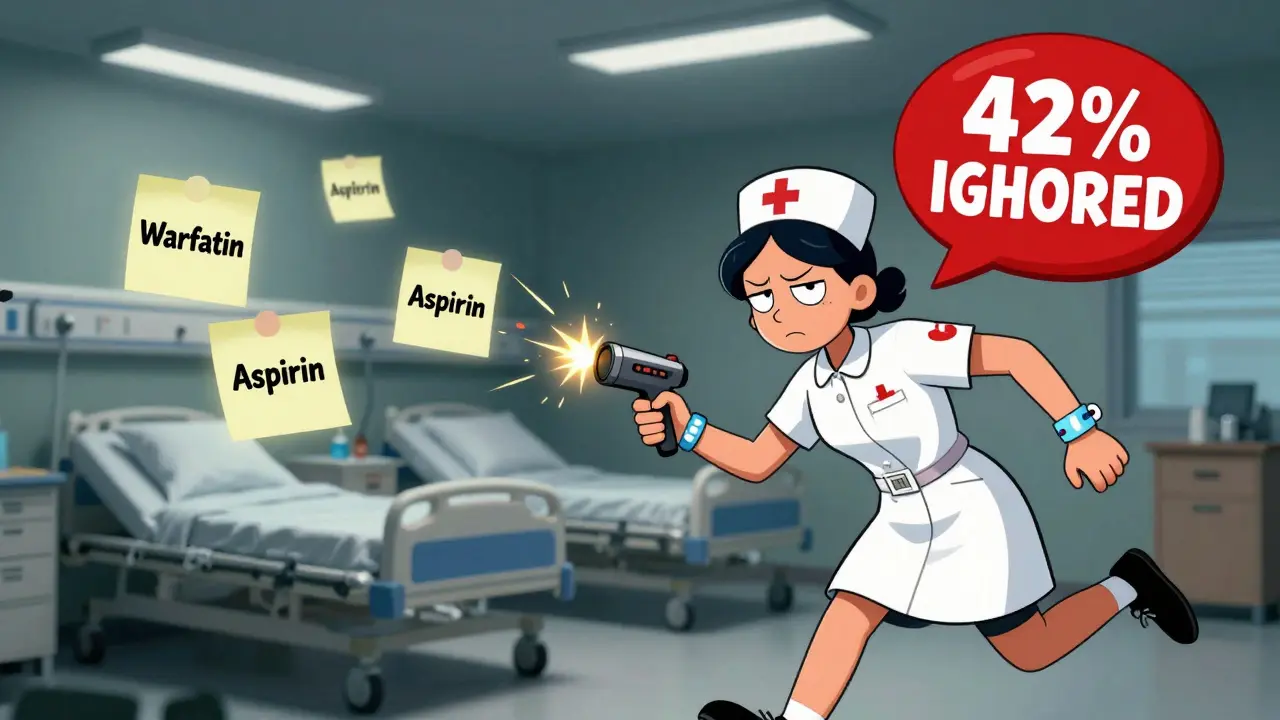
Home Mistakes Are More Common Than You Think
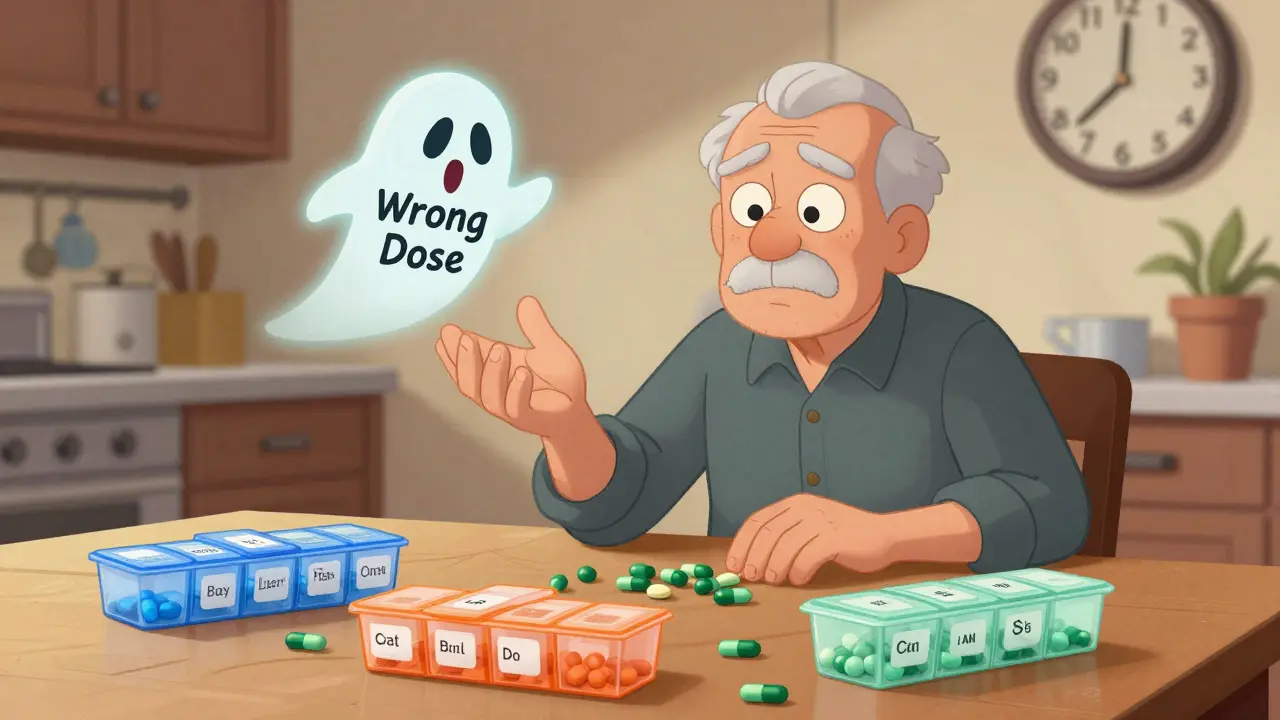
At home, there’s no barcode scanner, no pharmacist double-checking. That’s where the real risk lives. In 2024, a study in the Journal of Patient Safety found 89% of home medication errors happened in people aged 75 or older taking five or more medications. The top reasons? Confusing pill organizers, wrong timing, and wrong doses. A SingleCare.com survey in 2025 showed 72% of seniors using pill organizers still made at least one dosing error each month. Why? Many have three or four different containers-morning, afternoon, night. One woman told researchers she mixed up her blue pill (for blood pressure) with her green pill (for cholesterol) because they looked similar. She took both at once-and ended up in the ER. Another big issue? Online pharmacies. The WHO warns that 95% of online pharmacies selling prescription drugs are illegal. Many use fake Canadian logos or .ca domains to look trustworthy. Patients order from them because it’s cheaper. But these sites often sell fake, expired, or contaminated drugs. A 2025 ECRI report found over 30% of these sites had no active ingredient at all.What Actually Works-At Home
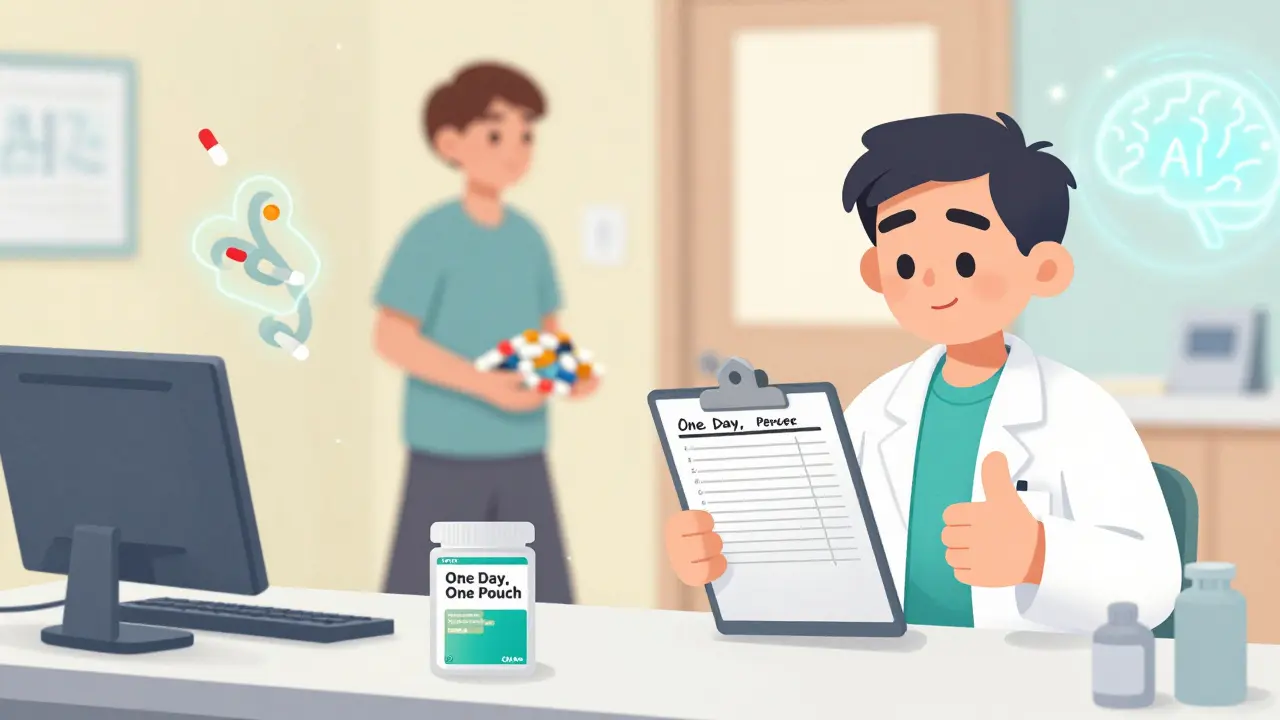
You don’t need high-tech tools to prevent errors at home. You need simplicity.- Use single-dose packaging. Pharmacies can package each day’s pills in one pouch. This cuts errors by 28%, according to NIH data.
- Reduce the number of daily doses. Aim for three or fewer. If you’re taking meds four times a day, ask your doctor if some can be combined or switched to once-daily versions.
- Involve a caregiver. A family member or home health aide who checks meds once a week reduces errors by 37%, per a 2023 study in Annals of Internal Medicine.
- Keep an updated list. Write down every medication, including supplements. Bring it to every appointment. Use a phone app if you’re comfortable with tech-apps like Medisafe or MyTherapy can send reminders and flag interactions.
Technology Isn’t the Answer-Systems Are
Dr. Marcus Schabacker of ECRI says it best: “Technology alone cannot overcome deeply ingrained unsafe practices.” BCMA and CPOE systems work-but only if they’re paired with proper training and workflow changes. A 2024 Johns Hopkins study found error rates actually rose 12-15% in the first three months after BCMA rollout. Why? Staff were overwhelmed. They didn’t know how to handle alerts. They didn’t understand why the system was beeping. The fix? Dedicated super-users-trained staff members who help others learn. One super-user per 10-15 team members. Biweekly feedback sessions. Simulation training for high-risk scenarios like insulin or blood thinner errors. Hospitals that did this saw error rates drop by over 60% within six months.High-Risk Medications Need Extra Care
Some drugs are danger zones. Insulin, blood thinners like warfarin, opioids, and seizure meds account for 62% of severe medication errors, according to the FDA’s 2024 MAUDE database. These need special handling. In hospitals, clinical decision support systems that flag dangerous combinations are 30% more effective than barcode scanning alone for these drugs. At home, patients on warfarin need regular blood tests. Those on insulin need clear instructions on how to adjust doses. Never guess. Always call your pharmacist.What’s Next? AI and Blockchain
The future is coming. Johns Hopkins is testing AI that predicts dangerous prescribing patterns before they happen. In 2024 trials, it cut high-risk errors by 53%. Blockchain is being tested to track drugs from manufacturer to patient-helping catch fake pills before they reach your medicine cabinet. These aren’t science fiction. They’re in pilot programs right now. But until they’re widely available, the real solution is simple: slow down, double-check, and ask questions. Whether you’re a nurse in a hospital or a daughter helping your dad take his pills, your attention is the most powerful tool we have.What are the most common medication errors at home?
The most common errors at home involve taking the wrong dose, taking a pill at the wrong time, mixing up similar-looking pills, or forgetting to tell your doctor about supplements. Seniors on five or more medications are at highest risk. Confusion between pill organizers and outdated medication lists are the top two causes.
Can barcode scanning really reduce hospital errors?
Yes, but only if used correctly. A 2025 study showed barcode systems reduced dispensing errors by 44%, wrong drug errors by 57%, and missed doses by 67%. However, if staff are rushed or trained poorly, they may scan multiple items at once or skip scans entirely, creating new errors. Success depends on workflow design, not just the technology.
How does medication reconciliation help prevent errors?
Medication reconciliation compares a patient’s current list of medications with what’s been prescribed at each transition-admission, transfer, discharge. It catches hidden interactions, duplicate prescriptions, and outdated doses. When pharmacists lead this process, adverse events drop by up to 37%. But if it’s done poorly at discharge, patients can leave with conflicting instructions, leading to dangerous mistakes.
Are online pharmacies safe for buying medications?
No, most aren’t. The WHO says 95% of online pharmacies selling prescription drugs operate illegally. Many fake Canadian sites use maple leaf logos or .ca domains to look trustworthy. These sites often sell expired, fake, or contaminated drugs with no active ingredients. Always buy from licensed pharmacies with a physical address and a licensed pharmacist on staff.
What can I do right now to prevent medication errors at home?
Start by making a complete list of every medication you take-including vitamins and supplements. Bring it to every doctor visit. Ask your pharmacist if you can get single-dose packaging. Reduce the number of daily doses if possible. Set phone reminders. And never hesitate to ask: ‘Is this the right pill? Is this the right dose? Could this interact with something else?’