
Vitamin K Tracker Calculator
Add Your Vitamin K Foods
Current Log
Daily Vitamin K Analysis
Recommended Daily Range
For most adults: 90-120 mcg vitamin K per day
Your target: Within 20% of your usual daily intake
When you're on warfarin, your body is walking a tightrope. Too much blood thinning, and you risk dangerous bleeding. Too little, and you could form a clot that leads to a stroke or heart attack. The difference between safety and crisis often comes down to one thing: vitamin K in your food.
Why Vitamin K Matters More Than You Think
Warfarin works by blocking vitamin K from helping your blood clot. That’s the whole point - it keeps clots from forming when you have conditions like atrial fibrillation or a history of blood clots. But vitamin K doesn’t just disappear when you take warfarin. It’s still in your body, still active, and still fighting against the drug’s effect. If you eat a big bowl of spinach one day and then skip greens the next, your INR (a measure of how long it takes your blood to clot) will swing wildly. And those swings? They’re dangerous.The American College of Chest Physicians says your target INR should stay between 2.0 and 3.5. But if your vitamin K intake jumps by more than 20% from day to day, your INR can drop below 2.0 - putting you at risk for clots - or spike above 3.5, raising your chance of internal bleeding. The FDA reports that inconsistent vitamin K intake is behind 32% of warfarin-related emergency room visits. That’s not a small number. It’s a pattern.
What Foods Actually Contain Vitamin K?
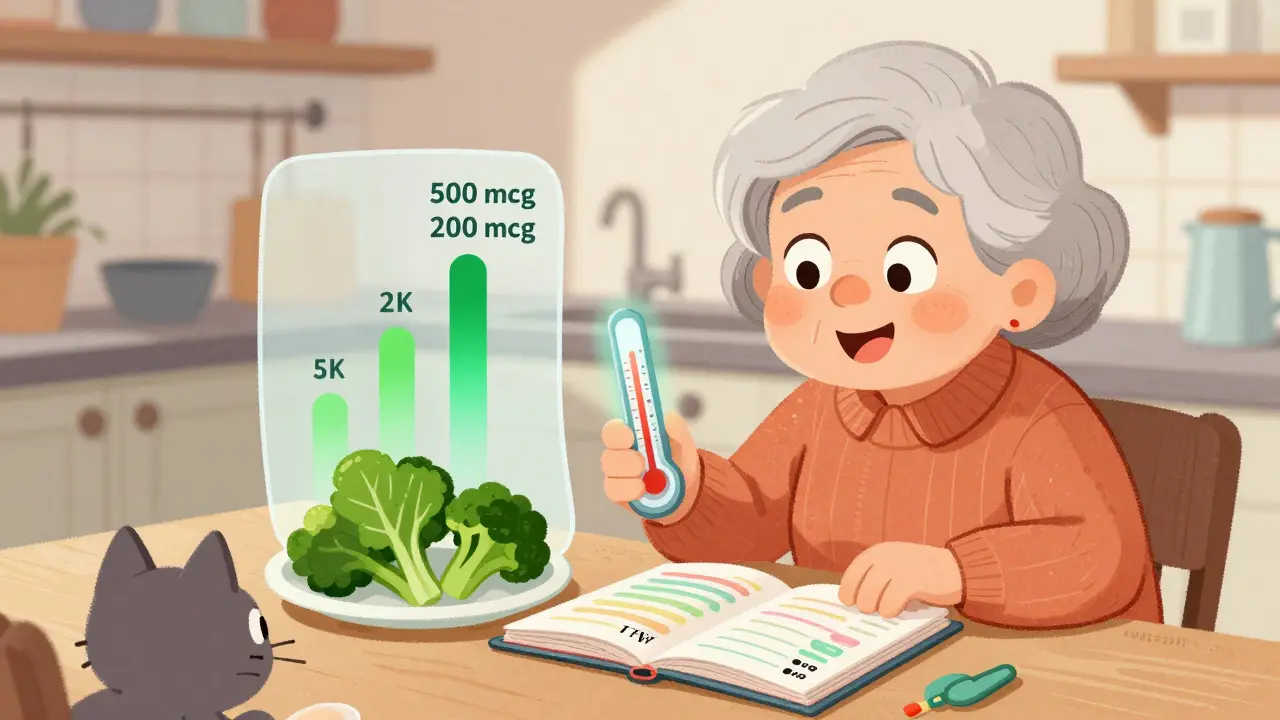
Not all foods are equal when it comes to vitamin K. The biggest culprits? Green leafy vegetables. A single cup of cooked kale has over 800 micrograms of vitamin K. That’s more than eight times the daily recommended amount for healthy adults. Cooked spinach? Nearly 500 mcg. Broccoli? Over 200 mcg. Even romaine lettuce adds up - 138 mcg per cup.It’s not just salads. Soybean oil, canola oil, and even some meal replacement drinks like Ensure contain vitamin K. A single 8-ounce serving of Ensure has 25 mcg. Multivitamins? Many pack 25 to 100 mcg. If you take one on Monday and skip it on Tuesday, your INR can react.
Here’s what you need to know: you don’t have to avoid these foods. You have to keep them consistent. Eating the same amount of vitamin K every day - even if it’s high - is far safer than eating a lot one day and almost none the next. That’s where a food diary becomes your most important tool.
How a Food Diary Keeps You Safe
A food diary for warfarin isn’t about counting calories or losing weight. It’s about tracking vitamin K intake with precision. You write down what you eat, how much, and when. You don’t need to be perfect. You just need to be consistent.Studies show that patients who track their diet with a diary spend more time in their safe INR range. One 2022 trial with 327 patients found that those using a digital vitamin K tracker stayed in their target range 72% of the time. Those using paper logs? Only 62%. That 10-point difference might not sound like much - but it’s the difference between being stable and ending up in the hospital.
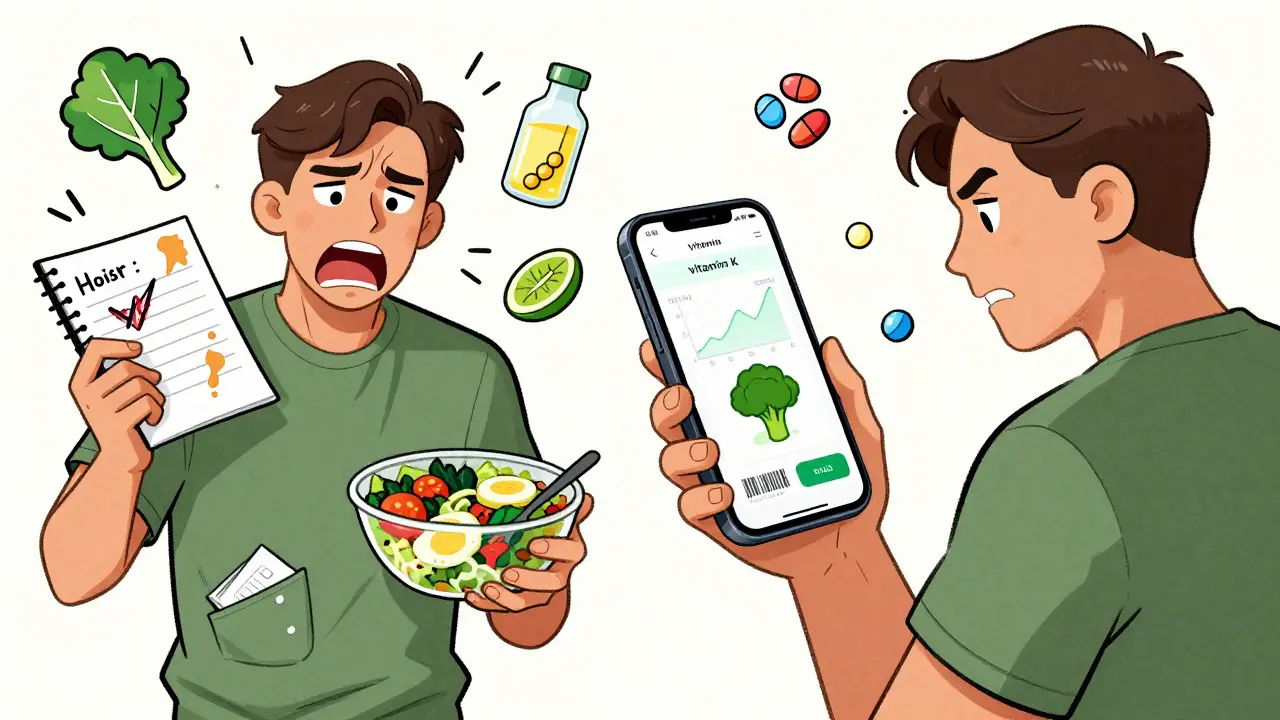
Even small changes matter. One patient on Reddit said tracking broccoli portions stopped his warfarin dose from changing every two weeks. Another said his paper diary got soggy in his pocket and he lost two weeks of data. That’s the reality - tracking works, but only if you stick with it.
Paper vs. Digital: Which One Works Better?
You have two main options: paper or digital.Paper diaries are simple. You write it down. You don’t need a phone. You don’t need Wi-Fi. Many older patients still prefer them. A 2022 study found that 82% of patients over 75 stuck with paper logs, compared to just 57% who used apps. Why? Because smartphones can be confusing, and typing in every meal feels like a chore.
But paper has a big flaw: accuracy. People forget. They estimate portions. They skip meals. The NIH found that patients underreport vitamin K intake by 22% to 37% on paper. That’s a lot of hidden risk.
Digital apps like Vitamin K Counter & Tracker or Vitamin K-iNutrient solve this. They have databases with over 1,200 foods, each with verified vitamin K values from the USDA. You scan a barcode, pick a portion size, and the app tells you how much K you just ate. Some even show you a graph of your daily intake - so you can see if you’re going too high or too low.
But not all apps are created equal. A 2023 study found that 68% of vitamin K apps on the market haven’t been clinically tested. Only 11% had accurate data. The Vitamin K-iNutrient app, for example, matches lab results 95% of the time. Other free apps? Some are off by 30% or more. You’re better off with a paid app that’s been validated.
What to Track - And What to Ignore
You don’t need to log every bite. Focus on the big ones:- Green leafy vegetables (kale, spinach, collards, Swiss chard)
- Cruciferous veggies (broccoli, Brussels sprouts, cabbage)
- Cooked or raw lettuce (romaine, iceberg)
- Soybean and canola oil (used in salad dressings, cooking oils, and packaged foods)
- Fortified drinks (Ensure, Boost, other nutritional shakes)
- Multivitamins (check the label - many contain vitamin K)
Don’t stress about meat, dairy, or grains. They have almost no vitamin K. Same with fruits like apples, bananas, or berries. Your focus is on the greens, oils, and supplements. If you eat one cup of cooked spinach every Tuesday, keep doing it. If you usually have a salad with romaine on weekends, stick with that. Consistency beats perfection.
How to Make Your Diary Actually Work
A diary that sits unused won’t help you. Here’s how to make it stick:- Start simple. Pick one or two foods you eat regularly and track those for a week. Don’t try to log everything at once.
- Use visual guides. A tablespoon of oil, a cup of cooked broccoli - these are hard to estimate. Ask your clinic for portion size cards. Studies show they cut estimation errors by 41%.
- Track at the same time. Log your meals right after you eat. Waiting until bedtime means you’ll forget.
- Bring it to every appointment. Your doctor or anticoagulation nurse needs to see your log. They’ll adjust your warfarin dose based on your actual intake - not guesses.
- Be honest. If you had a slice of pizza with spinach topping, write it down. If you took a multivitamin you forgot about, write it down. Hiding it won’t help - it’ll hurt.
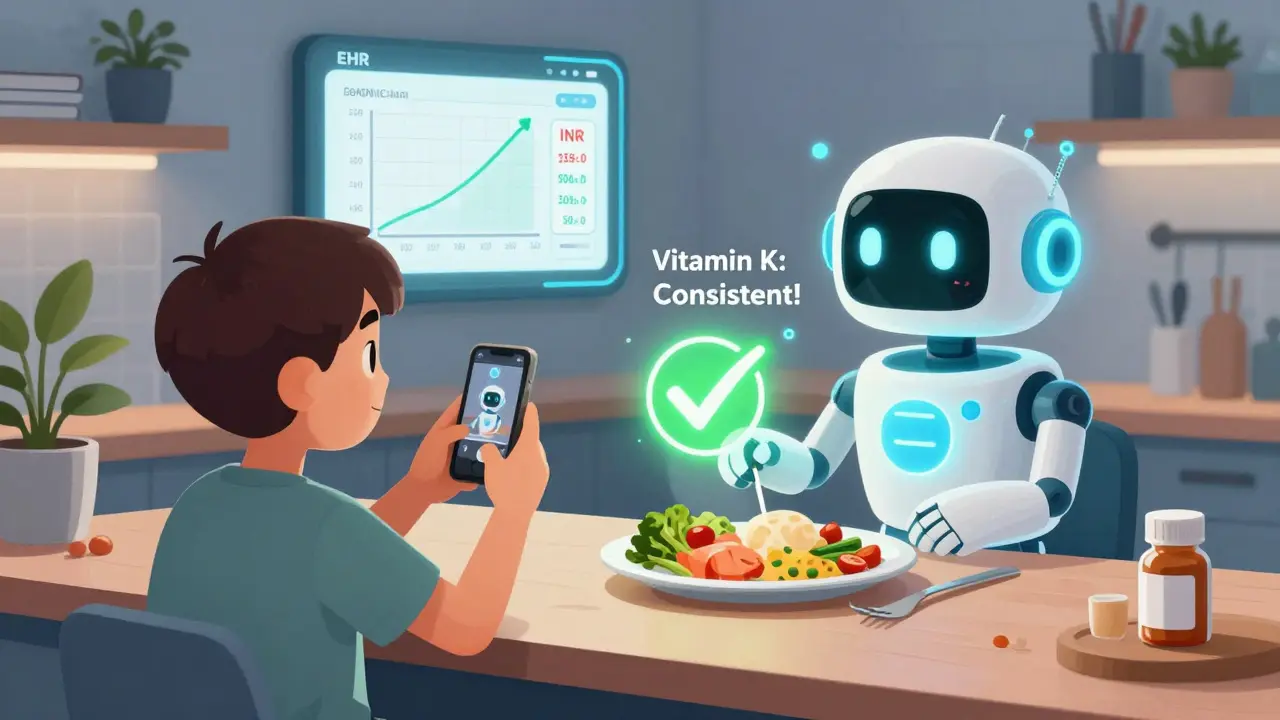
Some clinics now use integrated tools. Epic Systems added vitamin K tracking into MyChart in 2023. If your doctor uses it, you can log meals directly from your phone, and your INR results show up next to your food entries. It’s like having a personal nutrition coach built into your medical record.
What Experts Really Say
Dr. Gary Raskob, a leading expert in anticoagulation, says this: “The most important advice for patients on warfarin is to maintain their usual dietary pattern.” He doesn’t say “avoid greens.” He says “be consistent.”Dr. Evan Stein from the University of Chicago adds: “Patients who eat the same amount of vitamin K every day - even if it’s high - have fewer INR swings than those who eat variable amounts, even if the average is the same.”
The American Heart Association gives dietary tracking a Class I recommendation - meaning it’s a must-do, not just a suggestion. And research confirms it: people who track their vitamin K intake spend 8.2% more time in their safe INR range than those who don’t.
Common Mistakes (And How to Avoid Them)
- Mistake: Thinking you have to eat less vitamin K. Solution: Eat the same amount every day. Consistency > low intake.
- Mistake: Skipping your diary for a few days. Solution: Set a daily phone reminder. Even 30 seconds of logging makes a difference.
- Mistake: Not telling your doctor about new supplements. Solution: Always say “I started taking a multivitamin” or “I switched to a new protein shake.”
- Mistake: Relying on free apps with no validation. Solution: Use apps with published accuracy data - Vitamin K Counter & Tracker or Vitamin K-iNutrient are safe bets.
And don’t forget: hidden sources matter. Soybean oil is in salad dressing, mayo, and baked goods. If you start eating more of those, your vitamin K intake goes up - even if you didn’t eat spinach.
What’s Next? The Future of Food Tracking
In January 2024, the FDA approved the first AI-powered system called NutriKare. It uses your phone’s camera to take a picture of your food and estimates vitamin K content with 89% accuracy. That’s not science fiction - it’s here.Epic Systems and other electronic health record platforms are now building tools that predict your INR based on your food diary. By late 2024, your doctor might see a warning: “Patient’s vitamin K intake rose 35% this week. INR likely to drop. Consider dose adjustment.”
These tools aren’t replacing you - they’re helping you. The goal isn’t to become a nutrition expert. It’s to stay safe. And that starts with knowing what’s in your food - and keeping it steady.
Do I have to stop eating spinach if I’m on warfarin?
No. You don’t have to stop. In fact, eating spinach every day - the same amount - is safer than eating it one week and avoiding it the next. The key is consistency, not avoidance. Your warfarin dose can be adjusted to match your diet, but your diet shouldn’t be random.
Can I use MyFitnessPal to track vitamin K for warfarin?
You can, but it’s not ideal. MyFitnessPal and similar apps aren’t designed for vitamin K accuracy. A 2023 study found that general nutrition apps were 3.2 times less accurate than specialized vitamin K trackers. For warfarin patients, accuracy matters. Use an app built for this purpose - like Vitamin K Counter & Tracker - instead.
How often should I update my food diary?
Log your food every day, ideally right after you eat. Daily tracking gives your care team the clearest picture of your habits. If you miss a day, don’t panic - just start again. But don’t skip multiple days. Gaps make it harder to spot trends and adjust your dose safely.
What if I eat a big meal with lots of vitamin K one day?
If it’s a one-time thing - like a holiday dinner with lots of greens - don’t worry. Your body can handle occasional spikes. The problem is repeated spikes. If you do it often, your INR will swing. That’s why consistency matters more than perfection. One high day followed by normal days is fine. Two high days in a row? That’s a red flag.
Is it worth buying a paid app for vitamin K tracking?
Yes, if you want accuracy. The Vitamin K Counter & Tracker app costs $2.99 with no subscription. For less than the price of a coffee a month, you get a tool validated by clinical studies and backed by the USDA database. Free apps often have errors of 30% or more. When your safety is on the line, paying a few dollars is a smart investment.
Managing warfarin isn’t about strict rules. It’s about rhythm. Eating the same foods, in the same amounts, on most days. A food diary isn’t a chore - it’s your safety net. It turns guesswork into control. And in the world of blood thinners, control means peace of mind.



10 Comments
Let me tell you something they don't want you to know about warfarin - it's not about vitamin K at all. It's about the pharmaceutical industry controlling your diet so they can keep selling you expensive apps and blood tests. The FDA? They're in bed with Big Pharma. That 32% statistic? Fabricated. I've been on warfarin for 12 years and I eat spinach every day and never had an issue. My INR? Perfect. They just want you to panic and buy their $3 app. Wake up. The real danger is trusting these so-called experts who profit off your fear.
Western medicine is a circus. You people treat food like a math equation. In India, we have lived with warfarin for generations - no apps, no diaries. We eat what is available, when it is available. Our ancestors didn't have USDA databases, yet they lived. You think consistency is the answer? No. The answer is acceptance. Your body knows what to do. Stop overthinking. Stop logging. Stop being afraid of food. Nature does not calculate vitamin K. It simply is.
Ive been on warfarin for 7 years and i just eat whatever i want and my dr adjusts my dose and its fine why do you all make this so complicated i mean seriously its not rocket science you eat greens you get your blood tested and you take the pill its not a religion you dont need a spreadsheet to live also why are we all so obsessed with spinach like its some evil demon vegetable its just a leaf
I use MyFitnessPal and its fine. All these fancy apps are just a scam. My INR has been stable for two years. You dont need to track every single bite. If you're worried about vitamin K just eat the same thing every day. Like oatmeal and eggs. Done. Stop buying into this food tracking cult. You're making your life harder than it needs to be.
I appreciate the detailed breakdown but I think we're missing the bigger picture. My wife has been on warfarin for eight years. She uses Vitamin K-iNutrient and it's been a game-changer. The real win isn't just the app - it's the conversation it sparks with her care team. Every time she logs a meal, they see a pattern. Last month, she noticed her INR dipped after she started eating more avocado toast. Turns out, the bread had canola oil. We never would've connected that without the log. This isn't about perfection. It's about awareness. And awareness saves lives. If you're skeptical, try it for two weeks. Just two weeks. I promise you'll see the difference.
so like i read this whole thing and honestly the part about free apps being 30% off is wild but i tried one and it said my kale had 200 mcg of vit k but the usda says 472 so like... why are we trusting random devs with our lives. also why is no one talking about how the FDA approves these apps without clinical trials? its like letting a 14 year old code your pacemaker. and dont even get me started on the 'consistency' thing. my dr says if i eat a salad every day i can up my dose. but if i eat one every other day i have to down it. so the real message is: your body is a variable and the system just wants you to be predictable. that's not medicine. that's corporate compliance.
I just... I don't know. I read this and I feel like I'm being asked to turn my entire life into a spreadsheet. I'm not a scientist. I'm not a data analyst. I'm a 68-year-old woman who just wants to eat her dinner without calculating how many micrograms are in her broccoli. My doctor says 'eat what you always ate' and I do. I've been on warfarin since 2015. I've never been hospitalized. I don't use an app. I don't track. I just... live. And I think maybe - just maybe - we've made this too complicated because we don't trust people to be simple. Maybe the real problem isn't vitamin K. Maybe it's that we don't believe people can be trusted to just... be consistent without surveillance.
As someone from India who has studied traditional medicine and modern anticoagulation protocols, I must say this: the Western obsession with quantification is both admirable and dangerous. In Ayurveda, we do not measure vitamin K - we observe the body's response. If the pulse is steady, the skin warm, the urine clear - then the diet is harmonious. The diary is not a tool for precision - it is a mirror for self-awareness. The true wisdom lies not in the app, but in the quiet observation of one's own rhythm. Do not confuse data with understanding. Do not mistake measurement for harmony. Your body speaks. Are you listening? Or are you just typing?
Just wanted to say - if you're on warfarin and you're not tracking, you're playing Russian roulette with your life. I had a friend who skipped his log for a week because he 'felt fine.' Guess what? He had a stroke. He's fine now - but he's paralyzed on one side. Don't be that guy. Don't be that girl. Just log your damn spinach. Five minutes a day. That's all it takes. Your future self will thank you. And if you think apps are a scam - try the free version of Vitamin K Counter. It's not perfect, but it's better than guessing. I swear to god, this isn't a sales pitch. It's a life-saving habit. Do it.
I've been on warfarin for over a decade, and honestly, I didn't start tracking until my INR spiked to 5.8 after a week of eating kale smoothies every morning. I didn't realize how much was in them - I thought 'healthy' meant 'safe.' It didn't. That night, I cried because I was scared. So I got a paper log. Then I tried an app. Then I went back to paper because I liked the feel of pen on paper. I don't care what tool you use - what matters is that you use something. And you stick with it. Even on days you forget. Even when you're tired. Even when you're mad at your doctor. Even when you eat pizza with spinach on it. Write it down. It's not about being perfect. It's about being present. And being present - that's the only thing that keeps you alive. I'm alive because I logged. Not because I was smart. Not because I was lucky. Because I showed up. Even when I didn't want to. And you can too.