

When a nurse hands a vial of concentrated potassium chloride to a patient, or an IV pump starts delivering insulin at 10 times the prescribed dose, there’s no second chance. These aren’t hypotheticals-they’re real errors that happen every day in hospitals and clinics. That’s why high-risk medications demand more than a quick glance at the label. They need a second pair of eyes, a second brain, and a system designed to catch mistakes before they become tragedies.
What Makes a Medication High-Risk?
Not all drugs are created equal when it comes to danger. A high-risk medication isn’t just powerful-it’s unforgiving. A tiny mistake in dosage, route, or timing can lead to cardiac arrest, organ failure, or death. The Institute for Safe Medication Practices (ISMP) defines these as drugs that carry a heightened risk of causing significant patient harm when used incorrectly. It’s not about how strong the drug is-it’s about how little room there is for error. Common examples include:- Insulin (all forms, including injections and infusions)
- Intravenous opioids like fentanyl and morphine
- Heparin (both IV and subcutaneous)
- Concentrated potassium chloride
- Chemotherapy agents
- Cardiovascular drugs like sodium nitroprusside or epinephrine infusions
Why Double Checks Are Required
The Joint Commission, which sets safety standards for healthcare facilities in the US and influences practice globally, requires every organization to identify its own list of high-alert medications and enforce verification procedures. But why? Because human memory is fallible. A nurse rushing between rooms might misread a decimal point. A pharmacy tech might grab the wrong vial from a similar-looking shelf. A computer system might auto-fill the wrong dose. Independent double checking-where two qualified professionals verify the medication independently before administration-is the gold standard. It’s not just about having two people look at the same thing. It’s about each person doing their own calculation, checking the patient’s ID, confirming the route, and reviewing the order without seeing the other’s work. This prevents confirmation bias, where the second person just nods along because they assume the first got it right. In pediatric and neonatal units, the stakes are even higher. A child’s weight-based dose can be off by 10% and still be lethal. Many hospitals require double checks for every cardiac medication given to patients under 18. In NICUs, it’s often mandatory for every single high-alert drug-even if it’s just a few milliliters.Who Can Perform the Double Check?
Not just anyone can sign off. The second checker must be a licensed, trained healthcare professional with the authority to verify medications. That usually means:- Registered nurses (RNs)
- Pharmacists
- Physicians or physician assistants
- Advanced practice nurses
- Right patient
- Right drug
- Right dose
- Right route
- Right time
- Right documentation
- Right reason
- Right response
- Right to refuse
Where It Goes Wrong
Double checks sound simple. But in practice, they often fail-not because people are careless, but because systems are broken. A 2022 ISMP survey found that 68% of nurses admitted skipping required double checks during busy shifts. Why? Forty-two percent said there simply wasn’t a second person available. Another 31% said they didn’t have time to do it properly. In community hospitals with low staffing, nurses are often alone with a cart full of high-risk meds and a 15-minute window to get them all administered. Even when checks happen, they’re sometimes performed poorly. One nurse might read the label while the other just nods. Or they both look at the same screen, making it easy to miss a typo. Some hospitals still use paper MARs (Medication Administration Records), where signatures are scrawled after the fact-making it easy to fake compliance. The worst part? Many staff believe double checks make them safer. But if they’re done rushed, distracted, or in unison, they create a false sense of security. That’s worse than no check at all.The Shift Toward Technology
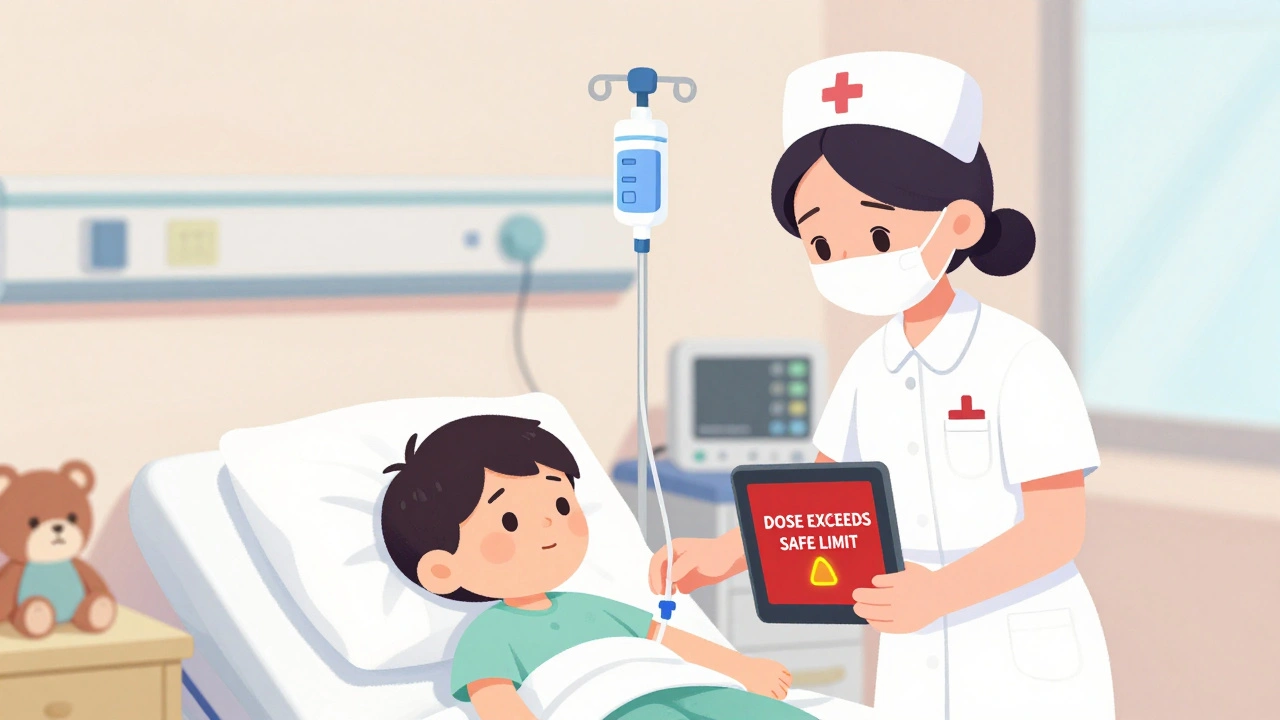
The healthcare world is slowly realizing that human checks alone aren’t enough. Technology is stepping in-but not to replace people, to support them. Barcode scanning at the bedside is now standard in most large hospitals. Before giving a drug, the nurse scans the patient’s wristband and the medication’s barcode. If the system says, “This insulin doesn’t match the order,” it stops everything. No guesswork. No assumptions. Infusion pumps with built-in drug libraries are another game-changer. If a nurse tries to program a dose higher than the safe limit, the pump won’t allow it. For example, if someone tries to set an insulin drip at 100 units/hour instead of 10, the system flags it immediately. The VHA is rolling out full barcode and smart pump integration across all its facilities by December 2024. This doesn’t eliminate double checks-it refines them. Now, the second person verifies the system’s alert, not just the paper order. For chemotherapy, electronic prescribing and automated dispensing cabinets reduce errors before the drug even leaves the pharmacy. But even with all this tech, human judgment still matters. A nurse still needs to check if the patient looks pale, if their heart rate is dropping, or if the IV site is swelling. Machines can’t replace clinical intuition.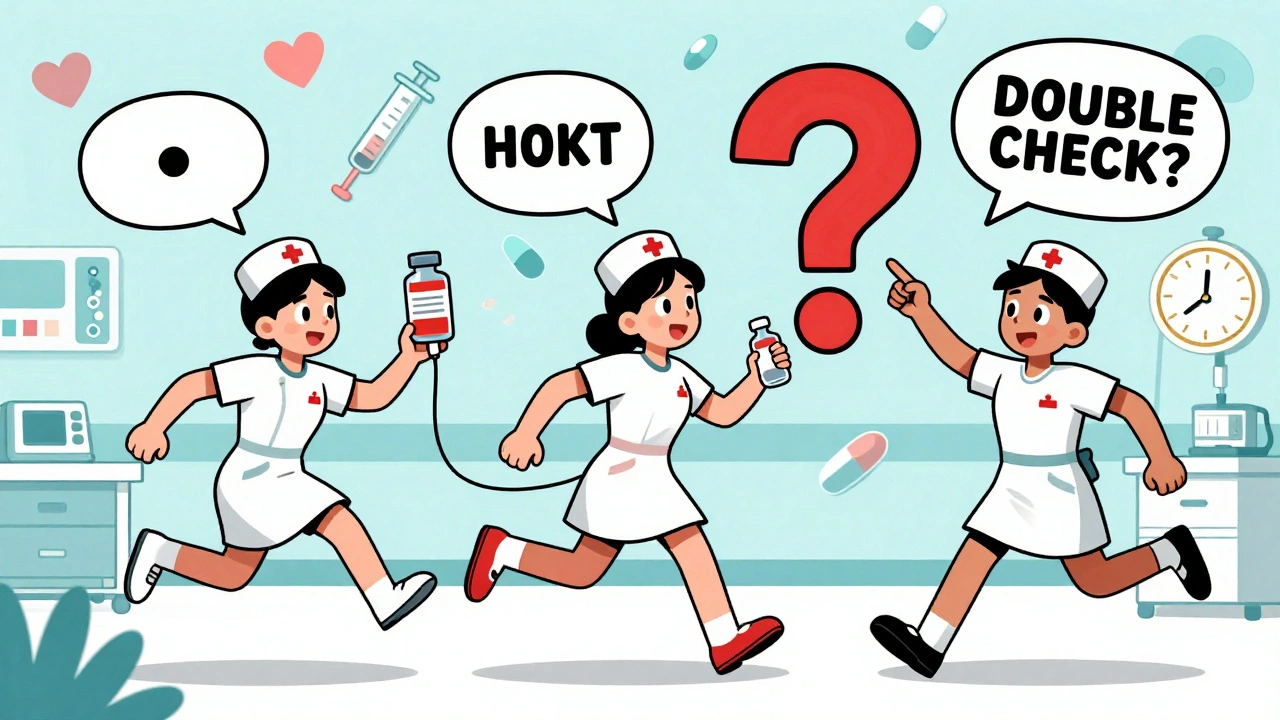
What’s Changing Now
The old model-“double-check everything high-risk”-is being replaced with a smarter one: “double-check only where it matters most.” ISMP now advises targeting verification at the most dangerous points:- IV opioids
- IV insulin
- IV heparin
- Chemotherapy infusions
What You Can Do
If you’re a healthcare worker, never rush a double check. If you’re the second person, don’t just sign off. Ask questions. Look at the original order. Do the math yourself. If you’re unsure, stop. Say something. If you’re a patient or family member, don’t be afraid to ask: “Are you double-checking this medication?” You have the right to know. Your life might depend on it. Hospitals need to stop treating double checks as a checkbox. They need to treat them as a lifeline.Which medications absolutely require a double check?
Medications that require mandatory double verification include IV insulin, IV heparin, concentrated potassium chloride, IV opioids (like fentanyl or morphine), and chemotherapy agents. In pediatric and neonatal units, all cardiac medications are subject to double checks. Some institutions also include IV calcium, epinephrine infusions, and neuromuscular blocking agents based on internal risk assessments.
Can a pharmacist and nurse do the double check together?
Yes, but only if they perform independent verification. If the pharmacist checks the order and the nurse just confirms what the pharmacist says, it’s not a true double check. Both must review the patient’s ID, the medication label, the dose calculation, and the route without influencing each other. The pharmacist should verify the prescription and preparation; the nurse should verify the patient and administration.
Are double checks always effective?
Not always. Studies show that when double checks are rushed, poorly trained, or done in unison, they fail as often as they succeed. The biggest problem is workload-nurses skip them when they’re short-staffed. The key is not doing more checks, but doing them right. Targeting them at the highest-risk medications and pairing them with technology like barcode scanning improves outcomes significantly.
What’s the difference between a double check and a barcode scan?
A double check is a manual, human-driven process where two people verify the medication independently. A barcode scan is a technology-based system that electronically matches the patient, drug, dose, and route. Barcode scanning catches mismatches faster and with fewer distractions. Double checks are better for spotting mislabeled vials or complex dosing errors that systems might miss. The best safety systems use both.
Why don’t all hospitals require double checks for every high-risk drug?
Because it’s not practical-and not always safer. Requiring double checks for every high-alert drug leads to fatigue, workarounds, and false confidence. Organizations now focus on the top 5-10 medications that cause the most harm. For others, better labeling, standardized concentrations, automated dispensing, and smart pumps are more effective and sustainable solutions.


18 Comments
Double checks save lives. Period. No excuses.
Just do it.
I’ve seen nurses skip double checks during night shifts because they’re exhausted. It’s not laziness-it’s burnout. We need better staffing, not just more rules.
Oh honey, we’re still doing double checks on paper in 2024? 🙄
My hospital’s barcode system flagged a wrong insulin dose before the nurse even touched the vial. Technology > tired humans.
But hey, at least we’re not using a clipboard and a prayer anymore.
Let me tell you something, y’all. I worked in a Tier-1 trauma center in Delhi and we didn’t have barcode scanners, we didn’t have smart pumps, we had ONE nurse per 12 beds and a stack of MARs thicker than my laptop. We did triple checks. Sometimes quadruple. Because if you mess up a potassium chloride vial, the patient doesn’t just die-they die screaming. And you hear it. In your dreams. For years. So don’t come here talking about ‘targeted’ checks. When you’re holding the syringe and the kid’s heart just stops? You don’t get to pick which mistakes matter. Every single one matters. And if your system can’t handle it? Then your system is broken. Not the nurses.
I’ve seen new grads terrified to speak up during double checks. We need to make it safe to say, ‘Wait, something’s off.’ Not just because it’s policy-but because we’re a team. Everyone’s voice counts. Even the student.
The very notion of ‘double-checking’ is a pathetic capitulation to human fallibility. A truly rational system would eliminate the possibility of error through deterministic protocols-not rely on the whims of overworked, emotionally depleted individuals. We are not monks in a scriptorium. We are engineers of life. And yet, we treat medicine like a game of telephone.
I’ve worked in 7 hospitals. Every single one had double checks. Every single one still had preventable deaths. So what’s the point? It’s theater. We’re just checking boxes to make administrators feel better. The real problem? The system is designed to fail.
I’ve seen nurses do double checks while scrolling TikTok. The second person just says ‘looks good’ and signs. It’s a joke. We’re not safer-we’re just more confident we’re safe. Dangerous.
This whole post is just a glorified HR compliance pamphlet. You think a barcode scan is magic? It’s just another layer of bureaucracy that makes nurses feel like robots. Real safety comes from culture-not tech. And we don’t have that. We have fear, overwork, and silence.
I don’t get why we still do manual checks. If the system says it’s wrong, why are we even arguing? Just let the machine stop it.
Honestly? I think the whole ‘double-check’ thing is just a way to make nurses feel useful while the real problems-underfunding, understaffing, poor training-go ignored. 🤷♀️
The real question isn’t whether we need double checks but whether we’re willing to accept that medicine is inherently uncertain. We want control where none exists. We build systems to pretend we can eliminate risk. But death doesn’t care about your protocols. It only cares if you were listening.
If you’re skipping checks because you’re tired then you shouldn’t be working. End of story. People die because you’re lazy. Stop making excuses.
I work in a small ER and we do double checks on everything. Even the damn Tylenol. 🤯
One time a nurse almost gave 10x insulin because the label was smudged. The second nurse caught it. We hugged. Then we cried. Then we went back to work.
That’s why we do it.
i think we need to stop blaming nurses and start fixing the system. we r overworked and underpaid and still expected to be perfect. double checks are good but they cant fix everything. we need more staff and less paperwork
The epistemological foundation of the double-check paradigm is predicated upon an anthropocentric fallacy-that human cognition, even when duplicated, can reliably transcend systemic dysfunction. One must ask: is the verification process a safeguard, or merely a ritualized appeasement of institutional guilt? The reliance on bilateral human observation in an environment saturated with cognitive load and temporal compression does not mitigate error-it merely redistributes it across the labor force. The true solution lies not in redundancy of personnel, but in the architecture of decisional resistance embedded within the technological substrate.
America’s healthcare is a mess. We’re doing double checks like it’s 1999. In China, they use AI to auto-verify every dose. We’re still using paper. Pathetic.
We can do better. We HAVE to. Every time someone catches a mistake before it happens, it’s a win. Keep speaking up. Keep asking questions. Keep showing up. You’re not just a nurse-you’re someone’s lifeline 💪❤️