
Medication Side Effect Assessment Tool
Assess Your Medication Side Effects
This tool uses the FDA's Naranjo Scale to help determine if your side effects warrant a second medical opinion. Answer the questions below to get a personalized assessment.
Did your symptoms begin within 72 hours of starting the medication?
Are your side effects interfering with 2 or more areas of daily life?
Have you waited longer than the standard treatment window without improvement?
Did your weight change by more than 5% in the past two weeks?
Are you experiencing neurological symptoms?
Are you taking new supplements or over-the-counter medications?
Your Assessment Result
Recommendation:
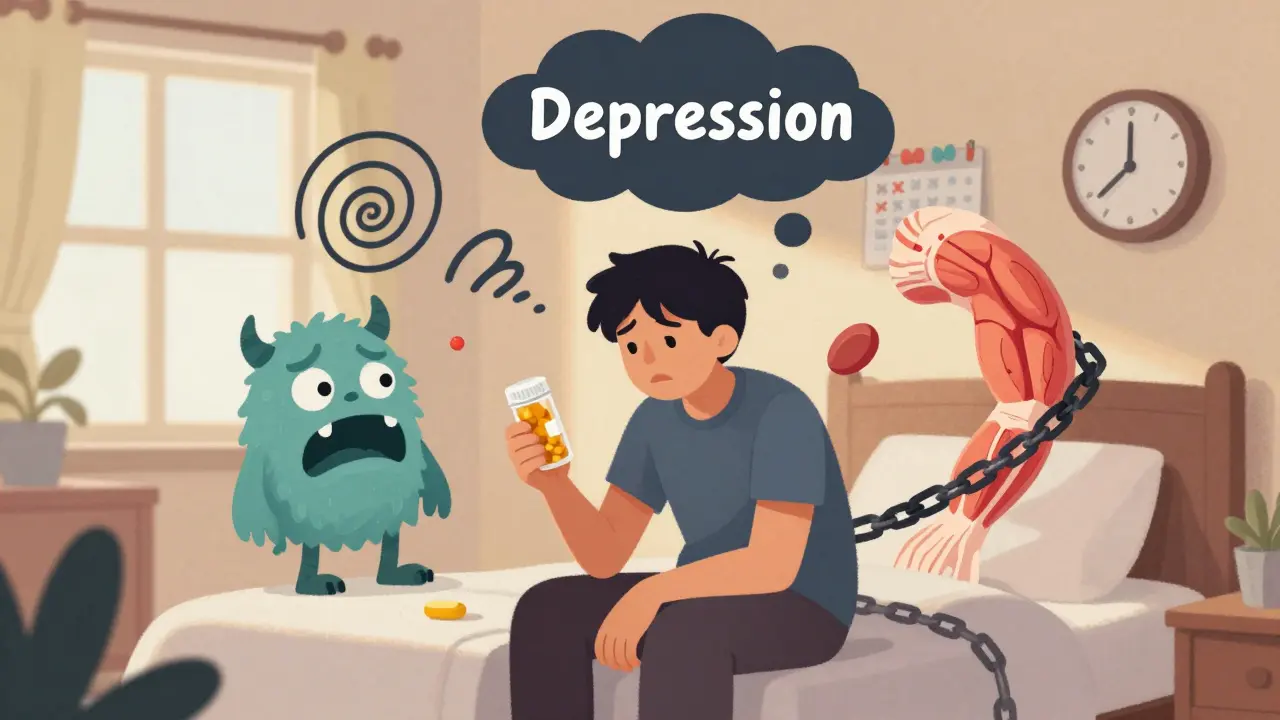
Feeling worse after starting a new medication isn’t normal - it’s a red flag. You weren’t expecting to feel dizzy every morning, or to lose your appetite so badly you’re skipping meals. Maybe your muscles ache like you’ve run a marathon when you haven’t moved much at all. Or perhaps the depression you were trying to treat just won’t lift, no matter how long you’ve been on the pills. If this sounds familiar, you’re not overreacting. You might need a second opinion.
It’s Not Just in Your Head - Side Effects Can Be Dangerous
Many people hesitate to question their doctor’s prescription. They worry they’ll be seen as difficult, or that the side effects will go away on their own. But the truth is, medication side effects aren’t always temporary. In fact, 42% of patients who sought a second opinion discovered serious problems with their original treatment plan, according to Solace Health’s 2023 data. Some needed immediate dosage changes. Others were on drugs that simply didn’t belong to them - either because of a misdiagnosis or a dangerous interaction they didn’t know about.Medication errors are one of the leading causes of emergency room visits in the U.S., with over 1.3 million cases each year. And it’s not just rare cases. Antidepressants, blood thinners, and diabetes meds are the most common culprits behind second opinion requests. If you’re on one of these, and something feels off, don’t wait.
When Exactly Should You Ask for a Second Opinion?
There’s no single rule, but here are clear signs it’s time to get another doctor’s take:- Your symptoms started within 72 hours of taking the new drug. If you felt sick, confused, or unusually tired right after your first dose, that’s a strong clue the medication is the cause.
- Side effects are stopping you from living. Can you work? Sleep? Talk to your family? If your daily life is hit in two or more areas - like work, relationships, or self-care - that’s a major red flag. The American Medical Association says this level of disruption should trigger a second opinion.
- You’ve waited too long without improvement. Antidepressants? Give it 4-6 weeks. Cholesterol meds? 2-3 months. Osteoporosis drugs? 3-6 months. If you’re past that window and still feeling awful, the treatment isn’t working - or it’s doing more harm than good.
- Your weight changed by more than 5% in two weeks - up or down. That’s not normal. It could mean your body is struggling to process the drug.
- You’re experiencing neurological symptoms - tremors, memory lapses, confusion, or sudden mood swings. These aren’t just "side effects"; they can be signs of toxicity.
- You found out you’re pregnant - or started taking a new supplement, herb, or OTC painkiller. Many drug interactions aren’t obvious. A new supplement you thought was harmless could be mixing dangerously with your prescription.
One of the most underused tools? Timing. If your symptoms began the day after you started the drug, there’s a 78% chance it’s the cause, according to Harvard Medical School research. Write down when each symptom started. That simple step alone helps doctors spot patterns faster.
What Makes a Second Opinion Actually Help?
Not all second opinions are equal. The difference between a wasted appointment and a life-changing one comes down to preparation.A 2024 study in the Annals of Internal Medicine found that patients who brought detailed records were 63% more likely to get a meaningful change in their treatment. Here’s what you need to bring:
- A complete medication list - every pill, patch, vitamin, and herbal supplement. Include exact names and dosages. Don’t say "I take fish oil." Say "I take Nordic Naturals Omega-3, 1,000 mg daily."
- A symptom diary - track each side effect: when it happened, how bad it was (use a 1-10 scale), how long it lasted, and what you were doing when it hit. Did the dizziness come after lunch? Did the nausea only happen when you took the pill on an empty stomach?
- Recent lab results - especially if you’re on blood thinners, diabetes meds, or psychiatric drugs. Bring results from the last 30 days. If you don’t have them, ask your current doctor for copies.
- What you’ve tried so far - Did you switch the time you take the pill? Eat with it? Cut the dose? Write it down. Doctors need to know what’s already been tried.
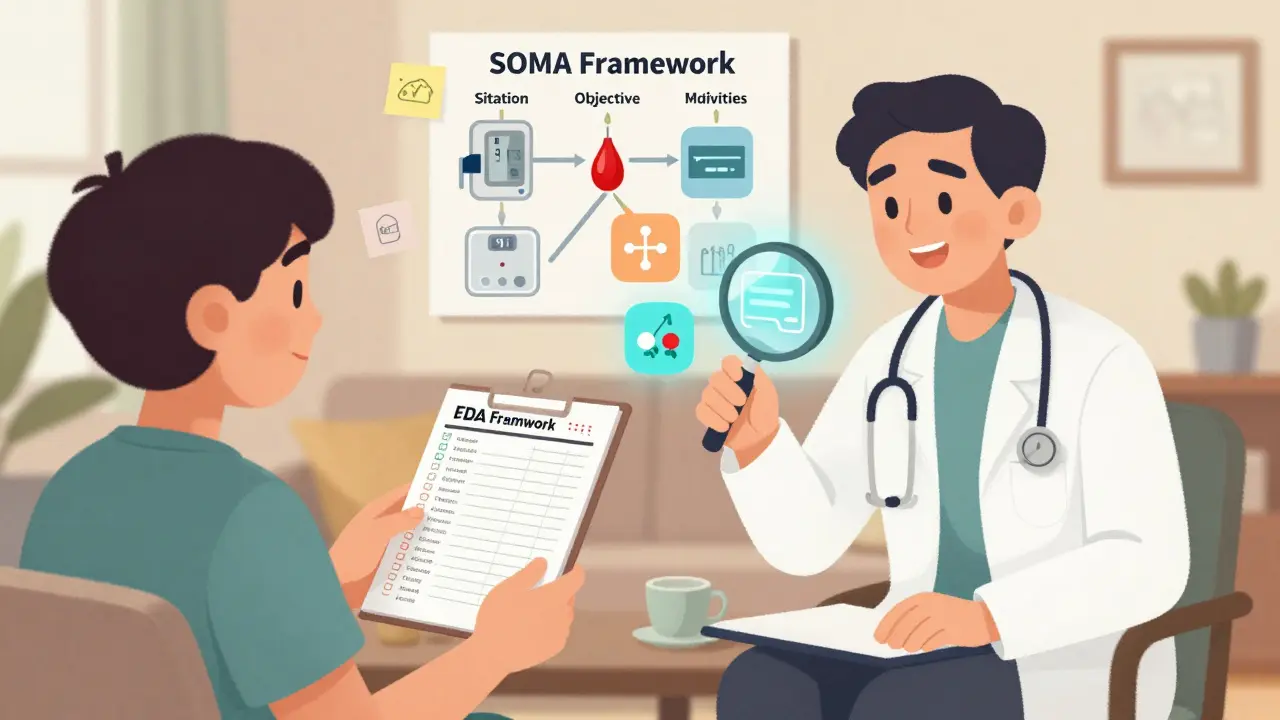
Use the SOMA framework when you talk: Situation (when the symptom happens), Objective (your weight, blood pressure, sleep hours), Modifications (what you changed), Activities affected (what you can’t do anymore). This structure cuts through the noise and helps the doctor focus on what matters.
What Happens During a Second Opinion?
The second doctor won’t just nod and say "you’re right." They’ll dig. They’ll check your history, review your labs, look for drug interactions using updated databases (like the FDA’s 14,372-interaction list), and possibly run new tests. In psychiatric cases, they might suggest switching from an SSRI to a different class of antidepressant. For statin-related muscle pain, they might switch you to ezetimibe - a non-statin option that helped 58% of Reddit users in a 2024 analysis.Some people think second opinions are about finding a "better doctor." They’re not. They’re about finding the right treatment. A 2023 JAMA Internal Medicine study showed that 37.8% of psychiatric medication reviews led to major changes - far higher than for heart or hormone drugs. That’s because mental health meds have narrow margins, and small changes make big differences.
And here’s something surprising: 89% of patients who sought second opinions said their concerns were taken more seriously the second time around. Many doctors use the "teach-back" method - asking you to explain your symptoms in your own words. It’s not about testing you. It’s about making sure they really understand what you’re going through.
What Doesn’t Work - And When a Second Opinion Won’t Help
Not every situation calls for a second opinion. If you’re on chemotherapy or other high-risk cancer treatments, the chance of changing your regimen is low - only 9.3% of cases led to major adjustments, according to the American Society of Clinical Oncology. That’s because cancer drugs have very little room for error. But even then, a second opinion can help clarify whether the side effects are normal for your treatment or something new.Also, don’t wait too long. Patients who sought help within 30 days of symptoms starting saw their side effects resolve in an average of 47 days. Those who waited over 90 days? It took 112 days - more than three times longer.
How to Get One - And What It Costs
Getting a second opinion used to mean months of waiting. Now, telehealth platforms like Solace Health can connect you with specialists in under two weeks. Psychiatric second opinions average 18.7 days. Primary care consultations? Around 11.3 days.Medicare now covers second opinions for 28 types of medication regimens under its 2024 fee schedule. The typical reimbursement is $187.42 for a 30-minute consult. Private insurers often cover it too - check your plan. Some hospitals now have clinical pharmacists dedicated to reviewing side effects - a 32% increase since 2019.
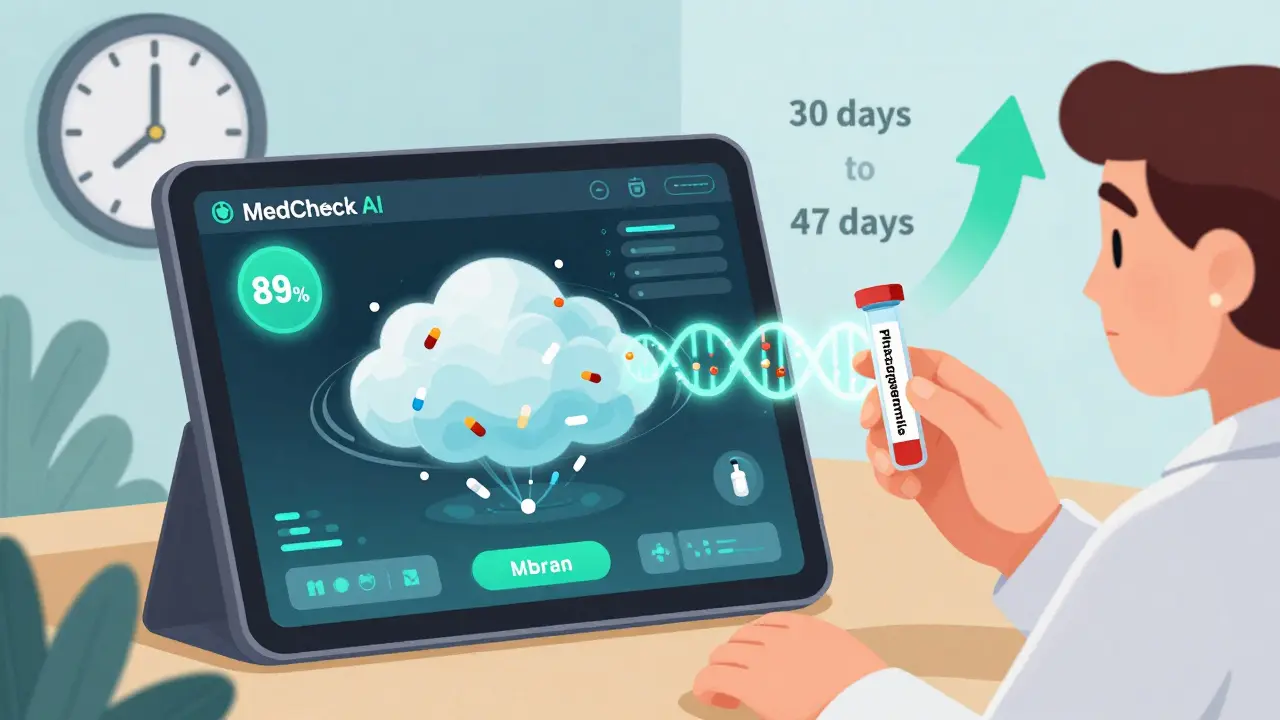
And now, there’s MedCheck AI - an FDA-approved tool that lets you upload your meds and symptoms for a preliminary analysis. It’s not a replacement for a doctor, but it flags 89% of potential side effect patterns correctly. Use it to prepare before your appointment.
What Comes Next
The future of medication safety is personal. Pharmacogenomic testing - checking your genes to see how you’ll react to drugs - is expanding fast. The Clinical Pharmacogenetics Implementation Consortium now covers 42 gene-drug pairs, up from 28 in 2022. For some people, this could cut side effects by nearly half.Right now, you don’t need a fancy test to protect yourself. You just need to speak up. If your medication is making you feel worse, not better - you have the right to ask for another opinion. It’s not disrespectful. It’s smart. And it could save you from a hospital stay, a dangerous interaction, or years of unnecessary suffering.
You know your body better than anyone. Don’t let a prescription silence your instincts.
How do I know if my side effects are serious enough for a second opinion?
If your side effects are interfering with two or more areas of daily life - like work, sleep, relationships, or self-care - it’s serious enough. Other red flags include symptoms that started within 72 hours of taking the drug, unexplained weight loss or gain over 5% in two weeks, neurological changes like tremors or confusion, or no improvement after the standard treatment window (e.g., 4-6 weeks for antidepressants). The FDA’s Naranjo Scale scores above 5 indicate a probable drug-related reaction, which warrants specialist review.
Can I get a second opinion without telling my current doctor?
Yes, you can. You don’t need permission to seek another opinion. However, it’s often helpful to share your records with the second doctor. Most doctors expect and support second opinions - the American Medical Association encourages them when side effects affect quality of life. Request copies of your lab results, medication list, and notes from your current provider before your appointment to make the process smoother.
What if the second doctor says I don’t need to change anything?
That’s still valuable information. Sometimes, side effects are temporary or less dangerous than they feel. A second doctor can help you understand whether your symptoms are normal for the medication, how long they might last, and how to manage them safely. Even if no change is made, you’ll leave with clearer answers and a stronger plan - not just fear.
Do I need to bring all my medications to the appointment?
You don’t need to bring the bottles, but you do need exact details: brand names, dosages, how often you take them, and whether you take them with food. Many side effects come from interactions between prescriptions and over-the-counter supplements - like St. John’s Wort with antidepressants. A detailed list prevents guesswork. Use a notebook or phone app to list everything, including vitamins, herbs, and painkillers.
How long does a second opinion usually take?
Scheduling typically takes 2-3 weeks, depending on the specialty. Psychiatric consultations average 18.7 days, while primary care appointments may be available in under 12 days. Telehealth services can reduce this to 7-10 days. Once you have the appointment, the consultation itself usually lasts 30-45 minutes. Follow-up may be needed if new tests are ordered.
Is a second opinion covered by insurance?
Yes, in many cases. Medicare covers second opinions for 28 specialized medication categories under its 2024 fee schedule, with reimbursement around $187 for a 30-minute consult. Most private insurers also cover second opinions for medication-related concerns, especially if they’re deemed medically necessary. Always check with your insurer beforehand - and ask if they require a referral from your current doctor.
Can AI tools really help with medication side effects?
Yes. The FDA-approved MedCheck AI platform lets patients upload their medication list and symptom history for preliminary analysis. It identifies potential drug-side effect patterns with 89% accuracy. It’s not a replacement for a doctor, but it helps you ask better questions and prepares you for your appointment. It can flag interactions you didn’t know about, like mixing a common painkiller with your blood thinner.
What if I’m on a cancer drug and my side effects are bad?
Even with cancer treatments, a second opinion can help. While only 9.3% of oncology cases lead to major changes (due to narrow therapeutic windows), a second opinion can clarify whether your symptoms are expected, how to manage them better, or if a supportive therapy (like anti-nausea meds or dose timing changes) could help. It can also confirm you’re on the right regimen - especially if your diagnosis was complex or recent.



10 Comments
I’ve been on sertraline for 8 weeks, and my hands won’t stop trembling. I thought it was stress… until I started timing it. Every time I took it at 8 AM, the shakes hit by 10. I brought my diary to my next appt - they switched me to bupropion. No more tremors. Don’t ignore the pattern. Write it down. Seriously. :)
THEY DON’T WANT YOU TO KNOW THIS BUT BIG PHARMA LOVES YOU SICK. They pump out pills that make you dependent and then charge you $800 for a ‘second opinion’ so you keep buying. MedCheck AI? That’s a spy tool. They’re tracking your meds to sell to insurers. I’m done. I’m going herbal. Turmeric, garlic, and prayer. 🌿💊🩸
Bro, I was on statins for 6 months and felt like I’d been hit by a truck every morning. My doc said ‘it’s normal.’ I went to a pharmacist at CVS who ran a drug interaction check - turns out my fish oil and blood pressure med were dancing together like they were at a rave. Switched to ezetimibe. Now I hike on weekends. Don’t trust the first ‘it’s normal.’ Ask the pharmacist. They know more than you think.
This is so important. I almost didn’t speak up because I didn’t want to seem ‘difficult.’ But after 10 weeks of crushing fatigue on my new antidepressant, I brought my symptom log, lab results, and a list of every supplement I took - even the gummy vitamins. The second doctor spotted a thyroid interaction I didn’t even know existed. Changed my life. You are not being rude. You are being brave. Keep going. 💪
Track your symptoms. Write them down. Bring them. Don’t rely on memory. That’s it.
Of course you feel worse. You took a pill designed for someone with different genes, different liver enzymes, different life. You’re not broken. The system is. You’re just collateral damage in a profit-driven machine that treats bodies like widgets. And now you’re supposed to pay $187 to be told what you already knew? Pathetic.
Let’s deconstruct this paradigm of medical authority, shall we? The very notion of a ‘second opinion’ implies a hierarchy - one doctor as oracle, another as interpreter. But what if the real authority is your somatic intelligence? Your body doesn’t lie. It screams in tremors, weight shifts, insomnia, and emotional voids. The pharmaceutical-industrial complex weaponizes placebo and pathologizes normal human variation. Your ‘side effects’? They’re not side effects - they’re signals. You’re not a patient. You’re a sentient organism resisting chemical colonization. The real question isn’t ‘when to seek a second opinion’ - it’s ‘why did you ever trust the first?’ 🌌💊
They told me my anxiety was ‘just stress.’ I was on 50mg of fluoxetine for 10 weeks. My heart raced every time I stood up. I lost 12 pounds. I didn’t eat. I didn’t talk. I cried in the shower. I brought my log to a new doctor - she looked at it and said, ‘You’re not depressed. You’re allergic to this drug.’ We switched. Within 3 days, I slept. Within 2 weeks, I laughed. Your body knows. Trust it. Don’t let a 7-minute consult silence your truth.
In India, many patients do not have access to second opinions due to cost and lack of specialists. However, the principles outlined here - documenting symptoms, listing all medications, and using structured frameworks like SOMA - are universally applicable. Even in resource-limited settings, writing down symptoms in a notebook and sharing it with a pharmacist can lead to life-saving adjustments. Knowledge is power, even without insurance.
Here’s the thing nobody says: the second opinion isn’t about finding a better doctor - it’s about finding a better version of yourself. The first doctor sees a chart. The second sees a person. I went in thinking I needed a new pill. I left realizing I needed to stop taking pills that made me feel like a ghost. The AI tool flagged a interaction between my melatonin and my blood thinner - I never would’ve connected them. But more than that, the second doctor asked me: ‘What did you lose when you started this?’ That question changed everything. We don’t just treat bodies. We restore lives. And sometimes, that means saying no - to a drug, to a timeline, to a system that says ‘wait and see.’ Don’t wait. See for yourself.