
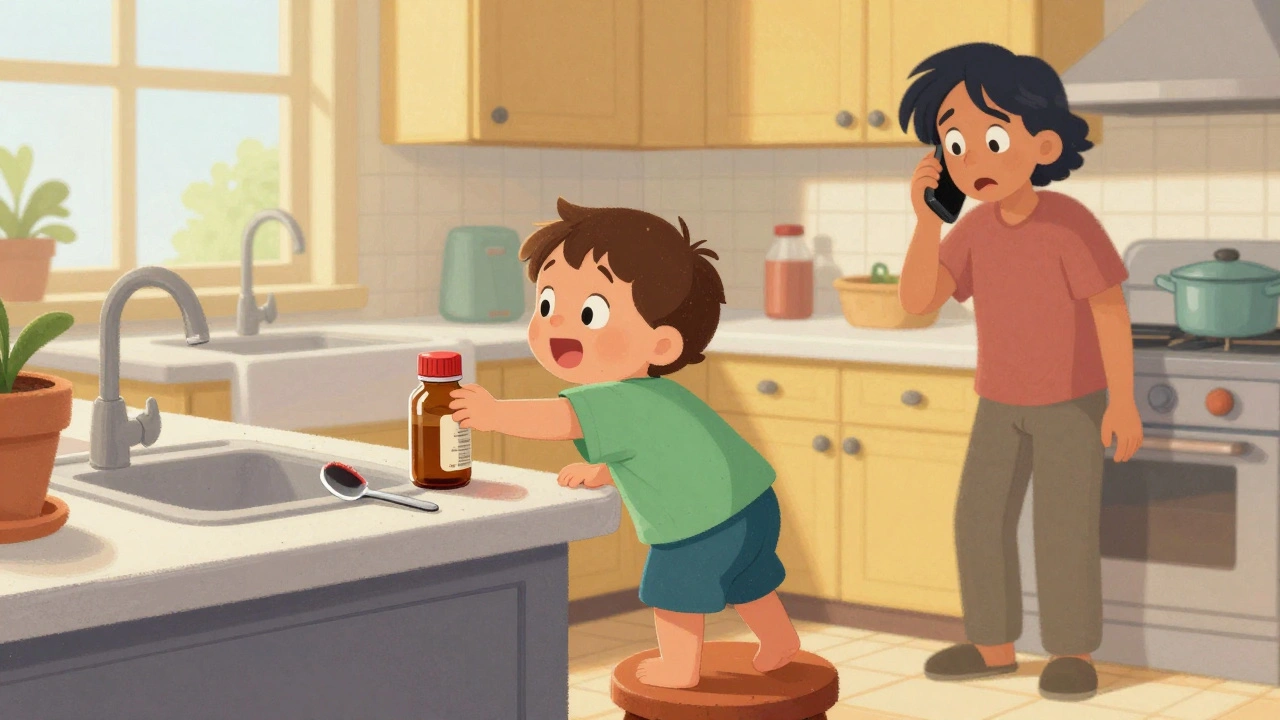
Every year, more than 90 percent of accidental medication poisonings in children happen right in the home-often while a parent or caregiver is nearby. It’s not a matter of neglect. It’s a matter of oversight. A pill left on the counter. A purse on the couch. A bottle of liquid medicine sitting on the bathroom counter while you rinse the sink. These aren’t mistakes made by careless people. They’re mistakes made by tired, busy, distracted adults-people who love their kids but don’t realize how quickly a toddler can climb, reach, and swallow.
Most Poisonings Happen at Home, Not in Public
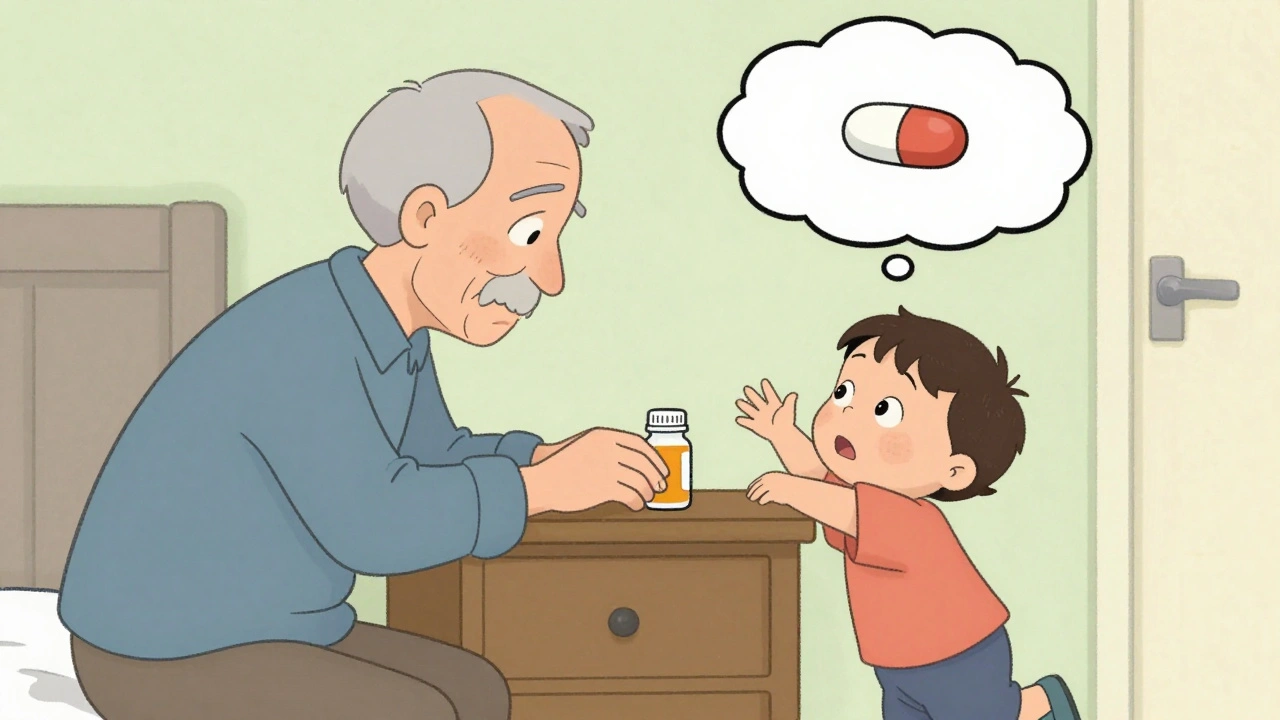
You might think poisonings happen when kids get into medicine at daycare, school, or a friend’s house. But the data says otherwise. According to Hassenfeld Children’s Hospital at NYU Langone Health, nearly all incidents occur where children feel safest: at home. And the most common culprits? Over-the-counter meds like acetaminophen (Tylenol), ibuprofen (Motrin, Advil), and aspirin. These aren’t dangerous drugs in the way opioids or sedatives are. They’re the kind of medicine you keep on hand for fevers, headaches, or sore throats. That’s exactly why they’re so risky.Even more alarming: 30 percent of poisonings happen because visitors-grandparents, babysitters, or relatives-leave their own medications in purses, coat pockets, or bedside tables. One study found households with frequent visitors had a 35 percent higher rate of accidental ingestion. A grandparent might think, “I’ll just leave my pills on the nightstand,” not realizing their 18-month-old grandchild can pull themselves up on the dresser, grab the bottle, and pop the cap open.
Child-Resistant Isn’t Childproof
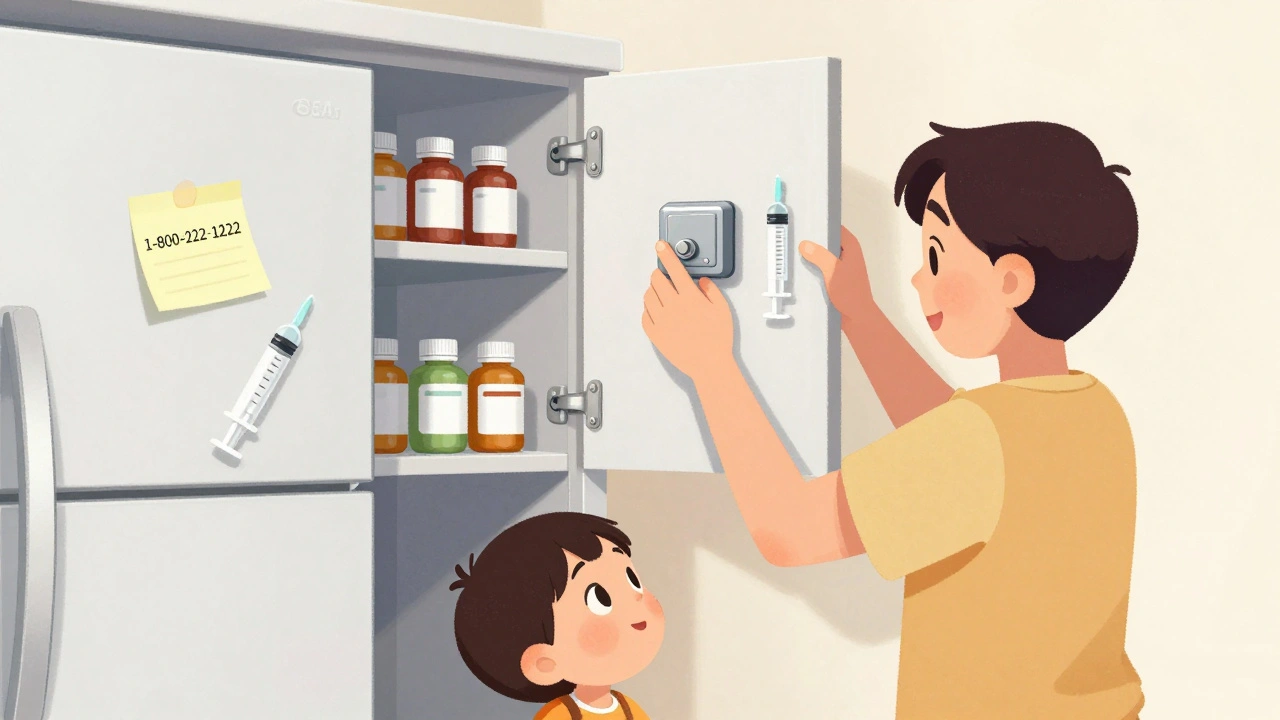
Many parents feel safe because they use bottles labeled “child-resistant.” But here’s the truth: those caps are designed to slow down a curious child, not stop them. Kids as young as 18 months can figure out how to twist, push, or pry them open. A 2022 report from UCSF Benioff Children’s Hospital found that relying solely on child-resistant packaging was one of the top three reasons for preventable poisonings.What works better? Locked cabinets. Not just high shelves. Not just “out of sight.” Actual locks. Automatic-locking safety latches that click shut when the cabinet door closes. These aren’t expensive. You can buy them for under $10 online or at any hardware store. The key is making sure they’re installed on every cabinet where medicine, vitamins, or supplements are stored-even if you think you don’t keep anything dangerous there.
Store Medicines Where Toddlers Can’t Reach-Even If They Can Climb
Most toddlers can reach up to 4 feet. That’s the average height they can grab things from by age two. So if your medicine cabinet is at 48 inches, it’s not safe. The Rural Health Information Hub found that 78 percent of poisonings involved items stored below that height.Experts recommend storing medications in cabinets with magnetic locks placed at least 54 inches above the floor. That’s higher than most toddlers can reach-even if they’re standing on a chair, a stool, or the toilet. But here’s the trick: get down on your hands and knees. Look around your home from your child’s eye level. What do you see? Is the medicine bottle on the counter next to the sink? Is the vitamin jar in the drawer next to the cereal? Is the e-cigarette charger on the nightstand?
Don’t assume you’ve covered all the spots. Kids climb. They pull things down. They open drawers they shouldn’t. A 2021 study from Nationwide Children’s Hospital showed that 25 percent of poisonings happened because medicine was moved from its original container into a pill organizer, a water bottle, or even a candy dish. Never transfer medication unless it’s absolutely necessary-and if you do, lock it up immediately.
Never Call Medicine “Candy”
It’s tempting. You want your child to take their medicine. So you say, “This is like candy,” or “It’s sweet, just like gummies.” But the American Academy of Pediatrics found this increases the chance of a child self-administering medicine by 3.2 times. A child who thinks medicine tastes like candy will actively seek it out. They’ll look for it. They’ll ask for it. They’ll steal it.Instead, say: “This is medicine. It’s not food. Only grown-ups can give it to you.” Be clear. Be consistent. Even if your child is too young to understand now, they’ll remember the rule by the time they’re two.
Use the Right Measuring Tool-No Kitchen Spoons
One of the most common dosing errors? Using a kitchen spoon. A teaspoon from your drawer isn’t the same as a teaspoon from a medicine dropper. Studies show household spoons vary by 20 to 40 percent in volume. That means your child might get twice the dose-or none at all.Always use the measuring device that comes with the medicine: a syringe, a dosing cup, or a marked dropper. Keep it with the bottle. If you lose it, get a new one from the pharmacy. They give them out for free. And never guess. If you’re unsure how much to give, call your doctor or Poison Control before you give a single drop.
Keep E-Cigarettes and Nicotine Liquid Locked Up
This one is deadly serious. Liquid nicotine from e-cigarettes is extremely toxic to toddlers. As little as 0.5 milliliters can be fatal. That’s less than a teaspoon. And it often looks like flavored juice-blueberry, mint, mango. Kids are drawn to the bright colors and sweet smells.Store e-cigarettes and nicotine pods in the same locked cabinet as your medicine. Never leave them on a table, in a drawer, or in a bag. Even a used device with residual liquid can be dangerous. If you vape, treat it like you would a bottle of bleach.
Know When and Where Poisonings Happen
Most people assume poisonings happen at night, when kids are sleepy and caregivers are tired. But Poison Control’s 2023 data shows 58 percent of incidents occur between noon and 6 p.m.-the busiest, most chaotic part of the day. That’s when you’re cooking, answering the phone, checking emails, or helping an older sibling with homework.That’s also when 40 percent of poisonings occur: when you’re actively using a medicine or cleaning up after a dose, and you get distracted. You turn away for five seconds to answer the door. You put the bottle down while you wipe your hands. That’s all it takes.
Make a rule: never leave medicine unattended. Even for a second. If you’re giving your child medicine, do it at the kitchen table, not the couch. Put the bottle down only after you’ve put the cap back on and locked it away.
Prepare for Visitors and Travel
Grandparents, babysitters, relatives-they’re not the enemy. But they don’t know your rules. So before they come over, take five minutes to lock up your medicine. Put a reminder on your fridge: “Medicines locked. Please don’t leave pills in purses.”When you travel, bring your own lockbox. Don’t rely on hotel drawers or Airbnb cabinets. Pack your child’s medicine in a small, locked container. Keep it with you, not in the suitcase. If you’re staying overnight, ask the host to show you where they keep their own medicine-and make sure yours is stored separately.
Post the Poison Control Number-Everywhere
The number is 1-800-222-1222. It’s free. It’s available 24/7. And it’s the fastest way to get help if your child swallows something they shouldn’t.Don’t wait to see if they’re okay. Don’t Google it. Don’t call your pediatrician first. Call Poison Control immediately. Their 2023 report showed that getting advice within five minutes improves outcomes by 89 percent. That’s not a small number. That’s life-changing.
Write the number on a sticky note. Put it on the fridge. The medicine cabinet. The back of the front door. The inside of your wallet. Post it on your phone’s lock screen. If you have a smart speaker, say, “Alexa, save Poison Control number.”
Learn Basic Emergency Skills
Poisoning isn’t always about vomiting or drowsiness. Sometimes, it’s about seizures, breathing trouble, or cardiac arrest. That’s why CPR and the Heimlich maneuver matter. The Children’s Safety Network found that 12 percent of severe poisoning cases need immediate intervention before emergency help arrives.You don’t need to be a nurse. You just need to know what to do. Take a free online course from the American Heart Association. Or sign up for a local class through your hospital or community center. It takes two hours. It could save your child’s life.
What to Do If Your Child Swallows Medicine
1. Don’t panic. Stay calm. Your child will pick up on your stress.2. Don’t make them vomit. That can cause more harm.
3. Call Poison Control immediately. 1-800-222-1222. Or use the webPOISONCONTROL online tool.
4. Have the medicine bottle ready. Bring it with you to the phone. Tell them the name, how much was taken, and when.
5. Follow their instructions. They’ll tell you whether to go to the ER, wait, or monitor at home.
6. Don’t wait. Even if your child seems fine. Some poisons don’t show symptoms for hours.
What’s New in Prevention
Some hospitals and pharmacies are now offering free medication lock boxes to families with toddlers. One program in Ohio saw a 41 percent drop in access incidents after handing out these boxes. Others are testing smart pill containers that send alerts to your phone if the cap is opened when no one’s around. Pilot programs show a 63 percent reduction in unsupervised access.These aren’t science fiction. They’re real tools available now. Ask your pharmacist if they offer lock boxes. Check with your local children’s hospital. You don’t have to wait for the perfect solution. Start with what works today: lock it up, keep it out of sight, and know the number.
Final Thought: It’s Not About Being Perfect
You don’t need to be a superhero. You just need to be consistent. Lock the cabinet. Don’t leave medicine on the counter. Call Poison Control without hesitation. Teach your child that medicine isn’t candy. These aren’t big actions. But they’re the ones that save lives.Every child who survives a poisoning because their parent locked the cabinet is a child who got a second chance. That’s not luck. That’s preparation. And you can do it.
What should I do if my toddler swallows medicine by accident?
Call Poison Control immediately at 1-800-222-1222. Don’t wait to see if they’re okay. Don’t try to make them vomit. Have the medicine bottle ready when you call. They’ll tell you whether to go to the ER, monitor at home, or take other steps. Most cases don’t need a hospital visit if you act fast.
Are child-resistant caps enough to keep kids safe?
No. Child-resistant caps are designed to slow kids down, not stop them. Toddlers as young as 18 months can figure out how to open them. The only reliable method is storing medicine in a locked cabinet or using automatic-locking safety latches on cabinets. Never rely on child-resistant packaging alone.
Why shouldn’t I call medicine “candy” to get my child to take it?
Calling medicine candy makes children more likely to seek it out on their own. Studies show this increases accidental ingestion by 3.2 times. Instead, say, “This is medicine. Only grown-ups can give it to you.” Be clear and consistent. Kids remember rules-even if they don’t understand them yet.
Can I store medicine in my purse or coat pocket?
Never. Thirty percent of poisonings happen because visitors leave medicine in purses, bags, or coat pockets within a child’s reach. Even if you’re only gone for a minute, a toddler can climb, open, and swallow. Always store medicine in a locked cabinet, even if you’re carrying it for the day.
Is it safe to use a kitchen spoon to measure liquid medicine?
No. Kitchen spoons vary by 20 to 40 percent in size, meaning your child could get too much or too little. Always use the measuring tool that comes with the medicine-a syringe, dropper, or dosing cup. If you lost it, ask your pharmacy for a free replacement.
How do I protect my child from liquid nicotine in e-cigarettes?
Store e-cigarettes and nicotine pods in the same locked cabinet as your medicine. As little as 0.5 milliliters of liquid nicotine can be fatal to a toddler. Even used devices can leak. Treat them like you would bleach or cleaning products-never leave them on a table, nightstand, or in a bag.
When are poisonings most likely to happen?
Between 12 p.m. and 6 p.m.-not at night. That’s when parents are busiest: cooking, answering calls, helping older kids. Forty percent of poisonings happen when caregivers are distracted while using medicine. Never leave a bottle unattended, even for a second.
Should I keep the Poison Control number posted at home?
Yes. Homes with the number posted visibly respond 47 percent faster in emergencies. Put it on the fridge, near the medicine cabinet, on the back of the front door, and save it in your phone. The number is 1-800-222-1222. It’s free, available 24/7, and trained professionals will guide you through what to do.
What age group is most at risk for medication poisoning?
Children between 1 and 5 years old make up 67 percent of all accidental medication poisonings. That’s because they’re mobile, curious, and still exploring the world by putting things in their mouths. But even babies under 1 can be at risk if they grab a bottle left within reach.
Can I trust pharmacies to give me safe storage options?
Yes. Many pharmacies now offer free medication lock boxes to families with toddlers. Some hospitals even provide them as part of pediatric safety programs. Ask your pharmacist. You don’t need to buy one. Many are available at no cost.


9 Comments
Just installed lock latches on all cabinets yesterday. So simple, so cheap. Why didn’t I do this sooner? 🙈
This is so true. My sister left her ibuprofen in her purse and my nephew got into it. Scared the hell out of us. Now I lock everything. 🙏💊
It’s not merely about physical security-it’s about reprogramming the cultural narrative around medication. We’ve normalized the casual accessibility of pharmaceuticals in domestic spaces as if they were condiments. The child-resistant cap is a performative gesture of safety, a neoliberal illusion of responsibility that absolves the caregiver of systemic vigilance. The real solution lies in institutionalizing pharmacological containment as a non-negotiable architectural standard, akin to electrical outlet covers or stair gates. Until we treat medicine with the same lethal gravity as firearms or bleach, we are merely rearranging deck chairs on the Titanic. And yes, calling it ‘candy’ is a linguistic betrayal of trust-children don’t need euphemisms; they need boundaries, and boundaries require unyielding consistency, not convenience.
Wow. So you're telling me I'm a bad parent because I keep my vitamins on the nightstand? Maybe if you didn't live in a paranoid dystopia of childproof everything, you'd realize most kids aren't going to eat a bottle of gummy vitamins. 🙄
I’ve been thinking about this a lot since my niece nearly swallowed my blood pressure pills last month. It’s not about being perfect. It’s about creating systems so small that they become automatic. Locking the cabinet isn’t a chore-it’s like buckling your seatbelt. You don’t think about it. You just do it. And when you stop thinking of medicine as ‘something you use,’ and start seeing it as ‘something that can kill,’ everything changes. The real tragedy isn’t the accident-it’s how often we dismiss the risk because it feels too inconvenient to prevent.
Lock boxes? Really? That’s your solution? We’ve been reduced to living in a fortress because society refuses to teach basic responsibility. Next you’ll tell me to install biometric locks on the fridge. At what point do we stop treating children like fragile porcelain and start teaching them consequences? 🤡
Oh wow, I didn't realize my 'meds on the counter' habit was a cry for help. Next you'll tell me to wear a helmet while brushing my teeth. 😌
In India, we keep medicine in high cupboard. No lock needed. Kids learn fast: don't touch what you don't understand. Simple.
So let me get this straight… I’m supposed to turn my house into a prison because some grandparent left their pills in a purse? And now I have to post a number on my fridge like I’m in a hostage situation? I’m just glad I don’t have to install a security system for my toothpaste.