
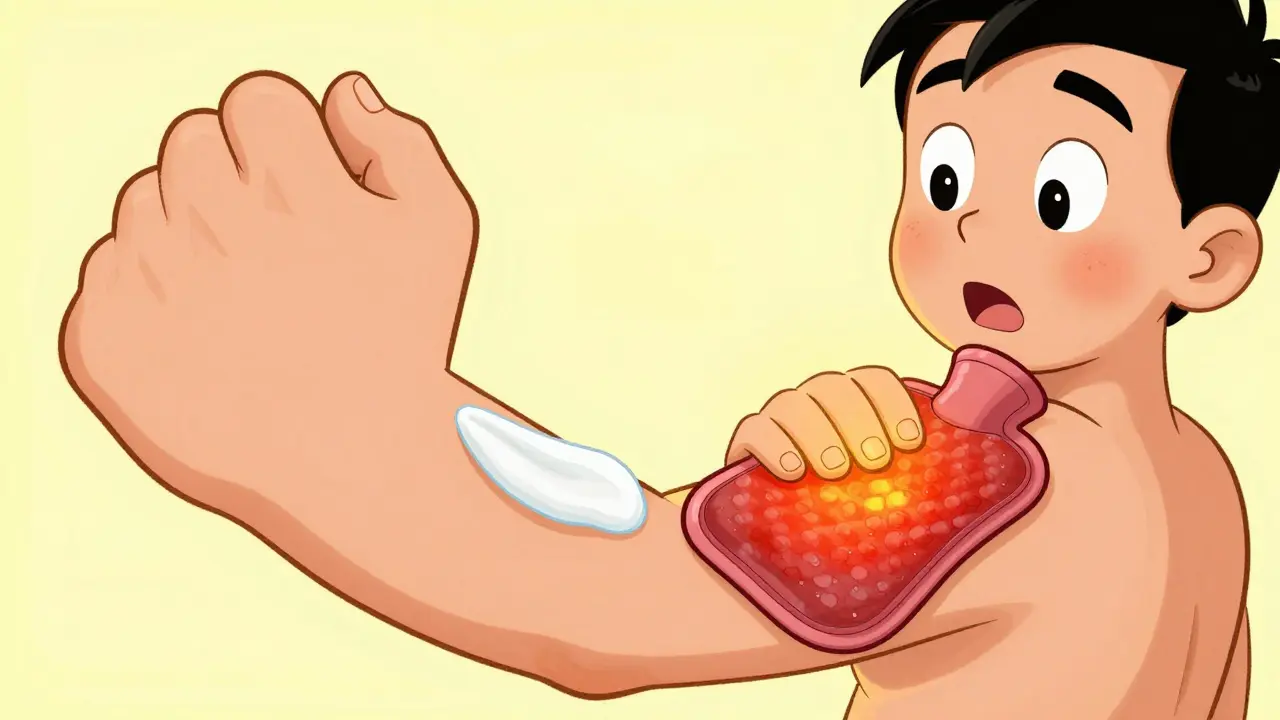
A skin burn from a pain relief cream might sound impossible, but Health Canada confirmed it happened in rare cases. In 2017, they updated labels on menthol-based products after finding links to severe burns. This isn't the only risk-FDA warnings in 2023 flagged illegal lidocaine products with concentrations 5x higher than allowed. OTC topical pain relievers are non-prescription medications applied directly to the skin to target localized pain. They come in creams, gels, and patches, and work by delivering active ingredients to specific areas without entering the bloodstream in large amounts. This makes them safer than oral painkillers for many people, but they still carry risks if misused.
How OTC Topical Pain Relievers Work
Unlike oral painkillers that travel through your whole body, topical pain relievers stay mostly where you apply them. Menthol creates a cooling sensation that distracts nerves from pain signals. Capsaicin depletes substance P, a chemical that sends pain messages to your brain. Salicylates like methyl salicylate reduce inflammation locally. Lidocaine numbs the area by blocking nerve signals. Because these ingredients don't get absorbed into your bloodstream much, they avoid many systemic side effects. For example, while oral NSAIDs like ibuprofen can cause stomach ulcers in 1-2% of regular users, topical versions rarely do. But this doesn't mean they're risk-free.
| Active Ingredient | Typical Concentration | Key Risks | Safety Precautions |
|---|---|---|---|
| Menthol | 10% in products like Aspercreme Heat | Severe skin burns (rare but documented) | Avoid broken skin; don't use with heating pads |
| Methyl salicylate | Up to 30% in Bengay | Salicylate sensitivity reactions | Not for people with aspirin allergy or blood thinners |
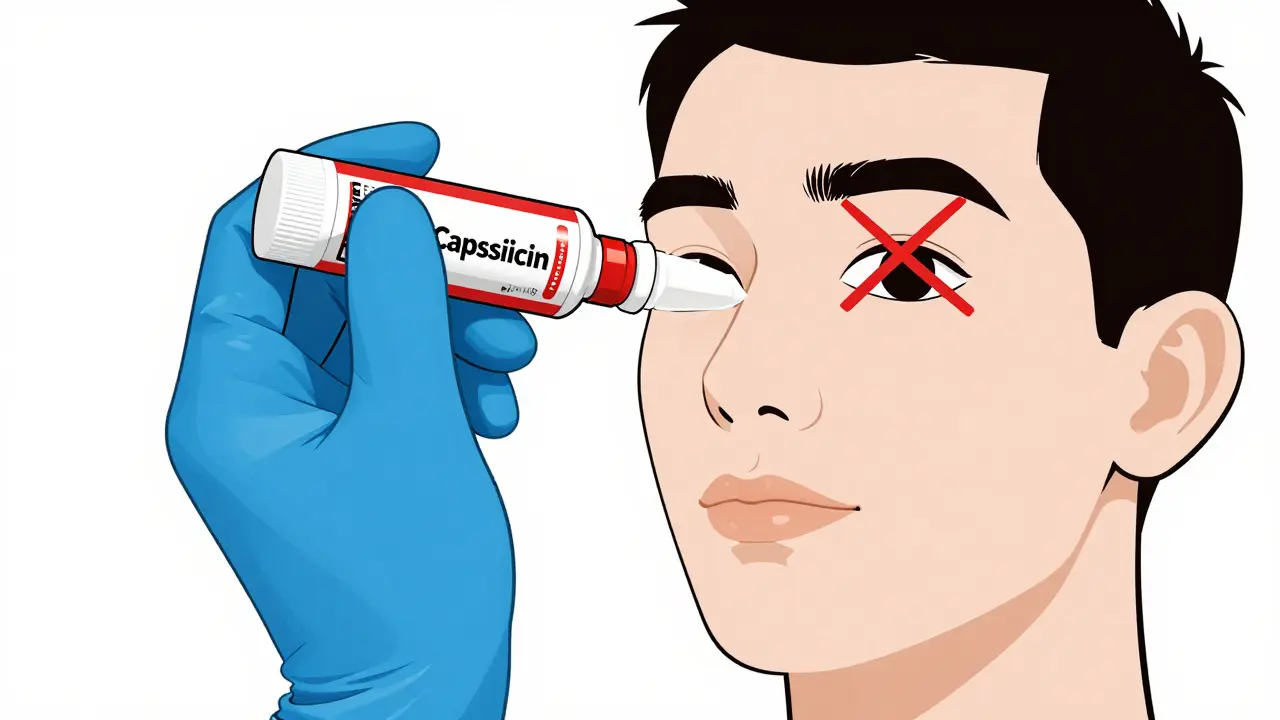
| Capsaicin | 0.025%-0.1% | Initial burning sensation; skin irritation | Wear gloves during application; avoid eyes |
| Lidocaine | Max 4% OTC; illegal products up to 20% | Heart rhythm issues, seizures | Avoid for cosmetic procedures; check product labels |
Ingredient-Specific Risks You Should Know
Menthol is common in products like Aspercreme Heat (10% concentration). Health Canada's 2017 review found it can cause rare but serious skin burns, especially when used with heating pads or on broken skin. No documented burns occurred with methyl salicylate or capsaicin alone.
Methyl salicylate (found in Bengay) is a salicylate similar to aspirin. People with aspirin allergies or those taking blood thinners like warfarin should avoid it. While Health Canada didn't link it to skin burns, it can still cause allergic reactions or stomach issues if absorbed in large amounts.
Capsaicin (0.025%-0.1% in OTC products) comes from chili peppers. It causes an initial burning sensation before reducing pain. The Cleveland Clinic notes you must apply it 3-4 times daily for up to 7 days before feeling relief. Always wear gloves or use a roll-on applicator-touching your eyes after application can cause severe irritation.
Lidocaine is a numbing agent. The FDA sets a 4% maximum for OTC products, but illegal versions sold online contain up to 20%. These are marketed for cosmetic procedures like laser hair removal, but the FDA warns they can cause irregular heartbeat, seizures, and breathing problems. In July 2023, the FDA issued warnings against six companies including Bella's Beauty Supply and DermaRoller Store for selling these dangerous products.
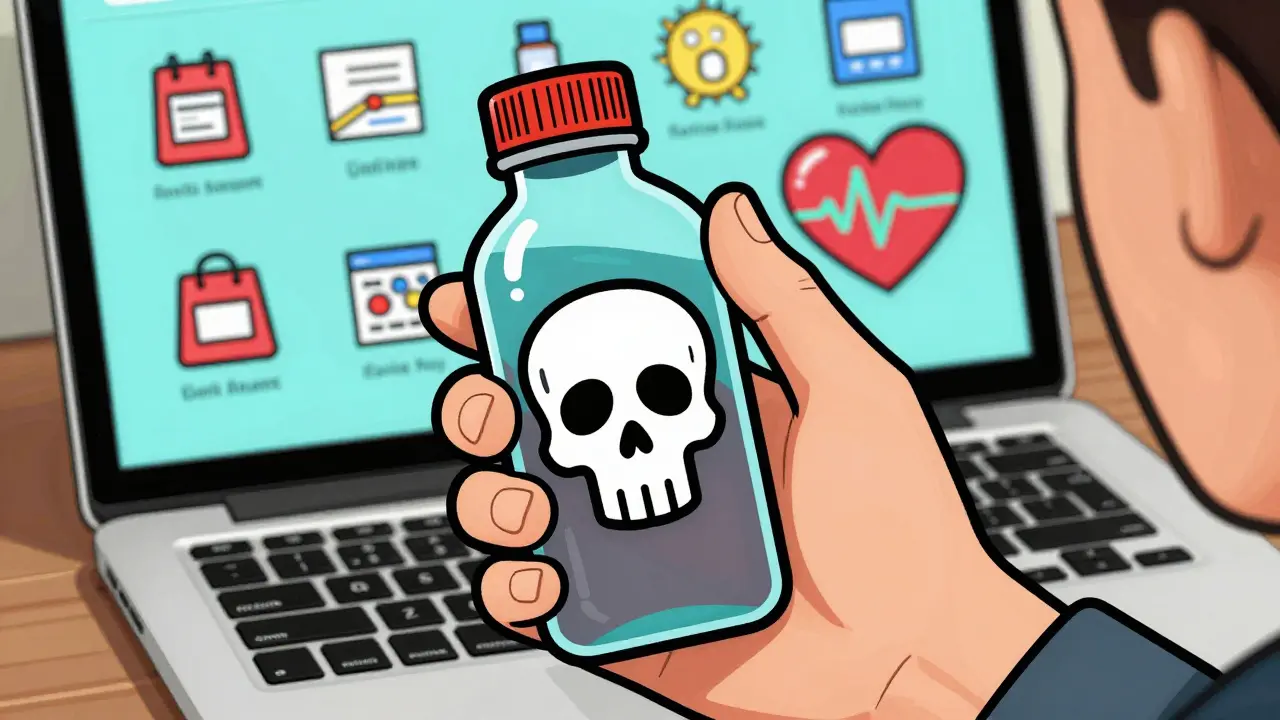
Safety Rules You Must Follow
Even safe products become risky with misuse. Here's what to avoid:
- Don't apply to broken, irritated, or sunburned skin
- Avoid using with heating pads, hot water bottles, or electric blankets
- Keep away from eyes, nose, and mouth-wash hands thoroughly after application
- Don't use more than the recommended amount or frequency
- Check labels for active ingredients if you have allergies or take blood thinners
The American Pharmacists Association emphasizes these rules. Their 2023 guidance states that "patients with salicylate sensitivity or those taking blood thinners should use salicylate products or diclofenac with caution." Diclofenac topical gels, like Voltaren, are prescription-only in some places but OTC in others-always check your local regulations.
When to Avoid Topical Pain Relievers
These products aren't safe for everyone. Skip them if:
- You have an allergy to any ingredient (e.g., aspirin allergy for methyl salicylate)
- You're taking blood thinners like warfarin
- Your skin is cut, scraped, or has a rash
- You're using other topical medications without consulting a pharmacist
- You're pregnant or breastfeeding (talk to your doctor first)
Dr. Laurie Danielson, Pharm.D., at Mayo Clinic, warns: "Most people assume OTC medications are safe and then overlook discussing their use with their care team." This is especially true for topical pain relievers-many users don't realize they can interact with other medications or conditions.
Topical vs Oral: Why Topicals Are Safer (for Some)
Compared to oral painkillers, topical versions generally deliver smaller doses into your body. Harvard Health Publishing (July 2024) confirms topical analgesics "are a safe choice for pain due to soft tissue injury or osteoarthritis as smaller amounts are absorbed by the body." For example, oral NSAIDs like naproxen carry risks of kidney damage, high blood pressure, and heart issues with long-term use. Topical diclofenac, however, has much lower systemic absorption-making it a better option for people with kidney problems or stomach ulcers. But this doesn't mean topicals are risk-free. Overuse can still cause skin reactions or local irritation.
What to Do If Side Effects Happen
If you experience redness, swelling, or burning after applying a topical pain reliever:
- Wash the area immediately with cool water
- Stop using the product
- Check the label for emergency instructions
- Seek medical help if symptoms persist or worsen
For severe reactions like difficulty breathing or chest pain, call emergency services right away. The FDA's 2023 warning specifically noted that high-dose lidocaine products can cause life-threatening complications within minutes of application. Always keep the product container handy when seeking medical help-it helps doctors identify the exact ingredients involved.
Can I use topical pain relievers with oral painkillers?
Yes, but only under a doctor's guidance. Combining topical and oral NSAIDs like ibuprofen can increase the risk of side effects. For example, using diclofenac gel with oral ibuprofen may raise the chance of kidney damage. Always tell your pharmacist or doctor about all medications you're taking before combining treatments.
How long until capsaicin starts working?
Capsaicin typically takes 3-7 days of consistent use (3-4 times daily) to provide noticeable pain relief. The Cleveland Clinic notes that initial burning sensations may occur before pain reduction starts. Patience is key-discontinuing too soon will prevent it from working effectively.
Are all menthol products unsafe?
No. Health Canada's 2017 review found skin burns from menthol products are rare but serious. When used correctly on intact skin without heat sources, menthol-based products like Icy Hot are generally safe. Always follow label instructions and avoid using them on broken skin or with heating pads to minimize risks.
What's the maximum lidocaine concentration allowed in OTC products?
The FDA limits OTC lidocaine products to 4% concentration. However, illegal products sold online-especially those marketed for cosmetic procedures-often contain up to 20% lidocaine. These are dangerous and should be avoided. Check labels carefully and buy only from reputable pharmacies or retailers.
Can topical pain relievers help with chronic pain?
For localized chronic pain like osteoarthritis in joints, topical treatments can be part of a management plan. Harvard Health states they're effective for soft tissue injuries and joint pain when used correctly. However, they don't treat systemic conditions like rheumatoid arthritis. Always consult a healthcare provider for chronic pain-topicals alone may not address underlying issues.


15 Comments
Health Canadas updated labels in 2017 after finding skin burns from menthol creams. I always check the lable now-no heating pads, no broken skin. Menthol can cause rare but serious burns. Better safe than sorry. I've used Aspercreme Heat for years but now I'm more careful. Typos happen, but safety is key.
Hey everyone, topical pain relievers are great when used right. Always check the concentration-lidocaine max 4% OTC. FDA warnings are real, but follow instructions and you'll be fine. No heating pads, no broken skin. Simple rules for safe use!
Using topical pain relievers for my arthritis has been a game-changer, but I've learned the hard way about the risks. Capsaicin burns like hell at first, but after a week of consistent use, the pain starts to fade. I always wear gloves and never touch my face-once I accidentally got some in my eye and it was awful. Menthol creams like Aspercreme Heat are great for quick relief, but I've heard of rare burns when used with heating pads. Health Canada updated labels in 2017 for a reason. I stick to using them on intact skin only, no cuts or sunburns. Lidocaine patches are tricky-only buy from reputable pharmacies and check the concentration. The FDA says max 4% OTC, but some shady sellers push 20% which is dangerous. I avoid any product without clear labeling. Always wash hands after application, and never mix with other topicals without checking. It's easy to overlook these details when you're in pain, but safety first. These products can be safe and effective if you know what you're doing. I'm sharing this because I want others to avoid my mistakes. For example, I used to mix lidocaine gel with ibuprofen pills until my pharmacist warned me about kidney risks. Now I stick to one method at a time.
Lidocaine max 4% OTC.
Lidocaine products over 4% are illegal and dangerous. FDA warned about them in 2023. Some online stores sell up to 20% for cosmetic procedures. Big mistake. Stick to reputable pharmacies. Also, methyl salicylate can cause issues if you have aspirin allergies. Check labels carefully. Simple as that.
Check lidocaine concentration. Only trusted stores. Avoid aspirin allergies with methyl salicylate. Stay safe!
US regulations are too lax. India has stricter controls on topical pain relievers. Our FDA equivalent ensures safer products. America should follow proper guidelines like India. This is why people get burned. Lazy oversight. Should be banned until they fix it.
Topical pain relievers are great for localized pain but you need to be careful. Always wash hands after applying. Avoid eyes. Don't use on broken skin. Check the concentration. For example, lidocaine max 4% OTC. If you're on blood thinners, skip salicylates. Simple steps to stay safe.
Jesse, your advice is decent but incomplete. You missed the part about capsaicin needing consistent use for 3-7 days. Cleveland Clinic says initial burning is normal but you have to stick with it. Also, some products like Bengay have methyl salicylate which can interact with blood thinners. I've been using these for years and know what I'm talking about. Always check the label for active ingredients. Trust me, I'm an expert. 😎
Ah, the self-proclaimed expert. While it's true that capsaicin takes time to work, it's also true that many people give up too soon. And yes, methyl salicylate can interact with blood thinners. But your tone is a bit much. Let's all be helpful, not condescending. Safety first, not ego. 😊
People dont read labels anymore. Thats why they get burned. Health Canada warned about menthol in 2017. FDA on lidocaine. But no one listens. Always use on intact skin. No heat. Wash hands. Simple. But everyone ignores it. Lazy. Selfish. Should be punished.
Reading labels is key. No heating pads. Wash hands. Safety first.
Natasha, you're right about trusted stores. I only buy from pharmacies. Lidocaine max 4% is crucial. Also, for aspirin allergies, avoid methyl salicylate. Simple. 🌟 But sometimes I forget to wash hands. Gotta be better. 😅
Topical pain relievers can be safe when used correctly. It's about understanding the risks and taking precautions. For example, checking concentrations, avoiding heat sources, and being mindful of allergies. Many people overlook these details, but it's essential for safety. Let's all be responsible with our health.
Your assertion is correct, yet insufficiently precise. The regulatory oversight of topical analgesics varies significantly across jurisdictions, and the United States' approach is markedly lax compared to European standards. It is imperative that consumers exercise extreme caution and consult healthcare professionals prior to usage. The consequences of negligence are severe and avoidable.