
When you buy a pill, injection, or medical device, you expect it to be safe. But how do you know the factory that made it followed the rules? The answer lies in FDA inspection records - the hidden paper trail that tells regulators whether a manufacturer is doing things right. This isn’t about secrecy. It’s about accountability. And if you work in pharmaceuticals, medical devices, or even supply chain management, understanding how these records work isn’t optional - it’s survival.
What the FDA Can and Can’t See
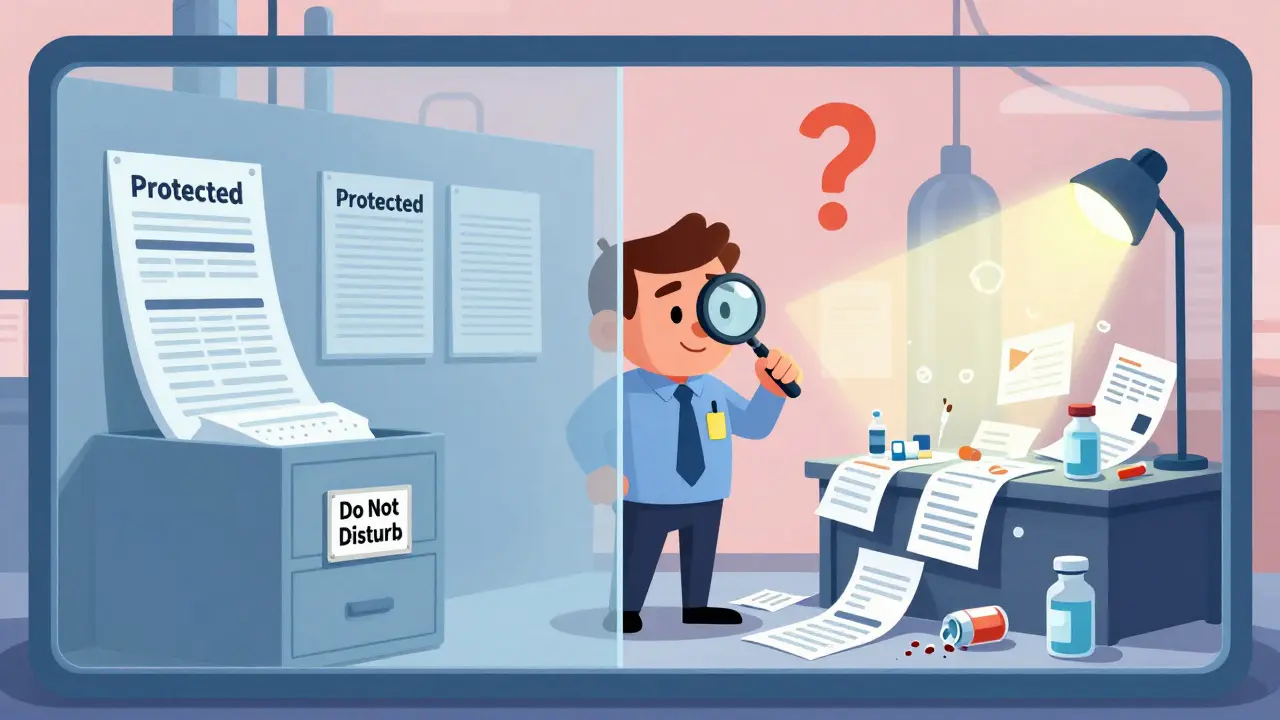
The FDA doesn’t have free access to everything inside your factory. That’s by design. Under Compliance Policy Guide (CPG) Sec. 130.300, the agency generally avoids reviewing internal quality assurance audits. Why? Because if companies fear their honest mistakes will be used against them, they won’t do them at all. The FDA wants companies to find their own problems before inspectors show up.
But here’s the line: if a product fails, a batch is rejected, or a customer complains, that’s not an internal audit anymore. That’s a quality control investigation - and the FDA can demand every email, lab report, and root cause analysis. The difference is subtle but critical. Internal audits are about prevention. Investigations are about correction. One is protected. The other isn’t.
For example, a company might run a monthly audit checking if operators are following SOPs. Those reports stay private. But if a vial of insulin is found with particulate matter, the investigation into why that happened - who tested it, what equipment failed, how the deviation was logged - becomes FDA property. The agency doesn’t care about your internal checklist. They care about what you did when something went wrong.
What Records Must Be Kept - And For How Long
If you’re making drugs, you’re legally required to keep records under 21 CFR 211.180. That means production logs, validation reports, equipment cleaning records, and deviation investigations must be saved for at least one year after the product expires. For medical devices, it’s even longer: records must stay for the life of the device plus two years under 21 CFR 820.180.
These aren’t suggestions. The FDA checks. In 2024, 22% of warning letters issued cited missing or delayed records. That’s not because companies forgot. It’s because they didn’t build systems to track them. Real-time documentation matters. If your operator writes down a temperature reading two hours after the fact, that’s not contemporaneous. And the FDA will call it out.
Think of it like a flight recorder. You don’t need to record every conversation in the cockpit. But you absolutely need to capture every switch flip, every alarm, every deviation. The FDA doesn’t need your diary. They need your evidence.
The Two Types of Inspections - And What They Mean for You
Not all FDA inspections are the same. In 2024, 75% were routine surveillance checks. These are scheduled. They’re predictable. The inspectors show up with Form FDA 482, take samples, review your production logs, and check your CAPA system. They won’t ask for your internal audit reports. They’re looking for consistency.
The other 18%? Those are for-cause inspections. Triggered by complaints, recalls, or whistleblower tips. In these cases, the FDA pulls out all the stops. They can demand internal audit reports, HR files, even emails between quality managers. There’s no protection here. If something went wrong, they want to know why - and who knew about it.
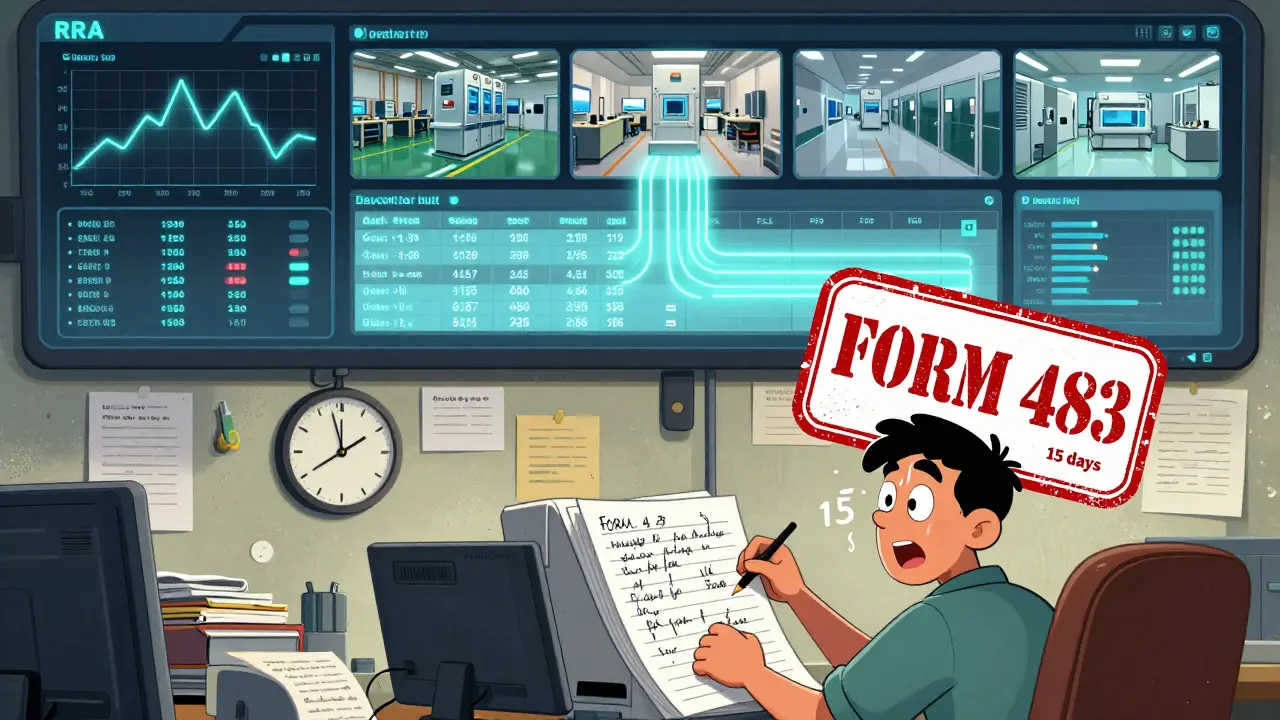
And then there’s the new frontier: Remote Regulatory Assessments (RRAs). Introduced in July 2025, RRAs let the FDA review records digitally - read-only access to your LIMS system, video walkthroughs of cleanrooms, electronic submission of batch records. RRAs don’t generate Form 483s. But they’re becoming a pre-screening tool. If your digital records are messy, you’ll be flagged for a physical inspection. Companies using RRAs cut inspection downtime by 65%, according to FDA’s 2025 assessment.
What Happens When the FDA Finds Something Wrong
Let’s say the inspector finds a problem. They’ll hand you Form FDA 483 - a list of observations. It’s not a fine. It’s not a shutdown. But it’s a red flag. You have exactly 15 business days to respond. Not 16. Not 20. Fifteen.
Most companies panic. They write generic replies: “We’ve retrained staff.” “We’ve updated procedures.” That’s not enough. The FDA wants root cause analysis. Why did the error happen? Why wasn’t it caught earlier? What’s your plan to stop it from happening again? Companies using the FDA’s recommended root cause method - like 5 Whys or Fishbone diagrams - close 89% of their 483s within six months. Those who don’t? Only 62% make it.
And if you ignore it? Or worse - lie about it? The FDA can issue a warning letter. Or seize product. Or ban you from exporting. In 2024, 17% more warning letters were issued for facilities that delayed or denied inspection access. Section 301(f) of the FD&C Act makes that a federal offense.
The Real Cost of Being Ready
Preparing for FDA inspections isn’t cheap. According to a 2025 study of 120 facilities, companies spend an average of $385,000 a year on inspection readiness. That includes training, documentation systems, audits, and hiring specialists. Forty-one percent of quality leaders report inconsistent rules between FDA district offices - one inspector says your audit report is protected, another says it’s not. That uncertainty drives up costs.
On top of that, you need people who understand the difference between protected and non-protected records. New hires typically need 6 to 9 months of training to get it right. Certification through RAPS increases preparedness by 37%. That’s not a bonus. That’s a baseline.
And it’s getting harder. The FDA is ramping up unannounced inspections - especially for foreign facilities. In 2023, only 12% of foreign inspections were unannounced. By the end of 2025, that number will hit 35%. Domestic facilities still mostly get scheduled visits - 92% of them. But if you’re making drugs in India, China, or Vietnam? You’re on the radar. No notice. No warning. Just knock on the door.
What’s Coming Next
The FDA’s 2025-2027 Strategic Plan wants to cut inspection cycle times by 25% using digital records. That means more RRAs. More electronic submissions. Less paper. If you’re still printing batch records and storing them in binders, you’re behind.
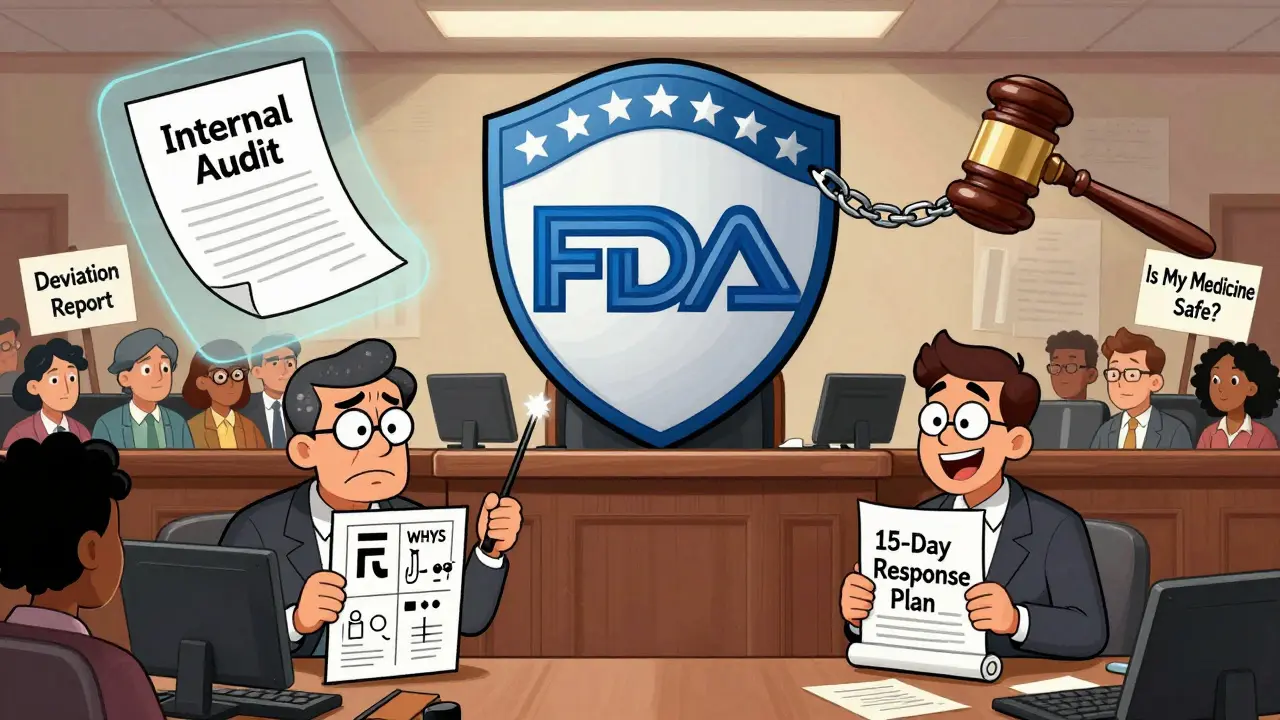
Congress is also pushing for more transparency. The 2024 Pharmaceutical Supply Chain Transparency Act (S. 2884) would force public disclosure of some inspection results. The drug industry fights back, saying it will scare companies out of doing honest internal audits. But the public wants to know: Is my medicine safe? And if the FDA won’t tell them, someone else will.
The message is clear: transparency isn’t just a policy. It’s a requirement. The days of hiding behind vague internal reports are over. The FDA has the tools, the data, and the mandate. Your job isn’t to avoid inspections. It’s to make sure your records speak for themselves - clearly, honestly, and completely.
How to Get Ready Today
- Map every record you keep. Know which ones are protected (internal audits) and which ones are open to FDA review (investigations, complaints, deviations).
- Train your team on contemporaneous documentation. If it wasn’t written at the time it happened, it’s not valid.
- Build a 15-day response plan for Form 483. Don’t wait until it happens.
- Invest in digital systems. RRAs are here. Don’t be the company that still uses Excel spreadsheets for batch records.
- Get certified. RAPS or ASQ training isn’t optional anymore. It’s the minimum bar.
Manufacturing transparency isn’t about pleasing the FDA. It’s about protecting your patients - and your business. If your records are clean, your inspections will be too.
Can the FDA inspect my facility without warning?
Yes, especially for foreign facilities. The FDA plans to increase unannounced inspections of overseas factories from 12% to 35% by the end of 2025. Domestic facilities still mostly get scheduled visits, but for-cause inspections - triggered by complaints or recalls - can happen anytime, anywhere, with no notice.
What’s the difference between an internal audit and a quality investigation?
Internal audits are proactive checks - like monthly reviews of SOP compliance. These are generally protected under FDA policy. Quality investigations are reactive - triggered by a product failure, complaint, or deviation. These records must be shared with the FDA. The key is intent: prevention vs. correction.
How long do I need to keep manufacturing records?
For drugs, keep CGMP records for at least one year after the product’s expiration date. For medical devices, you must retain quality system records for the life of the device plus two years. Missing or incomplete records are among the top reasons for FDA warning letters.
What happens if I don’t respond to a Form FDA 483 in 15 days?
Failing to respond within 15 business days can lead to a formal warning letter, product seizure, or import alerts. The FDA considers non-response as a sign of poor quality culture. Companies that respond with root cause analysis and corrective actions close 89% of observations within six months.
Are Remote Regulatory Assessments (RRAs) replacing physical inspections?
No, but they’re becoming a powerful screening tool. RRAs let the FDA review records digitally - no physical visit needed. They don’t generate Form 483s, but if your digital records show red flags, you’ll likely get a full inspection. Over 73% of Fortune 500 pharma companies now use RRA-ready systems to reduce downtime and stay ahead.



8 Comments
lol who even reads these FDA docs anymore? i just trust my pharmacist and hope for the best. if my pill tastes weird i just swallow harder.
i think the real issue is not the records but the people managing them. i worked at a med device plant in ohio and half the staff didnt know what contemporaneous meant. theyd write stuff down after lunch like it was a diary entry. the FDA doesnt care about your handwriting they care if you lied by omission.
this whole transparency thing is a sham. the FDA lets big pharma cook the books and then acts shocked when something blows up. they dont want clean records they want scapegoats. i saw a plant in indiana get slammed for a typo in a logbook while the parent company in switzerland shipped 12k contaminated vials and got a polite email. capitalism is a joke and so is this regulatory theater.
It is imperative that all personnel involved in manufacturing processes receive comprehensive training on the distinction between protected internal audits and non-protected quality investigations. Failure to maintain contemporaneous documentation not only violates 21 CFR 211.180 but also undermines patient safety. The 15-day response window for Form FDA 483 is not discretionary; it is a regulatory imperative that must be met with precision and thoroughness.
you know what this really reminds me of? flying. no one thinks about the maintenance logs or the pre-flight checks until something goes wrong. but when it does you want every single screw checked and every sensor logged. the FDA isnt being paranoid theyre just trying to make sure the plane doesnt fall out of the sky. and yeah digital records are the future. my grandma still prints batch sheets on dot matrix and i cry a little every time i see it. we need to stop pretending paper is safe and start building systems that dont break when someone sneezes.
why do american companies think theyre above the law? my cousin works in a factory in bangalore and they get inspected once a year and still get shut down for missing signatures. meanwhile in the usa they have entire departments just to write fake logs that look real. this isnt compliance its performance art. and you call this transparency? its a circus.
i think the part about rrAs is cool but what if your system crashes? i had a lmis go down last month and the inspector said i had to email him the records from my phone. i did but i misspelled contamination as contaimination and now im on a watchlist. help.
everyone is so obsessed with paperwork. the real problem is that nobody cares about patients anymore. you spend 385k on training but your CEO is still cutting corners to hit quarterly numbers. if you really wanted transparency youd post the inspection results on the front page of your website not bury them in a 500 page pdf. this whole thing is just corporate theater.