
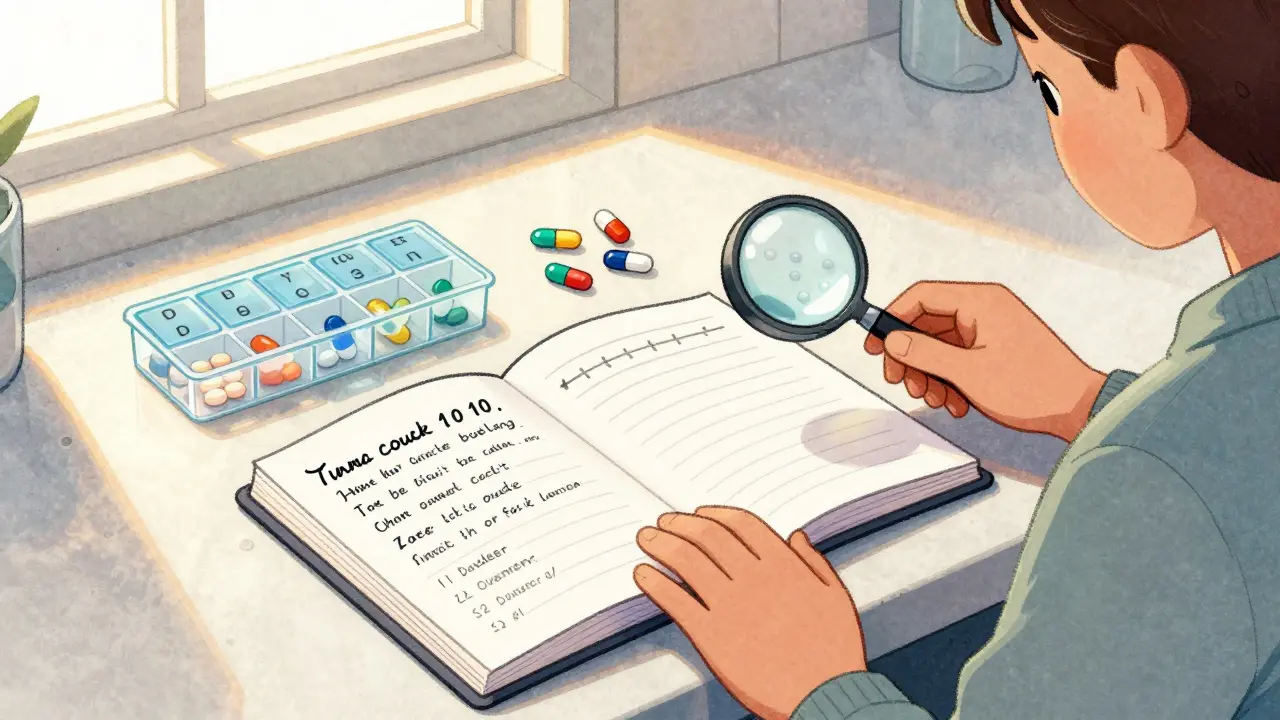
Switching from brand-name meds to generics can save you hundreds a year. But what if you start feeling different after the switch? Maybe your pain isn’t as controlled. Or your mood dips. Or you get dizzy when you didn’t before. You’re not imagining it. And you’re not alone.
More than half of people in the U.S. take at least one generic drug. For some, it’s seamless. For others, it’s not. A 2017 study found 15% of patients reported new or worse side effects after switching to a generic. Another 8% felt the drug just didn’t work as well. These aren’t rare cases. They’re common enough that doctors and pharmacists now recommend keeping a medication journal - especially when you’re on drugs where small changes matter.
Why Generic Switches Can Feel Different
Generic drugs are required to be bioequivalent to their brand-name counterparts. That means they must deliver the same active ingredient in the same amount, and it must be absorbed at the same rate - within an 80% to 125% range. Sounds perfect, right?
But here’s the catch: that range is wide. A 20% difference in absorption might not sound like much, but for drugs like warfarin, levothyroxine, or epilepsy medications, even a 5% shift can throw your body off. These are called narrow therapeutic index (NTI) drugs. Your body needs just the right amount. Too little, and the condition returns. Too much, and you risk serious side effects.
And it’s not just about the active ingredient. Generics can have different fillers, dyes, or coatings. These don’t affect the drug’s action, but they can change how your stomach reacts - or how quickly the pill dissolves. Some people notice this in the shape, color, or even the taste of the pill. One patient on Reddit switched from one generic levothyroxine to another and noticed her pill was now a different shade of white. Within weeks, her TSH levels jumped from 1.2 to 8.7. Her endocrinologist switched her back to the brand, and her numbers stabilized.
What to Track in Your Medication Journal
A simple note like “generic made me feel weird” won’t help your doctor. You need details. Here’s what to write down every time you take your meds:
- Medication name - both brand and generic (e.g., Synthroid vs. levothyroxine sodium, Teva)
- Manufacturer - Teva, Mylan, Dr. Reddy’s, etc. (this matters more than you think)
- Lot number - found on the bottle or blister pack. If you have a bad reaction, this helps trace the batch.
- Date of switch - exactly when you started the new version.
- Dosage and form - 50 mcg tablet, 10 mg capsule, etc.
- Physical appearance - color, shape, scoring, imprint code. Take a photo if you’re unsure.
- Symptoms - use a scale. Rate your pain, anxiety, fatigue, or mood from 1 to 10 each day. Use the same scale every time.
- Side effects - nausea, dizziness, rash, insomnia. Note when they started and how long they lasted.
- Objective data - if you monitor blood pressure, blood sugar, or INR, record those numbers. For thyroid meds, ask your doctor for TSH levels every 6-8 weeks after a switch.
- Adherence - did you miss a dose? Why? Forgot? Couldn’t afford it? Felt too sick to take it?
Don’t try to remember everything. Write it down the same time you take your pill - morning, noon, or night. Make it part of your routine.
Paper vs. Digital: Which Works Best
You don’t need fancy tech. A notebook and pen work fine. In fact, 62% of people over 65 still prefer paper, according to AARP. But if you’re tech-savvy or want to share data easily, apps like Medisafe or MyTherapy can help. Both are FDA-recognized and used by millions.
Medisafe lets you set reminders, log symptoms, and generate a printable report for your doctor. MyTherapy tracks mood, sleep, and adherence with charts you can export. Both sync with Apple Health and Google Fit. But here’s the thing: apps require setup. Paper takes 10 minutes to start. If you’re overwhelmed, go paper.
For NTI drugs, the Cleveland Clinic offers a free printable template with columns for manufacturer, lot number, physical changes, and symptom comparison. It’s been downloaded over 28,000 times. Use it. It turns messy notes into clear data.

When Journaling Makes the Biggest Difference
Journaling works best for drugs that act quickly. Blood pressure meds, painkillers, thyroid hormones, seizure drugs - you’ll notice changes within hours or days.
It’s less helpful for antidepressants or antipsychotics, where effects take weeks. But even then, tracking mood scores on the PHQ-9 scale can show subtle trends your doctor might miss.
One study found patients who brought their journals to appointments had 32% fewer unnecessary medication changes. Why? Because their doctor saw patterns - not just complaints. One man switched from one generic warfarin to another and started bruising easily. His journal showed his INR rose from 2.1 to 4.8 within two weeks. His doctor caught it before he bled internally.
What Your Doctor Needs to Know
Bring your journal to every visit. Don’t wait until something goes wrong. Say: “I switched to a new generic and I’ve been tracking how I feel. Here’s what I’ve noticed.”
Pharmacists are your allies too. Kaiser Permanente found that when pharmacists reviewed patient journals, generic-related medication changes dropped by 44%. They can spot if you’ve switched manufacturers twice in three months - a red flag for NTI drugs.
Also, check the FDA’s Orange Book. If your generic has an “AB” rating, it’s considered interchangeable. “BX” means bioequivalence hasn’t been proven - avoid switching those unless your doctor says it’s safe.
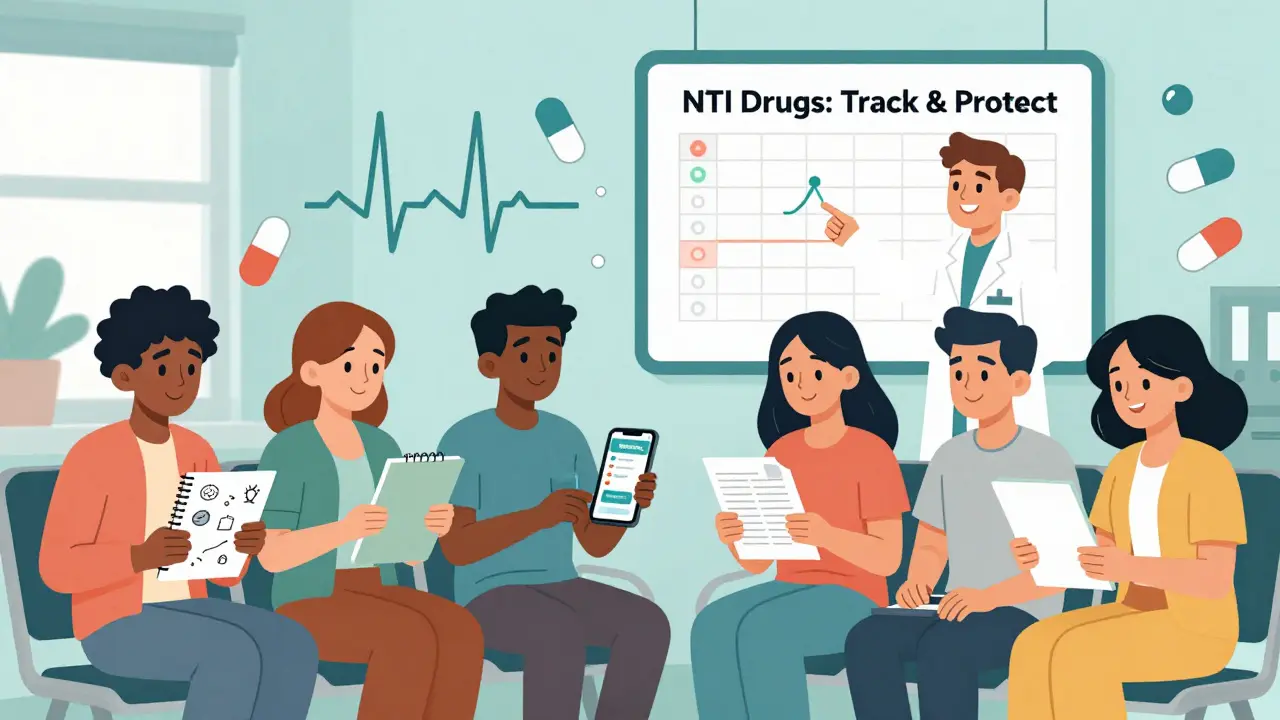
The Downsides - And How to Beat Them
Journaling isn’t magic. A 2019 study found only 38% of people kept it up past three months. Why? It feels like a chore. Or they don’t know what to write.
Here’s how to stay consistent:
- Set a daily phone alarm labeled “Log meds” - right after you take your pill.
- Use the Wong-Baker FACES scale for pain or mood. It’s visual, easy, and standardized.
- Don’t overthink it. If you feel worse, write “felt tired, 7/10” - that’s enough.
- Keep your journal where you take your meds - on the counter, next to your pill box.
And don’t panic over small changes. The FDA says 90% of generic switches cause no clinical difference. But the other 10%? That’s where your journal saves you.
What’s Next for Medication Tracking
The FDA is starting to listen. In 2023, they partnered with Apple Health to build standardized templates for iOS users. Generic drug packaging now often has QR codes linking to manufacturer bioequivalence data. And in 2024, Epic Systems rolled out a feature letting patients upload journal data directly to their electronic health records.
AI tools are coming too. Microsoft’s prototype can analyze your symptom patterns and predict if you’re at risk for therapeutic failure - with 82% accuracy.
But none of that replaces your own observations. No algorithm knows how your body feels better on Tuesday after a good night’s sleep - or how you felt awful after switching to a new generic on Monday.
That’s why your journal matters.
Final Thoughts: Your Voice Matters
Generics are safe. Most of the time, they work just fine. But your experience is real. If you feel different, it’s not in your head. It’s in your body. And the only way to prove it - to yourself and your doctor - is to track it.
You don’t need to be perfect. Just consistent. One entry a day. A few lines. A number. A note. That’s all it takes.
And if you ever feel dismissed? Show them your journal. That’s not being difficult. That’s being smart.
Can generic medications really be less effective than brand-name ones?
Yes, in rare cases. While generics must meet FDA bioequivalence standards, the allowed range (80-125% absorption) means small differences can matter for narrow therapeutic index drugs like warfarin, levothyroxine, or seizure medications. Some patients report changes in effectiveness or side effects after switching manufacturers, even if the active ingredient is identical. A 2020 study found 7.3% of patients on generic antiepileptics had breakthrough seizures after switching manufacturers - compared to just 1.2% when staying with the same formulation.
What should I do if I think my generic medication isn’t working?
First, check your medication journal. Look for patterns: Did symptoms start after switching? Did you change manufacturers? Note the lot number and physical appearance of the pill. Then schedule a visit with your doctor or pharmacist. Bring your journal. Don’t stop taking the medication unless instructed. Your provider may test blood levels (like TSH or INR) or switch you back to your previous version - or to the brand name - to confirm the issue.
Is it safe to switch between different generic manufacturers?
For most drugs, yes. But for narrow therapeutic index (NTI) drugs - like thyroid meds, blood thinners, or epilepsy treatments - frequent switches between manufacturers can be risky. Each manufacturer uses different fillers and manufacturing processes, which can slightly alter how the drug is absorbed. The FDA recommends sticking with the same generic manufacturer for NTI drugs whenever possible. If your insurance forces a switch, document it in your journal and monitor closely.
Do I need to track every single generic I take?
No. Focus on drugs where small changes matter: anticoagulants (warfarin), thyroid hormones (levothyroxine), anti-seizure meds (phenytoin, carbamazepine), immunosuppressants (tacrolimus), and some antidepressants. For pain relievers, allergy meds, or vitamins, tracking isn’t usually necessary unless you notice a clear reaction. Start with your most critical meds and expand if needed.
Can I share my medication journal with my doctor electronically?
Yes. Apps like Medisafe and MyTherapy let you email or export your data as a PDF. Some electronic health record systems, like Epic’s MyJournal, now allow direct uploads from patient apps. Even paper journals can be scanned or photographed and sent securely through patient portals. The goal is to make your data useful - not just visible. Bring it to appointments, don’t just email it.
If you’re on a generic drug and feel something’s off, don’t ignore it. Your body is telling you something. A medication journal is your tool to turn feeling into facts - and facts into better care.





12 Comments
I switched to generic levothyroxine last year and thought I was just getting older-tired all the time, mood swings, brain fog. Then I started jotting down every pill change in a notebook next to my coffee maker. When I switched from Mylan to Teva, my TSH jumped from 2.1 to 6.9 in three weeks. I showed my endo the notes and she switched me back. Now I feel like myself again. Seriously, if you’re on thyroid meds, DO THIS. It’s not paranoia, it’s power.
Also, I take a photo of every new pill. Color, shape, imprint. I didn’t think it mattered until I saw how the Teva one had a weird blue tint under fluorescent light. Weird, right? But it mattered.
Now I tell all my friends with chronic conditions to keep a journal. Even if it’s just one line a day. Your body talks. You just gotta listen.
OMG I cried reading this. I’ve been on generic Keppra for seizures and I swear I felt like I was slowly losing myself. Dizzy, spaced out, forgetful-like my brain was wrapped in cotton. I didn’t say anything because I thought I was just anxious. But then I started writing down every pill change and the exact time I took it. When I switched from Teva to Sandoz, my seizures increased by 300%. My neurologist didn’t believe me until I showed her my log with dates, lot numbers, and even the shape of the pill. She cried too. We switched me back. I’m not just ‘overreacting.’ I’m surviving.
To anyone out there feeling dismissed: your journal is your armor. Write it all. Even the small stuff. I promise-it saves lives.
Bro. I switched generics for my blood pressure med and suddenly I was sweating like I ran a marathon in a sauna at 3 a.m. I thought I was having a heart attack. Turned out? New manufacturer, new filler. My INR went nuts. I didn’t even know what INR meant until I Googled it at 4 a.m. Now I have a little notebook next to my pill organizer labeled ‘DO NOT IGNORE THIS.’
Also, I took a pic of the pill. It’s a tiny, sad, pale yellow circle now. Used to be a happy blue oval. That’s the difference between ‘fine’ and ‘emergency room.’
PS: If your doctor says ‘it’s the same thing,’ hand them your journal and walk out. 😎💊
The bioequivalence range is 80-125% which means generics can vary by up to 45% in absorption. That’s not a typo. That’s FDA policy. The notion that ‘it’s the same drug’ is a myth propagated by pharmaceutical marketing. People report changes because the active ingredient’s pharmacokinetics are not identical across manufacturers. The fillers alter dissolution rates. That’s chemistry, not placebo. Your journal isn’t anecdotal-it’s data.
Most patients don’t track because they’re not trained to. But the system doesn’t care. It’s cheaper to switch you than to test you. Your journal is the only countermeasure.
I’ve been on warfarin for 12 years. I’ve switched generics five times. Three times I had to go to the ER because my INR spiked. I didn’t know why until I started writing down the lot numbers and pill colors. Now I only take the same one-Teva, lot #G782. I even call my pharmacy and ask them to hold that batch.
I know it sounds obsessive. But when your life depends on a number between 2 and 3, you learn to be meticulous. I don’t judge people who don’t do this. I just wish someone had told me earlier. Maybe I wouldn’t have almost bled out twice.
Use the Cleveland Clinic template. It’s free. It’s simple. It’s lifesaving.
Y’all. I started journaling after my anxiety got worse on a new generic sertraline. I thought I was failing. But I wrote down my mood every day on a 1–10 scale. Week 1: 7. Week 2: 8. Week 3: 9. Then I switched to a different generic-same name, different maker-and boom. Week 4: 4. I showed my therapist. She was like ‘ohhhhhh.’
Now I use the MyTherapy app. It makes charts. I print them. My doctor high-fives me. I feel seen. I’m not crazy. I’m just a human with a body that reacts to dyes and binders.
Also, I named my pill bottle ‘Sir Regurgitates My Soul.’ It’s a little thing. But it helps. 💪❤️
I’m from India and we use generics almost exclusively here. I didn’t think it mattered until my mom switched from one brand of levothyroxine to another and her heart started racing. She didn’t say anything for weeks. I found her little notebook-dates, symptoms, pill colors. We took it to her doctor. They switched her back. She’s fine now.
It’s not just a Western thing. Our bodies know. We just need to listen. Write it down. Even if it’s just a sticky note. It matters.
My pharmacist told me to switch generics. I did. Felt weird. Didn’t say anything. Then I got a rash. Then I got dizzy. Then I found out the new one had FD&C Yellow No. 6. I’m allergic. I didn’t know that was in it. Now I check the inactive ingredients. Every time.
Journaling? Yeah. I do it. Not because I’m obsessive. Because I’m tired of being the one who has to figure out why I’m sick.
So we’re told generics are ‘just as good.’ But if your body’s a precision instrument and the manufacturer changes the lubricant in the gears… you’re gonna feel it. The FDA doesn’t test for patient experience. They test for ‘bioequivalence’-a term that sounds scientific but is really just a statistical loophole.
People aren’t ‘imagining’ things. They’re just not being heard. Your journal is the only thing standing between you and a medical system that treats you like a number.
Also, I once switched generics and started dreaming about cats. I don’t know why. But I wrote it down. Turns out, the new pill had a different coating. Weird, right? But it’s real.
Pharmacokinetic variability in generic formulations is a well-documented phenomenon in clinical pharmacology, particularly for NTI drugs with low therapeutic indices. The pharmacopeial standards for dissolution profiles and bioavailability are insufficiently granular to account for inter-patient variability in gastric pH, CYP450 polymorphisms, and enteric absorption kinetics. Consequently, suboptimal bioequivalence profiles may induce subtherapeutic or supratherapeutic serum concentrations, precipitating iatrogenic adverse events. Documentation via structured medication logs facilitates retrospective pharmacovigilance and enables precision dosing adjustments. This is not anecdotal-it is evidence-based therapeutics.
My INR was stable on Teva warfarin. Then I got a new bottle. Same name. Different lot. INR jumped to 6.2. No bleeding. But I was terrified. I didn’t know what changed. Then I noticed the pill was smaller. Lighter. I called the pharmacy. They said ‘it’s the same.’ I said ‘prove it.’ They didn’t.
Now I always check the lot number. And I keep a photo. Because if the system won’t track it, I will.
My doctor told me to switch from brand to generic for my epilepsy meds. I did. Two weeks later, I had a seizure at work. I didn’t know why. I didn’t know how to explain it. Then I found this post. Started journaling. Lot numbers. Pill color. Mood. Sleep. Everything. Found out the new generic had a different binder that slowed absorption. My neurologist switched me back. I’m seizure-free now.
Don’t let anyone tell you it’s ‘all in your head.’ Your body isn’t wrong. The system is.