
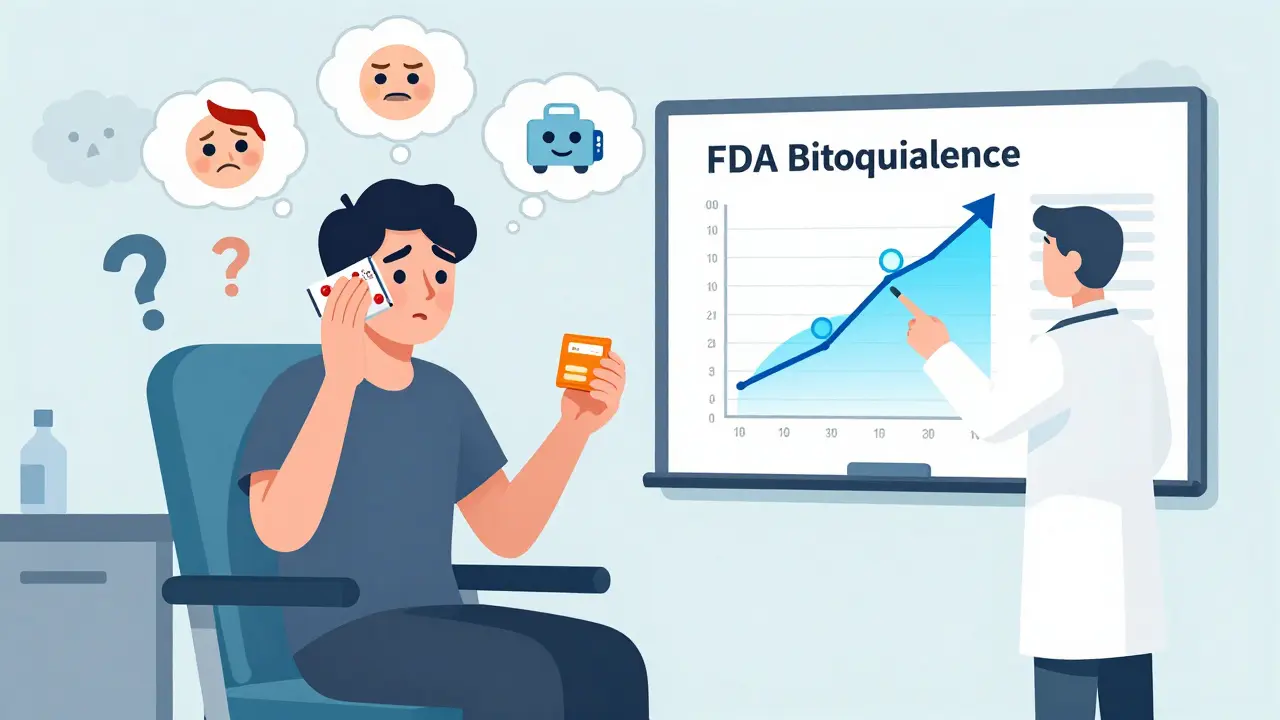
When a patient switches from a brand-name drug to a generic version, they often don’t realize the pills are chemically identical. But their body might still react differently-not because of the medicine, but because of what they believe about it.
Why Generic Pills Feel Different
You’ve probably heard someone say: "I was fine on the brand, but as soon as they switched me to the generic, I felt awful." Headaches. Nausea. Fatigue. Mood swings. These symptoms aren’t random. In many cases, they’re not even caused by the drug itself. They’re caused by expectation. This is called the nocebo effect. It’s the dark twin of the placebo effect. Where placebo makes you feel better because you believe a treatment will help, nocebo makes you feel worse because you believe it will hurt. And when it comes to generic medications, this effect is powerful-and well-documented. A 2025 study tested this with sham oxytocin sprays. Healthy volunteers were told they were getting either a brand-name product or a generic one. Both sprays were sugar water. But those who thought they were using the generic version reported more side effects and felt less benefit. The difference? Just the name and price label. No active ingredient changed. Yet the perceived harm did. In the U.S., 90% of prescriptions are filled with generics. But nearly 40% of patients still worry they’re less effective. That gap between science and perception is where the problem lives.How Packaging and Price Trick Your Brain
It’s not just the name on the bottle. The color, shape, size, and even the price tag shape your experience. One study gave people an inert cream labeled either "Solestan® Creme" in a sleek blue box-or "Imotadil-LeniPharma Creme" in a plain orange one. Both were identical. But people who thought they were using the expensive version reported more pain sensitivity. The cheaper version? They blamed it for everything. In another experiment, patients given a placebo pill told it was expensive reported more side effects than those told it was cheap-even though both pills were identical sugar tablets. This isn’t irrational. It’s human. We’ve been trained to link cost with quality. We assume expensive = better. Cheap = risky. And when a doctor switches your medication to a cheaper version, your brain doesn’t hear "bioequivalent." It hears "cut-rate."What Bioequivalence Really Means
The FDA requires generics to prove they deliver the same amount of active ingredient into your bloodstream as the brand-name drug-within 80% to 125% of the original. That’s not a guess. It’s a strict scientific standard. Think of it like two identical engines. One is built by the original manufacturer. The other by a different factory, using the same blueprints and parts. Both run the same. Both last the same. But if you’re told the second one is made by a "no-name" company, you might start hearing strange noises-even if the engine sounds exactly the same. Generics must meet the same purity, strength, and performance standards. They’re not "copycats." They’re legally required to be the same. But perception doesn’t care about legal standards. It cares about labels.
The Role of the Prescriber
Your doctor’s words matter more than you think. When a pharmacist switches your medication, they often don’t tell you. Or worse-they say, "It’s just the generic version," like it’s an afterthought. That tiny phrase plants a seed of doubt. Kaiser Permanente’s protocol for switching patients to generics is simple but effective: "This medication contains the exact same active ingredient as what you were taking before. Studies show patients do just as well on the generic version." Notice what’s missing? No mention of "cheaper," "alternative," or "substitute." Just facts. And reassurance. Doctors who frame the switch positively-"This is the same medicine, just more affordable"-see fewer complaints. Those who say, "We’re switching you to save money," trigger anxiety. The same drug. Two different outcomes.When Media and Social Media Fuel the Fear
In 2017, New Zealand switched patients from one brand of venlafaxine to a generic version. At first, adverse effect reports stayed flat. Then a local news story aired: "Are Generic Antidepressants Safe?" Within weeks, reports spiked. Not because the drug changed. Because people started looking for side effects. Reddit threads like r/pharmacy are full of stories: "Generic sertraline made me feel like I was dying. Brand never did." But when researchers check blood levels, they’re identical. The drug didn’t change. The patient’s attention did. Social media amplifies fear. One bad experience gets shared. Others see it. They start noticing their own headaches. They blame the pill. The cycle continues.How to Fight the Nocebo Effect
You can’t ignore perception. But you can shape it.- Don’t list every possible side effect. Saying "This drug can cause dizziness, nausea, insomnia, weight gain, anxiety, and suicidal thoughts" creates a checklist for the brain to tick off. Instead, say: "Most people tolerate this well. A few may feel a bit tired at first, but it usually passes in a few days."
- Explain the cost savings. A 2022 study found that when patients learned switching to a generic could save them over $3,000 a year-alongside reassurance about effectiveness-nocebo effects dropped by 37%.
- Use branded generics when possible. Some generics look and feel like the original brand. They’re still generics-same active ingredient, same manufacturer sometimes-but the packaging reduces the psychological shock.
- Ask about beliefs. The Beliefs about Medicines Questionnaire (BMQ) helps identify patients who are overly worried about side effects. These are the ones who need extra support before switching.
- Don’t surprise patients. If a switch is coming, tell them ahead of time. Give them a chance to ask questions. Let them feel in control.
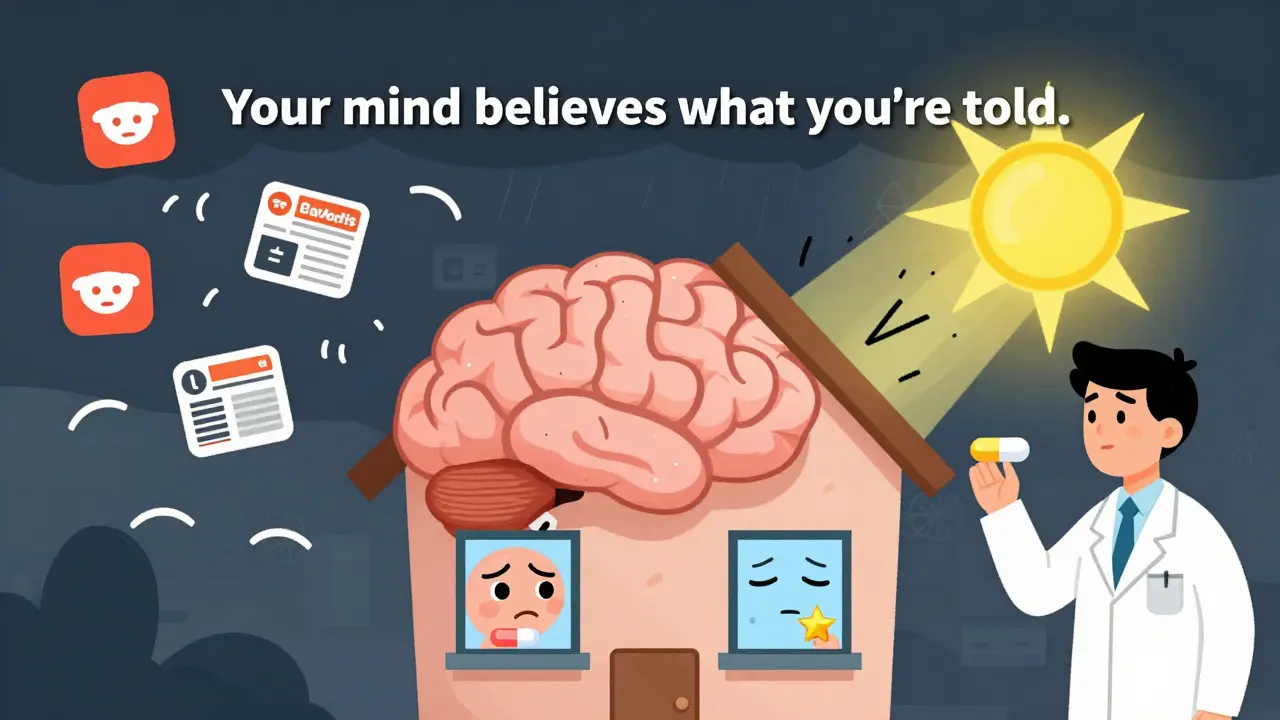
What Patients Can Do
If you’ve noticed a change after switching to a generic:- Write down your symptoms. Are they new? Or just things you’ve always felt but didn’t notice before?
- Check your blood levels if possible. Are they the same as before? If yes, your body isn’t reacting to the drug-it’s reacting to your mind.
- Ask your pharmacist: "Is this the same as the brand?" Most will confirm it’s bioequivalent.
- Don’t assume the worst. The nocebo effect is real, but it’s reversible. Your brain can unlearn fear.
The Bigger Picture
The nocebo effect isn’t about patients being "weak" or "imagining things." It’s about how deeply our minds shape our physical reality. When we dismiss patient complaints as "psychological," we miss the point. The pain is real. The fatigue is real. The anxiety is real. But the cause? Often, it’s not the pill. It’s the story we’ve been told about it. Healthcare systems that invest in clear, positive communication around generics see better adherence, fewer dropouts, and lower costs. The science is clear: generics work. But they only work if patients believe they will. The solution isn’t to stop using generics. It’s to stop treating them like second-class medicine.What’s Next?
Researchers are now using fMRI scans to see how the brain reacts when people think they’re taking a generic. Early results show increased activity in areas linked to threat detection and fear-right after a switch, even when the drug is identical. Future guidelines may include mandatory patient education scripts for pharmacists. Some countries are testing "rebranding" generics with more professional packaging to reduce stigma. One thing’s certain: the gap between chemical reality and perceived experience is the next frontier in medicine. And closing it starts with how we talk about pills.Do generic medications work as well as brand-name drugs?
Yes. Generic medications contain the same active ingredient, strength, dosage form, and route of administration as the brand-name version. The FDA requires them to prove they deliver the same amount of medicine into your bloodstream within the same time frame. Studies show they are just as effective for treating conditions like high blood pressure, depression, and diabetes. The only differences are in inactive ingredients-like fillers or dyes-which don’t affect how the drug works.
Why do I feel worse after switching to a generic?
You’re not imagining it. But the cause is likely psychological, not chemical. The nocebo effect means negative expectations-like believing generics are inferior-can trigger real physical symptoms. Studies show people report more side effects when they think they’re taking a cheaper version, even when the drug is identical. This is especially common after a switch, when patients are already anxious about change.
Can packaging affect how a generic works?
Not chemically-but yes, psychologically. A 2024 study showed that people reported more side effects from an inert cream labeled with a generic-looking package compared to one that looked expensive-even though both were identical. Packaging shapes expectations. If a pill looks cheap or unfamiliar, your brain may interpret normal sensations as side effects.
Are branded generics better than regular generics?
No-not in terms of ingredients or effectiveness. But they can be better for your mindset. Branded generics often look and feel more like the original brand-name drug. This reduces the psychological shock of switching, which can lower the risk of nocebo effects. If you’ve had bad experiences with generics before, asking for a branded generic might help you adjust more easily.
How can I tell if my symptoms are from the drug or just my mind?
Start by tracking your symptoms before and after the switch. Were they present before? Are they the same type as before? If you had no side effects on the brand and suddenly developed them after switching, it’s likely the nocebo effect. Blood tests can confirm your drug levels are unchanged. Talk to your doctor about your concerns-they can help you reframe your expectations and possibly try a different generic version.
Is it safe to go back to the brand-name drug?
Yes, if your doctor agrees. But understand why you’re switching back. If it’s because you believe the generic is inferior, you might experience the same issues again if you switch back to a generic later. The goal isn’t to avoid generics forever-it’s to break the cycle of fear. Your doctor can help you find a balance between cost, comfort, and confidence.
Do insurance companies force patients to use generics?
Often, yes. Insurance plans typically require patients to try generics first because they’re cheaper. But this doesn’t mean you have to accept feeling worse. You can ask for a medical exception if you’ve had a bad reaction to a generic. Many insurers will approve the brand-name drug if there’s documented evidence of intolerance or psychological distress linked to the switch.
Can the nocebo effect be reversed?
Absolutely. Once patients understand that their symptoms are likely due to expectation-not the drug-they often feel better. Re-education, positive framing, and even a return to the original brand for a short trial can reset expectations. Many people find that after a few weeks of reassurance, their symptoms fade-even if they stay on the generic.



9 Comments
My grandma switched to generic blood pressure meds last year and said she felt fine-until she saw the pill looked different. Then she started blaming it for every little ache. We showed her the FDA info, and within a week, she stopped noticing the ‘side effects.’ Mind is wild.
Just wanted to say this is one of the most important posts I’ve read all year. 🙌
People think ‘placebo’ means ‘not real,’ but the pain, the fatigue, the anxiety-they’re 100% real. It’s not in their head. It’s their head *making* it real. We need to stop calling it ‘psychological’ like it’s a weakness. It’s biology + culture + marketing. Huge respect to docs who reframe this right.
I’ve been thinking about this a lot since my therapist switched me to a generic SSRI. I felt weird for two weeks-head pressure, jittery. I almost went back. But then I read a study about how the color of the pill affects serotonin perception. Turns out, the generic was a dull yellow, while the brand was bright blue. I started telling myself: ‘This is the same chemical. Yellow doesn’t mean weaker.’ And… it faded. Not magic. Just cognitive reframing. Weird how much the brain runs the show.
As a medical educator, I’ve seen this firsthand. The language used during the switch is critical. Saying ‘We’re switching you to a cheaper option’ activates threat response. Saying ‘This is the exact same medication, just more affordable’ activates trust. The words matter as much as the molecules. I train my students to script this exact phrase: ‘It’s the same drug, just without the brand markup.’ Simple. Clear. Effective.
Let’s be clear: this isn’t ‘perception.’ It’s corporate manipulation. Big Pharma spends billions making their pills look ‘premium’-then lets generics be sold in plain packaging like they’re discount toilet paper. And now you want us to believe the patient’s ‘mind’ is the problem? No. The problem is a system designed to make people feel ashamed of saving money. The nocebo effect? It’s engineered. And it’s profitable.
Oh please. This is just another way to gaslight patients who are legitimately suffering. I switched to generic levothyroxine and gained 30 pounds, developed brain fog, and my heart started fluttering. My doctor said ‘it’s all in your head.’ I got a second opinion. Turns out, the generic had a different filler that triggered an autoimmune response. The FDA’s 80-125% range? That’s a loophole for bad manufacturing. Don’t dismiss real biological differences because it’s inconvenient to your narrative.
Yeah right. And I’m supposed to believe that the same exact pill that made me feel like I was dying suddenly became fine just because I ‘retrained my brain’? Please. I’ve seen too many people get screwed over by generics. The FDA doesn’t test for long-term effects. The ‘bioequivalence’ studies are done on 20 people for 2 weeks. What about people with 5 chronic conditions? What about the elderly? This isn’t science-it’s corporate propaganda dressed up as psychology.
There’s something deeply human here, and I think we’re missing the bigger picture. We live in a world where everything is branded, packaged, and priced to manipulate our sense of value. We’ve been conditioned to equate cost with quality since childhood-expensive toys are better, expensive clothes last longer, expensive food is healthier. So when our medicine suddenly looks like it came from a dollar store, of course our nervous system panics. It’s not irrational. It’s evolutionary. Our ancestors didn’t survive by trusting cheap-looking herbs from strangers. The nocebo effect isn’t a flaw in the patient-it’s a flaw in the system that turned medicine into a commodity. Maybe the real solution isn’t just better wording… but better packaging. Better design. Better dignity. Maybe generics shouldn’t look like generics at all. Maybe they should look like medicine-because they are.
bro i switched to generic adderall and my brain felt like mush for 3 weeks. then i found a branded generic that looked just like the real thing and boom-back to normal. not placebo. just the pill looked too sketchy. my brain was like ‘nah this ain’t it’ and shut down. packaging matters. period.