
When you pick up a prescription for generic sertraline or metformin, you probably don’t think about how the price got so low. It’s not magic. It’s not charity. It’s the result of a deliberate, decades-long system designed to let competition do the work. Governments don’t set prices for most generic drugs - they set the rules that make it impossible for companies to charge more than a few dollars.
Why Generic Drugs Are So Cheap (And Why That’s Intentional)
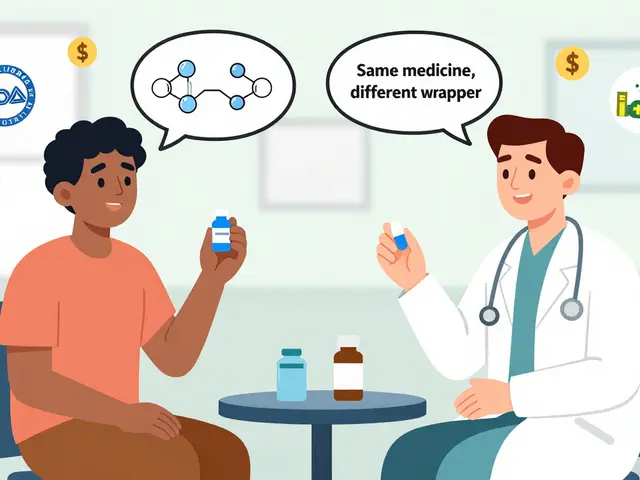
Generic drugs aren’t just cheaper versions of brand-name pills. They’re legally identical copies. Same active ingredient. Same dosage. Same effectiveness. The only difference? No patent. No marketing budget. And no need to spend $2.6 billion on clinical trials.
After a brand-name drug’s patent expires, any qualified manufacturer can apply to sell the same medicine under the Abbreviated New Drug Application (ANDA) process. The FDA doesn’t require new safety or efficacy studies. They just need proof the generic works the same way in the body. That cuts development costs from billions to about $2-3 million.
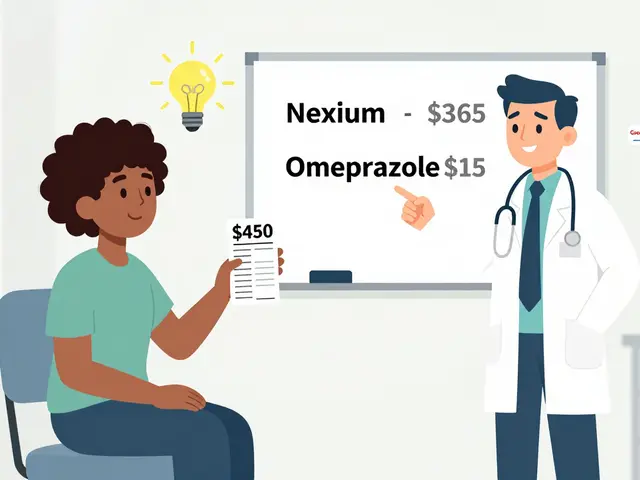
Once the first generic enters the market, prices drop fast. By the time three or more companies are selling the same drug, prices stabilize at just 10-15% of the original brand price. A 2021 FTC study found that in markets with five or more generic makers, prices often fall below 5% of the brand’s original cost. And that’s without any government setting a price ceiling.
The System That Keeps Prices Low: Competition, Not Controls
The U.S. government doesn’t need to cap generic drug prices because the market does it better. The key is getting multiple manufacturers into the game quickly. That’s where the FDA’s Generic Drug User Fee Amendments (GDUFA) come in. Since 2012, drugmakers pay fees to fund faster FDA reviews. In 2023, the agency approved 1,083 generic drugs - a 35% jump since 2017. The goal? Cut approval time from 18 months to 10. They hit 92% compliance in 2023.
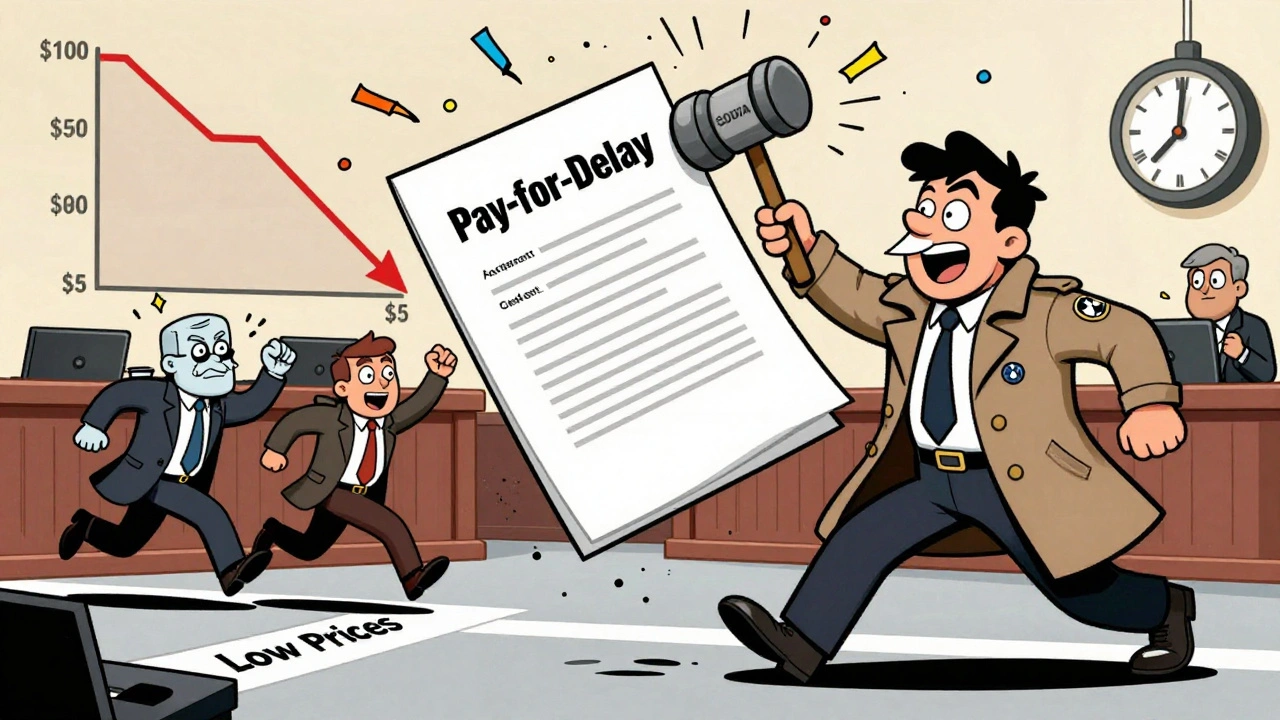
It’s not just about speed. It’s about fairness. The Federal Trade Commission (FTC) watches for shady tactics. In 2023 alone, they challenged 37 "pay-for-delay" deals - where brand-name companies pay generics to delay entry. These deals kept prices high. When the FTC stops them, prices crash. One 2023 FTC estimate said blocking these deals saves consumers $3.5 billion a year.
And it works. Medicare Part D plans pay an average of 15% below the manufacturer’s price for generics. On top of that, pharmacies negotiate rebates of 15-28% for preferred generics. The system isn’t perfect, but it’s self-correcting. When prices rise too much, new manufacturers jump in. When profits shrink too much, some exit. That’s the free market in action.
Why Governments Avoid Direct Price Controls on Generics
Every year, lawmakers propose bills to cap drug prices. Most target big-name drugs like Ozempic or insulin. But almost none touch generics. Why?
The Congressional Budget Office (CBO) looked at this in 2023. Applying international price references to generics would save Medicare just $2.1 billion annually - 0.4% of total generic spending. Meanwhile, negotiating prices for branded drugs could save $158 billion. The math doesn’t justify the complexity.
The Inflation Reduction Act of 2022 created a Medicare drug price negotiation program. It’s powerful. But it explicitly excludes generics. The Department of Health and Human Services said it clearly: generics already have competition. No need to interfere.
Even the 2025 Most-Favored-Nation Executive Order - which aims to tie U.S. drug prices to those in other countries - focuses on branded drugs like Wegovy. No mention of generics. Why? Because the U.S. already has the lowest generic prices in the developed world. The 2024 IQVIA report found the U.S. has 14.7 manufacturers per generic drug on average. Europe has 8.2. Japan has 5.3. More competitors = lower prices.
When the System Breaks Down: The Rare Price Spikes and Shortages
Most of the time, generic prices stay low. But sometimes, they don’t.
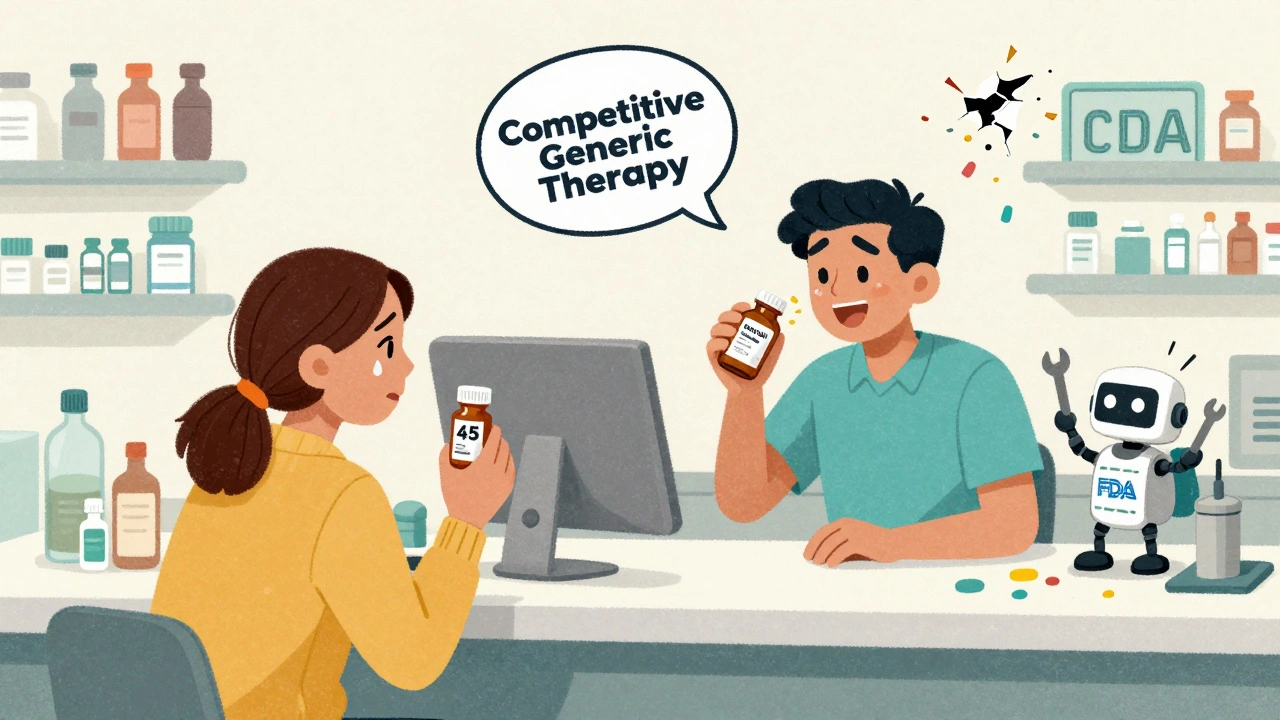
In 2024, a Reddit user reported their generic sertraline jumped from $4 to $45 a month. That sounds like a crisis. But the FDA says it’s an outlier. Less than 0.3% of generics see spikes like that. Most are caused by supply chain issues - one manufacturer shuts down, others can’t ramp up fast enough.
The real danger isn’t overpricing. It’s underpricing. In 2024, the American Society of Health-System Pharmacists found that 18% of hospital pharmacists faced shortages of critical generics. Why? Because the price dropped so low that manufacturers couldn’t cover production costs. Forty-three percent said companies had stopped making certain drugs entirely.
That’s the flip side of competition. When prices fall below the cost to make a pill, no one makes it. The system works best when there’s balance. Too much competition? Shortages. Too little? Price gouging.
What’s Changing in 2025 and Beyond
The government isn’t trying to control prices anymore. It’s trying to keep the system running smoothly.
The FDA launched a new Complex Generic Drug Product Application Submission Template in late 2023. Some generics - like injectables or inhalers - are hard to copy. The new template cuts review times by 35% for these tricky drugs.
The FTC is still blocking mergers. In January 2024, they stopped the Teva-Sandoz deal because it would’ve cut competition for 13 generic drugs. That’s not price control. That’s market defense.
CMS is also cracking down on pharmacy benefit managers. A new rule in April 2024 aims to stop insurers from forcing prior authorizations on generics. Right now, some plans make patients jump through hoops just to get a $5 pill. That’s not competition - that’s a barrier. Removing it could save patients $420 million a year.
The Generic Pharmaceutical Association now offers a "Competitive Generic Therapy" designation. If a drug has few generics, the manufacturer gets a faster FDA review. That encourages more players to enter markets where prices are still too high.
What Patients Really Think
Most people don’t care how the system works. They just want to know if they can afford their meds.
The 2024 KFF Consumer Survey found that 76% of Medicare Part D users pay $10 or less for generics. Only 28% pay that little for brand-name drugs. Eighty-two percent of generic users say their meds are affordable. Only 41% of brand-name users say the same.
On Drugs.com, 87% of reviews for generic drugs mention "affordable" or "cost-effective." Only 5% mention price problems. That’s not luck. That’s the system working.
But when prices spike - even once - it hurts. A patient on a fixed income might skip a dose. That’s why vigilance matters. The system doesn’t need fixing. It needs protecting.
The Bottom Line: Competition Works
Government doesn’t set the price for your generic pills. It sets the rules that let competition do it. Faster approvals. Blocked anti-competitive deals. Transparent tracking. No unnecessary barriers.
That’s why 90% of prescriptions in the U.S. are generics - but they cost only 23% of total drug spending. That’s the power of a well-designed market. No price caps needed. No bureaucrats deciding what’s fair. Just manufacturers competing to sell the cheapest, safest pill.
Any attempt to directly control generic drug prices would likely backfire. It could slow down approvals. Discourage new makers. Cause shortages. The best policy isn’t a price ceiling. It’s a level playing field - and the will to keep it that way.
8 Comments
I’ve been on sertraline for years and never paid more than $5 at Walmart. People act like drug prices are some mystery, but it’s just basic competition. If you want cheap meds, don’t block companies from making them.
Simple as that.
Oh wow, the free market saved us again. Next you’ll tell me Amazon’s low prices mean we shouldn’t regulate big tech.
Let’s be real - this system only works when no one’s cornering the market. And guess what? The same corporations that profit from generics are the ones lobbying to keep the FDA slow on approvals. You’re not seeing the full picture because you’re drinking the pharma Kool-Aid.
And don’t even get me started on how ‘competition’ disappears when one company buys up ten manufacturers overnight. This isn’t capitalism - it’s controlled chaos with a pretty infographic.
It is both intellectually dishonest and morally irresponsible to suggest that market forces alone are sufficient to ensure equitable access to life-sustaining pharmaceuticals. The fact that a single manufacturer’s shutdown can trigger a $45 price spike for a critical antidepressant reveals a systemic failure of the so-called ‘self-correcting’ mechanism.
Competition does not exist in a vacuum. It requires oversight, enforcement, and, yes - intervention when human lives are at stake. The FTC’s actions are reactive, not proactive. We are treating symptoms, not causes.
And let us not forget: the average American does not have the luxury of waiting for a new generic to enter the market after a shortage. They choose between medication and groceries. That is not a market outcome. That is a humanitarian crisis masked as economic efficiency.
Y’all are overcomplicating this. If your pill costs $5 and you’re not dying from it, then the system’s working. I’ve seen people cry because their insulin is $300, but no one’s crying about metformin - and that’s because it’s cheap. Don’t fix what ain’t broke.
Also, if you’re getting your meds for $10 a month, be grateful. A lot of people in other countries pay ten times that and still can’t get it. We’ve got it good here.
Stop complaining and start thanking the FDA for doing their job without being lazy.
The elegance of this system lies not in its perfection, but in its emergent equilibrium - a dynamic tension between supply, regulatory velocity, and market entry incentives.
When marginal production costs dip below the equilibrium price point, rational actors withdraw, creating scarcity - which, in turn, reactivates the incentive structure. It’s a feedback loop that mirrors biological homeostasis.
What we perceive as ‘shortages’ are merely phase transitions in a complex adaptive system. The challenge isn’t to impose price controls - it’s to preserve the conditions that allow self-organization to persist.
And yet, the real vulnerability isn’t economic - it’s psychological. We’ve been conditioned to equate affordability with moral righteousness, when in truth, sustainability requires both profit and purpose.
Oh wow, the FTC’s doing something useful for once. Who knew bureaucrats could actually stop bad behavior?
But let’s be real - this whole thing is a house of cards. One company goes bankrupt, another gets bought by a hedge fund, and suddenly your blood pressure med jumps from $3 to $80. And yeah, they’ll say ‘competition!’ - but if you’ve got three manufacturers and two are owned by the same parent company, that’s not competition. That’s collusion with a PowerPoint.
And don’t even get me started on how PBMs are squeezing pharmacies while pretending they’re saving you money. It’s all smoke and mirrors. The system’s rigged - just less obviously than insulin.
Just wanted to say thanks for laying this out so clearly. I never realized how much work goes into keeping generics cheap.
My grandma takes six different generics and pays $12 a month total. She doesn’t know about ANDAs or GDUFA, but she knows she can afford her meds.
That’s all that matters. Keep the rules fair, keep the approvals fast, and don’t let the big guys cheat. That’s all we need.
Simple. Smart. Works.
So you’re telling me we should trust the same corporations that raised insulin prices 1000% to now magically be the heroes of affordable medicine?
You’re not defending competition - you’re defending exploitation dressed up as economics.
And the fact that you’re proud of a system where people skip doses because prices ‘dropped too low’ shows how disconnected you are from reality.
This isn’t a market. It’s a blood sport - and the winners are the ones who can afford to play.