
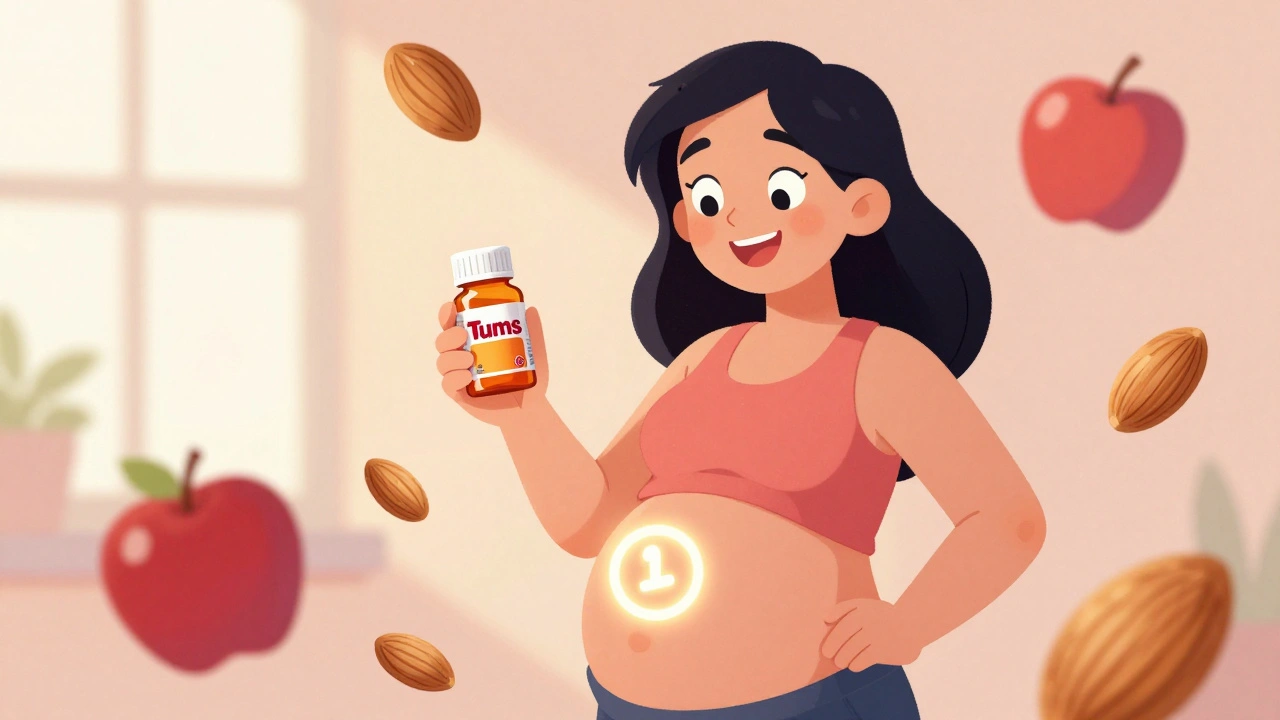
Heartburn during pregnancy isn’t just uncomfortable-it’s common. Up to 80% of pregnant people experience it, especially in the second and third trimesters. The growing baby presses on the stomach, and pregnancy hormones relax the valve that keeps acid down. You might feel that burning sensation after eating, when lying down, or even in the middle of the night. It’s normal, but that doesn’t mean you have to suffer. The good news? There are safe, effective ways to manage it-without putting your baby at risk.
First-Line Treatment: Antacids Like Tums
If you’re dealing with occasional heartburn, start with antacids. They work fast-within minutes-by neutralizing stomach acid right where it’s causing trouble. The safest and most recommended option? Tums, which contains calcium carbonate. Why? Because it does double duty: it relieves heartburn and gives your body extra calcium, which your baby needs for bone development. Your body actually absorbs calcium better during pregnancy, so this isn’t just a quick fix-it’s a small nutritional boost.
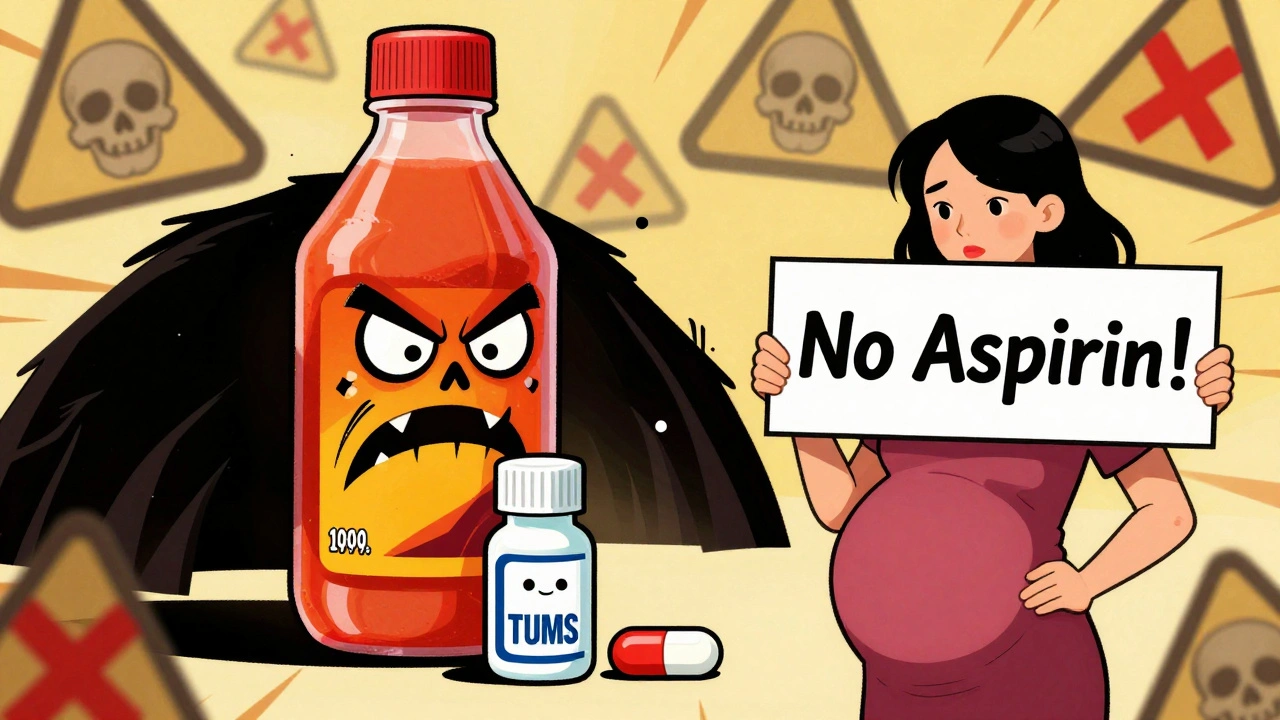
Other calcium-based antacids like Rolaids are also fine. Mylanta, which has aluminum and magnesium, is generally safe too, but avoid anything with magnesium trisilicate or high levels of aluminum. Those can cause constipation or other issues if used too often. And please, don’t use Pepto-Bismol. It contains bismuth subsalicylate, which acts like aspirin-and aspirin is not safe during pregnancy.
How much is too much? Stick to the label: 500-1500 mg of calcium carbonate every 4 to 6 hours as needed. Don’t go over 7,500 mg in a day. Too much calcium can lead to kidney stones or interfere with iron absorption. If you’re already taking prenatal vitamins with calcium, keep track of your total intake. Talk to your provider if you’re using antacids more than a few times a week.
Second-Line: H2 Blockers Like Pepcid
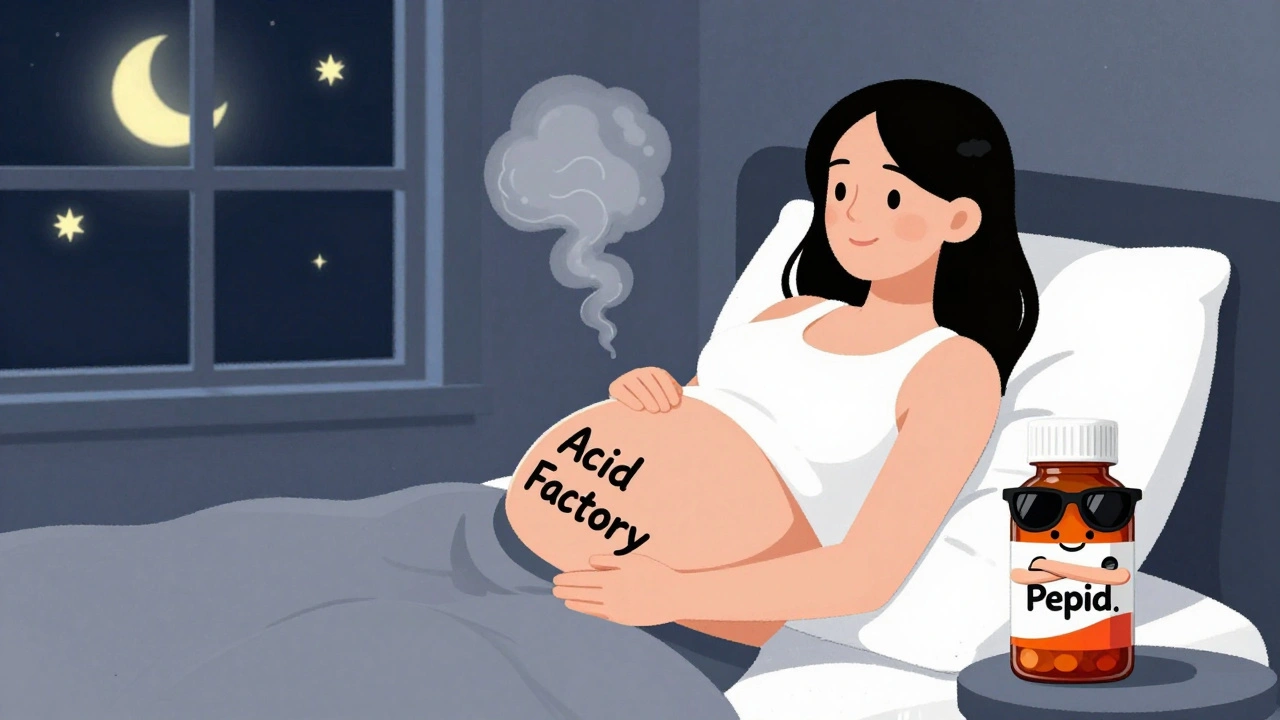
If antacids aren’t cutting it-maybe you’re getting heartburn multiple times a day or it’s waking you up at night-your provider might suggest an H2 blocker. These work differently. Instead of neutralizing acid, they reduce how much your stomach makes. The most common and safest choice is famotidine (Pepcid). It starts working in about an hour and lasts up to 12 hours, so one dose can cover you through dinner and bedtime.
Why famotidine? Because it’s been studied the most in pregnant people. Data from thousands of pregnancies show no increased risk of birth defects or complications. Ranitidine (Zantac) used to be a go-to, but it was pulled from the U.S. market in 2020 after being found to contain NDMA, a possible carcinogen. Don’t use it. Ever.
H2 blockers are generally safe for short-term use. Side effects are rare but can include mild headaches or dizziness in a small number of people. If you’re using one daily for more than two weeks, talk to your provider. Long-term use isn’t usually necessary, and there’s no need to keep taking it if your symptoms improve with diet changes.
Third-Line: Proton Pump Inhibitors Like Prilosec
If you’ve tried antacids and H2 blockers and you’re still in pain, your provider might consider a proton pump inhibitor (PPI). These are the strongest acid reducers available. Omeprazole (Prilosec) is the most studied PPI in pregnancy. Lansoprazole (Prevacid) and pantoprazole (Protonix) are also options, but omeprazole has the most safety data.
PPIs work by shutting down the acid-producing pumps in your stomach lining. They take longer to kick in-1 to 4 hours-but their effect lasts 24 hours or more. That’s why they’re often taken once a day, usually before breakfast.
Here’s the catch: while studies haven’t shown a clear link to birth defects, there are some concerns. A 2019 study in JAMA Pediatrics found a possible association between PPI use in the first trimester and a slightly higher risk of childhood asthma-but it didn’t prove cause and effect. That’s why doctors don’t prescribe PPIs unless absolutely necessary. If you’re in your first 14 weeks of pregnancy, avoid them unless your symptoms are severe and other treatments have failed.
Long-term PPI use can also affect how your body absorbs calcium, iron, and vitamin B12. That’s why they’re not meant for daily, indefinite use during pregnancy. If you need them for more than a few weeks, your provider will likely monitor you closely.
What to Avoid Completely
Not all heartburn remedies are safe. Some over-the-counter products sound harmless but can be dangerous. Here’s what to skip:
- Pepto-Bismol and other bismuth subsalicylate products-these are aspirin-like and linked to bleeding risks and developmental issues.
- Ranitidine (Zantac)-withdrawn from the market in 2020 due to cancer-causing contaminants.
- Aluminum-based antacids in high doses-can cause constipation and may affect fetal development if used long-term.
- Herbal remedies and unregulated supplements-many haven’t been tested in pregnancy and could contain hidden ingredients.
Even if something says “natural,” don’t assume it’s safe. Always check with your provider before trying anything new.
When to Skip Medication Altogether
The best heartburn treatment isn’t a pill-it’s a change in habits. Many women find relief just by adjusting their routine. Try these simple, drug-free strategies:
- Eat smaller meals-five or six tiny meals a day instead of three big ones.
- Avoid trigger foods: spicy, fried, fatty, or acidic foods like citrus, tomatoes, coffee, and chocolate.
- Don’t lie down for at least 3 hours after eating.
- Wear loose clothing-tight waistbands put extra pressure on your stomach.
- Elevate your head while sleeping-use a wedge pillow or stack a couple of regular pillows.
- Drink fluids between meals, not during-filling your stomach with liquid makes reflux worse.
These changes don’t just help with heartburn-they can reduce bloating, nausea, and overall discomfort. And they’re free.
Timing Matters: First Trimester Caution
The first 14 weeks of pregnancy are the most sensitive for fetal development. That’s when organs are forming. While no medication is 100% risk-free, the risk of harm is highest during this time. Experts recommend avoiding all non-essential medications-including antacids-during the first trimester unless absolutely necessary.
If you’re struggling with heartburn early on, focus on diet and posture. If you must use something, calcium carbonate antacids like Tums are the least risky option. But even then, talk to your provider first. They can help you weigh the benefit of relief against any potential risk.
When to Call Your Provider
Heartburn is common. But some symptoms aren’t normal. Call your provider if you have:
- Heartburn that doesn’t improve with medication or lifestyle changes
- Difficulty swallowing or pain when swallowing
- Vomiting blood or black, tarry stools
- Unexplained weight loss
- Chest pain that radiates to your arm, jaw, or back
These could signal something more serious-like GERD complications, a hiatal hernia, or even heart issues. Don’t ignore them.
Final Thoughts: Safety Is Personal
There’s no one-size-fits-all answer when it comes to heartburn in pregnancy. What works for one person might not work for another. The goal isn’t to eliminate every bit of discomfort-it’s to find the safest, most effective way to feel better without risking your baby’s health.
Start with lifestyle changes. If you need help, reach for calcium carbonate antacids. If that’s not enough, ask about famotidine. Save PPIs for when everything else fails-and only with your provider’s approval. And never take anything without checking in first. Your body is doing something incredible. Treat it with care-medication or not.
Is Tums safe during pregnancy?
Yes, Tums (calcium carbonate) is considered one of the safest heartburn medications during pregnancy. It neutralizes stomach acid quickly and provides extra calcium, which supports your baby’s bone development. Stick to the recommended dose-no more than 7,500 mg per day-and talk to your provider if you’re using it daily for more than a few weeks.
Can I take Pepcid while pregnant?
Yes, famotidine (Pepcid) is generally safe for short-term use during pregnancy. It’s an H2 blocker that reduces acid production and lasts up to 12 hours. It’s often recommended after antacids if symptoms persist. Avoid ranitidine (Zantac)-it was removed from the market in 2020 due to contamination risks.
Is omeprazole safe in early pregnancy?
Omeprazole (Prilosec) is the most studied PPI in pregnancy and is considered low-risk, but it’s not usually recommended in the first trimester unless absolutely necessary. Some studies suggest a possible link to childhood asthma, though no direct cause has been proven. Doctors typically reserve PPIs for severe cases that don’t respond to antacids or H2 blockers.
Why is Pepto-Bismol unsafe during pregnancy?
Pepto-Bismol contains bismuth subsalicylate, which breaks down into salicylates-similar to aspirin. Aspirin use during pregnancy is linked to bleeding risks, low birth weight, and complications during delivery. Even small amounts can be harmful, especially in the third trimester. Avoid all products with salicylates during pregnancy.
Can heartburn during pregnancy harm the baby?
No, heartburn itself doesn’t harm the baby. It’s caused by physical and hormonal changes in your body, not by anything affecting fetal development. However, if severe heartburn leads to poor nutrition, weight loss, or dehydration because you’re avoiding food, that could indirectly impact your baby. Managing symptoms helps ensure you’re eating well and staying healthy.
Should I avoid all medications in the first trimester?
It’s best to avoid all non-essential medications during the first 14 weeks, when your baby’s organs are forming. For heartburn, focus on diet and posture changes first. If symptoms are severe, calcium carbonate antacids like Tums are the safest option-but still check with your provider before using them.


14 Comments
Tums saved my life in the second trimester. No more midnight burning. Also got bonus calcium for the baby. Win-win. 😊
Agreed. Pepcid was my go-to after 20 weeks. Took one at dinner, slept through the night. No Zantac though-remember the NDMA mess? 🚫
OMG YES. I used to cry from heartburn at 2am. Tums + wedge pillow = my new BFFs. You're not alone, mama. 💪❤️
They say PPIs are 'low risk'... but what about the 2019 JAMA study linking them to childhood asthma? They're just downplaying it. Big Pharma doesn't care about your baby. 🤔
Important to note: calcium carbonate in Tums can interfere with iron absorption. If you're anemic, space your antacids and prenatal vitamins by at least two hours. Also, avoid magnesium trisilicate-can cause fetal toxicity in chronic use. Small details matter.
As an OB-GYN resident in Mumbai, I see this daily. Antacids first, H2 blockers second, PPIs last. And yes-diet changes are 80% of the battle. No magic pills, just smart habits. Also, avoid pineapple and curry at night. Trust me.
Simple advice: eat small. Sleep upright. Avoid chocolate. Done. Medication is for emergencies. Nature knows best.
But... what if your doctor prescribes omeprazole anyway? Do you really trust them? They get kickbacks from pharma. I read a Reddit thread where a woman's kid developed asthma after she took PPIs. Coincidence? I think not. 😔
@Laura Weemering-there’s no evidence of causation, only association. The JAMA study adjusted for confounders like maternal BMI, smoking, and breastfeeding duration. Also, asthma risk was only slightly elevated (HR 1.13). That’s less than the risk from secondhand smoke. Don’t panic-be informed.
The real issue isn’t the meds-it’s that we’ve medicalized a normal physiological process. The body isn’t broken; it’s adapting. Lifestyle changes are the true cure. Medication is a crutch. And yes-Tums are fine, but don’t mistake calcium for healing.
my doc said pepcid is fine but i totally forgot and took pepto once bc i was desperate and now i’m terrified. is my baby gonna be ok?? 😭
One time won’t hurt, I promise. You’re not a bad mom for being desperate. Just don’t do it again. Tums next time, okay? ❤️
While the article cites JAMA Pediatrics, it fails to mention that the 2019 cohort study had significant selection bias-mothers on PPIs were more likely to have GERD, obesity, and higher SES, all confounding variables. The data is not robust enough to inform clinical practice. This is why evidence-based medicine requires meta-analyses, not single studies.
Why are we even talking about this? In my country, we just eat rice and avoid spicy food. No pills. No doctors. No problems. You Americans over-medicate everything. Just eat right. That’s it.