
Why Tracking Medication Expiration Dates Matters
Most people don’t think about their medicine cabinet until they need something-maybe a headache pill, an antibiotic, or an EpiPen in an emergency. But if that pill has been sitting there since 2021, it might not work when you need it most. The FDA says most medications are safe to use past their expiration date, but their effectiveness drops over time. For critical drugs like insulin, nitroglycerin, or epinephrine, even a small loss in potency can be dangerous. In Australia, the TGA estimates that over 15% of household medicine cabinets contain at least one expired product. That’s not just waste-it’s a hidden risk.
Start With a Full Cabinet Audit
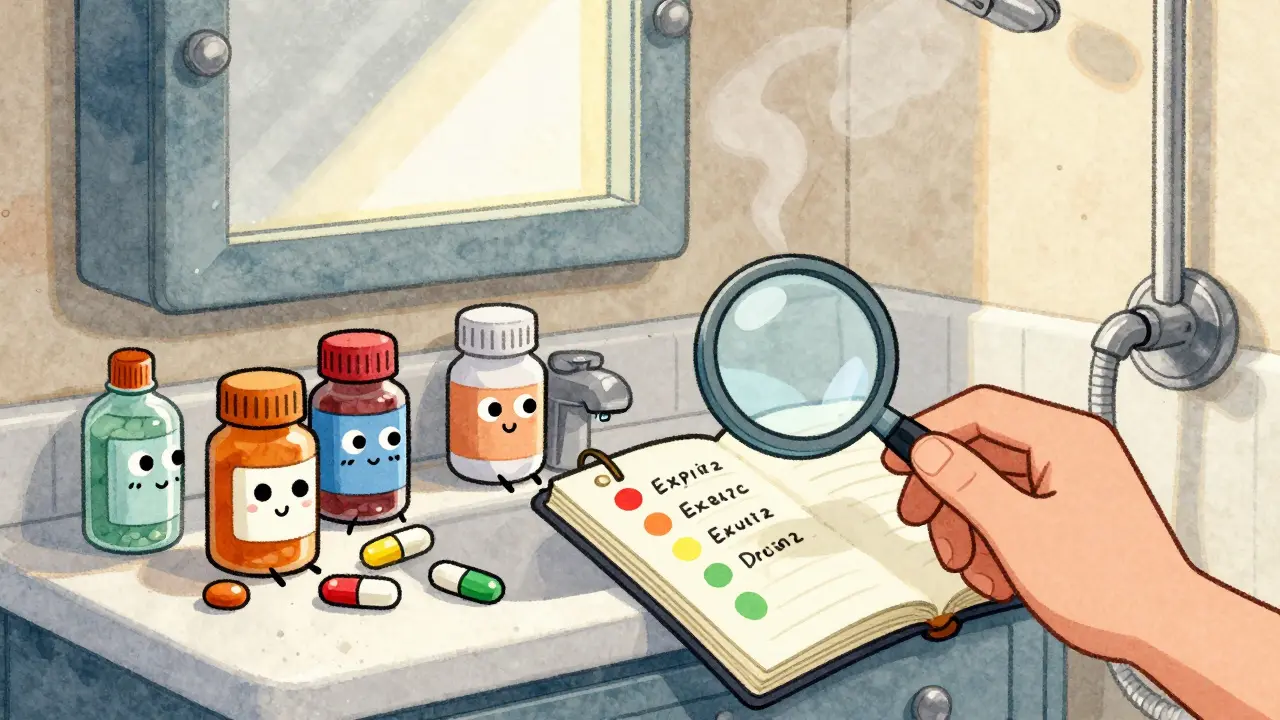
Don’t just glance at your cabinet. Take everything out. Lay it all on the counter. Look at every bottle, box, and blister pack. Check the printed expiration date. If it’s faded or missing, write the purchase date on the container with a permanent marker. This isn’t just busywork-it’s your first line of defense. Many people keep old antibiotics “just in case,” but those lose potency after six months. Same with liquid medications like eye drops or cough syrup-they’re good for only 28 days after opening, even if the bottle says 2027.
Use a Simple Tracking System (No Tech Needed)
You don’t need a smart cabinet or an app to stay on top of this. A $3 notebook and a pen work just fine. Create two columns: one for the medication name, one for the expiration date. Add a third column for when you opened it (especially for liquids). Update it every time you refill a prescription. Keep the notebook next to your cabinet. Every three months, take five minutes to scan it. If something expires in the next 30 days, plan to replace it. This simple habit cuts down on clutter and keeps your meds reliable.
Label Everything Clearly
Transfer the expiration date from the box to the bottle using a small sticker or waterproof label. Use bright colors-red for expired, yellow for expiring soon, green for good. If you have kids or elderly family members living with you, color-coding helps them avoid mistakes. Don’t rely on memory. A 78-year-old man in Melbourne recently took a 2021 painkiller because he thought it was new. It didn’t help. He ended up in the ER. Clear labels prevent that kind of confusion.
Store Medications Right
Heat, humidity, and light kill medicine faster than time. Don’t keep pills in the bathroom cabinet-steam from showers ruins them. Don’t leave them on the kitchen counter near the stove. The best place is a cool, dry drawer or cupboard away from direct sunlight. Some medications, like insulin or certain antibiotics, need refrigeration. Check the label. If it says “store below 25°C,” keep it in a shaded spot, not the fridge unless specified. In Melbourne’s summer heat, even a sunny windowsill can push a cabinet past safe temperatures.
Dispose of Expired Meds Properly
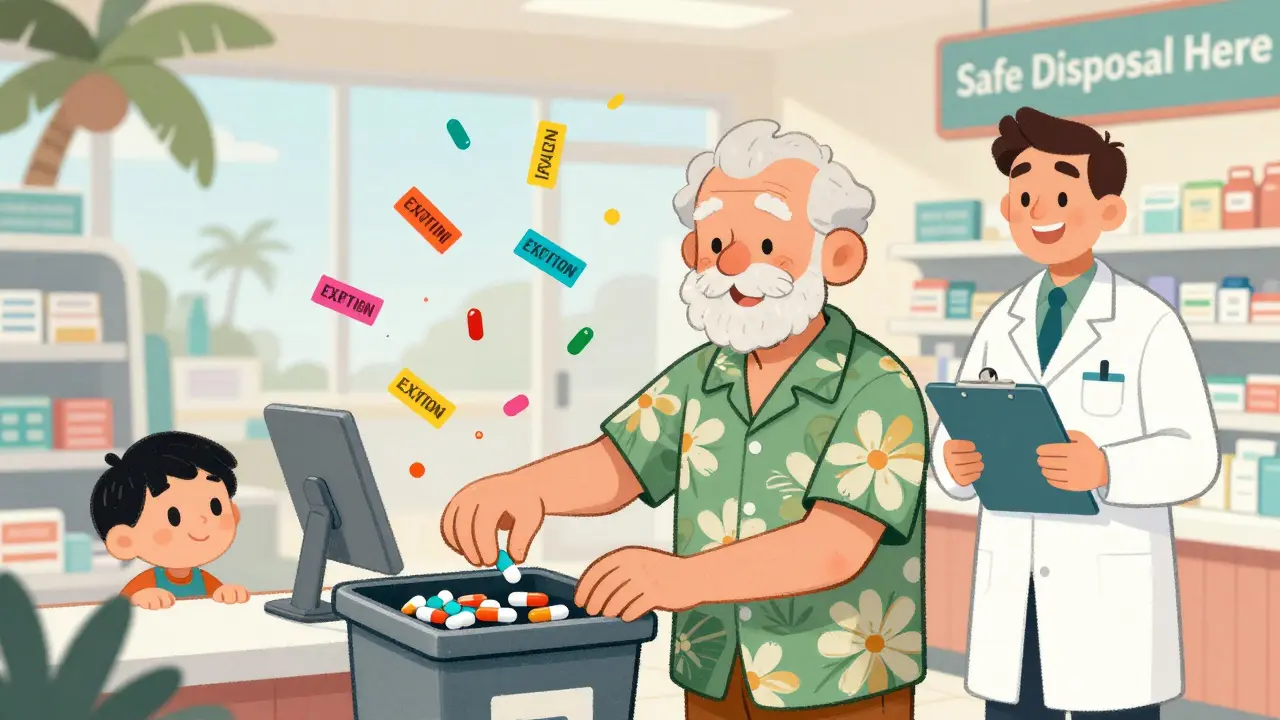
Never flush pills down the toilet or toss them in the trash. In Australia, the National Drug Strategy recommends returning expired or unwanted medicines to your local pharmacy for safe disposal. Most pharmacies have a free take-back bin. If yours doesn’t, call your council-they often run quarterly collection events. Throwing meds in the garbage risks pets, kids, or even water contamination. A 2023 study by the University of Melbourne found trace amounts of expired antibiotics in local waterways because of improper disposal. Don’t be part of the problem.
What to Do When You’re Not Sure
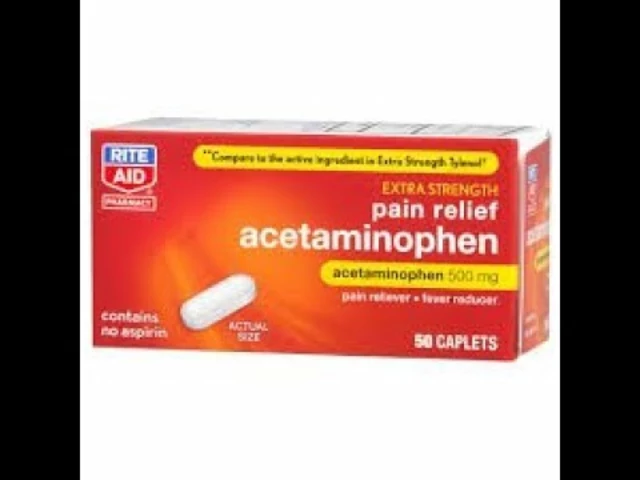
Still unsure if a pill is safe? Don’t guess. Call your pharmacist. They can tell you if it’s still effective, even past the printed date. Some medications, like aspirin or acetaminophen, remain stable for years. Others, like liquid antibiotics or thyroid pills, degrade fast. Pharmacists see this every day. They’ve helped people avoid dangerous mistakes for decades. Use their expertise. It’s free, and it’s faster than Googling.
When to Upgrade to a Smart System
If you manage medications for multiple people-say, an elderly parent or a child with chronic illness-a digital tracker might help. Apps like Medisafe or MyTherapy let you log doses and set alerts for expirations. Some smart cabinets (like BD Pyxis or Omnicell) exist, but they’re designed for hospitals and cost thousands. For home use, they’re overkill. Stick with a simple system unless you’re managing 10+ medications daily. Even then, a printed log with color-coded labels beats a complicated app that you stop using after a month.
Make It a Routine, Not a Chore
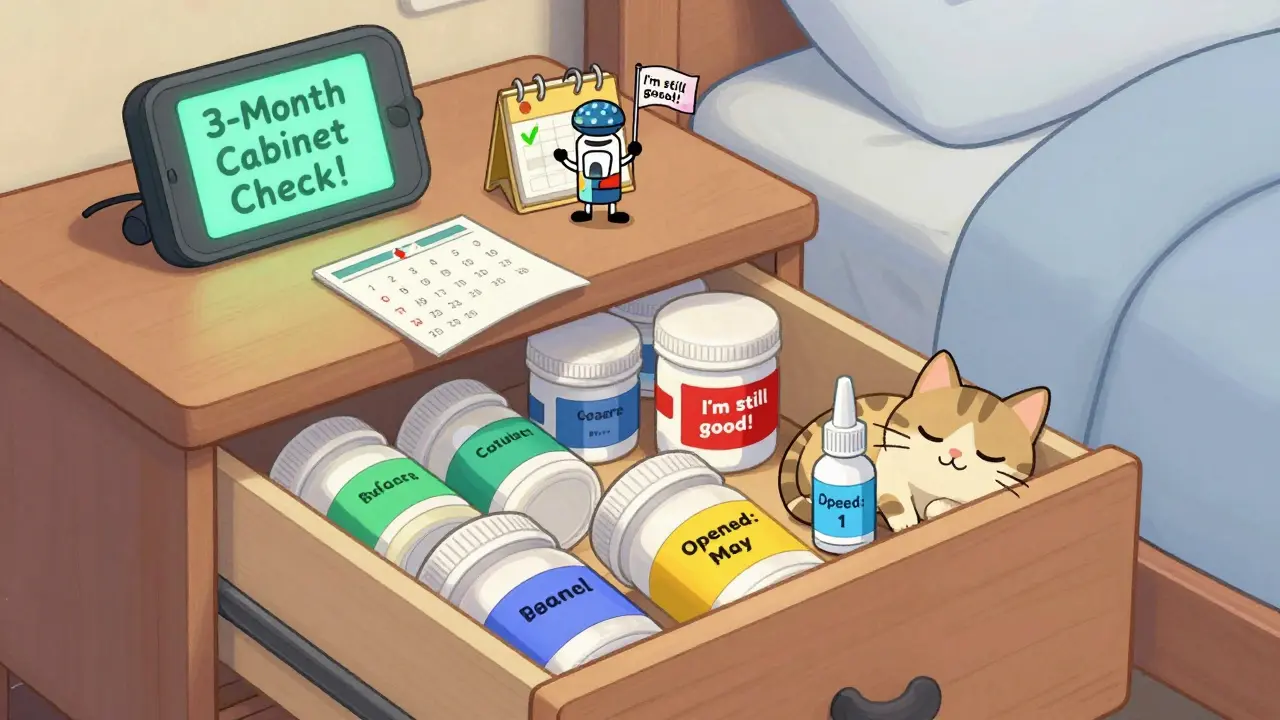
Set a reminder on your phone: every three months, on the first Sunday, check your cabinet. It takes 10 minutes. You’ll find expired painkillers, old antihistamines, forgotten inhalers. You’ll toss them safely. You’ll refill what you need. You’ll feel in control. This isn’t about perfection-it’s about safety. A few minutes every season can prevent a trip to the hospital, a failed treatment, or worse.
What Happens If You Ignore This?
People think expired medicine is harmless. It’s not. In 2022, a Sydney woman took an old antibiotic for a tooth infection. It didn’t work. The infection spread. She lost two teeth. Her doctor said the drug had lost 60% of its potency. In another case, a Melbourne dad gave his son expired asthma inhaler during a flare-up. It didn’t open the airways. The child needed emergency treatment. These aren’t rare. They’re preventable. Tracking expiration dates isn’t about being neat. It’s about being ready when it counts.
Can I still use medicine after its expiration date?
Most solid medications like pills and capsules remain safe and effective for years past their printed date, especially if stored properly. However, effectiveness decreases over time. Liquid medicines, insulin, epinephrine, and antibiotics degrade faster and should never be used after expiration. When in doubt, consult your pharmacist.
Where’s the best place to store medicine at home?
Store medicines in a cool, dry place away from sunlight and moisture. A bedroom drawer or kitchen cupboard away from the stove is ideal. Avoid bathrooms due to steam and humidity. Some medications require refrigeration-always check the label. Never leave pills in a hot car or near a window.
How do I safely dispose of expired medication?
Return expired or unwanted medications to your local pharmacy-they offer free take-back bins. In Australia, this is the only safe method. Never flush pills or throw them in the trash. Many councils also host annual collection days. This prevents contamination and keeps medicines out of children’s or pets’ reach.
Do I need a smart cabinet or app to track expiration dates?
No. Most people don’t need expensive smart cabinets or apps. A simple notebook with expiration dates and color-coded labels works better than complex systems that get ignored. Only consider digital tools if you manage over 10 medications daily or care for someone with complex needs.
What medications expire fastest after opening?
Liquid antibiotics, eye drops, insulin, nasal sprays, and oral suspensions lose potency quickly after opening-often within 28 days. Even if the bottle says “use by 2027,” once opened, treat them like perishable food. Write the opening date on the container and discard after four weeks unless instructed otherwise.


9 Comments
I used to ignore expiration dates until my mum had a bad reaction to an old antihistamine. Now I check every three months like clockwork. No apps, no fancy gadgets-just a notebook and a red marker. Simple, but it saves lives.
Also, never store meds in the bathroom. Steam is the silent killer of pills. I learned that the hard way when my asthma inhaler turned to dust after six months in the cabinet above the sink.
Thank you for this. I’ve been meaning to clean out my cabinet for over a year-and I still haven’t done it. But now I’m going to, because I realized I’ve got three different bottles of ibuprofen from 2019, 2020, and 2021. All of them. And I didn’t even remember buying them.
Also, I had no idea eye drops expire 28 days after opening. That’s terrifying. I’ve been using the same bottle since my last cold. I’m throwing it out today.
Wow, someone finally said it. People are idiots for keeping expired meds. You wouldn’t eat spoiled milk, but you’ll swallow a 5-year-old antibiotic like it’s candy? Come on.
And no, the FDA doesn’t say it’s safe. They say it’s *likely* not toxic. Big difference. Potency isn’t a suggestion-it’s a guarantee. If it’s expired, it’s trash. Stop rationalizing.
Just wanted to add-liquid antibiotics are the worst. I had a kid’s amoxicillin that expired in 2022 but I used it anyway because it looked fine. Kid got sicker. Turned out the suspension had clumped and the active ingredient settled at the bottom. We had to go to urgent care. Never again.
Also, write the opening date on the bottle. Seriously. Even if it’s messy. I use a Sharpie and it lasts. No excuses.
There’s a deeper question here: why do we treat medicine as disposable? We stockpile it like it’s canned goods, yet we rarely question its integrity. The expiration date is not just a legal formality-it’s a reflection of our relationship with time, control, and vulnerability.
We fear illness, so we hoard remedies. But hoarding without understanding is just superstition dressed as preparedness. Maybe the real issue isn’t the cabinet-it’s the anxiety behind it.
Bro this is life changing. I just did my cabinet audit and found like 7 expired things. I threw em all out and made a little chart on my fridge with colors. Red = trash, green = good. My mom even asked what’s going on and I told her. Now she’s doing it too.
Also, pharmacies in India have take-back bins too. You just gotta ask. Don’t be shy. They’ll help you. You’re not weird for caring. You’re smart.
Forget the notebook. Just buy a cheap whiteboard and stick it on the cabinet door. Write meds and dates. Erase when you use them. Update when you refill. 10 seconds a week. Done.
And yes, the bathroom is a death trap. I had a bottle of liquid melatonin that turned into sludge because of humidity. I didn’t know until I tried to pour it. That’s not science. That’s a horror story.
Pharmacists are your real MVPs. Use them. They’re paid to know this stuff. Don’t Google it. Don’t Reddit it. Ask a human who’s seen 500 expired bottles this week.
😂 I love how this turned into a public service announcement. Next they’ll tell us to floss and wear sunscreen.
Also, I keep my meds in the glovebox. Works great. Hot? Yes. But hey, if it’s expired, it’s expired. Who cares? I’ve taken 2018 ibuprofen in the desert and lived to tell the tale. 😎
Also, the FDA says it’s fine. So I’m not worried. 🤷♂️
How charming. A 1,200-word essay on medicine cabinet hygiene, followed by a smug, self-congratulatory tone-as if the act of labeling pills makes one morally superior to those who haven’t yet reached your level of organized enlightenment.
Yet, you neglect to mention that 40% of Americans can’t afford to replace expired medications. Or that many elderly patients rely on expired drugs because they simply have no choice.
Perhaps the real crisis isn’t the expiration date on the bottle-but the expiration of compassion in our healthcare system.