
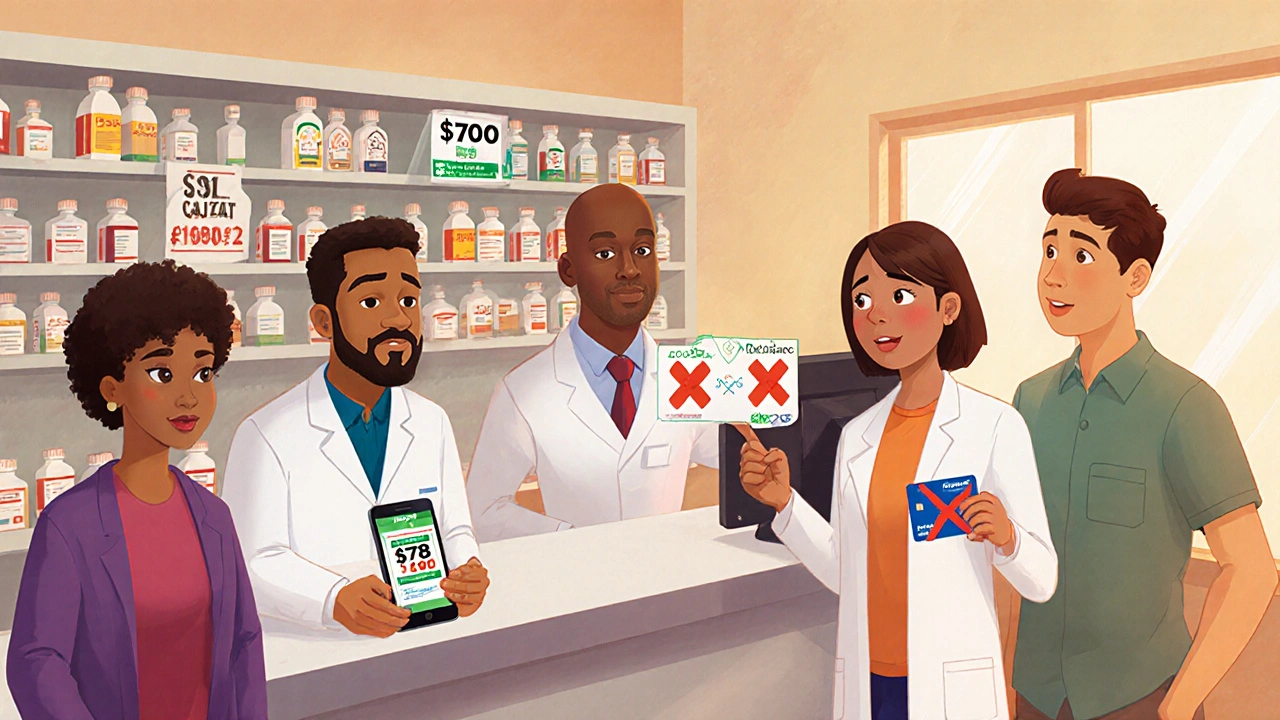
Every month, millions of Americans face a tough choice: pay their insurance copay for a prescription, or use a discount card and pay cash instead. It sounds simple, but the reality is messy. For some, using GoodRx or a similar service saves hundreds - even thousands - of dollars. For others, it leads to confusion, denial at the pharmacy counter, or worse, a bill that somehow still comes out higher. This isn’t about being uninsured. It’s about understanding how drug pricing really works - and when skipping insurance might be the smarter move.
How GoodRx Actually Works (And Why It’s Not Insurance)
GoodRx isn’t insurance. It doesn’t cover you. It doesn’t pay for your meds. Instead, it acts like a price comparison tool that taps into the same hidden discounts pharmacies give to big insurance companies and Pharmacy Benefit Managers (PBMs) like Express Scripts and OptumRx. These discounts are usually not available to regular customers - unless you use a service like GoodRx. Here’s how it works: You type in your drug name and zip code. The app shows you prices at nearby pharmacies - CVS, Walgreens, Walmart, even small local shops. You pick the lowest price, show the coupon on your phone, and pay cash. No enrollment. No monthly fees. No deductible to meet. Just a simple transaction. The catch? You can’t use it with your insurance. Ever. If you try to present both your insurance card and a GoodRx coupon, the pharmacy will reject the coupon. The system doesn’t allow it. You have to choose one or the other. That’s where most people get tripped up. They assume insurance always saves money. But for certain drugs - especially brand-name medications not on your plan’s formulary - the cash price through GoodRx can be way lower than your insurance copay. For example, someone on Medicare paying $700 for Jardiance (a diabetes drug) might find the same prescription for $578 using GoodRx. That’s a $122 saving - just by switching. And it’s not rare. According to GoodRx’s own data, 34% of insured patients save more using a discount coupon than their insurance copay for non-preferred brand drugs.GoodRx vs. Other Discount Services: What’s the Difference?
GoodRx isn’t the only player. SingleCare, RxSaver, and even Amazon Pharmacy offer similar services. But they’re not all the same. GoodRx leads the market with 75% share, mainly because it pulls real-time prices from over 70,000 U.S. pharmacies. That’s more than any other service. SingleCare, for example, has fewer pharmacy partners and uses fixed pricing that doesn’t update as often. RxSaver is cheaper for some insulin prices - but only by a few dollars. GoodRx also offers a paid version: GoodRx Gold. For $9.99 a month (or $19.99 for a family), you get deeper discounts - up to 90% off - and free home delivery on 38,000+ medications. It’s worth it if you take multiple prescriptions regularly. For someone on a $400/month GLP-1 drug like Ozempic, the savings can easily cover the subscription cost in one month. But here’s the thing: Amazon Pharmacy has started undercutting GoodRx on generics by 8-12%. If you’re buying common drugs like metformin or lisinopril, Amazon might be cheaper - especially if you already use Prime. But Amazon doesn’t cover as many pharmacies, and it doesn’t show you price comparisons across multiple locations. GoodRx still wins if you want to shop around.When GoodRx Saves You Money (And When It Doesn’t)
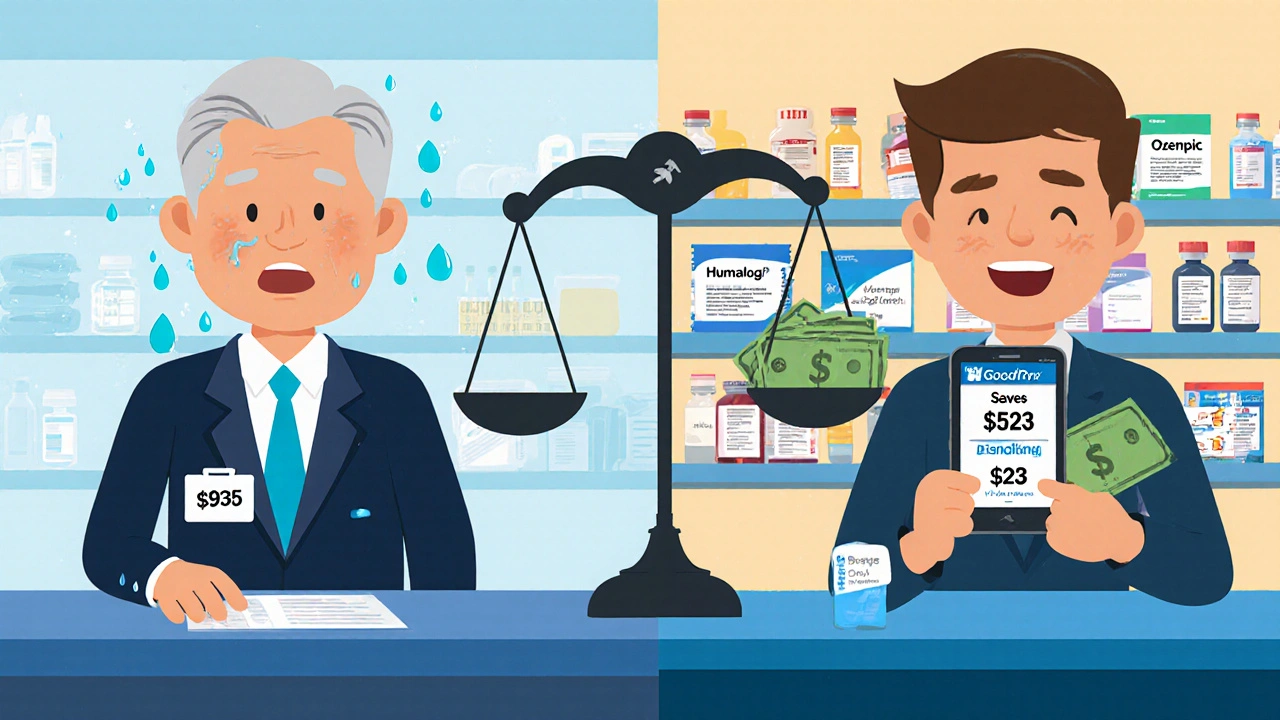
Not every drug is cheaper with GoodRx. It depends on three things: your insurance plan, the drug, and whether it’s generic or brand. GoodRx shines when:- You’re paying a high copay for a brand-name drug not on your formulary
- You haven’t met your insurance deductible yet
- You’re on Medicare Part D and stuck in the coverage gap (the "donut hole")
- You need a compounded medication or a drug your insurance won’t cover at all
- You’re on Medicare or Medicaid and use the coupon with your card - this can trigger fraud flags
- You’re taking controlled substances like Adderall - GoodRx doesn’t discount these due to DEA rules
- Your pharmacy doesn’t accept it - about 35% of independent pharmacies don’t participate
- You’re in a Medicare Part D gap where manufacturer coupons offer better savings
What You Need to Know Before You Use It
Using GoodRx is easy. But using it wisely takes a little homework. First, always compare. Before you pay at the pharmacy, check your insurance’s Explanation of Benefits (EOB) or call your insurer. Ask: “What’s my copay for this drug?” Then check GoodRx. Pick the lower one. Second, know your pharmacy’s rules. Some, like Kroger, require you to show the coupon on your phone - not print it. Others won’t accept it at all. Call ahead. It takes 30 seconds and saves a trip. Third, never mix it with Medicare or Medicaid. Presenting a GoodRx coupon along with your Medicare card is a violation of federal anti-kickback laws. Pharmacies will refuse it - and in some cases, your coverage could be flagged. The Medicare Rights Center reports 18% of such cases lead to coverage issues. Fourth, understand your drug’s status. Is it generic? Then GoodRx will likely save you money. Is it a new specialty drug? Then your insurance might still be cheaper - especially if it’s covered under a tier with a manufacturer coupon.Real Stories From Real Users
Reddit threads and Trustpilot reviews tell the real story. On r/GoodRx, users share wins and losses daily. One user, u/InsuredButBroke, tried to use GoodRx at Rite Aid for a $150 prescription. The pharmacist said no - “We don’t accept third-party coupons.” The user had to pay full price. That’s not uncommon. Only 65% of independent pharmacies accept GoodRx. Another, u/PharmTech2020, saved $412 on Ozempic and posted screenshots of the price difference. That’s the kind of win that keeps people coming back. On Trustpilot, 4.3 out of 5 stars from nearly 15,000 reviews. Most positive reviews mention GLP-1 drugs. Most negative ones cite pharmacy staff who don’t know how to process the coupon. The lesson? Success depends on the pharmacy and your preparation.
Expert Warnings: The Hidden Costs
Not everyone agrees GoodRx is a win. Some experts warn it’s part of a broken system. Dr. Aaron Kesselheim from Harvard says services like GoodRx may actually inflate list prices. How? Because PBMs adjust rebates when they see these coupons being used. If more people use GoodRx, drugmakers raise the list price to compensate - which means insurance prices go up too. Meanwhile, Express Scripts cut discounts on over 200 drugs in early 2024 after seeing a spike in GoodRx usage. That’s a direct response. The more people use it, the less discount pharmacies get - and eventually, those savings might disappear. The FDA and CMS are watching. New rules coming in 2025 could force PBMs to stop hiding prices. If that happens, GoodRx’s advantage might shrink by 15-20%. But here’s the truth: for now, it still works. For people paying out of pocket - whether they’re uninsured, underinsured, or stuck in a coverage gap - it’s a lifeline.How to Use GoodRx Like a Pro
You don’t need to be a pharmacist to use this right. Here’s your simple checklist:- Search your drug on the GoodRx app or website
- Compare the cash price with your insurance copay (call your insurer if unsure)
- If GoodRx is cheaper, skip your insurance card
- Go to the pharmacy with your phone - show the coupon
- If they refuse, ask to speak to the manager. Say: “I’m paying cash. Can you honor this discount?”
- For ongoing meds, consider GoodRx Gold if you take 3+ prescriptions monthly
- Never use it with Medicare or Medicaid
What Comes Next?
GoodRx isn’t going away. With 1.2 million new users every month, demand is growing. More people are realizing: insurance doesn’t always mean lower prices. Sometimes, cash is king. The system is broken. But GoodRx? It’s a workaround. A smart one. Not perfect. Not legal for everyone. But for millions of Americans, it’s the only way to afford their meds. If you’re paying hundreds every month for prescriptions - and your insurance isn’t helping - it’s time to check GoodRx. Not because it’s magic. But because it’s real. And right now, it’s one of the few tools that actually works.Can I use GoodRx with Medicare?
No. Federal law prohibits using GoodRx coupons with Medicare or Medicaid. If you present both your Medicare card and a GoodRx coupon, the pharmacy must reject the coupon. In some cases, this can trigger a fraud investigation or cause your coverage to be flagged. Always choose one or the other - never both.
Is GoodRx cheaper than my insurance copay?
It depends. For generic drugs, insurance is usually cheaper. But for brand-name drugs not on your formulary, or if you haven’t met your deductible, GoodRx can be significantly cheaper. One study found 34% of insured patients saved more using GoodRx than their insurance copay. Always compare the cash price with your insurance copay before paying.
Does GoodRx work at all pharmacies?
No. About 35% of independent pharmacies don’t accept GoodRx coupons. Major chains like CVS, Walgreens, and Walmart do. Smaller pharmacies may not have the system set up to process them. Always call ahead or check the app - it shows which pharmacies near you accept GoodRx.
Can I use GoodRx for controlled substances like Adderall?
No. GoodRx does not offer discounts on controlled substances due to DEA regulations. This includes ADHD medications like Adderall, opioids like oxycodone, and other Schedule II-IV drugs. You’ll need to rely on insurance or manufacturer assistance programs for these.
What’s the difference between GoodRx and GoodRx Gold?
GoodRx is free and gives you access to standard discount prices. GoodRx Gold is a $9.99/month (or $19.99/month for families) subscription that offers deeper discounts - up to 90% off - on over 38,000 medications. It also includes free home delivery and access to telehealth visits at $19 each. If you take multiple prescriptions monthly, Gold often pays for itself.
Does using GoodRx help me meet my insurance deductible?
No. When you pay with GoodRx, it’s treated as a cash payment. That means your spending doesn’t count toward your insurance deductible or out-of-pocket maximum. If you’re trying to reach your deductible to unlock better coverage later in the year, using GoodRx will delay that. Use insurance instead if you’re close to hitting your limit.


15 Comments
GoodRx is just a bandaid on a gunshot wound. The system’s rigged and they know it.
Let me guess-you’re one of those people who thinks insurance is sacred? Newsflash: PBMs are the real villains, and GoodRx is the middle finger they didn’t see coming. If you’re paying $700 for Jardiance, you’re already being fleeced. Stop pretending this is about fairness-it’s about survival.
I mean, I get it, right? Like, I’ve used GoodRx before, and sometimes it’s way cheaper, but then again, sometimes the pharmacy just doesn’t accept it and then you’re stuck standing there like an idiot holding your phone like it’s a magic wand and the pharmacist just stares at you like you’re from another planet and then you have to pay full price anyway and you just want to cry because you already spent 20 minutes trying to figure out if your insurance even covers this stupid pill and now you’re late for work and your coffee’s cold and honestly why does everything have to be so complicated
I used GoodRx for my dad’s blood pressure med last month and saved $110. He’s on Medicare, so I was nervous, but I made sure not to swipe his card-just showed the coupon. He didn’t even know how to use the app, so I helped him set up price alerts. Now he checks it every time he needs a refill. It’s not perfect, but it’s helped us breathe a little easier. If you’re stressed about meds, just try comparing prices once. You might be surprised.
While the utility of discount services like GoodRx is undeniable, it is imperative to acknowledge that their proliferation reflects a deeper structural failure in pharmaceutical pricing mechanisms. The fact that millions must resort to third-party coupons to afford essential medications is not a triumph of consumer innovation-it is a symptom of systemic neglect. The regulatory framework must evolve to ensure transparency and equity, rather than enabling market arbitrage as a substitute for policy.
Thank you for writing this with such clarity. Many people don’t realize how complex drug pricing is, and your breakdown helps them make informed decisions. I’ve seen friends pay hundreds more than they needed to because they assumed insurance was always better. Your checklist is gold. Please keep sharing this kind of practical wisdom-it saves lives.
GoodRx is a symptom not a solution
I’ve used GoodRx for my cholesterol med. Saved $80/month. I don’t use it with my insurance. I know it doesn’t count toward my deductible, but I’m not close to hitting it anyway. If I were, I’d switch back. Simple math. Also, the app’s price alerts saved me $40 last month when the price dropped. Not magic, just smart.
in india we dont have this but i heard from my cousin in texas she uses goodrx and saves so much money i wish we had something like this here the medicines here are so expensive even generics
I love how this post breaks it down without the jargon. My sister’s on Ozempic and was crying over the $900 copay. We checked GoodRx-$488. She cried again, but this time from relief. I printed out the coupon and walked her to the pharmacy. The pharmacist didn’t know how to process it at first, but after a quick call to the corporate line, it worked. We both learned something that day.
Thank you for this detailed and thoughtful guide! I have been using GoodRx for my diabetic medications for over a year now, and it has made a tremendous difference in my monthly budget. I always compare with my insurance, and sometimes, even though I have coverage, the cash price is lower. I also use the price alerts feature-it's a game-changer! I encourage everyone to take five minutes to check before paying at the pharmacy.
Been using GoodRx for my thyroid med since last year. Saved me $60 a month. Didn’t even know I could do this until my friend told me. Now I check every time. Some pharmacies still give you side-eye, but if you stay calm and say ‘I’m paying cash, can you honor this?’ they usually figure it out. No drama. Just savings.
GoodRx is just another way the elite let us think we’re winning while they keep raising list prices so insurance can keep gouging us. The system knows what we’re doing. They’re already cutting rebates. Next thing you know GoodRx won’t work at all and we’ll be back to paying $1000 for insulin like good little sheep
I’ve been on Medicare for five years now and I’ve learned the hard way that mixing GoodRx with Medicare is a dangerous game. I did it once-just to see if it worked-and the pharmacy refused it outright. Then I got a letter from my plan saying my account was under review. I had to spend three weeks proving I didn’t commit fraud. It was stressful, expensive, and totally unnecessary. If you’re on Medicare, don’t even think about it. Stick to your plan or use manufacturer coupons. There are legal ways to save.
It’s weird how we’ve turned something meant to help people-like affordable medicine-into a puzzle you have to solve just to survive. GoodRx isn’t the problem. The problem is that we live in a country where you need a spreadsheet and a degree in pharmacy law just to buy a pill. Maybe one day we’ll fix the system instead of just teaching people how to hack it.