

After a heart attack, bypass surgery, or other major cardiac event, the last thing you want to do is push yourself too hard. But the truth is, exercise is one of the most powerful tools you have to rebuild your heart and your life. The fear is real-many people worry that moving too much might trigger another event. That’s why structured, supervised cardiac rehabilitation exists. It’s not just a gym session with a clipboard. It’s a science-backed, step-by-step plan designed to get you back to living without putting your heart at risk.
What Happens in the First Days After a Heart Event?
Right after a heart attack or surgery, you’re not meant to be running laps. In fact, movement starts as soon as your doctors feel it’s safe-sometimes within 24 hours. In the hospital, you’ll begin with simple things: ankle pumps while lying down, sitting up in bed, and taking a few steps to the bathroom. These aren’t just to keep you from getting stiff. They help prevent blood clots, improve circulation, and gently wake up your cardiovascular system. Each movement is measured in METs-metabolic equivalents. Early activity stays under 2 METs. That’s about the effort of slow walking or getting dressed. No rushing. No straining. Just steady, safe progress.Phase 2: Getting Back on Your Feet
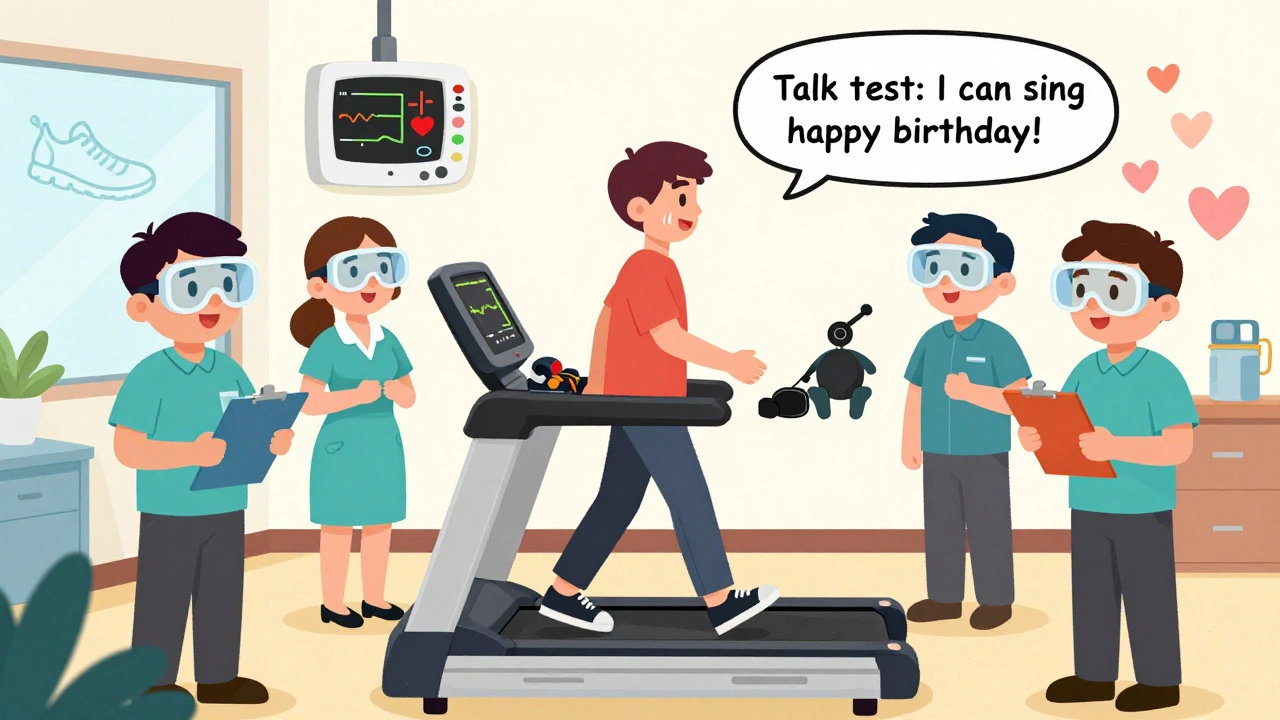
Once you’re discharged, you enter Phase 2 of cardiac rehab. This is where real recovery begins. Most programs start with walking-just 5 to 10 minutes a day. You’ll slowly build up to 30 minutes over the next four to six weeks. The goal isn’t speed or distance. It’s consistency. You’ll be told to use the talk test: if you can speak in full sentences without gasping, you’re in the right zone. Your heart rate should stay around your resting rate plus 20 to 30 beats per minute. If you’re on beta-blockers-which many are-your max heart rate might be 20% to 30% lower than before. That’s normal. Don’t chase old numbers. Focus on how you feel.Strength training starts too, but lightly. Light resistance bands or 1- to 2-pound weights, two days a week. No heavy lifting. No holding your breath. Breathing steadily during movement keeps your blood pressure stable. You’ll also do gentle stretching to keep your shoulders, chest, and back loose after surgery. All of this happens under supervision-at least at first. Nurses or exercise physiologists watch your heart rate, blood pressure, and symptoms. If you feel chest pressure, dizziness, or sudden shortness of breath, you stop. No questions asked.
Why Supervised Programs Work Better Than Going It Alone
You might think, “I can just walk in the park like everyone else.” But studies show people who do cardiac rehab have 25% faster recovery and 30% lower risk of dying within five years compared to those who exercise on their own. Why? Because cardiac rehab isn’t just about exercise-it’s about education and safety. You learn your personal warning signs: chest pain that spreads to your arm or jaw, unusual fatigue, slurred speech, or sudden weakness. These aren’t just “maybe it’s nothing” moments. They’re red flags.Without supervision, 27% of patients accidentally push too hard in the first month, according to Baptist Health. That’s dangerous. In cardiac rehab, you’re monitored with heart rate monitors and sometimes ECG patches. If your numbers spike, the team adjusts your plan immediately. You also get psychological support. Nearly 70% of heart patients feel anxious about exercise after an event. That fear can keep you sedentary-and that’s worse than overdoing it. In rehab, you hear from others who’ve been there. You learn that movement isn’t the enemy. Inactivity is.
What to Expect After 12 Weeks
By Phase 3, you’re no longer in a clinic. You’re in the maintenance phase. This is where you take control. The American Heart Association recommends at least 150 minutes of moderate aerobic activity per week-that’s 30 minutes, five days a week. You can split it up: two 15-minute walks, or three 10-minute sessions. Brisk walking, cycling on a stationary bike, or swimming are all excellent. You’ll also keep doing light strength training twice a week. The goal now is to make this part of your life, not a chore.Some newer research is changing old rules. A 2024 JAMA Cardiology study showed that for stable patients, short bursts of high-intensity interval training (HIIT)-like 30 seconds of fast walking followed by 90 seconds of slow walking, repeated 5 to 8 times-can improve heart function more than steady walking. But this isn’t for everyone. Only do HIIT if your rehab team says it’s safe. Most people still do moderate, continuous exercise. And that’s perfectly fine.
Barriers and How to Overcome Them
Only about 30% of people who qualify for cardiac rehab actually enroll. Why? Transportation issues, work schedules, or thinking it’s not covered by insurance. But Medicare and most private insurers cover up to 36 sessions after a qualifying event. Many programs now offer hybrid options: 12 in-person visits plus 24 virtual check-ins using wearable sensors. If you live far from a clinic, this can be a game-changer.Weather’s another obstacle. Cold winters or hot summers can make outdoor walking hard. Solution? Mall walking. Many shopping centers open early for walkers. Or use a treadmill at home. You don’t need a fancy one-just something that lets you walk safely indoors. Keep a symptom journal too. Write down how you felt after each session: energy level, breathing, any discomfort. That helps you spot patterns and talk to your doctor if something changes.

Warning Signs: When to Stop Immediately
You’re not expected to guess what’s dangerous. But you need to know the seven red flags that mean stop now:- Chest pain or pressure
- Pain spreading to your arm, neck, jaw, or back
- Dizziness or lightheadedness
- Irregular or racing heartbeat
- Unusual shortness of breath-not from exertion, but out of nowhere
- Slurred speech or confusion
- Sudden weakness or numbness in your face, arm, or leg
If any of these happen during exercise, stop. Sit down. Rest. If it doesn’t go away in a few minutes, call your doctor or 999. Don’t wait. Don’t hope it’ll pass. This isn’t overreacting. It’s survival.
Success Stories and Common Mistakes
A Mayo Clinic study followed 1,200 people who completed 36 rehab sessions. At one year, 92% were still exercising regularly. Only 45% of those who skipped rehab stuck with it. The difference? Support, structure, and confidence.On the flip side, failures usually come from pushing too soon. One patient I know started jogging two weeks after his stent. He felt fine-until he collapsed at home. He didn’t have chest pain. Just extreme fatigue. That’s the silent danger. Your heart might feel okay, but it’s still healing. Give it time.
People who succeed use simple tricks: they schedule exercise when their meds are working best (often mid-morning), they walk with a friend, and they celebrate small wins. Walking 10 minutes without stopping? That’s a victory. Adding five more minutes next week? Another win.
What’s Next for Cardiac Rehab?
The future is personal. Wearable tech is now standard in top programs. Sensors track your heart rate, sleep, and activity 24/7. AI tools are being tested to adjust your workout plan in real time based on your body’s response. One pilot at Mayo Clinic showed 28% better adherence when the system tweaked workouts automatically. That’s huge.But technology won’t replace human care. What works best is the blend: trained professionals guiding you, tech helping monitor you, and you learning to trust your body again. Cardiac rehab isn’t about getting back to how you were before. It’s about becoming stronger, smarter, and more resilient than ever.
Can I start exercising right after a heart attack?
Yes-but only with medical clearance and under supervision. Most patients begin gentle movement like ankle pumps or short walks within 24 to 48 hours after a heart attack, depending on their condition. The key is starting slow and staying within safe limits set by your care team.
Is it safe to lift weights after a heart event?
Yes, but only light resistance training, and only after your doctor approves it. Start with resistance bands or light dumbbells (1-2 pounds). Focus on controlled movements and never hold your breath. Strength training helps your heart by improving muscle efficiency and lowering blood pressure over time.
How do I know if I’m exercising too hard?
Use the talk test: if you can’t speak in full sentences without gasping, you’re going too hard. Also watch for chest pain, dizziness, nausea, or an irregular heartbeat. If you’re on beta-blockers, your heart rate won’t rise like it used to-so don’t rely on heart rate alone. Your perceived effort matters more.
Does insurance cover cardiac rehab?
Yes. Medicare and most private insurers cover up to 36 sessions of cardiac rehabilitation after a heart attack, bypass surgery, stent placement, or other qualifying cardiac events. Some plans also cover home-based or virtual rehab options, especially since 2023 when telehealth became more widely accepted.
What if I don’t live near a cardiac rehab center?
Many programs now offer hybrid models-12 in-person visits plus 24 virtual sessions using wearable devices like Bluetooth heart rate monitors. Your care team can guide you remotely, review your data, and adjust your plan. If no formal program is available, ask your doctor for a personalized exercise plan and consider joining a local walking group for support.
Can I do high-intensity workouts after cardiac rehab?
Only if your rehab team says it’s safe. Recent studies show that high-intensity interval training (HIIT) can be safe and effective for stable patients, improving heart function more than steady exercise. But it’s not for everyone. Start with moderate exercise first. Only progress to HIIT after several months of consistent, supervised training and medical approval.
How long does it take to feel normal again after a heart event?
Recovery varies, but most people start feeling stronger within 6 to 8 weeks of consistent rehab. Full recovery-where exercise feels natural and anxiety fades-often takes 3 to 6 months. The goal isn’t to return to exactly how you were before, but to become healthier and more confident than ever.

10 Comments
OMG I literally cried reading this. After my bypass, I was terrified to even stand up-now I walk 5K every morning and my cardiologist says I’m a poster child for rehab. Thank you for saying what so many of us need to hear: movement isn’t the enemy. Inactivity is. 🥹❤️
This is one of the most meticulously crafted, clinically grounded, and emotionally resonant pieces on post-cardiac recovery I have encountered in recent years. The integration of METs, the talk test, and the nuanced discussion of beta-blocker-adjusted heart rate thresholds demonstrates a profound understanding of both physiological and psychosocial dimensions of rehabilitation. It is not merely informative-it is transformative.
Y’all need to stop underestimating how powerful this stuff is. I’m from Mumbai, had a stent in 2021, and started with 5 minutes of walking around my apartment. Now I do yoga, swim, and even joined a local walking club. The key? Consistency. Not intensity. And yes, wearables help-my Fitbit told me I was overdoing it before I even felt dizzy. Also, don’t let anyone tell you ‘Indian food can’t be heart-healthy’-we’ve had dal, chana, and oats for centuries. Stop buying processed junk and start moving. Your heart will thank you. 🙏💪
Cardiac rehab is just a money grab for hospitals. I know people who died because they followed ‘the program’ and pushed too hard. The real solution? Don’t have a heart attack in the first place. Stop eating sugar. Stop being lazy. Stop blaming the system. You think walking 10 minutes a day fixes decades of bad choices? Pathetic.
There’s a missing period after ‘call your doctor or 999.’ Also, ‘27% of patients accidentally push too hard’-should be ‘27 percent.’ And ‘36 sessions’ should be hyphenated as ‘36-session’ when used adjectivally. Minor, but it matters.
My dad did this after his triple bypass. He used to hate exercise. Now he walks with his grandkids every evening and says he feels like he got a second life. No fancy gear. Just sneakers and a smile. If he can do it, anyone can. 💪❤️
This is why Western medicine is so overrated. In India, we’ve always known that rest, turmeric, and yoga are the real cures. Why are we paying for machines and monitors when our ancestors healed with breath and diet? This whole ‘METs’ and ‘HIIT’ nonsense is just corporate greed dressed as science. Go back to tradition, not technology.
I’m a nurse in Delhi and I’ve seen this firsthand. People think they’re fine after a stent because they ‘don’t feel pain.’ But the heart doesn’t scream-it whispers. And by the time it yells, it’s too late. The rehab program saved my uncle’s life. He didn’t believe in it until week 3. Now he’s training others. If you’re reading this and hesitating-just show up. One step. That’s all you need to start.
Let me tell you something-cardiac rehab isn’t about surviving. It’s about thriving. I went from needing oxygen to climb stairs to hiking mountains in Colorado. The science? Solid. The support? Life-changing. The gear? Doesn’t matter. What matters is showing up, listening to your body, and refusing to let fear write your story. You’re not broken-you’re becoming. And that’s beautiful.
This article is overlong and emotionally manipulative. Real recovery is discipline not handholding. Stop coddling patients. Just tell them to move or die. End of story.