
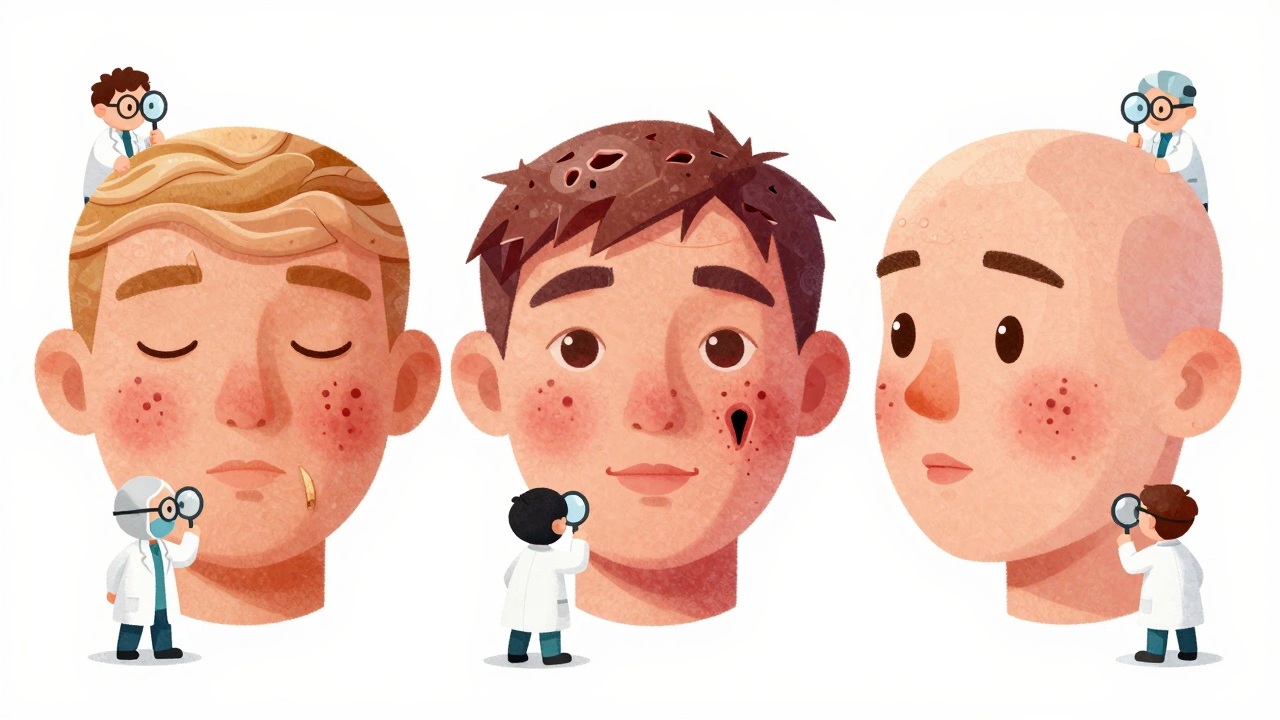
Acne scars don’t just linger-they stick around for years, sometimes decades, long after the breakouts are gone. If you’ve ever looked in the mirror and felt frustrated by the pitted, uneven texture left behind by severe acne, you’re not alone. Around 95% of people who’ve had acne develop some kind of scar, according to the American Academy of Dermatology. These aren’t just surface blemishes. They’re deep changes in your skin’s structure, caused when inflammation from cysts or nodules damages collagen and doesn’t heal properly. The good news? We now have more effective, science-backed ways to fix them than ever before.
Understanding Your Scar Type
Not all acne scars are the same. Knowing what kind you have helps pick the right treatment. There are three main types:- Rolling scars: Wide, shallow depressions with sloping edges that make skin look wavy.
- Boxcar scars: Sharp, angular indentations, often wide, like small craters.
- Ice pick scars: Narrow, deep pits that look like punctures-these are the toughest to treat.
Microneedling: The Gentle Powerhouse
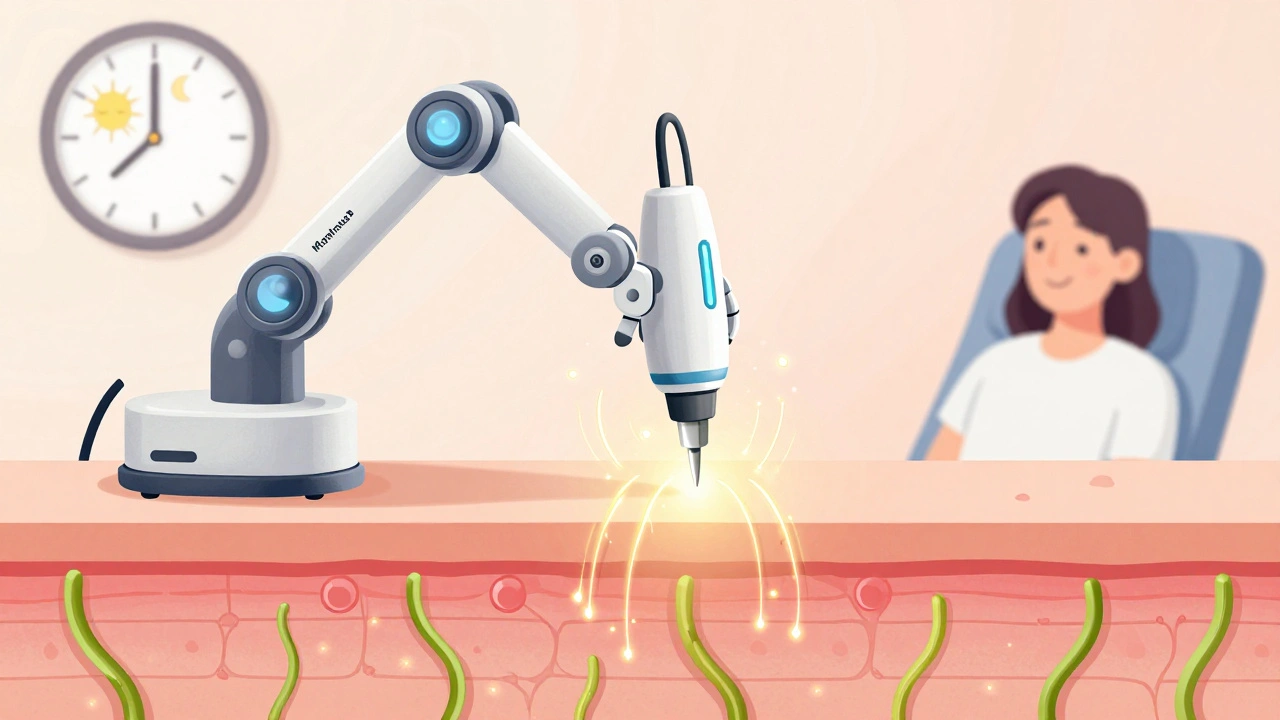
Microneedling isn’t new, but modern versions are far more powerful. Standard microneedling uses tiny needles to create micro-injuries in the skin, triggering your body’s natural healing response. This boosts collagen and elastin, smoothing out scars over time. But the real game-changer is RF microneedling-devices like Morpheus8. These needles don’t just poke the skin. They deliver radiofrequency energy deep into the dermis, heating tissue precisely to stimulate collagen remodeling. Think of it as a controlled burn from the inside out. Here’s what you can expect:- Needle depth: 1.5-2.5mm for best results on scars
- Punctures per second: Up to 200 (much faster than manual rollers)
- Energy range: 1-12W, adjusted based on scar depth and skin tone
- Sessions needed: 3-6, spaced 4-6 weeks apart
Laser Treatments: Precision, But With Trade-Offs
Lasers are the heavy lifters. They remove layers of damaged skin or heat deep tissue to rebuild structure. The type matters a lot:- Fractional CO2 (10,600 nm): Ablative. Removes thin layers of skin. Best for severe scarring, especially rolling scars. But downtime is 7-14 days.
- Er:YAG (2940 nm): Also ablative, but gentler. Good for moderate scars. Recovery: 5-7 days.
- Fractional 1,540 nm (Fraxel): Non-ablative. Targets deeper layers without removing skin. Recovery: 3-5 days. Works well for boxcar scars.
- Nd:YAG (1064 nm): Used for pigment issues and mild texture changes.
Topical Strategies: The Hidden Key
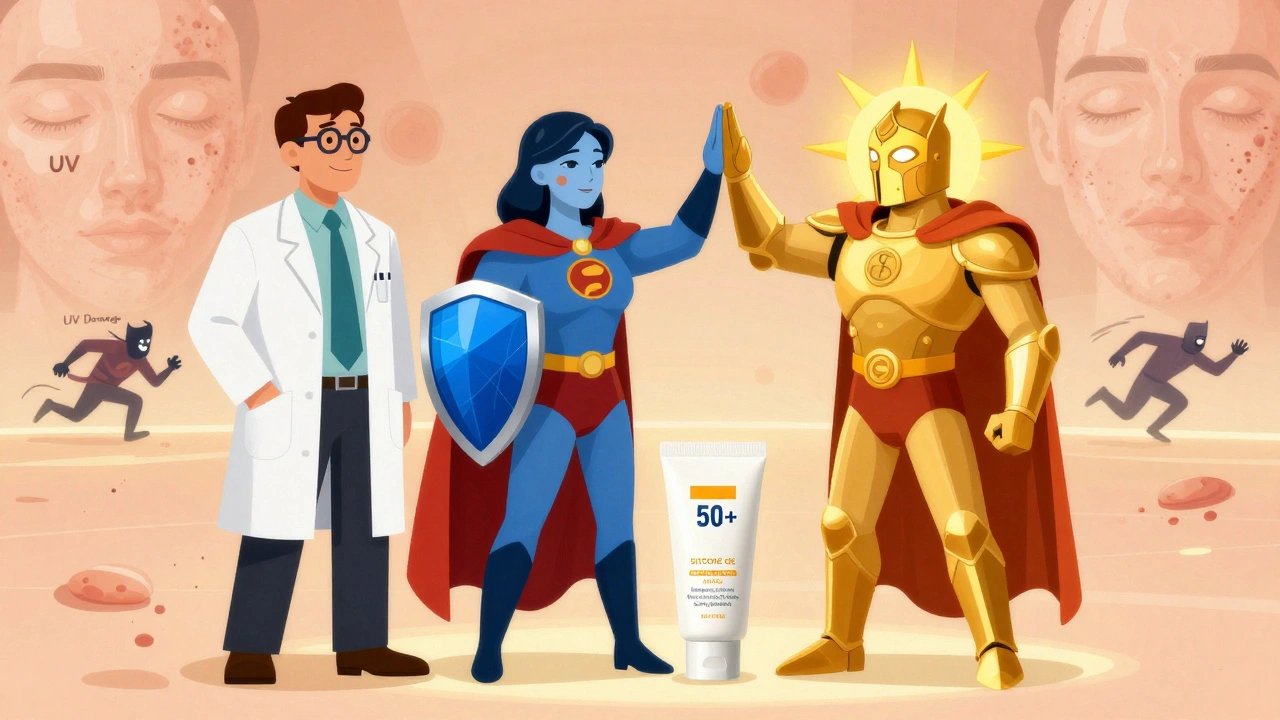
Too many people think lasers and microneedling are magic bullets. They’re not. Without the right skincare, results fade fast. Topical treatments aren’t optional-they’re essential. Before treatment: Use tretinoin 0.05% nightly for at least 12 weeks. A 2023 study showed this boosts treatment effectiveness by 22%. Why? It speeds up cell turnover and prepares the skin to respond better to energy-based devices. After treatment: Silicone gel is your best friend. It reduces redness, flattens scars, and cuts hyperpigmentation risk by 35%. Apply it daily for 3-6 months. Newer products like Skinbetter Science’s AlphaRet Scar Correcting Treatment combine retinaldehyde (a stronger form of retinol) with growth factors. In independent tests, it improved scar appearance by 30% in just 12 weeks. Don’t skip sunscreen. UV exposure worsens scarring and triggers dark spots. Use SPF 50+ daily-even on cloudy days-for at least 8-12 weeks after any procedure.Which Treatment Is Right for You?
There’s no one-size-fits-all. Here’s how to decide:| Factor | Microneedling (RF) | Laser (Fractional CO2/Er:YAG) |
|---|---|---|
| Best for | Mild to moderate scars, all skin tones | Severe scars, especially rolling |
| Downtime | 1-2 days | 7-14 days |
| Pain level | Moderate (VAS 5-7) | Moderate to severe (VAS 6-8) |
| Hyperpigmentation risk | 5-8% | 15-20% |
| Cost per session | £250-£400 | £400-£700 |
| Number of sessions | 3-6 | 1-5 |
| Results after 6 months | 50-70% improvement | 60-85% improvement |
The Winning Combo: What Pros Are Doing Now
The most successful outcomes aren’t from one treatment-they’re from a smart sequence. Leading clinics like Creo Clinic now use this protocol:- Start with 3 sessions of RF microneedling (Morpheus8) over 3-4 months.
- Follow with 1-2 sessions of fractional Er:YAG laser to polish remaining texture.
- Maintain with nightly tretinoin and daily silicone gel.
What to Avoid
Don’t fall for quick fixes. Chemical peels and over-the-counter serums won’t fix deep scars. And never skip pre-treatment prep. Jumping straight into a laser without using tretinoin first? That’s how you get uneven results or worse pigmentation. Also, avoid going to unlicensed providers. The American Board of Laser Surgery recommends at least 100 supervised procedures before someone can practice independently. Ask about their training. If they can’t tell you, walk away.Real Results, Real Stories
One patient in Liverpool had deep boxcar scars from teenage acne. She did six Morpheus8 sessions over a year. Each session took 45 minutes. She had two days of redness each time. After six months, her scars were 50% less visible. She didn’t need lasers. Just consistency. Another man tried a single CO2 laser session. His rolling scars dropped by 70%-but he was red for 10 days and had to cancel two work meetings. He says it was worth it, but he wishes he’d known about the combo approach first.What’s Next?
The future is personalized. Companies like Canfield Imaging are using AI to map scars in 3D and predict exactly which treatment will work best for your skin. In clinical trials, this boosted accuracy by 40%. Meanwhile, new topical formulas are emerging-like stabilized retinaldehyde blends and growth factor serums-that can improve scars without any procedures. Early data shows promise, especially for people who can’t afford or don’t want downtime. But right now, the best path is simple: know your scar type, choose the right energy-based treatment, and stick with the skincare. Don’t rush. Don’t skip steps. And don’t underestimate the power of patience.Can acne scars be completely removed?
No, acne scars can’t be completely erased, but they can be significantly improved-often by 50-85%. Most people see a dramatic difference in texture and confidence after a proper treatment plan. The goal isn’t perfection, it’s progression.
How many sessions of microneedling do I need for acne scars?
Most people need 3-6 sessions of RF microneedling, spaced 4-6 weeks apart. Mild scars may improve after 3, while deeper or mixed scars often require 5-6. Results build gradually over 3-6 months as new collagen forms.
Is laser or microneedling better for dark skin?
RF microneedling is safer for darker skin tones. Lasers carry a higher risk of post-inflammatory hyperpigmentation-up to 20% for Fitzpatrick types IV-VI. RF microneedling keeps heat focused below the surface, avoiding pigment disruption. Most dermatologists now recommend it as the first-line option for darker skin.
How long do results last?
Results from microneedling and lasers typically last 3-5 years, sometimes longer. Collagen remodeling is long-term, but aging and sun exposure can gradually bring back some texture. Maintenance with tretinoin and sunscreen helps preserve results indefinitely.
Can I do microneedling at home?
Home microneedling devices (under 0.5mm) are safe for general skin texture, but they won’t help acne scars. Scar treatment needs needles 1.5mm or deeper, which requires professional equipment and sterile technique. DIY tools can cause infection or worsen scarring. Stick to clinical-grade treatments.
What’s the fastest way to see results?
The fastest results come from combining RF microneedling with a single fractional laser session. Most patients notice visible improvement after 2-3 treatments, with peak results at 4-6 months. Don’t expect overnight change-this is a process, not a quick fix.


10 Comments
OMG THIS IS LIFE CHANGING 😭 I had ice pick scars from 16 and thought I was stuck with them… did 6 Morpheus8 sessions and now my friends ask if I got microblading on my cheeks 😅 also started silicone gel daily and my skin looks like it’s been airbrushed. No lasers, no drama. Just patience and consistency 💪✨
Lmao you people actually believe this corporate skincare propaganda? 🤡 Lasers are just fancy heaters run by Big Dermatology. They’re funded by pharma to keep you hooked. I’ve been using raw honey and apple cider vinegar for 3 years - my scars are ‘artistic’ now. Also, sunscreen? More like sunscreen propaganda. The sun is healing, not harming. 🌞✌️
As a board-certified derm tech, I can confirm the RF microneedling + Er:YAG combo is the gold standard for mixed scarring. The collagen remodeling kinetics are off the charts - especially with pre-treatment tretinoin priming. Just make sure your provider uses calibrated depth settings (1.8-2.2mm) and avoids overtreating Fitzpatrick IV+. Pro tip: post-procedure, use a ceramide-rich barrier repair cream to minimize TEWL. Your skin will thank you. 📈
I’m so glad this exists. I used to avoid mirrors for years. After my third Morpheus8 session, I caught my reflection and didn’t flinch. That’s the real win. Also, silicone gel isn’t sexy, but it’s the quiet hero. I’ve been using it for 8 months now - my scars are softer, lighter, and honestly? I feel like myself again. You’re not broken. You’re just healing. 💛
Let’s be real - most of you are wasting thousands on these procedures because you’ve been conditioned by Instagram influencers and dermatology marketing departments. The truth? Your scars are a reflection of poor lifestyle choices - sugar, dairy, stress, lack of sleep. No laser, no microneedling, no expensive gel is going to fix that. Go fix your gut. Go drink water. Go sleep 8 hours. Then come back and tell me you still need $2,000 worth of energy-based devices. You don’t. You just don’t want to admit it. This is capitalism selling you a cure for a problem it helped create.
Thank you for writing this. I was so scared to try anything because I have dark skin and was terrified of hyperpigmentation. I did 4 RF microneedling sessions and zero laser - and my skin looks better than it has since I was 18. I cried the first time I saw the difference. It’s not perfect, but it’s enough. You’re not alone. 🫂
Why are we trusting British pricing? £250? That’s a joke. In the US, this stuff costs $400-$700. And don’t get me started on ‘Morpheus8’ - it’s just a fancy name for a needle. If you’re going to pay for it, at least make sure your provider is American-trained. Foreign-trained techs don’t know the skin tone nuances. I’ve seen too many bad outcomes from overseas clinics. Stick to US board-certified providers. No exceptions.
My sister did the full combo: 6 RF sessions, 2 Er:YAG, tretinoin nightly, and silicone gel. After 18 months, her scars are 80% gone. But here’s what nobody says - the mental toll is real. You spend months looking in the mirror, waiting, doubting. Don’t just treat the skin. Treat the shame too. You’re not just healing your face. You’re healing your self-worth. And that’s worth every penny.
Just want to say - if you’re reading this and feeling hopeless, you’re not broken. Your scars don’t define you. I’ve been where you are. I thought I’d never date again. I thought I’d never take a photo without hiding. But progress isn’t linear. Some days you’ll feel like you’re back at square one. That’s normal. Keep going. The collagen doesn’t care how you feel. It just keeps building. And so should you. 💪
Wait so you’re telling me I can’t just use a derma roller from Amazon for $12 and get the same results? That’s what I’ve been doing for 2 years and my scars are kinda better? Maybe I’m just lucky? Also why are people spending so much money? I mean… I’ve got a 0.5mm roller and I roll every Sunday. That’s like 30 minutes a week. Who needs lasers? 🤷♂️