
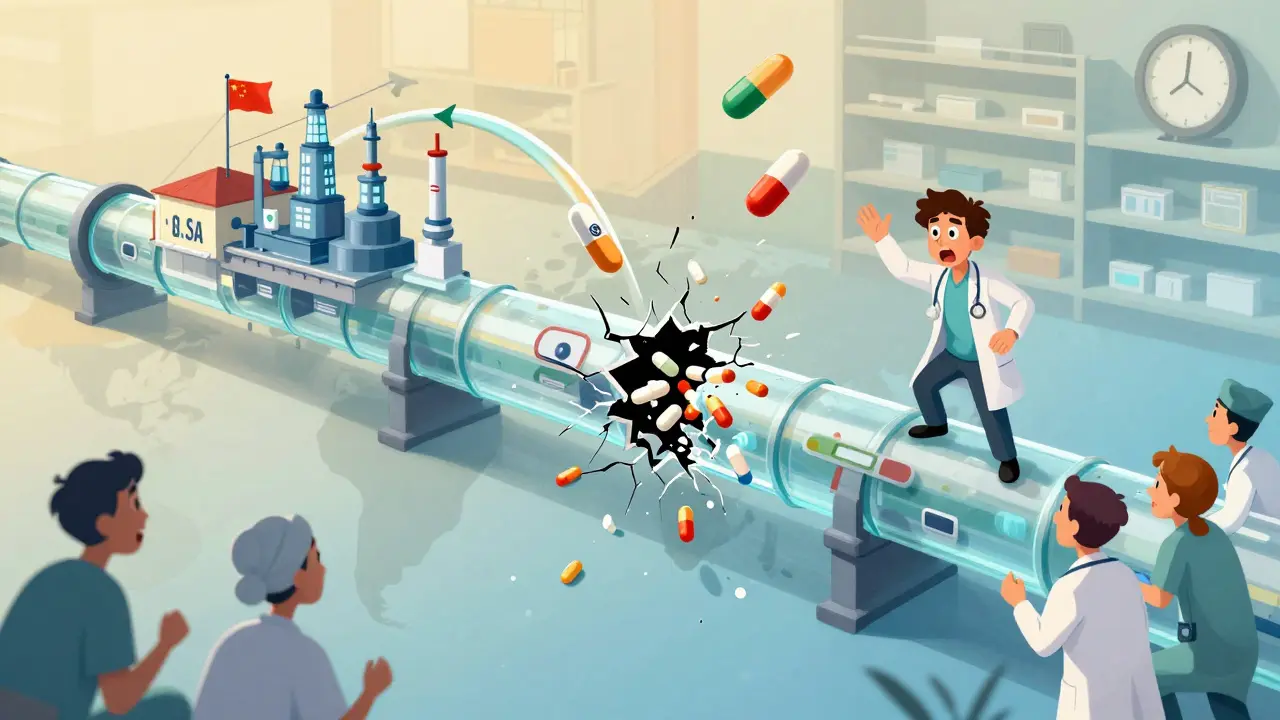
Drug shortages aren’t just inconvenient-they’re dangerous. In 2022, the FDA recorded 245 drug shortages in the U.S. alone. Many of these involved sterile injectables used in emergency rooms, ICUs, and during surgery. When a life-saving drug runs out, doctors scramble. Nurses ration doses. Patients delay treatment. And the cost? Over $216 million in extra healthcare expenses that year. This isn’t a glitch. It’s a system failure built over decades.
Why the drug supply is so fragile
For years, pharmaceutical companies chased efficiency. They cut costs by relying on a handful of overseas factories to make the active ingredients in medicines-especially in China and India. Today, 72% of the active pharmaceutical ingredients (APIs) used in U.S. drugs come from outside the country. Nearly 28% come from just two nations. That’s not diversification. That’s a single point of failure. When a factory in India shuts down for inspection, or a port in China closes due to lockdowns, or a cyberattack hits a logistics provider, the ripple effect hits hospitals weeks later. The system was designed to run lean-just enough inventory, just enough suppliers, just enough buffer. But when a disruption hits, there’s nothing left to fall back on.What resilience actually means
Resilience isn’t about having more drugs lying around. It’s about designing a system that can bend without breaking. The National Academies of Sciences laid out a clear framework: resilience requires three things-anticipation, planning, and risk management. Anticipation means knowing where your drugs come from, all the way back to the raw materials. Yet, only 12% of pharmaceutical companies can track their supply chain beyond three tiers deep. That’s like trying to fix a car without knowing where the engine is made. Planning means having backup options built in. That includes having at least three suppliers for critical drugs, spread across different continents. It means keeping six to twelve months’ worth of stock for the most essential medicines. And it means having pre-approved alternative versions of drugs ready to switch to when the original runs out. Risk management is about acting before crisis strikes. It’s not just about storing extra pills. It’s about using AI to predict disruptions before they happen. Companies that use AI-driven forecasting have seen 38% fewer stockouts. That’s not magic-it’s data.The three real strategies that work
There are three proven paths to building resilience, and they’re not mutually exclusive. 1. Domestic manufacturing for the most critical drugs Making APIs in the U.S. is expensive-up to 40% more than importing them. But for drugs like epinephrine, heparin, or antibiotics used in emergencies, the cost of a shortage is far higher. Merck invested $85 million in a domestic API facility for key antibiotics. The result? 95% of those drugs are now made in the U.S. The trade-off? Higher prices. But with federal support and adjusted Medicare payments, it became viable. 2. Global diversification Instead of relying on China and India alone, companies are now spreading manufacturing across Vietnam, Poland, Mexico, and South Korea. This doesn’t eliminate risk-but it reduces it. Kearney’s 2024 analysis found this approach delivers 70% of the benefits of reshoring, at just a 15-20% cost increase. It’s the smart middle ground. 3. Supply chain visibility The biggest blind spot? No one can see past their immediate supplier. That’s why 78% of companies use incompatible data systems. Investing in digital mapping tools-tools that track every step from raw chemical to pharmacy shelf-has the highest return on investment. Companies with full visibility report 32% fewer disruptions, even though this accounts for only 8% of total resilience spending.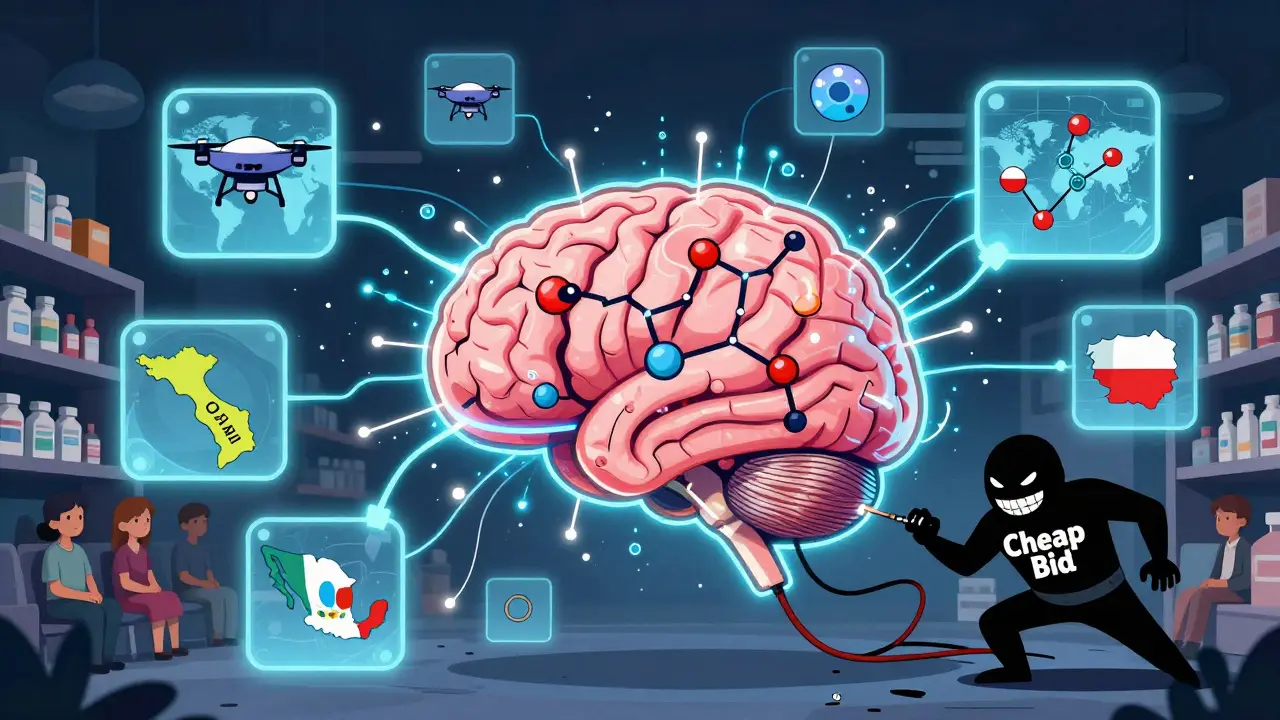
What doesn’t work
Stockpiling alone is expensive and ineffective. Keeping enough buffer stock to cover all shortages would cost $3.5-$4.2 billion a year-and still only prevent 45% of them. That’s not sustainable. Relying on doctors to switch to alternatives during a crisis? That’s a band-aid. Only 12% of resilience strategies focus on demand management because it doesn’t stop shortages-it just manages them after they happen. And hoping suppliers will act responsibly? That’s not a strategy. Without rules, incentives, and consequences, companies won’t invest in resilience. Why spend extra money when procurement teams are told to pick the cheapest bid?Regulation is changing-fast
The FDA’s Drug Supply Chain Security Act (DSCSA) now requires full electronic tracing of all drugs by 2024. That’s a game-changer. For the first time, every package of medicine will have a digital trail. If a batch is contaminated or delayed, you can trace it back in minutes, not weeks. The European Medicines Agency has already adopted similar rules. Now, global manufacturers are building parallel supply chains for the U.S. and EU markets. That’s forcing companies to think beyond borders. And in 2024, CMS proposed a rule that could shift the entire economics of drug supply: Medicare reimbursement will be tied to supply chain transparency. By 2026, manufacturers will have to disclose their full supply chain maps to get paid. That means companies that hide their dependencies will lose revenue. That’s the kind of incentive that changes behavior.What’s working on the ground
Pfizer spent $220 million and 18 months overhauling its supply chain with AI. Result? 38% fewer stockouts. They didn’t just buy more drugs-they built a system that predicts where shortages will happen before they do. Some distributors are using drones to deliver critical medicines to rural pharmacies. What used to take 72 hours now takes 4. But they hit roadblocks-42 states still don’t have clear rules for medical drone flights. Resilience isn’t just tech. It’s policy. The biggest success? Companies that treat resilience like a core function-not a side project. Those with integrated resilience teams-dedicated staff analyzing risks, mapping suppliers, running simulations-saw 63% fewer disruptions during the pandemic.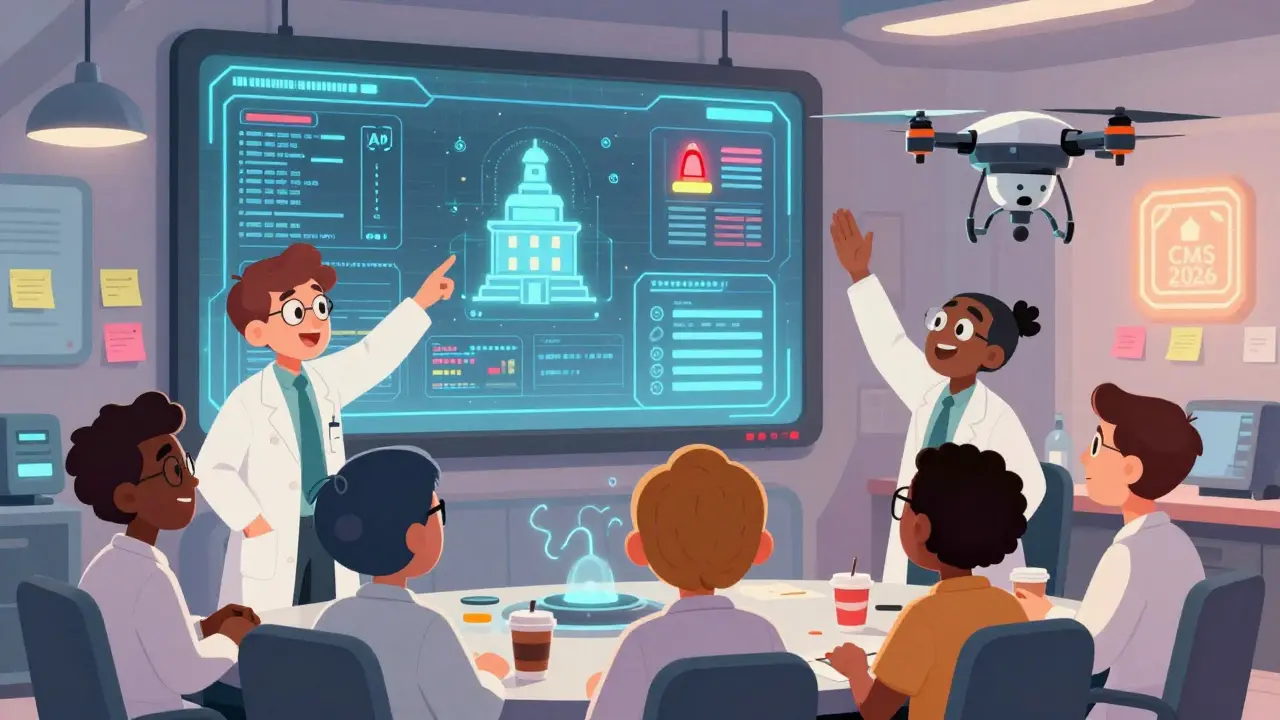
The road ahead
The U.S. government has pledged $520 million to build domestic manufacturing for 50 critical drugs by 2027. That’s a start. But it’s not enough. The Congressional Budget Office estimates we need $2.1-$3.4 billion per year to cut shortages by 75% by 2030. That’s less than 0.3% of total U.S. prescription drug spending. A tiny price to pay for not having to choose which patient gets the last dose of a life-saving drug. The workforce is catching up, too. McKinsey predicts the industry will need 125,000 new supply chain risk specialists by 2027. Right now, only 35% of companies have staff trained to do this work. Training programs are starting-but they’re not moving fast enough.What you can expect next
By 2025, every major drug manufacturer will be required to do annual vulnerability assessments. If they don’t, the FDA can refuse to approve new drugs. That’s a powerful lever. The Global Supply Chain Resilience Partnership, now including 17 countries, is working to harmonize standards for 200 critical medicines. That means fewer regulatory delays and faster cross-border responses. And AI? It’s no longer optional. By 2026, 70% of large pharma companies will use predictive models to anticipate disruptions with 80%+ accuracy. The ones that don’t will fall behind-not just in efficiency, but in survival.It’s not about more drugs. It’s about smarter systems.
Building resilience into the drug supply isn’t about hoarding pills or banning imports. It’s about designing systems that don’t break under pressure. It’s about knowing where your drugs come from. Having backups ready. Using data to see what’s coming. And making sure the people who make, ship, and prescribe medicines are all working from the same playbook. The technology exists. The data is there. The policy is shifting. What’s missing is the will to act-not just in crisis, but before it hits. The next shortage won’t be an accident. It’ll be a choice. And we’re choosing right now-every time we buy the cheapest drug, ignore supplier risks, or delay investing in visibility. The question isn’t whether we can afford to build resilience. It’s whether we can afford not to.Why are drug shortages still happening despite more awareness?
Awareness hasn’t translated into action because the financial incentives are still misaligned. Procurement teams are rewarded for cutting costs, not reducing risk. A $0.10 savings on a drug today can mean a $100,000 emergency shipment-or a patient’s delayed treatment-tomorrow. Until reimbursement models and procurement rules change, companies will keep choosing short-term savings over long-term safety.
Can we just make all drugs in the U.S.?
No-and it’s not necessary. The U.S. can’t economically produce every single active ingredient domestically. But it doesn’t need to. The goal is to secure the most critical ones: life-saving injectables, antibiotics, anesthetics, and cancer drugs. For everything else, diversifying suppliers across multiple countries is more cost-effective and still highly reliable. Resilience isn’t about self-sufficiency. It’s about smart redundancy.
How do cyberattacks affect drug supplies?
Cyberattacks can shut down manufacturing lines, erase inventory records, or lock up logistics systems. Between 2020 and 2023, cyberattacks on healthcare supply chains increased by 214%. One ransomware attack on a major distributor in 2022 delayed shipments of 14 critical drugs for over three weeks. Security isn’t an IT issue-it’s a patient safety issue. The NIST Cybersecurity Framework is now mandatory for all partners in the supply chain.
Why aren’t hospitals stockpiling more drugs?
Hospitals operate on tight budgets and limited storage. Stockpiling six months of a drug means tying up capital and space for something that might sit unused for years. Plus, drugs expire. The system is designed so manufacturers and distributors handle inventory-not hospitals. That’s why resilience must be built upstream, not at the bedside.
What’s the biggest barrier to fixing this?
The biggest barrier is fragmented responsibility. No single entity owns the entire supply chain. Manufacturers, distributors, regulators, insurers, and hospitals all have different goals. Until there’s a unified standard-where everyone is held accountable for resilience, not just compliance-progress will be slow and uneven.




10 Comments
they just want to control us. this whole drug shortage thing? fake. they make it happen so we pay more. 72% from china? yeah right. they're hiding the real factories. watch what happens when the next 'cyberattack' hits.
this is so important 🙏 i’ve seen nurses rationing insulin in my town. we need to stop treating medicine like a commodity and start treating it like a human right. 💙
The structural vulnerabilities outlined here are not merely logistical-they are ethical failures. When profit motives override patient safety, the system ceases to function as a public good. The proposed regulatory shifts, particularly Medicare reimbursement tied to transparency, represent a necessary recalibration of incentives. This is not radical reform; it is basic accountability.
Let’s be real: this isn’t about supply chains-it’s about the death of the American Dream. We used to make things here. Now we outsource everything, then wonder why everything breaks. The FDA? They’re just bureaucrats with clipboards. The real villains? The CEOs who get bonuses for cutting costs by 40% while patients die waiting for epinephrine. And don’t even get me started on the ‘AI solutions’-it’s all just fancy buzzwords to distract from the fact that nobody wants to pay for real infrastructure. We’re not fixing the system-we’re just painting it gold and calling it innovation.
finally someone gets it. we need more domesic stuff. not all, but the lifesavers. drones? yes please. my cousin in rural oklahoma got her chemo 3 days late last year. that's not okay.
The data is clear. Resilience through diversification and visibility delivers disproportionate returns. Investment in digital supply chain mapping yields 32% fewer disruptions at only 8% of total resilience spending. This isn't speculation-it's ROI.
USA thinks it can fix everything with money. India and China make 72% of APIs because they’re better at it. Stop pretending you can outproduce them. Just pay more and stop whining.
This is why I love data-driven solutions 🌟 The 38% drop in stockouts with AI? That’s not luck-that’s science. We can do this. We just need to stop pretending cheap is always better. You wouldn’t buy a $50 heart monitor, so why buy $5 drugs?
Ah yes, the classic American solution: spend more money and call it ‘resilience’. Meanwhile, in India, we’ve been making 80% of the world’s generics for decades without a single hospital shutting down. Maybe stop blaming others and fix your own broken procurement system?
I just read this and cried. Not because I’m dramatic. Because I’ve held a dying patient’s hand while they waited for a drug that wasn’t there. And the worst part? Nobody got fired. Nobody even got a memo.