
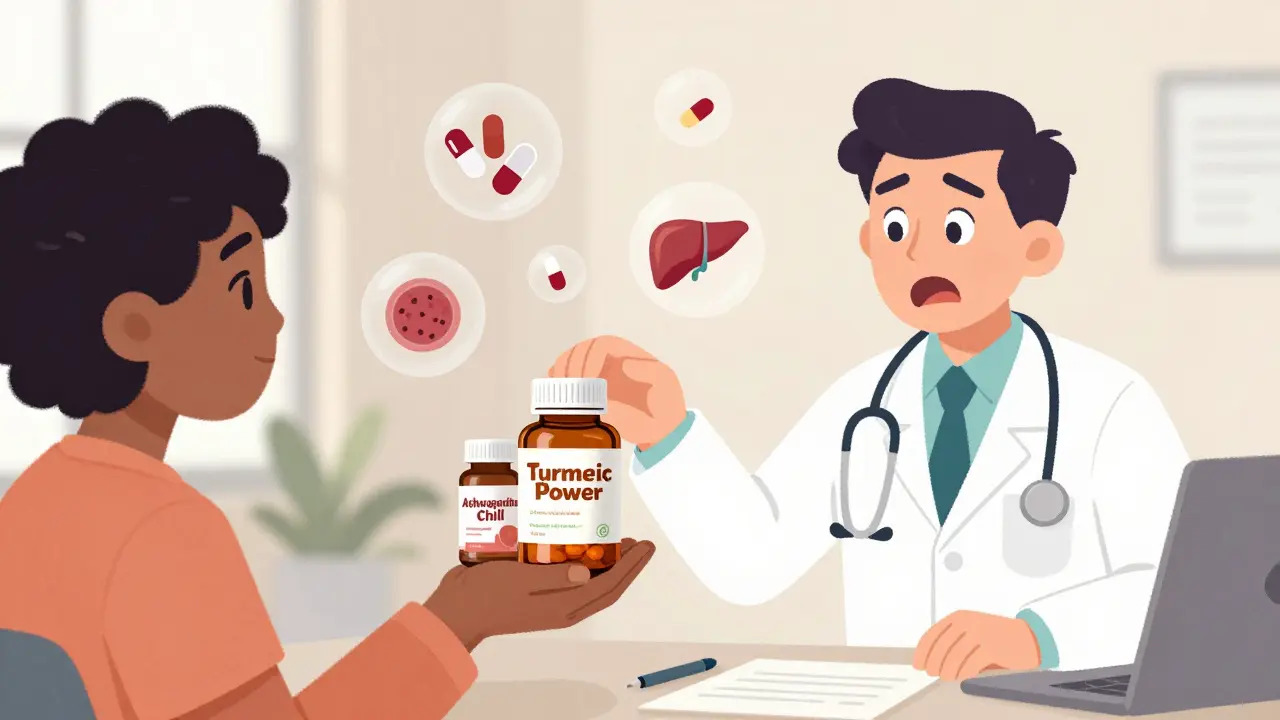
It’s 2026. You’re taking turmeric for your knees, magnesium for sleep, and ashwagandha to handle stress. You think these are harmless - ‘natural,’ after all. But what if that turmeric is making your blood thinner than your doctor thinks? What if the ashwagandha is canceling out your antidepressant? You didn’t mention it because your doctor never asked. And that’s the problem.
Most People Don’t Tell Their Doctors - But They Should
More than half of U.S. adults take dietary supplements. Nearly one in four take herbal remedies like echinacea, ginseng, or St. John’s wort. Yet, studies show only about one in three people tell their doctor. That’s not just a gap - it’s a safety blind spot.
Why? Because most patients assume supplements are ‘too mild’ to matter. Or they fear being judged. Or they think their doctor doesn’t care. One Reddit user shared how they didn’t mention garlic pills until they bled excessively during minor surgery. Another told their cardiologist about turmeric only after he asked - and learned it could spike their blood pressure meds. These aren’t rare stories. They’re the norm.
Doctors aren’t mind readers. They don’t know you’re taking something unless you tell them. And if you don’t, they can’t protect you.
Supplements Aren’t Just ‘Vitamins’ - They’re Active Drugs
St. John’s wort isn’t just a ‘natural mood booster.’ It’s a powerful enzyme inducer. It can cut the effectiveness of birth control pills by up to 50%. It can make your antidepressant useless. It can turn your blood thinner into a ticking time bomb.
Turmeric? It’s a natural anticoagulant. Take it with warfarin or aspirin? You’re increasing your risk of internal bleeding. Garlic supplements? Same thing. Ginger? Can interfere with anesthesia.
Even something as simple as vitamin K can undo the effects of blood thinners. Calcium supplements can block absorption of thyroid meds. Iron can make antibiotics useless. These aren’t myths. They’re documented, peer-reviewed risks.
The FDA doesn’t approve supplements before they hit shelves. They only step in after someone gets hurt. And even then, fewer than 1% of adverse reactions get reported. That means the system is built on silence - and silence is dangerous.
Doctors Don’t Ask - But They Should
Here’s the uncomfortable truth: most doctors aren’t trained to ask about supplements. A 2021 survey found only 27% of physicians felt confident discussing herbal remedies. They’re rushed. Appointments average 15-20 minutes. They’re focused on blood pressure, cholesterol, diabetes. Supplements? They’re an afterthought.
But that’s changing. Medical schools now have to teach supplement interactions thanks to new AMA policy. Some clinics use a simple five-question screening tool during intake. The result? Disclosure rates jump from 33% to 78%. That’s not magic - it’s structure.
It’s not your job to educate your doctor. It’s your job to give them the facts. And the best way to do that? Bring the bottles.
Bring the Bottles - Seriously
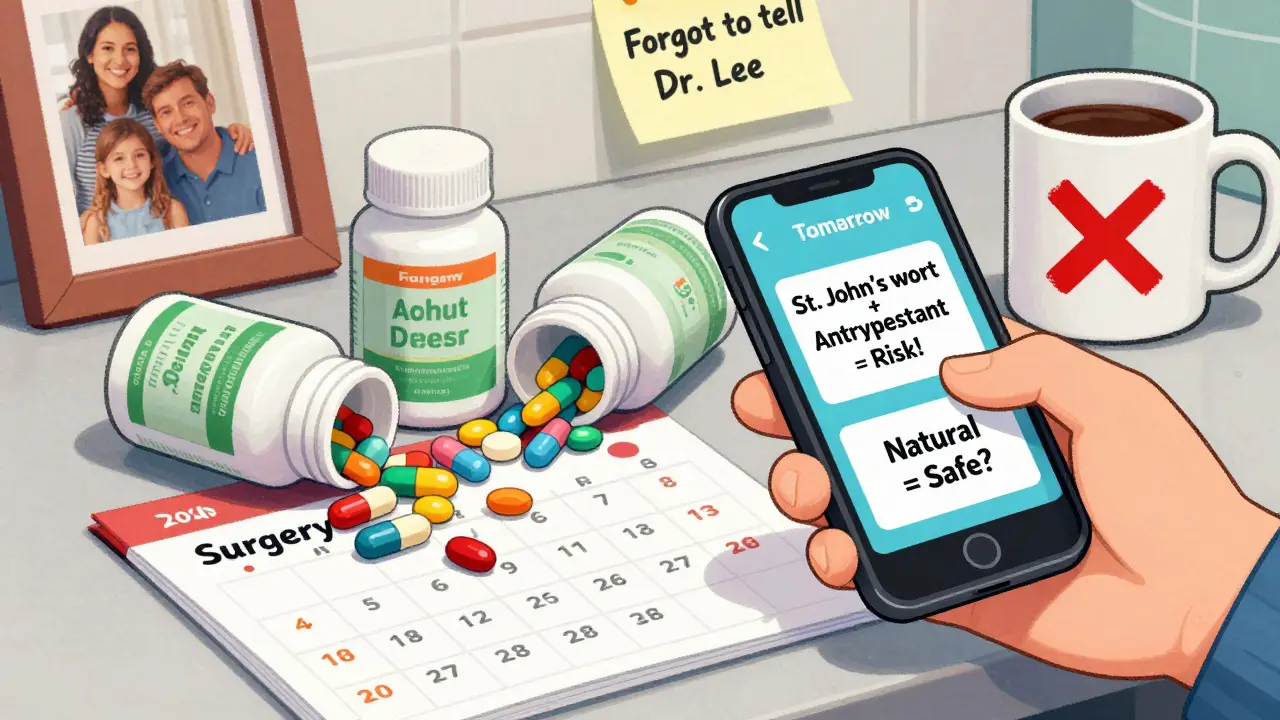
Don’t say ‘I take ashwagandha.’ Say ‘I take this.’ Hand them the bottle.
Supplements aren’t regulated like drugs. That means two brands labeled ‘ashwagandha’ can have wildly different doses - or even different herbs inside. One study found 70% of herbal products didn’t contain what the label claimed. Some had contaminants. Others had hidden prescription drugs.
Bringing the actual container lets your provider see the exact ingredients, dosage, and manufacturer. It’s the only way they can check for interactions properly. If you don’t have the bottle, take a photo. Write down the name, dose, and how often you take it. Don’t rely on memory. Memory fails. Labels don’t.
When to Speak Up
You don’t need to wait for an annual checkup. Speak up when:
- You start a new prescription
- You’re scheduled for surgery
- Your medication dose changes
- You feel weird - dizzy, nauseous, anxious, or bleeding more than usual
- You’re seeing a new doctor
Especially if you’re on more than three medications. People with chronic conditions - diabetes, heart disease, autoimmune disorders - are at the highest risk. Yet they’re also the least likely to disclose. That’s a deadly combo.
What Happens When You Do Tell?
Most patients worry their doctor will dismiss them. Or tell them to stop. But here’s what actually happens when people speak up: 78% say their provider gave useful advice. 63% say it made them trust their doctor more.
Your provider might say: ‘Keep taking it - just not with this med.’ Or ‘Switch to a different brand.’ Or ‘Stop for now - we’ll monitor your levels.’ They’re not trying to control you. They’re trying to keep you safe.
One patient told her oncologist she was taking green tea extract for ‘detox.’ He found out it was interfering with her chemo. He adjusted her treatment. She’s in remission. She didn’t get yelled at. She got saved.
The Bottom Line: Silence Is Risky
Herbs and supplements aren’t ‘alternative’ medicine. They’re medicine. Period. They have chemistry. They have effects. They have risks. Just because they’re sold in a health food store doesn’t mean they’re safe.
You wouldn’t hide a new prescription from your doctor. Don’t hide a supplement either.
The next time you walk into a clinic - whether it’s for a cold, a checkup, or a surgery - bring your supplements. Tell them. No shame. No fear. Your life might depend on it.
Do I really need to tell my doctor about vitamins and minerals?
Yes. Even common vitamins can interfere with medications. Vitamin K reduces the effect of blood thinners like warfarin. Calcium and iron can block absorption of thyroid medication and antibiotics. High doses of vitamin E can increase bleeding risk, especially before surgery. Your doctor needs to know everything you’re taking - even if you think it’s ‘just a multivitamin.’
What if my doctor doesn’t know much about supplements?
That’s common. Most doctors aren’t trained in herbal medicine. But that doesn’t mean you shouldn’t tell them. Bring the bottle. Give them the name and dose. They can look up interactions using reliable databases like Micromedex or Lexicomp. Many clinics now have pharmacists on staff who specialize in herb-drug interactions. Your job is to provide the information. Their job is to use it.
Can herbal remedies cause serious side effects?
Absolutely. St. John’s wort has caused transplant rejection by lowering drug levels. Kava has been linked to severe liver damage. Comfrey and coltsfoot contain liver-toxic compounds. Even green tea extract has caused acute liver failure in healthy people. These aren’t rare. The FDA has issued warnings on dozens of herbal products. The risk isn’t in the herb itself - it’s in the lack of awareness.
Is it safe to take supplements with prescription drugs?
Some are, some aren’t - and you won’t know unless you ask. For example, omega-3s are generally safe with blood pressure meds. But ginkgo biloba can increase bleeding risk with aspirin or NSAIDs. Licorice root can raise blood pressure and lower potassium. The only way to know is to tell your provider what you’re taking and what you’re on. Never assume ‘natural’ means ‘safe.’
What if my provider tells me to stop taking a supplement?
Listen. They’re not trying to shut you down - they’re protecting you. If your supplement is reducing your medication’s effectiveness or increasing side effects, continuing it could be dangerous. Ask why. Ask for alternatives. Maybe there’s a safer herb, a different dose, or a non-herbal solution. But don’t ignore their advice. If you’re unsure, get a second opinion from a pharmacist or integrative medicine specialist.
Are supplements regulated at all?
Not like prescription drugs. Under the DSHEA law from 1994, supplement makers don’t need to prove safety or effectiveness before selling. The FDA can only act after someone gets hurt. Labels must say ‘Not evaluated by the FDA,’ but most people miss that. That’s why bringing the bottle matters - you’re the only one who can verify what’s actually inside.
Should I tell my doctor about supplements even if I’m healthy?
Yes. Health doesn’t mean invincible. You might be fine now, but you could need surgery next month. Or start a new medication. Or develop a condition you didn’t expect. Supplements can quietly interfere with your body’s chemistry. Telling your doctor isn’t about being sick - it’s about being prepared.
How do I bring up supplements without sounding like I’m arguing with my doctor?
Try this: ‘I’ve been taking [name] for [reason], and I wanted to make sure it’s okay with my other meds.’ Keep it simple. Neutral. Curious, not defensive. Most providers appreciate the honesty. If they react poorly, it’s not you - it’s them. You have the right to safe, informed care. Don’t let fear silence you.

14 Comments
man i took turmeric for months and never told my doc till i started bleeding after a tooth extraction. he looked at me like i’d just confessed to a crime. turns out it was messing with my clotting. dumb move on my part. now i bring the bottles. no shame.
It is imperative, nay, non-negotiable, that patients disclose ALL supplement intake-regardless of perceived ‘harmlessness.’ The FDA’s regulatory lacuna is a scandal, and the medical profession’s negligence in proactively inquiring compounds this public health failure. One must not assume ‘natural’ equates to ‘safe’-this is dangerously naïve, and frankly, irresponsible.
Let’s be real-supplements are the wild west of pharmacology. You got some guy in a basement in Nebraska bottling ‘ashwagandha’ that’s mostly powdered sawdust and caffeine. Meanwhile, your doc’s got a 12-minute window to ask if you’re taking anything besides your lisinopril. And you? You’re too scared they’ll roll their eyes. But here’s the kicker: the real danger isn’t the herb-it’s the silence. Silence is the silent killer in this whole damn system. Bring the bottle. Take a photo. Write it down. Don’t be the person who dies because they didn’t want to look ‘weird’ at the appointment.
kinda wild how we treat vitamins like candy but freak out if someone says ‘i take adderall.’ we’ve got this weird cultural split where ‘natural’ = good, ‘pharma’ = evil. but chemistry doesn’t care if it’s from a tree or a lab. i used to take melatonin and ginkgo together-didn’t realize they both thin blood. my doc caught it when i mentioned my nosebleeds. now i just screenshot the label and send it before every visit. simple. no drama. :)
in india, people use neem, tulsi, amla daily. many don’t know they can affect blood sugar or liver. doctor must ask. patient must tell. no big deal. just be honest. safety first.
YES. YES. YES. 🙌 I used to think my ‘natural’ sleep stack was harmless-magnesium, valerian, L-theanine. Then I got prescribed a beta-blocker and started feeling like a zombie. My pharmacist caught the interaction. I cried. Then I hugged her. Now I bring my whole cabinet. No judgment, just safety. You’re not weird for caring about your health. You’re smart. 💪🌸
It’s amusing how the average American treats herbal remedies like they’re exempt from scientific scrutiny. One does not casually ingest bioactive compounds without understanding their pharmacokinetics. The fact that your physician is ‘not trained’ is a failure of the medical system-not an excuse for your ignorance. If you cannot articulate the chemical structure of what you’re consuming, perhaps you should not be consuming it at all.
I didn’t say anything about my St. John’s wort until after I got pregnant. I was terrified they’d think I was a fool. They didn’t. They just said, ‘Good you told us.’ I’m not proud I hid it. But I’m proud I told them. Sometimes silence isn’t peace-it’s panic.
BRING THE BOTTLES. 🍃💊 I used to just say ‘I take vitamins.’ My doctor assumed I meant a daily multivitamin. Turns out I was taking 3 different high-dose supplements, one with hidden caffeine. I got dizzy every morning. They adjusted everything. Now I take a pic of every bottle before my visit. It’s not weird-it’s wise. You’re not annoying. You’re saving your life. 💖
How quaint. The notion that a ‘doctor’-a person trained to treat symptoms, not investigate the entire biochemical ecosystem of a patient-is somehow responsible for uncovering your supplement regimen. The burden is placed on the patient, yet the system is designed to discourage disclosure. This is not a failure of communication-it is a failure of institutional design. And yet, here we are, blaming the patient for being too timid to navigate a broken machine.
supplements are not ‘alternative’-they’re just unregulated. same chemistry, different label. i think the real issue is we treat our bodies like machines you can tweak with random powders. maybe we should ask: why do we need all this? not just what it does. but why we think we need it in the first place.
i never thought about how vitamin k affects warfarin until my mom had a stroke. she’d been taking a ‘heart health’ supplement with k2. the doctor said if she’d told them sooner, they could’ve adjusted her dose. i cried for a week. now i ask everyone i know to bring their bottles. it’s not awkward-it’s life-saving.
Just bring the bottle. Seriously. No explanation needed. Just hand it over. Done.
Oh wow, so now we’re treating supplements like they’re nuclear codes? Next you’ll tell me I need to report my morning coffee to the FDA. I take ginger for nausea. Is that going to kill me? Or is this just another fear-based marketing ploy disguised as medical advice?