
Topical Steroid Safety & Risk Calculator
How to Use This Tool
Enter your steroid usage details below to assess your risk of skin atrophy, infections, and withdrawal. This tool is based on clinical studies and safety guidelines from dermatology experts.
Important Do not rely solely on this tool for medical advice. Always consult a dermatologist for personalized guidance.
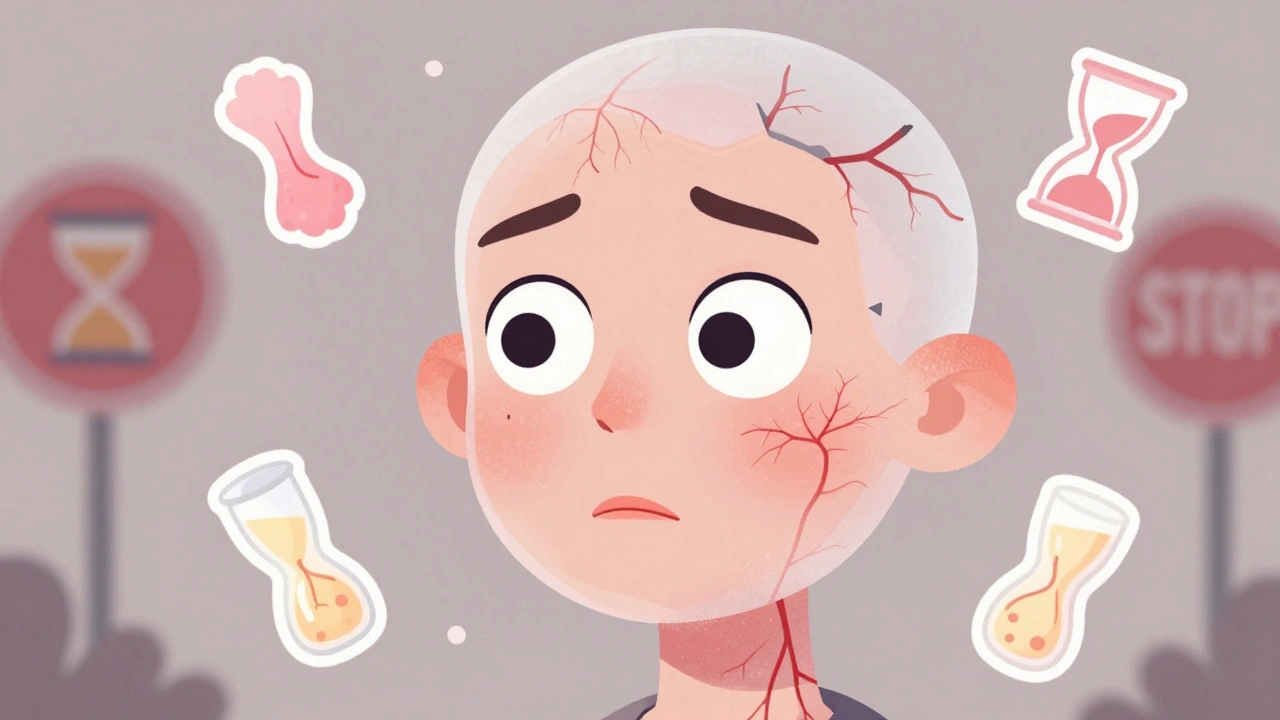
Using a strong cream on your face for a rash might seem like a quick fix-but what if it’s slowly eating away at your skin? Topical corticosteroids are powerful tools for calming eczema, psoriasis, and allergic reactions. But when used too long or too often, they don’t just suppress inflammation-they start breaking down your skin’s structure. The result? Thinning skin, visible blood vessels, and a higher risk of infections you didn’t even know you were vulnerable to.
How Topical Steroids Actually Change Your Skin
Topical corticosteroids work by turning down your immune response. That’s good for red, itchy skin. But they also hit the brakes on the cells that build your skin’s foundation: keratinocytes and fibroblasts. These cells make collagen, elastin, and the lipids that keep your barrier intact. When you use potent steroids for more than a few weeks, collagen production drops by up to 60%. Ceramides-the glue that holds your skin cells together-plummet. Your skin loses its ability to hold water, leading to dryness, cracking, and increased sensitivity.
It’s not always obvious at first. You might not see thinning right away, but your skin’s barrier is already compromised. Studies show that even three days of daily use on the face can disrupt the stratum corneum, the outermost layer. This is why people report burning, stinging, or tightness even when their skin looks normal. The damage is happening beneath the surface.
What Skin Atrophy Looks Like
When skin atrophy develops, the changes become visible. You might notice:
- Translucent, paper-thin skin, especially on the face, inner arms, or groin
- Visible blood vessels (telangiectasia) that look like fine red lines
- Stretch marks (striae) that don’t fade, even after stopping the cream
- "Elephant wrinkles"-deep, wrinkled folds that appear without weight loss or aging
- Easier bruising or purpura, where minor bumps leave purple spots
These signs aren’t rare. In clinical studies of long-term users, skin atrophy occurred in about 17% of patients. Striae appeared in over 7%, and rosacea-like redness in nearly 6%. Children and people using steroids on the face, eyelids, or skin folds are at highest risk because their skin is naturally thinner and absorbs more of the drug.
The Infection Risk You Can’t Ignore
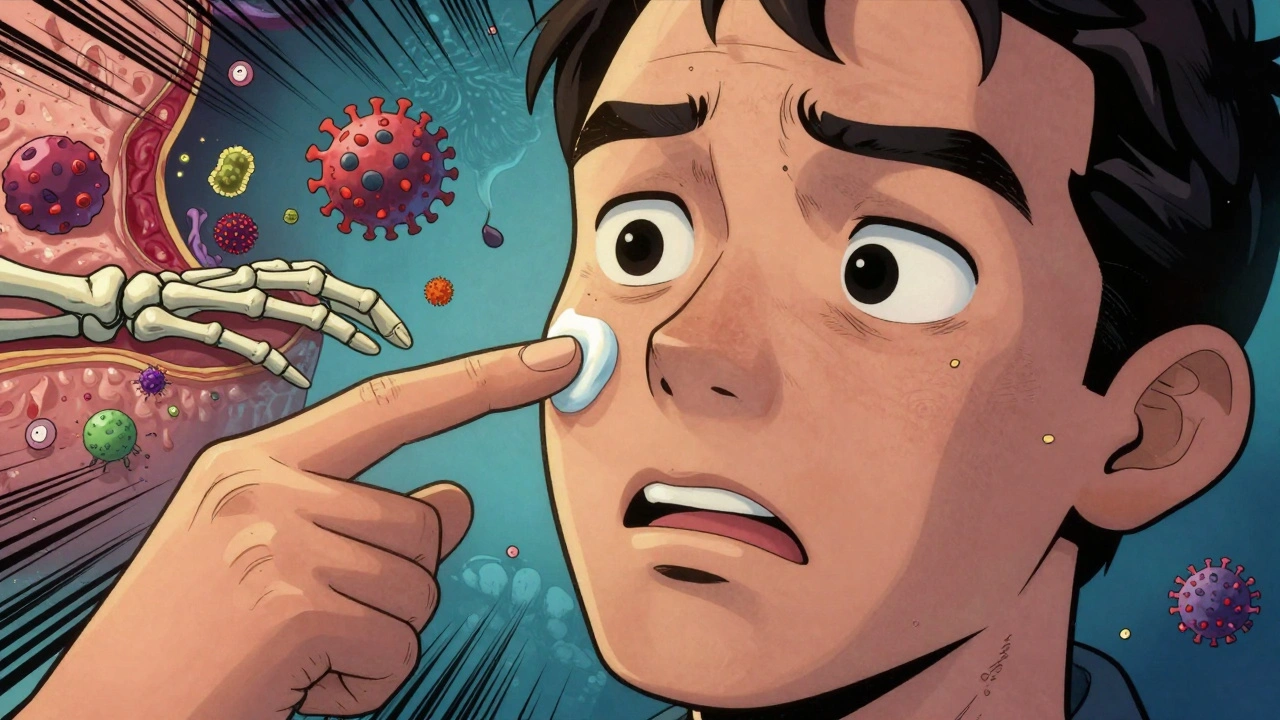
When your skin barrier breaks down, it’s no longer a shield-it’s an open door. Bacteria, fungi, and viruses move in easily. Common infections linked to long-term steroid use include:
- Fungal infections: Candida overgrowth causing red, itchy patches with satellite pustules, often mistaken for eczema flares
- Bacterial infections: Staphylococcus aureus leading to impetigo, folliculitis, or abscesses
- Perioral dermatitis: A red, bumpy rash around the mouth that flares up after stopping steroids
- Viral warts: HPV thrives in immunosuppressed skin, spreading rapidly
Many patients mistake these infections for their original condition worsening. They apply more steroid cream-and the cycle gets worse. A 2020 study found that nearly 40% of patients with persistent facial rashes after steroid use were actually dealing with fungal or bacterial overgrowth, not inflammation.
Why Some People Get Worse After Stopping
Stopping a potent steroid after months or years can trigger something called Topical Steroid Withdrawal (TSW). It’s not addiction-it’s your skin’s desperate attempt to recover after being chemically suppressed for too long. Symptoms include:
- Intense burning or stinging, even without visible rash
- Redness spreading beyond the original area
- Flaking, oozing, or swelling
- Extreme sensitivity to heat, sweat, or products
This isn’t just discomfort. In one analysis of 127 patients, the withdrawal phase lasted an average of 6 months. Some took over a year to stabilize. Reddit communities with thousands of members report similar patterns: burning faces, sleepless nights, and the fear that their skin will never heal. The key? Patience and no more steroids.
How to Use Steroids Safely
You don’t need to avoid topical steroids entirely. They’re life-changing for many. But you need to use them like a tool, not a crutch. Here’s how:
- Start low: Use the weakest steroid that works. For the face, stick to Class V or VI (like hydrocortisone 1%). Save Class I-IV (like clobetasol) for thick plaques on the body.
- Limit duration: No more than 2 weeks on the face. For body use, 4 weeks max unless your doctor says otherwise.
- Apply sparingly: One fingertip unit (the amount from the first joint to the tip) covers two adult handprints. Most people use 3-5 times too much.
- Avoid occlusion: Don’t wrap skin in plastic or tight clothing after applying. This increases absorption by up to 10 times.
- Never use on infected skin: If it’s oozing, crusting, or hot to the touch, stop the steroid and see a doctor.
Healing Damaged Skin
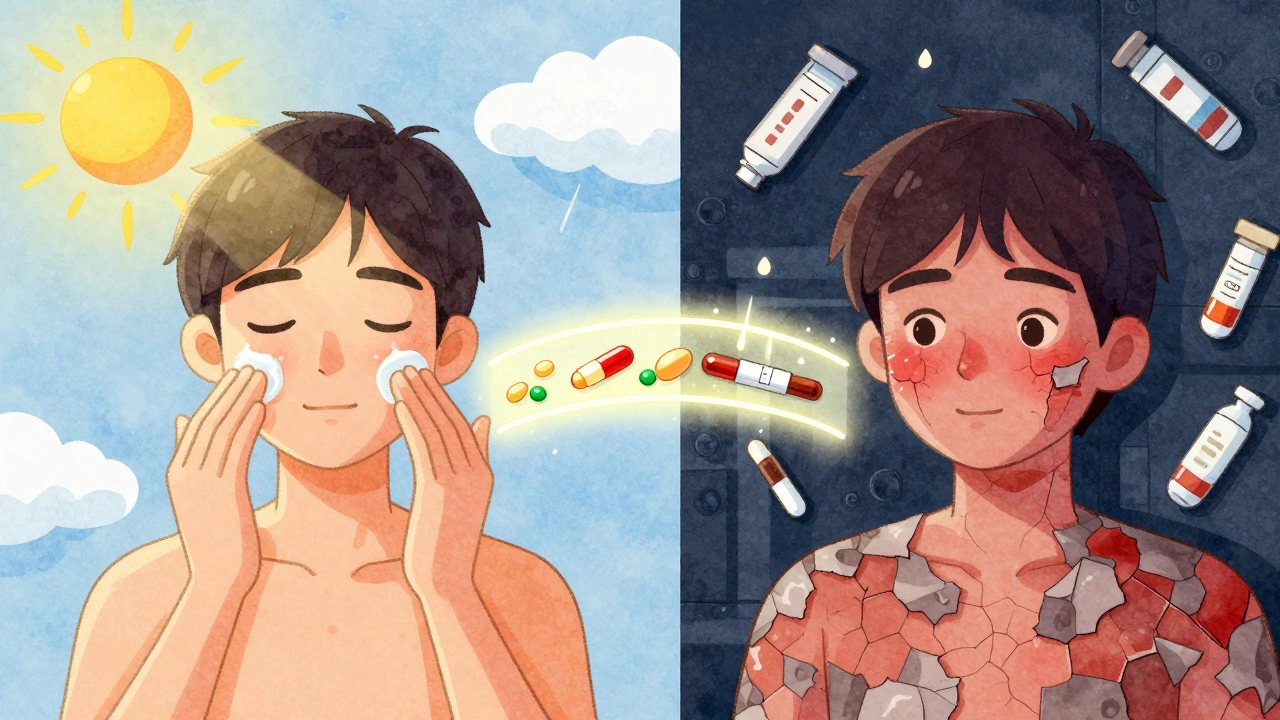
If you’ve already developed atrophy or signs of withdrawal, the first step is stopping the steroid-gradually if you’ve used it for more than two weeks. Abruptly quitting can trigger a severe flare.
Next, rebuild your barrier. Products with ceramides, cholesterol, and free fatty acids in a 3:1:1 ratio have been shown to restore barrier function in 8 weeks. Look for brands that list these exact ingredients in those proportions. Avoid fragrances, alcohol, and harsh exfoliants.
Sun protection is non-negotiable. UV light breaks down collagen faster in atrophic skin. Use SPF 50+ daily, even indoors. One study showed that sunscreen reduced collagen loss by 42% in damaged areas.
What’s Coming Next
Scientists are working on safer alternatives. New "dual-soft" steroids are being tested-drugs that calm inflammation without shutting down collagen production. The NIH is running trials on a formula that combines low-dose steroids with fibroblast growth factor to actively repair skin. Early results show a 63% drop in atrophy rates.
Meanwhile, the global market for steroid-sparing treatments is expected to grow from $1.2 billion to $3.8 billion by 2028. That’s not just business-it’s proof that more people are waking up to the hidden risks of long-term steroid use.
Topical corticosteroids are powerful. But they’re not harmless. Used wisely, they bring relief. Used carelessly, they change your skin forever. The goal isn’t to fear them-it’s to respect them.
Can skin atrophy from steroids be reversed?
Early-stage skin atrophy-like thinning and redness-can improve over months after stopping steroids, especially with barrier repair creams and sun protection. But once stretch marks (striae) form, the damage is permanent. The skin’s structure doesn’t regenerate fully. The key is catching it early.
Is it safe to use steroid cream on the face?
Only low-potency steroids (like hydrocortisone 1%) for short periods (under 2 weeks). Avoid mid- to high-potency steroids (clobetasol, betamethasone) on the face entirely. Facial skin is thin and absorbs more. Even short-term use can cause telangiectasia, acne, or perioral dermatitis.
How do I know if I have a steroid-induced infection?
Look for sudden worsening after weeks of improvement: spreading redness, pus-filled bumps, crusting, or burning that doesn’t match the rash’s appearance. Fungal infections often have satellite pustules. If you’re unsure, get a skin scraping test. Don’t keep applying steroid cream-it will make the infection worse.
How long does topical steroid withdrawal last?
Recovery varies widely. Most people see initial flare-ups within 1-2 weeks of stopping, with symptoms peaking around month 2-3. On average, recovery takes 6-12 months. Those who used steroids for over a year may take 18-24 months. The longer the use, the longer the recovery. Support, patience, and no steroids are essential.
Are over-the-counter steroid creams safe for long-term use?
No. Even low-dose hydrocortisone (0.5%-1%) can cause atrophy if used daily for more than 2 weeks. Many people use OTC steroids for months thinking they’re harmless. The FDA and EMA require warning labels for a reason. Always check the potency and duration-even "mild" steroids carry risk with prolonged use.
What should I use instead of steroid creams?
For eczema and similar conditions, non-steroidal options like pimecrolimus or tacrolimus (calcineurin inhibitors) are effective and don’t cause atrophy. Newer options like crisaborole (a PDE4 inhibitor) are also steroid-free. Barrier repair moisturizers with ceramides are foundational. Always discuss alternatives with a dermatologist-don’t self-treat.
What to Do Next
If you’re using a steroid cream and noticing thinning skin, visible veins, or persistent irritation, stop applying it. Don’t panic-just stop. Schedule a dermatology appointment. Bring your product list. Ask for a skin biopsy if needed. Start using a ceramide-based moisturizer daily. Wear sunscreen every morning.
This isn’t about guilt. It’s about awareness. Millions use topical steroids safely every day. But too many don’t know the risks until it’s too late. You don’t need to avoid treatment. You just need to use it wisely.



12 Comments
So let me get this straight - you’re telling me my ‘miracle cream’ for my face rash is basically skin bleach with a side of bacterial buffet? Cool. Cool cool cool. I’ve been using it for 8 months. Guess I’m just a walking science experiment now. 🤷♂️
Hey everyone - I’ve been there. Used hydrocortisone daily for my eczema for over a year. Then one day my face looked like a translucent lantern. 😭 But guess what? I switched to ceramide creams, stopped everything, and now my skin’s actually *breathing*. It took 9 months, but I’m not hiding behind makeup anymore. You got this. 💪🌸
Let’s be clear: this post is technically accurate, but it’s dangerously oversimplified. The real issue isn’t the steroids - it’s the lack of dermatological oversight. Most patients self-prescribe based on TikTok ‘skinfluencers’ who don’t know the difference between a keratinocyte and a keratin wig. The NIH data on dual-soft steroids is peer-reviewed. The Reddit ‘TSW’ narrative? Mostly anecdotal. Don’t let emotional testimony override clinical evidence.
To anyone reading this and feeling scared - you’re not alone. I stopped my steroid cream last year after my eyelids started cracking. It was brutal. But I found a dermatologist who didn’t judge me. We made a plan. Slow taper. Ceramides. Sunscreen. No shame in needing help. Healing isn’t linear. Be gentle with yourself.
omg i thought my face was just getting old?? i been usin hydrocortisone for 3 yrs like its lotion lmao. now i see why my skin feels like tissue paper and why i get these weird red bumps that dont go away. time to stop. and buy ceramides. 😅
STOP. RIGHT. NOW. If you’re using a steroid cream on your face longer than you brush your teeth - you’re playing Russian roulette with your skin. I’ve seen people cry because their cheeks look like crumpled cellophane. I’ve seen fungal infections spread like wildfire. This isn’t hype. This is real. Your skin isn’t a light switch. You can’t just turn it off and on. Protect it like your life depends on it - because it does.
just wanna say i used to think tsw was made up until i went through it. my face burned for 8 months straight. no sleep. no makeup. no social life. but i did it - no steroids, just moisturizer and patience. now my skin’s better than ever. if you’re reading this and you’re scared - i’m here. you’re not crazy. it’s real. and it gets better. 🙏
While the post correctly identifies the mechanisms of steroid-induced atrophy, it fails to contextualize risk stratification. The 17% atrophy rate cited is from a cohort of chronic, high-potency users - not general population data. Moreover, conflating perioral dermatitis with fungal overgrowth without diagnostic confirmation is clinically irresponsible. Misinformation proliferates faster than telangiectasia.
So basically steroids are the ex who keeps coming back? You think you’re fixed… then boom - your skin is on fire and you’re sobbing in the shower at 3am. 🤯 I’ve been there. I’ve done that. I’ve applied more cream because ‘it worked before.’ Spoiler: it didn’t. Stop. Breathe. Get ceramides. You’ll thank yourself in 6 months.
I’m curious - what’s the evidence for the 3:1:1 ceramide ratio being optimal? The 2021 JID meta-analysis showed variable efficacy across formulations. Are we assuming all barrier repair products are equal? Or is this just another case of oversimplified ‘science’ being marketed as gospel?
Just stopped my steroid cream last week. My face looks like a tomato. It burns. I can’t sleep. But I’m not giving up. I bought a $40 ceramide cream and I’m using SPF 50 like it’s my job. If I can do it - you can too. It’s gonna suck for a while. But your skin remembers how to be healthy. You just gotta let it. 💙
my dermatologist said i could use it for 2 weeks but i used it for 6 months bc it worked so good. now my skin is so thin i can see my veins and i cry every time i look in the mirror. i feel so stupid. but thank you for this post. i’m gonna try to fix it. one day at a time.