
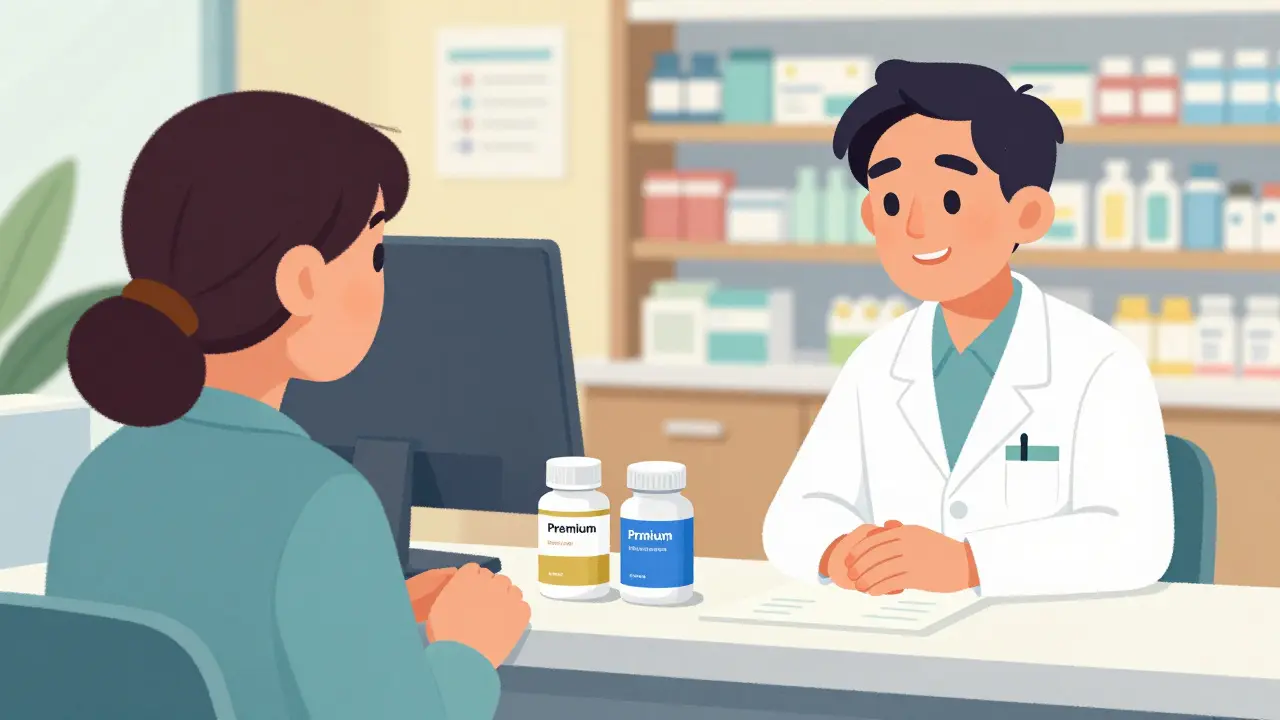
Managing a long-term health issue isn't just about taking a pill every day; it's about surviving financially over decades. If you are living with hypertension, diabetes, or high cholesterol, the price tag on your medication can feel like a second diagnosis. Recent data suggests that switching to generic medications, defined as pharmaceutical equivalents of brand-name drugs available after patent expiration, could save patients trillions of dollars globally over time. It's not just a small discount; we are talking about an 80-85% reduction in pharmaceutical costs compared to brand equivalents. For someone needing daily treatment for the rest of their life, the difference compounds into hundreds of thousands of dollars.
This isn't theoretical guessing work. The core value proposition is straightforward: identical therapeutic effects at significantly reduced costs. When patents expire, other manufacturers get the chance to make their own versions. These aren't "knock-offs" in any meaningful sense. Regulatory bodies require rigorous testing to prove these copies perform exactly the same way in the human body. By choosing the right path to medication access, you secure better health outcomes while keeping your bank account stable. Let's break down how this math works for you and why the science backs it up completely.
What Exactly Defines a Generic Drug?
To understand the savings, you need to understand the product. A generic drug is chemically identical to its brand-name counterpart in active ingredient, strength, dosage form, route of administration, safety, and intended use. Think of it like a copy of a book written by the original author where the text is exactly the same, but the cover might look different. The active ingredient inside-the part that actually fights the disease-is legally required to be the same. In fact, Generic Medications account for 97% of dispensed prescriptions in markets like the United States when a generic option is available.
Regulatory standards are the backbone of this trust. Agencies mandate that generic drugs demonstrate bioequivalence. This means the rate and extent of absorption of the generic drug into the bloodstream must be within a strict mathematical range of the brand-name version-specifically within a 90% confidence interval of 80-125% of the brand's pharmacokinetic parameters. This technical requirement ensures identical therapeutic outcomes despite potential cosmetic differences in inactive ingredients like binders or coloring agents. You might notice a pill looks slightly different or tastes slightly distinct, but what matters for your health remains unchanged.
The Financial Reality: Calculating Your Lifetime Savings
Let's talk about the actual numbers because abstract percentages don't always show the full picture. Consider a patient with hypertension who needs lifelong medication. A brand-name drug like Prinivil might cost around $40 to $50 per month. Now, compare that to generic lisinopril, which often runs about $4 per month. That looks like a small monthly difference initially, but let's project that forward.
| Cost Factor | Brand-Name Version | Generic Equivalent | Savings |
|---|---|---|---|
| Monthly Cost | $40 - $50 | $4 | ~$36 - $46 |
| Annual Cost | $480 - $600 | $48 | $432 - $552 |
| 10-Year Total | $4,800 - $6,000 | $480 | $4,320 - $5,520 |
| Percentage Saved | - | - | 80% - 90% |
That annual saving of roughly $1,200 to $2,000 adds up quickly. Over a decade, a single condition can result in thousands saved. On a larger scale, generics accounted for 90% of prescriptions filled in 2020, yet they only represented about 18% of total drug spending. While prescription volumes were high, the cost per script was low, meaning healthcare systems collectively spent far less than they would have if everyone stayed on branded drugs. The market dynamics work in favor of the consumer here. As soon as a patent expires, prices drop sharply because multiple companies can produce the drug, creating competition that drives prices down to the bare minimum needed to manufacture and distribute safely.
Connecting Savings to Better Health Outcomes
Saving money is great, but the ultimate goal of treating a chronic condition is to stay healthy. Here is where the connection gets interesting. Lower costs directly lead to higher medication adherence. Studies have shown that when out-of-pocket costs are lower, patients are much less likely to skip doses or stop taking their medication entirely. One report indicated that patients initiated on generic drugs were 18-22% more likely to maintain consistent medication regimens compared to those starting on brand names.
This consistency is critical. If you take your blood pressure medication inconsistently, your heart and kidneys take the damage. Improved adherence means fewer spikes in blood sugar or blood pressure readings, which translates to fewer complications down the road. Data suggests that adherent patients experience 20-30% lower hospitalization rates. Imagine the alternative: saving a few dollars today but paying for a hospital stay tomorrow due to unmanaged diabetes. Medication therapy management programs, often led by pharmacists, help bridge this gap. They monitor patients to ensure they understand their regimen and spot issues before they become emergencies, reducing medication-related problems by up to 40%.
Debunking Common Myths About Quality
Despite the overwhelming evidence, hesitation remains. Many people believe the old adage, "if it costs less, it must work less." This misconception stems from visible differences in pills-different shapes, sizes, or colors due to different inactive ingredients. However, clinical trials confirm that these differences do not affect how the medicine works inside your body. Research validates that generic drugs are used to treat complex diseases, including rare conditions, and provide identical therapeutic effects to originals.
There are rare cases where sensitive individuals react to different fillers or dyes in a generic pill. If you fall into this very small minority, you can ask your doctor to try a different manufacturer's generic or stick to the brand if insurance allows. But for the vast majority, the fear is unfounded. User feedback consistently highlights financial relief rather than quality complaints. Patients managing fixed incomes often praise the ability to afford multiple prescriptions, stating that access itself improves their peace of mind. Satisfaction scores rise when patients know they aren't skimping on care just to pay rent.
The Future Landscape: Biosimilars and Complex Generics
The generic landscape is evolving beyond simple pills. We are seeing the rise of biosimilars, which apply the generic concept to biologic drugs used for conditions like rheumatoid arthritis and cancer. These are slightly more complex to manufacture because they involve large molecules produced in living cells, but the principle of cost reduction remains the same. The government passed acts like the Biologics Price Competition and Innovation Act to speed this up. Experts predict that as patent cliffs continue-with billions in brand sales facing competition by 2027-more high-cost treatments will become affordable generic options.
This trend ensures the sustainability of the system. With nearly $2.4 trillion saved in a previous decade through generic substitution, the economic model relies on this cycle continuing. Manufacturers are shifting toward complex generics to maintain margins, offering improved delivery systems while keeping prices accessible. This evolution means that even expensive newer therapies for chronic diseases will eventually see price drops, securing future lifetime savings for patients developing new diagnoses.
Steps to Maximize Your Savings Today
You don't have to wait for policies to change. Start reviewing your current medication list. Check if a generic version exists for your chronic condition meds. If you are currently on a brand name, speak to your pharmacist or doctor about switching. Ask specifically about "therapeutic equivalence codes" which indicate that the two medicines are interchangeable. Keep in mind that insurance formularies often prefer generics anyway, potentially lowering your co-pay significantly. Utilizing Medication Therapy Management services can also uncover hidden costs or better combination therapies.
Finally, stay informed about expiration dates on patents. Knowing when a major drug goes off-patent can prepare you for price changes. Most pharmacists undergo continuing education on these timelines, so they are a valuable resource. By actively participating in your own care decisions, you turn passive prescription filling into an active strategy for financial and physical health security.
Frequently Asked Questions
Are generic medications safe to take?
Yes, generic medications are held to the same rigorous safety and efficacy standards as brand-name drugs by regulatory agencies. They must prove bioequivalence, ensuring they deliver the same amount of active ingredient into your body as the original drug.
Why are generic drugs cheaper than brand-name drugs?
Brand-name manufacturers incur massive costs for research, development, and marketing during the patent period. Generic manufacturers do not repeat these expensive studies; they simply prove their product matches the existing drug, allowing them to offer the medicine at a fraction of the cost.
Will my doctor accept me switching to generics?
Most doctors strongly support generic use due to the cost benefits and lack of clinical difference. However, you can always discuss preferences with them, especially if you have had specific reactions to inactive ingredients in the past.
How much money can I expect to save annually?
Depending on the medication, patients typically save between 80% to 85%. For common chronic conditions like high blood pressure, this could mean saving over $1,000 per year per prescription by using the generic option.
Do generic drugs expire sooner than brand drugs?
No, expiration dates are determined by stability testing of the specific drug formulation, not by whether it is generic or brand. Both must meet the same shelf-life requirements established during manufacturing approval.



11 Comments
Switched to generics last year and honestly saved a bundle. My lisinopril went from $45 to $4 a month. Not rocket science-just basic math. Insurance loves them too because co-pays drop. Don’t stress over the pill color; active ingredient’s what matters. Talked to my doc, and she backed it up immediately. Plus, my pharmacist said the FDA checks every generic batch. Honestly, it’s a no-brainer once you do the numbers. Everyone should at least ask their doctor about switching options. Little things add up over years.
Oh please! 😒 Generic drugs are for the poor. Real Americans invest in our domestic pharma giants! 💊💸 Settling for “copies” undermines American excellence in healthcare. We fund research-we deserve premium results! Cutting costs shouldn’t mean sacrificing quality. Some brands offer personalized packaging, faster delivery, and trust built over decades! Don’t be fooled by penny-pinching tactics. Your life isn’t worth saving a buck. Stick to the trusted names! 🇺🇸🚫
The implementation of generic medication substitution represents a paradigm shift in healthcare economics, necessitating a reevaluation of patient-centric financial strategies. Historical precedents demonstrate that regulatory frameworks established for bioequivalence testing maintain stringent adherence to therapeutic consistency benchmarks across pharmaceutical variants. Patients exhibiting chronic conditions benefit substantially from reduced expenditure, thereby enabling reallocation of resources towards ancillary wellness initiatives. Clinical studies corroborate sustained efficacy profiles without compromise in patient outcomes when transitioning between formulations. Furthermore, healthcare providers should actively facilitate informed dialogues regarding generic alternatives during consultation cycles. Cost transparency remains a pivotal component in fostering trust between practitioners and individuals managing long-term health protocols. Administrative processes within insurance networks often prioritize generic inclusion through tiered formulary structures, thereby incentivizing adherence without diminishing care standards. It is imperative to recognize that pharmacokinetic parameters remain consistent irrespective of nomenclature distinctions. Financial burdens alleviated through these mechanisms contribute significantly to societal economic stability. Regulatory bodies globally continue to reinforce compliance protocols ensuring public confidence persists. Healthcare professionals must remain vigilant in dispelling misconceptions surrounding generic therapeutic equivalence. Patient education campaigns should emphasize empirical evidence rather than anecdotal experiences. Strategic adoption of generic options correlates directly with improved population health metrics. Longitudinal data supports uninterrupted treatment regimens leading to reduced morbidity rates. Ultimately, systemic integration of cost-effective therapies fortifies the resilience of medical infrastructure against escalating expenditures.
You sound like you’re defending big pharma stock investments 😏. But yeah, for most folks, paying $45/month vs $4 is the reality. Not everyone has a Fortune 500 salary. The “trust” you’re talking about? Built on marketing budgets, not clinical outcomes. And let’s be honest-if the FDA certifies it’s the same, maybe the “premium” you’re praising is just your wallet taking a hit. Priorities matter.
Wow!!! Such thoroughness...!!! You really know your stuff!! Bioequivalence is key!! 👍 But wait-patients sometimes report side-effect variations on generics!! 🤔 Not ALL experiences match-some fillers trigger sensitivities!! 😯 Respecting individual medical histories matters alongside cost concerns!! 🙄
Hold up-my cousin took a generic antidepressant and his anxiety skyrocketed. The pill looked fine but he had headaches, nausea... turned back to the brand-name! Doctors shrugged. Said “switch manufacturers.” BUT WHO WANTS TO PLAY ROULETTE WITH THEIR MEDS?? 😭 One minute you’re saving money, next you’re ER-bound! Is it worth risking YOUR peace of mind?? Sometimes paying extra buys SECURITY! Security is priceless, right?! 💊❤️
Your cousin’s experience? Anecdotal trash. Millions switch without issues. Blaming generics for side effects sounds convenient when it suits the brand name lobby. Correlating symptom changes to generics often overlooks confounding variables. But hey, go ahead-let fear dictate decisions. After all, spending $45/month feels safer, right? Even if the math says otherwise. 😑
Hey everyone!! Let’s stay FOCUSED! Generics aren’t perfect-NEVER WILL BE! But for MOST, they’re LIFESAVERS! Think of the low-income family pulling double shifts. They NEED those savings! We can’t let fearmongering override REAL progress! Talk to YOUR docs! Test-drive the generic! If it glitches, SWITCH! But don’t throw shade on THE MOVEMENT!! Together, we CRUSH high costs! 💪🌟
Yes! Saving money is GOOD karma! 🙏 Big corps want you broke! Generics break their chains! Don’t listen to liars who sell expensive lies. India made cheap meds for millions-America should too! Money wasted on fancy pills hurts the nation! Smart people know truth. Choose wisdom over greed! 🇮🇳💰✅
Generic drugs save money; brand names exist for profit margins.
Precisely, yet oversimplified. Profit motives drive inefficiency, but systematic reform requires more than semantic clarity. Individuals must assert their rights within existing frameworks. Educated choices empower consumers beyond binary thinking. Proactive engagement yields better outcomes passivity. Knowledge is leverage. Use it responsibly.