

Immune Deficit Risk Analyzer
Select the type of immune system deficit to see associated risks, common pathogens, and clinical manifestations described in the medical literature.
Deficit Type
Please select a deficit type from the left to view the associated medical risks.
Imagine having a security system for your home where the alarms are turned off, the locks are broken, and the guards are asleep. That is essentially what happens inside the body of an immunosuppressed patient is an individual whose immune system's ability to fight infectious diseases is compromised or impaired . When the immune system is dampened-whether by medication, disease, or genetics-the body becomes a welcoming host for "opportunistic" organisms. These are germs that most of us encounter every day without a second thought, but in a vulnerable person, they can turn deadly.
The real danger isn't just that these infections happen, but how they hide. In a healthy person, the body fights back with fever, swelling, and pus. But for someone on immunosuppressive therapy, those warning signs often never show up. You could have a severe lung infection but feel completely fine until the situation becomes critical. This "silent" progression makes early detection a high-stakes game of guesswork and proactive testing.
Why the "Usual Suspects" Aren't the Only Threat
Most of us worry about the common cold or the flu. While those are still dangerous for someone with a weak immune system, there is a whole world of unusual organisms that only strike when the defenses are down. These aren't just rare tropical diseases; some are common fungi or bacteria that live in our soil, water, or even our own guts.
Depending on which part of the immune system is "offline," the risks change. For instance, people with humoral immunodeficiencies-where the body struggles to make antibodies-are much more likely to battle Giardia intestinalis. This flagellate protozoan causes chronic issues like abdominal distension and foul-smelling stools. While a healthy person might get over a bout of Giardia quickly, in an immunocompromised child, it can lead to severe anorexia and persistent illness.
On the other hand, those with T-cell deficits are at a massive disadvantage against viruses. According to guidelines from the American Society of Transplantation, T-cell deficient patients face a risk of viral reactivation that is 15 to 20 times higher than those with B-cell deficiencies. We aren't just talking about the sniffles; we are talking about Cytomegalovirus (CMV), which can hit up to 40% of allogeneic stem cell transplant recipients who aren't on preventative meds.
The Danger Zones: Lungs, Skin, and Blood
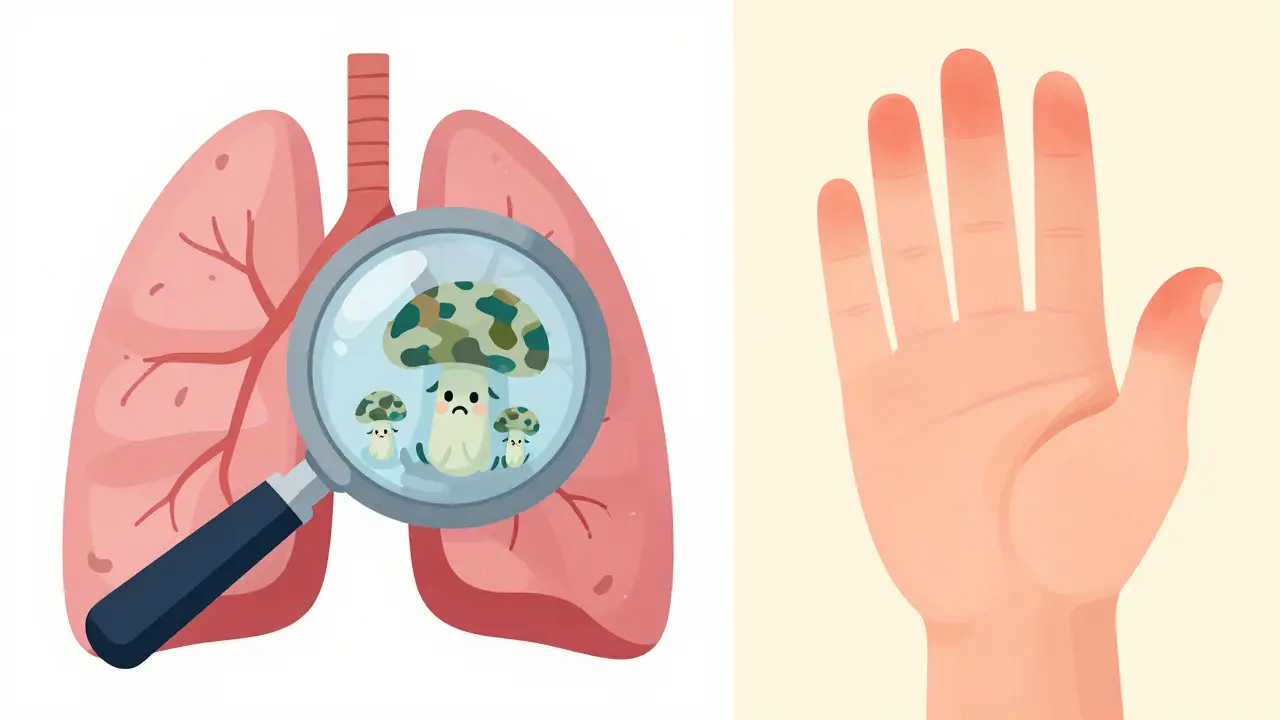
The respiratory tract is the most common entry point for these invaders. About 60% of all infections in this population start in the lungs. One of the most frequent culprits is Pneumocystis jirovecii, a fungus that causes a specific type of pneumonia (PCP). It is particularly sneaky because it can be present in the lungs without causing any obvious symptoms at all. In one study of children awaiting stem cell transplants, nearly a quarter of those who tested positive for pathogens through a lung wash (BAL) showed zero symptoms.
The skin also tells a story of vulnerability. In a typical person, a skin infection might look like a red, angry bump. In someone heavily immunosuppressed, it can look like almost anything. There are documented cases where fungal infections, like histoplasmosis, didn't create typical nodules but instead looked like a widespread, red inflammation similar to erysipelas. Because the body can't mount a proper inflammatory response, the infection spreads silently through the tissue, often leading to necrosis or systemic failure before it's even identified.
| Immune Deficit Type | Primary Pathogen Risks | Common Manifestations |
|---|---|---|
| B-Cell/Antibody Deficit | Giardia intestinalis, Encapsulated bacteria | Chronic diarrhea, recurrent sinus infections |
| T-Cell Deficit | CMV, RSV, Pneumocystis jirovecii | Severe pneumonia, viral reactivation |
| Phagocyte (Neutrophil) Deficit | Staphylococcus aureus, Pseudomonas, Aspergillus | Skin abscesses, bone infections, necrotic lung tissue |
| Combined (T & B Cell) | Mycobacterium avium, Candida, Various viruses | Disseminated systemic infections, failure to thrive |
The Diagnostic Nightmare: When the Body Stays Quiet
How do doctors find an infection if there is no fever? This is the central struggle in managing immunosuppressed patients. In a healthy body, fever is the "alarm bell." But when you're on high doses of steroids or other immunosuppressants, that bell is effectively muted. Leukocytosis (a high white blood cell count) and purulent discharge-the classic signs of infection-are often missing.
Because of this, doctors can't wait for symptoms to appear. They have to go hunting for the infection. This often involves invasive procedures like bronchoalveolar lavage (BAL), which is far more effective than just asking a patient to cough up sputum. For detecting PCP, for example, a BAL has a 92% sensitivity rate, compared to only 65% for induced sputum. When the stakes are this high, "waiting and seeing" is not an option.
Treatment is also a complicated puzzle. Medications that work for most people can fail in an immunosuppressed patient. Take Giardia as an example. While metronidazole is the go-to drug, treatment failure rates jump from about 5-10% in healthy people to as high as 30-40% in those with compromised immunity. This often forces doctors to use aggressive combination therapies with drugs like tinidazole or nitazoxanide.

Emerging Threats and New Tech
The landscape of risk is always shifting. The recent years have shown us that viruses like SARS-CoV-2 behave very differently in this population. While most people clear the virus in two weeks, some immunosuppressed patients continue shedding the virus for over 120 days. This turns the patient into a long-term source of infection and puts immense strain on their own recovering organs.
We are also seeing a rise in "rare" coronaviruses, such as NL63 and HKU1, which are causing a noticeable percentage of respiratory infections in people with blood cancers. The good news is that science is catching up. We are moving toward metagenomic next-generation sequencing (mNGS). Instead of trying to "grow" a germ in a petri dish-which often fails with these tricky organisms-mNGS looks at the genetic code of everything in a sample to find the exact DNA or RNA of the invader.
There is also exciting work in T-cell therapy. Instead of just suppressing the whole immune system to stop a transplant rejection, researchers are trying to create "designer" T-cells that only target specific viruses like CMV or adenovirus. In some phase II trials, this has shown a 70% response rate for infections that were otherwise untreatable.
Why don't immunosuppressed patients always get a fever during an infection?
Fever is caused by the immune system releasing chemicals called cytokines when it detects a threat. Because immunosuppressive drugs (like steroids) prevent the immune system from reacting, these chemicals aren't produced in high enough quantities to raise the body temperature, even if a severe infection is present.
What is an opportunistic infection?
An opportunistic infection is caused by pathogens that normally wouldn't make a healthy person sick. They "take the opportunity" to attack when the host's immune system is weakened, such as in people with HIV/AIDS, cancer patients on chemotherapy, or organ transplant recipients.
Which organ is most commonly affected by these infections?
The lungs are the most frequent site of infection, accounting for approximately 60% of cases. This is because the respiratory tract is a constant point of contact with the outside environment, making it easy for fungal spores and viruses to enter.
Is it possible to treat these infections if the patient is still on immunosuppressants?
Yes, but it is a balancing act. Doctors must treat the infection with powerful antimicrobials while trying to maintain enough immunosuppression to prevent the body from rejecting a transplanted organ or attacking its own tissues. This often requires modified drug dosages and closer monitoring for toxicity.
What is PCP and why is it dangerous?
PCP stands for Pneumocystis pneumonia, caused by the fungus Pneumocystis jirovecii. It is dangerous because it targets the lungs and can progress rapidly in T-cell deficient patients, often without showing typical symptoms until the patient struggles to breathe.
Next Steps for High-Risk Patients
If you or a loved one are managing a condition that requires immunosuppression, the best defense is a proactive strategy. This usually involves:
- Strict Prophylaxis: Using "preventative" medications (like certain antifungals or antivirals) before an infection even starts.
- Environmental Awareness: Avoiding high-risk areas, such as construction sites (where Aspergillus mold is common) or raw animal feces.
- Low-Threshold Testing: If you feel "slightly off" or have a mild cough, don't wait. Request diagnostic tests early, as the lack of a fever does not mean the absence of an infection.
- Regular Screening: For those undergoing HSCT or similar procedures, routine lung and blood screenings are vital to catch silent pathogens before they spread.


1 Comments
Oh wow look at that a table that basically says 'if your immune system is gone you might get sick' absolutely groundbreaking stuff here