
When it comes to medication safety for kids, the system of prescribing, dispensing, and administering drugs to children under 18. Also known as pediatric pharmacotherapy, it’s not just a smaller version of adult medicine—it’s a completely different science. Kids aren’t little adults. Their bodies process drugs differently, their weight changes fast, and even a tiny mistake can lead to serious harm. The FDA reports that over 7,000 children end up in emergency rooms each year because of medication errors—most of them preventable.
Pediatric drug dosing, the precise calculation of medication amounts based on a child’s weight, age, and kidney/liver function is the foundation of safe treatment. A common error? Using teaspoons instead of milliliters. A teaspoon holds about 5 mL, but not all spoons are the same. A kitchen spoon can vary by 2–3 mL. That’s enough to turn a safe dose into an overdose. Even worse, parents sometimes use adult medications—like ibuprofen or antihistamines—cutting pills or guessing amounts. That’s how accidental poisonings happen. Child medication errors, mistakes in dosage, timing, or drug selection that lead to harm often occur because no one double-checked the label, or the doctor didn’t clarify the instructions.
It’s not just about the dose. Drug interactions in children, harmful reactions when two or more medications (or supplements) are taken together are easy to miss. A child on antibiotics might also be taking an herbal remedy for colds, or a multivitamin with iron. These can interfere with absorption or cause side effects like drowsiness or stomach upset. And don’t forget: some over-the-counter cough syrups contain the same active ingredients as prescription drugs. Giving both means doubling the dose—without knowing it.
Pharmacists play a big role here. Many parents don’t realize they can—and should—ask their pharmacist to explain how to give the medicine. Is it safe with food? Should it be shaken? Does it need refrigeration? Is there a liquid form if the child can’t swallow pills? These questions aren’t optional—they’re essential. And if your child is on multiple medications, keep a written list: drug name, dose, time, reason. Bring it to every appointment. Doctors miss things. Nurses get busy. But you’re the constant.
There’s also the issue of expired or leftover meds. Storing old antibiotics in the medicine cabinet? That’s a risk. Kids are curious. They see colorful pills and think candy. Even if the bottle says "for ear infection," if your child has a fever now, you might be tempted to use it. Don’t. Antibiotics don’t work on viruses, and using the wrong one can lead to resistance—or worse, an allergic reaction you didn’t know they had.
What you’ll find below is a collection of real, practical articles that dig into exactly these problems. You’ll learn how insulin and chemotherapy require extra checks in kids, why certain antibiotics need heart monitoring, and how to tell if a reaction is a side effect or a true allergy. You’ll see how prescription abbreviations like QD and QID can cause deadly confusion—even in pediatric charts. And you’ll get clear, no-fluff advice on how to talk to doctors, read labels, and keep your child safe when medicine is involved. This isn’t theory. It’s what works in real homes, with real kids, and real risks.
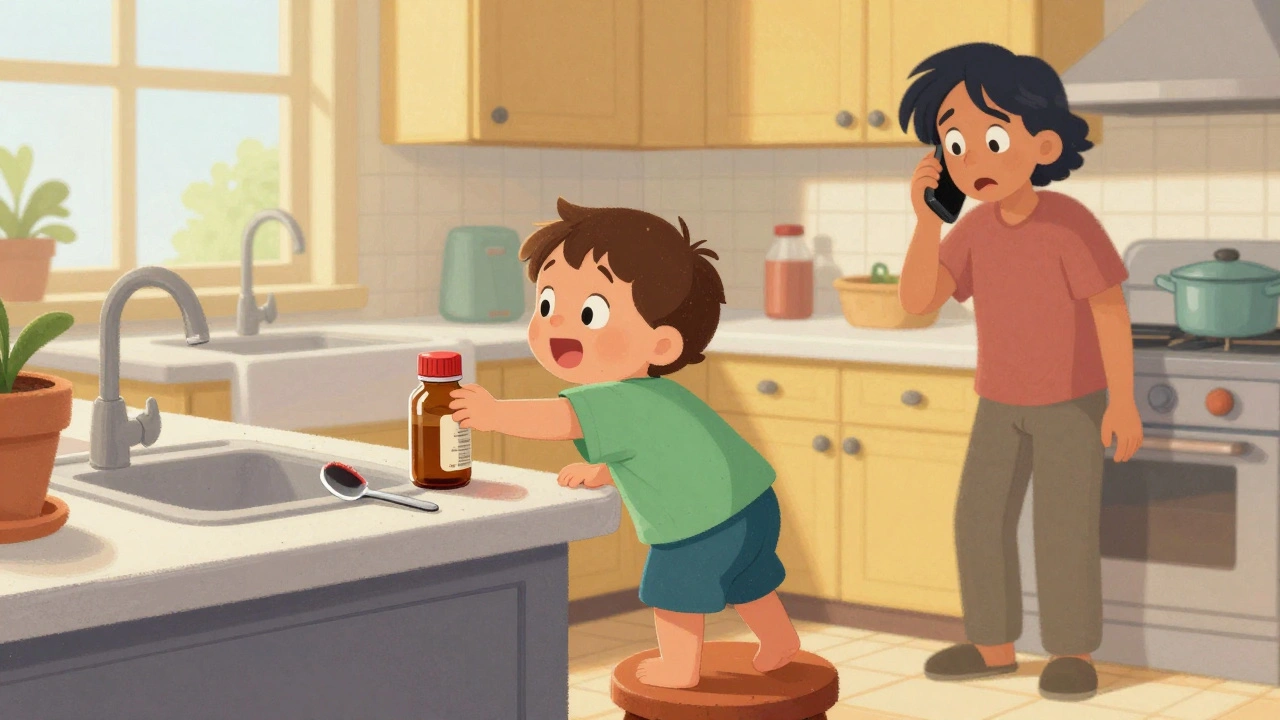
Accidental medication poisoning in kids is common, preventable, and often happens at home. Learn how to lock up medicines, avoid dangerous habits like calling pills candy, and what to do if your child swallows something they shouldn't.
Keep Reading