
When hiccups won’t stop and you haven’t eaten anything strange, it might not be your dinner—it could be your medication-induced hiccups, hiccups triggered by certain drugs that irritate the nerves controlling the diaphragm. Also known as drug-induced hiccups, this side effect isn’t rare and often gets ignored until it disrupts sleep, eating, or daily life. Unlike normal hiccups that last minutes, these can drag on for days or weeks, especially in older adults or people on multiple prescriptions.
Some of the most common culprits include benzodiazepines, sedatives used for anxiety or sleep, steroids, like prednisone, often prescribed for inflammation or autoimmune conditions, and chemotherapy drugs, particularly those used in cancer treatment that affect the central nervous system. Even common pain relievers like opioids and some antibiotics have been linked to persistent hiccups. It’s not about the dose—it’s about how your body reacts. A single pill can trigger it in one person and do nothing in another.
What makes this tricky is that most people don’t connect hiccups to their meds. Doctors rarely ask about them unless they’re severe. But if you’ve started a new drug and your hiccups began shortly after, it’s worth mentioning. The good news? Stopping or switching the drug often fixes it. In some cases, simple changes like taking the pill with food or adjusting the timing helps. For stubborn cases, doctors may prescribe muscle relaxants or anticonvulsants like baclofen—drugs that calm the nerve signals causing the spasms.
It’s also important to rule out other causes. Conditions like acid reflux, kidney failure, or even brain tumors can mimic medication-induced hiccups. That’s why tracking your meds and symptoms together matters. Keep a log: what you took, when, and how long the hiccups lasted. This helps your provider spot patterns faster.
Many of the posts below dive into how drugs interact with the body in unexpected ways—from how insulin can cause low blood sugar when mixed with alcohol, to why certain antibiotics need an ECG before use. Medication-induced hiccups fit right into that theme: side effects aren’t always obvious, but they’re often preventable if you know what to look for. You’ll find real-world examples of drugs linked to odd reactions, how to tell if it’s an allergy or just a side effect, and what steps to take when something doesn’t feel right. This isn’t about fear—it’s about being informed so you can speak up and get the right help.
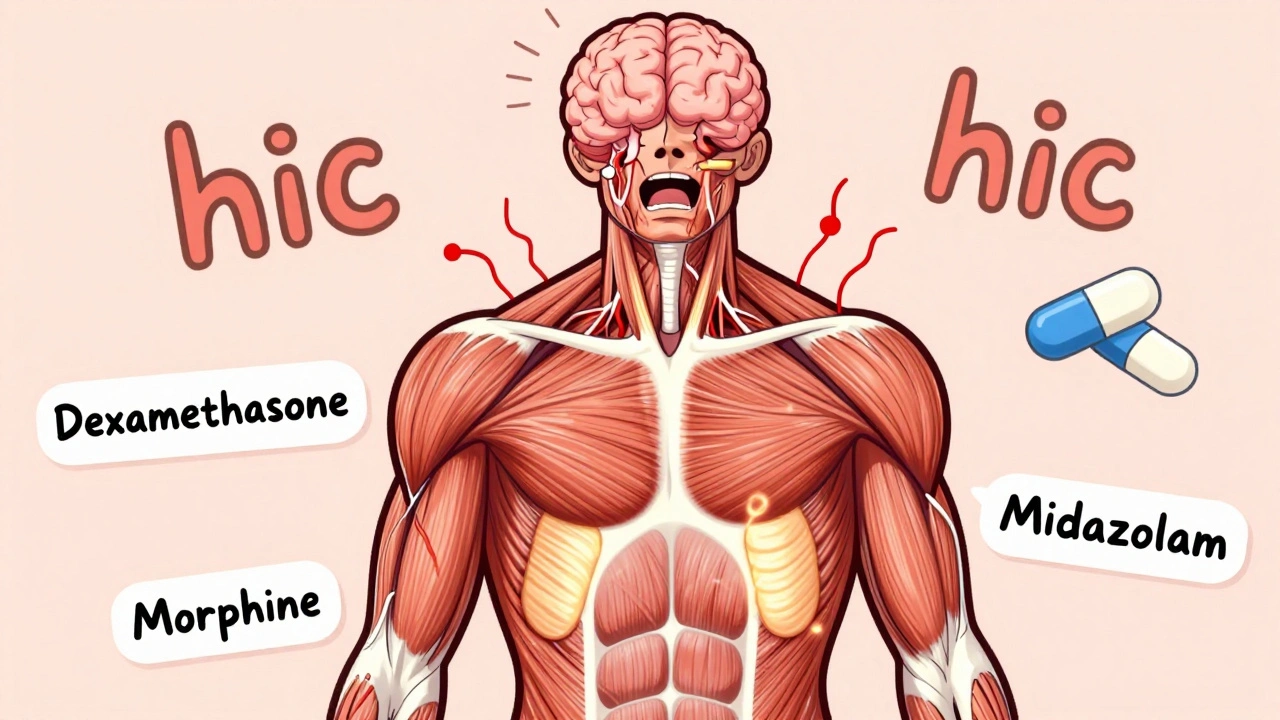
Medications like dexamethasone and opioids can trigger persistent hiccups. Learn the most common causes, proven remedies like sugar and baclofen, and how to prevent them before they start.
Keep Reading