
When you take more than one medication, your body doesn’t always treat them like separate pieces. Drug interactions, happen when two or more drugs affect each other’s action in your body, leading to unexpected side effects, reduced effectiveness, or dangerous health risks. Also known as medication interactions, they’re not rare — they’re one of the top reasons people end up in the ER. It’s not just prescription pills. Even something as simple as ginkgo biloba or St. John’s wort can change how your blood thinner works, or make your antidepressant less effective. You might think you’re being careful by following your doctor’s instructions, but if you’re also popping supplements, over-the-counter painkillers, or even grapefruit juice, you could be setting off a hidden chain reaction.
Some of the most dangerous drug interactions, involve blood thinners like warfarin or newer options like apixaban. These are designed to keep your blood flowing smoothly, but they’re easily thrown off by other substances. Ginkgo biloba, for example, can increase bleeding risk when taken with these drugs — a combo that’s not always flagged by pharmacists or even doctors. Meanwhile, alcohol can crash your blood sugar if you’re on diabetes meds, and even common antibiotics like azithromycin can mess with your heart rhythm if you’re already at risk. These aren’t theoretical risks. Real people have had strokes, internal bleeding, or dangerous heart arrhythmias because they didn’t know what they were mixing. And it’s not just about pills. Your body’s response to a drug can change based on what you eat, how much you sleep, or even your genetics. A generic version of a drug might be chemically identical, but if your body processes it differently than the brand name, you could still run into problems. That’s why knowing your full list of meds — including vitamins, supplements, and herbal products — is critical.
You don’t need to become a pharmacist to stay safe. But you do need to ask the right questions. When a new drug is added to your list, ask: "What could this interact with?" and "What should I avoid while taking this?" Keep a written list of everything you take, including doses and times. Bring that list to every appointment — even if you think it’s "just" a supplement. The truth is, most drug interactions aren’t obvious until something goes wrong. And by then, it’s often too late. The posts below cover real cases: how ginkgo and warfarin can be a deadly pair, why macrolide antibiotics need ECG checks, how copay cards can backfire, and what happens when you mix alcohol with diabetes meds. These aren’t abstract warnings. They’re lessons from people who lived through them. What you learn here could keep you out of the hospital.
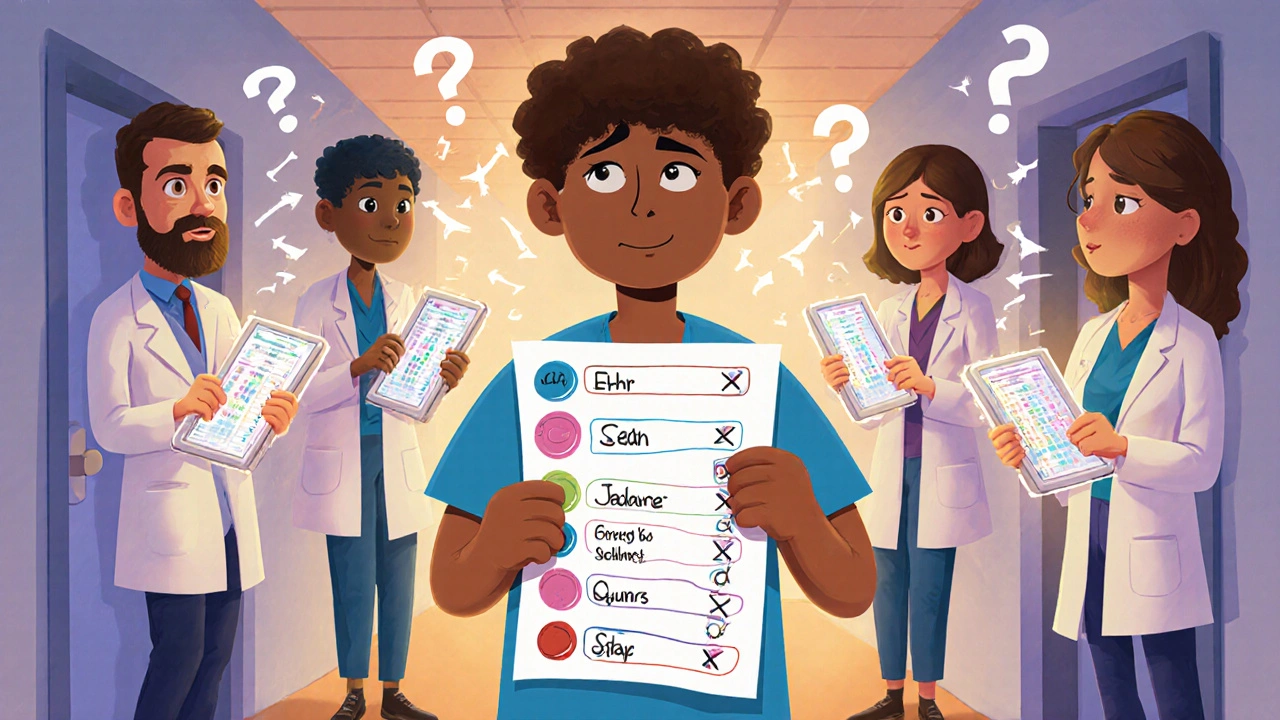
Learn how to safely manage multiple medications across different healthcare providers. Discover practical steps to prevent dangerous drug interactions and ensure all your doctors are on the same page.
Keep Reading