
When you have a bad infection, antibiotics, medications designed to kill or stop the growth of bacteria. Also known as antibacterial agents, they’re one of the most important tools in modern medicine—but only when used correctly. They don’t work on colds, flu, or most sore throats. Those are caused by viruses, and antibiotics are useless against them. Yet, millions of people still ask for them anyway, thinking they’ll speed up recovery. That’s not just wrong—it’s dangerous.
Every time you take an antibiotic when you don’t need it, you’re helping create antibiotic resistance, when bacteria evolve to survive the drugs meant to kill them. Superbugs like MRSA and drug-resistant tuberculosis are real, and they’re getting worse. The World Health Organization calls this one of the top global health threats. It’s not science fiction—it’s happening in hospitals, homes, and even in the food you eat. And it’s not just about taking too many pills. It’s also about not finishing the full course, or sharing prescriptions. Even if you feel better, stopping early lets the toughest bacteria survive and multiply.
Not all side effects are obvious. Some people get stomach upset, rashes, or yeast infections. Others develop serious reactions like C. diff, a dangerous gut infection caused when antibiotics wipe out good bacteria. And some antibiotics, like macrolides, can affect your heart rhythm—especially if you already have heart issues. That’s why doctors now check your ECG before prescribing certain ones. You can’t just pick one off the shelf. Even over-the-counter creams with antibiotics can contribute to resistance if used too often.
There’s no magic bullet. Sometimes, your body fights off infection on its own. Sometimes, you need help. But knowing the difference matters. The posts below cover real stories and science: how antibiotics are prescribed, what to do if you’re allergic, why some drugs are riskier than others, and how to avoid making the mistakes that lead to resistance. You’ll find advice on safe use, how to talk to your doctor, and what to watch for after taking them. This isn’t about fear—it’s about being smart. Because the next time you’re sick, you’ll want to know exactly what’s in that pill, why it’s being given, and what happens if you use it wrong.
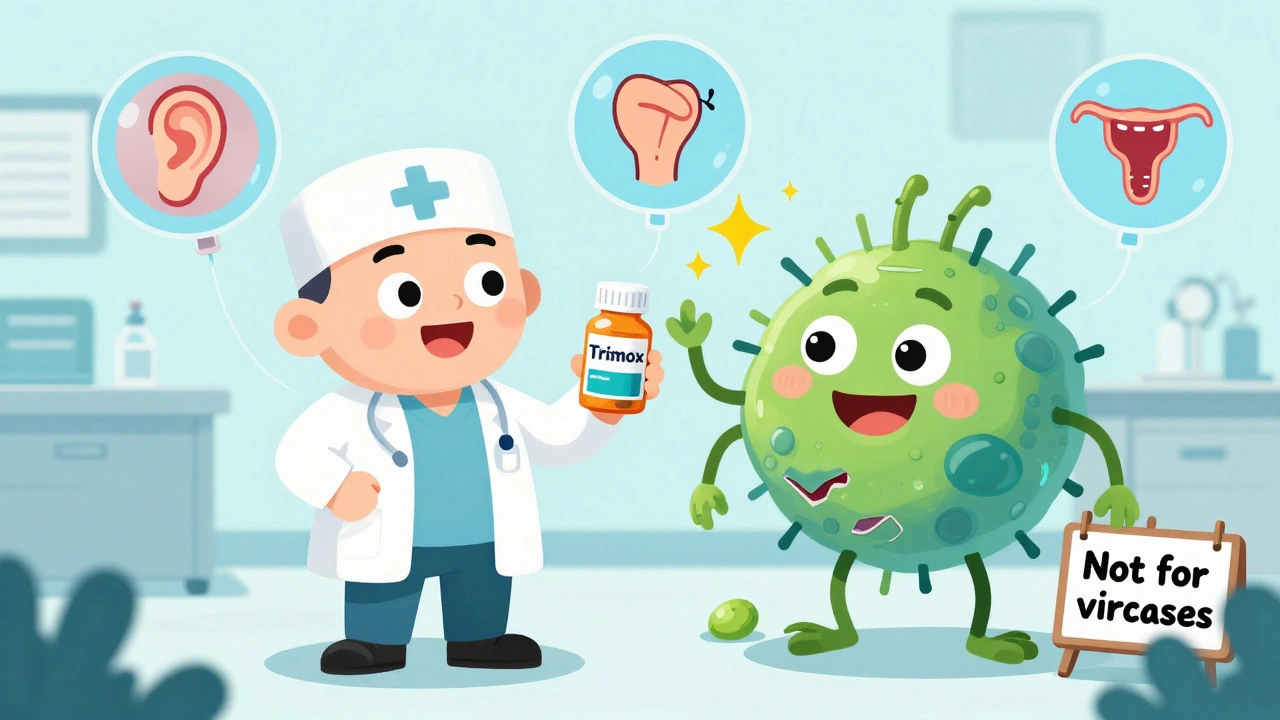
Trimox (amoxicillin) is a common antibiotic, but it's not always the right choice. Learn when alternatives like Augmentin, azithromycin, or cephalexin are better - and when to stick with amoxicillin.
Keep Reading