
When a patient has a bad reaction to a generic drug, who do you report it to? And does it even matter which manufacturer made it? The answer isn’t as simple as it seems. Even though the FDA treats brand-name and generic drugs the same under the law, the reality on the ground is very different. Generic drugs make up about 90% of all prescriptions filled in the U.S., yet they account for far fewer serious adverse event reports than brand-name drugs. This isn’t because generics are safer-it’s because the system isn’t working the way it should.
What Counts as a Serious Adverse Event?
A serious adverse event (SAE) isn’t just a mild side effect. The FDA defines it as any reaction that results in death, is life-threatening, requires hospitalization, causes permanent disability, leads to a birth defect, or needs medical intervention to prevent lasting harm. These rules apply equally to brand and generic drugs. If someone has a severe allergic reaction to generic metoprolol, or goes into liver failure after taking a generic statin, that’s an SAE-and it must be reported.Who Is Responsible for Reporting?
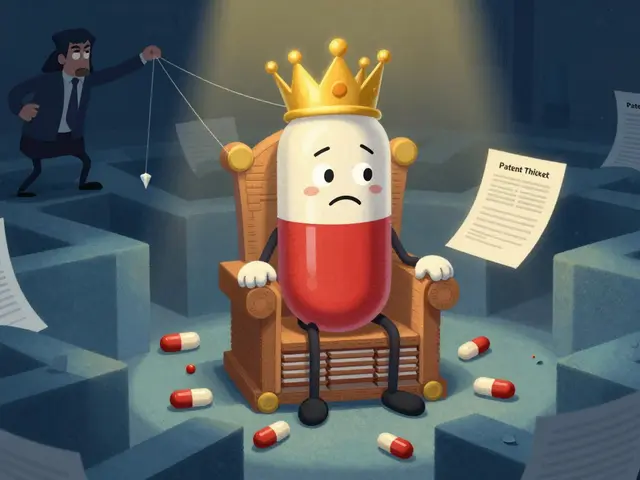
The law says the drug manufacturer must report serious and unexpected adverse events to the FDA within 15 days. That’s true whether the drug is made by Pfizer or a small generic company in India. But here’s the catch: most reports don’t come from manufacturers. They come from doctors, pharmacists, and patients through the FDA’s MedWatch program. Healthcare providers are supposed to file reports using MedWatch Form 3500-either online or by mail. But when the drug is generic, things get messy. The form asks for the manufacturer’s name. And most patients don’t know which company made their pills. Pharmacies switch suppliers all the time. One week, it’s Teva. The next, it’s Mylan. The bottle label might have the name in tiny print, or not at all. So what do providers do? They often report it under the brand name, even if the patient took a generic. That skews the data.Why Are Generic Drugs Underreported?
Data from the FDA’s FAERS system (2004-2015) shows a clear pattern. For drugs like losartan and simvastatin, generics made up over 80% of prescriptions, but brand-name manufacturers submitted nearly 70% of the serious adverse event reports. That doesn’t add up. If generics are being used more, why are fewer reactions being recorded? A 2020 survey of 1,247 healthcare providers found that 68% had trouble identifying the generic manufacturer when filing a report. Only 12% had the same problem with brand-name drugs. The FDA’s own 2019 usability study showed that 42% of providers abandoned reporting for generics because they couldn’t figure out who made the drug. That’s more than four in ten cases where a potentially life-threatening reaction goes unrecorded. Smaller generic manufacturers are especially underrepresented. While the top 10 generic companies control 65% of the market, the smaller ones-those making fewer than 20 drugs-account for 32% of prescriptions but only 4.7% of adverse event reports. Why? Because they often don’t have dedicated safety teams. Many rely on third-party contractors who aren’t always responsive. Brand-name companies, by contrast, have full pharmacovigilance departments with 10+ staff members. Generic companies? Sometimes one person handles safety for 50 different drugs.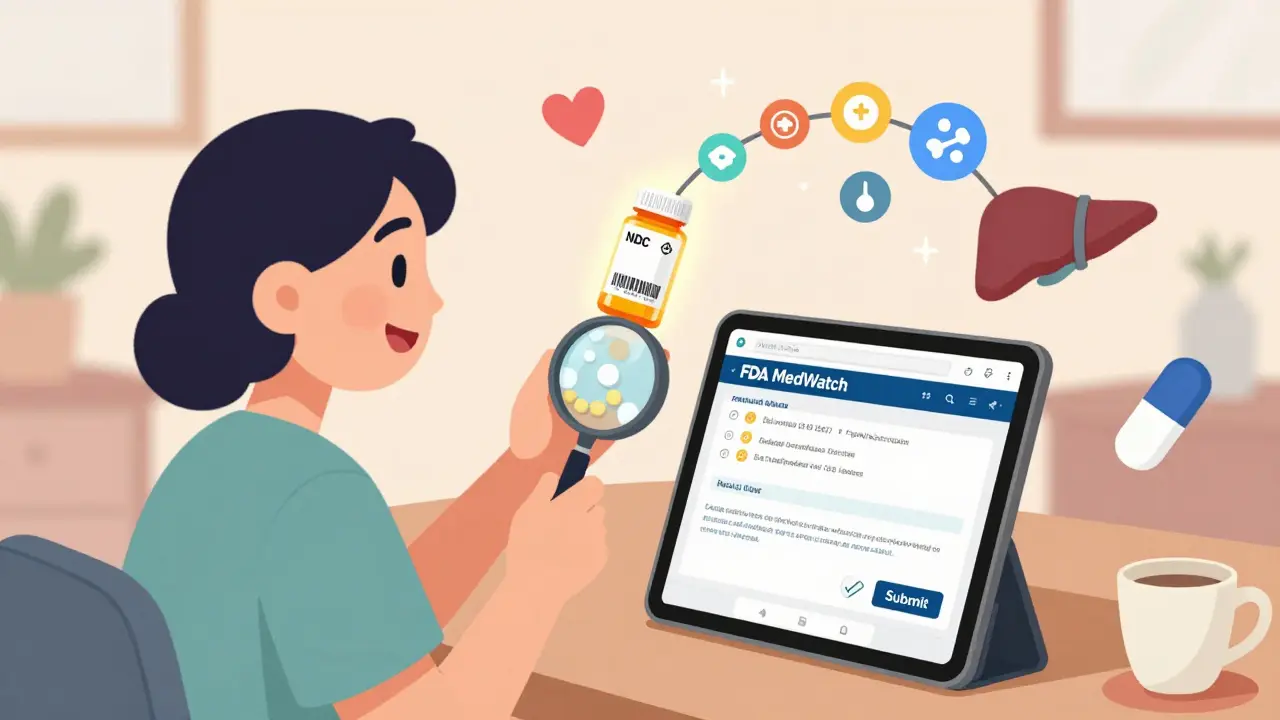
What Happens When Reports Are Missing?
Missing data doesn’t just look bad-it’s dangerous. If a generic version of a drug has a slightly different filler or coating, it might affect how the body absorbs the medicine. That’s not always obvious. For example, some patients report inconsistent effects with generic levothyroxine. If those reactions aren’t properly recorded, regulators can’t detect a pattern. A 2021 GAO report concluded that the FDA “lacks sufficient data to determine whether adverse event reports for generic drugs are underreported.” That’s not a minor oversight. It’s a blind spot in drug safety. Dr. Jerry Avorn from Harvard put it bluntly in JAMA Internal Medicine: “The current system fails to capture the complete safety profile of generic drugs, potentially putting patients at risk.”How to Report a Serious Reaction to a Generic Drug
If you’re a healthcare provider and you suspect a serious reaction to a generic drug, here’s what to do:- Check the medication bottle. Look for the manufacturer’s name-it’s usually printed near the National Drug Code (NDC) number. If it’s too small to read, take a photo.
- Use DailyMed. Go to the National Library of Medicine’s DailyMed website. Enter the NDC number from the bottle. It will show you the exact manufacturer and product details.
- Fill out MedWatch Form 3500. Select “Generic Name” and type the active ingredient (e.g., “amlodipine besylate”). In the “Brand Name” field, leave it blank or write “N/A.” In the manufacturer field, enter the full legal name of the company (e.g., “Teva Pharmaceuticals USA, Inc.”).
- Include details. Write down when the reaction started, what symptoms occurred, and whether the patient had taken the same generic before. If the reaction happened after switching from one generic to another, note that.
- Submit it. File online at fda.gov/medwatch or mail the form. Don’t wait. If it’s life-threatening, call the FDA at 1-800-FDA-1088 immediately.
It takes 15-30 minutes to file a report for a brand drug. For generics, it can take 45 minutes or more because of the extra steps. But it’s worth it.
What’s Being Done to Fix This?
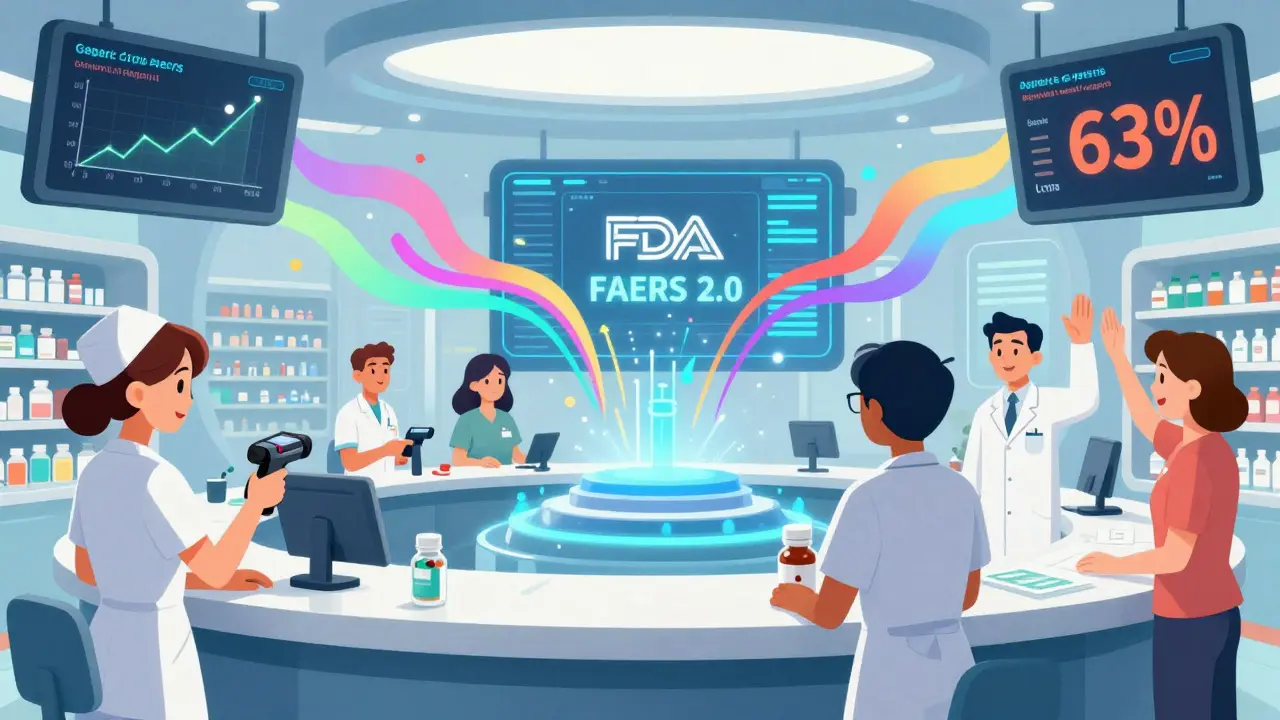
The FDA knows there’s a problem. In 2023, they launched FAERS 2.0, a new system that links adverse events directly to NDC codes-so even if the reporter doesn’t know the manufacturer, the system can figure it out. They’ve also drafted new guidance requiring pharmacies to print the manufacturer’s name on all prescription labels. That’s a big step. Some hospitals are already ahead of the curve. A pilot program at 12 major U.S. hospitals used barcode scanners at the point of medication administration. When a nurse scans the pill bottle, the system automatically logs the manufacturer. Result? Generic adverse event reporting jumped by 63%. The Generic Drug User Fee Amendments (GDUFA III), active from 2023 to 2027, now includes $15 million specifically for improving post-market safety monitoring of generics. And by 2024, the FDA is piloting automatic manufacturer tracking with major pharmacy chains like CVS and Walgreens.What You Can Do Right Now
If you’re a patient and you have a serious reaction to a generic drug:- Keep the pill bottle. Don’t throw it away.
- Write down the name of the drug and the manufacturer (if visible).
- Ask your pharmacist: “Which company made this?” They’re required to know.
- Report it yourself at fda.gov/medwatch. You don’t need a doctor to do it.
If you’re a pharmacist or nurse:
- Train your team to always check the manufacturer on the label.
- Use DailyMed or your pharmacy’s NDC lookup tool before submitting a report.
- Advocate for barcode scanning at your facility. It’s proven to work.
The system isn’t perfect. But it only gets better if people use it. Every report matters. One report might be the first sign of a pattern that saves thousands of lives.
Do I have to report a serious reaction to a generic drug if I’m not the manufacturer?
Yes. While manufacturers are legally required to report, healthcare providers and patients can-and should-submit reports too. The FDA’s MedWatch system is designed for anyone to use. Your report helps fill critical gaps in safety data, especially for generic drugs where manufacturer reporting is often weak.
What if I don’t know which company made the generic drug?
Don’t skip reporting. Use the National Drug Code (NDC) from the pill bottle and look it up on DailyMed.gov. That site will tell you the exact manufacturer. If you can’t find the NDC, report the active ingredient and note “manufacturer unknown.” The FDA can still track it through their new FAERS 2.0 system using the NDC code from pharmacy records.
Are generic drugs less safe than brand-name drugs?
No. Generic drugs must meet the same FDA standards for quality, strength, purity, and performance as brand-name drugs. But small differences in inactive ingredients (like fillers or coatings) can affect how some people absorb the medicine. These differences are rare, but when they cause reactions, they’re often missed because of underreporting. The issue isn’t safety-it’s visibility.
Why do brand-name companies report more adverse events?
Brand-name companies have large, well-funded pharmacovigilance teams. They track every report, follow up with doctors, and have systems to detect patterns. Generic manufacturers-especially smaller ones-often lack the staff or budget. Many rely on outsourced contractors who don’t respond quickly. So even though generics are used far more often, they’re reported far less.
Can I report an adverse event if I’m not a healthcare professional?
Absolutely. Patients and caregivers can and should report serious reactions directly to the FDA through MedWatch. You don’t need a medical license. Just go to fda.gov/medwatch, fill out the form, and include as much detail as you can: the drug name, when you started it, what happened, and how long it lasted. Your report could help prevent someone else from having the same reaction.

9 Comments
Just had to report a bad reaction to generic lisinopril last month. Took me 45 minutes just to find the manufacturer on the bottle. Pharmacist had to pull up the NDC on their system. Glad the FDA’s finally pushing for better labeling. But seriously, why is this still so hard?
THIS. THIS IS SO IMPORTANT. I almost died on generic metoprolol and no one believed me because the bottle said 'Teva' in letters smaller than a mosquito's eyelash. I filed the report myself. I'm not a doctor. I'm just a person who didn't want this to happen to someone else. PLEASE REPORT. IT MATTERS.
As a pharmacist with 18 years in community practice, I can confirm: the labeling issue is systemic. We're not lazy-we're overwhelmed. We get 150 scripts an hour. Some generics have no manufacturer name printed at all. We scan the NDC, but patients rarely keep bottles. And when they do, they toss them after one refill. We need mandatory labeling on the front of the label-not the tiny print on the side. This isn't negligence. It's design failure.
Actually, I think this whole thing is overblown. The FDA says generics are bioequivalent. If your body reacts differently, maybe it's you-not the drug. Stop blaming manufacturers. Also, why are we even tracking this? Isn't it cheaper to just switch to brand-name if you're that sensitive?
you know… i’ve been thinking… like… deeply… about this… and it’s not really about the drugs, is it? it’s about how we’ve outsourced trust… to corporations… to algorithms… to barcodes… and now we’re surprised when the system glitches? we want safety… but we won’t pay for it… we want cheap… and then we want magic… and when the magic fails… we blame the pill… but the pill didn’t make the policy… we did… and now we’re all just… hoping someone else will fix it… sigh…
Interesting how this mirrors global patterns. In countries with centralized pharmacy systems, like Canada or the UK, generic reporting is far more accurate because the supply chain is traceable from batch to patient. The U.S. system is fragmented by design-private insurers, multiple distributors, inconsistent labeling. The fix isn’t just technical-it’s structural. We need a national NDC registry linked to prescriptions, not just bottles.
Everyone’s acting like this is some new crisis. Newsflash: generic manufacturers have been cutting corners since the 80s. The FDA lets them get away with it because they’re cheaper. If this were a brand-name drug causing this, there’d be congressional hearings and CNN specials. But since it’s just some factory in Hyderabad? Nobody cares. This isn’t a reporting problem-it’s a corruption problem. And the FDA is complicit.
Thank you for this comprehensive breakdown. I work in clinical research and have reviewed FAERS data for over a decade. The underreporting of generic adverse events is one of the most persistent, understudied gaps in pharmacovigilance. The 63% increase in reporting observed in the barcode pilot is statistically significant (p<0.001). I strongly urge all institutions to adopt similar systems. The cost-benefit analysis is overwhelmingly favorable: one preventable hospitalization offsets the entire investment.
Report it. Always. Even if you’re not sure. The system only works if it’s used.