
Rifampin Contraceptive Risk Calculator
How This Works
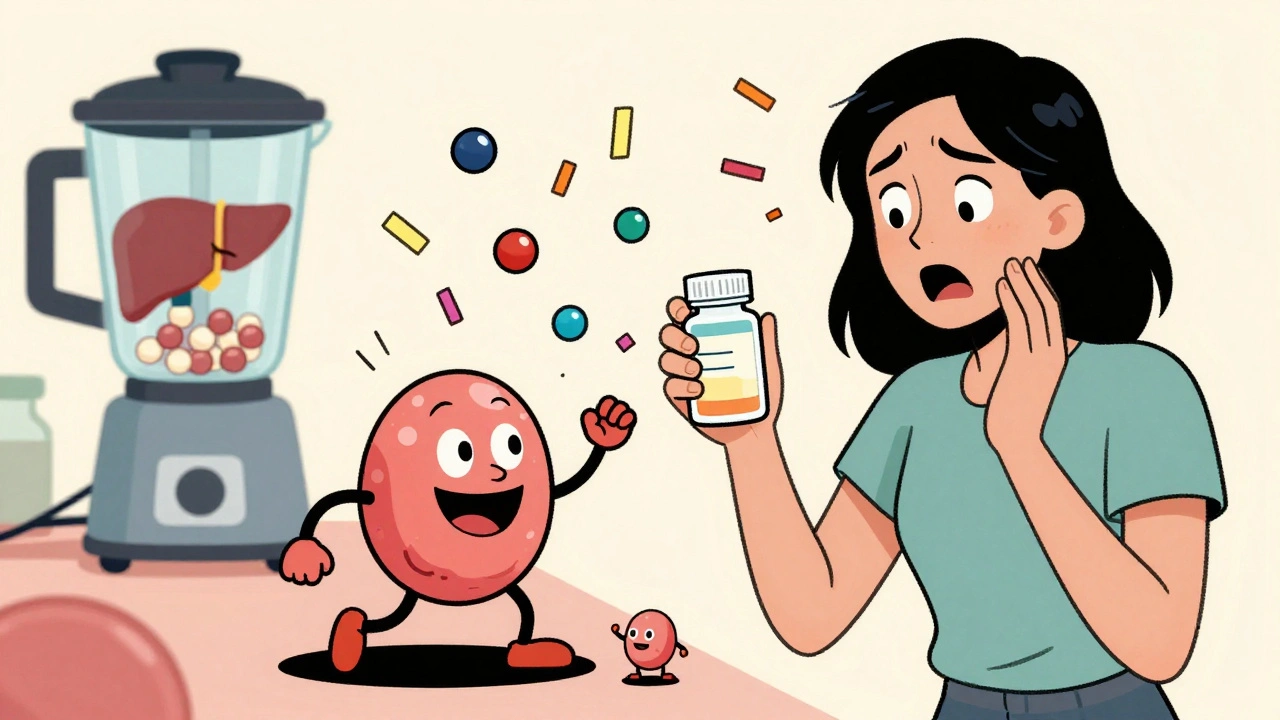
Rifampin increases your liver's enzyme production which breaks down birth control hormones faster. This effect can last 2-4 weeks after stopping rifampin. This tool calculates how many days of backup contraception you need.
Risk Period Status
You need backup contraception until 28 days after your last rifampin dose
Important: This tool shows your remaining risk period, but you must use backup contraception for the full 28 days after stopping rifampin. CDC guidelines state that you need backup contraception for the entire treatment period plus 28 days after.
Rifampin is one of the most effective antibiotics for treating tuberculosis and certain staph infections. But if you’re taking birth control pills, this drug can make them stop working - and not just a little. It can completely undo the protection you’re counting on. This isn’t a rare side effect. It’s a well-documented, predictable, and dangerous interaction that has led to real, documented cases of unintended pregnancies. And yet, many people - even some doctors - still don’t know how serious it is.
Why Rifampin Breaks Birth Control
Rifampin doesn’t just kill bacteria. It also tricks your liver into working overtime. It turns on a set of enzymes - specifically CYP3A4 - that are meant to break down toxins. But those enzymes don’t know the difference between a toxin and your birth control hormones. So when you take rifampin, your liver starts chewing up estrogen and progestin faster than normal. That means less of those hormones reach your bloodstream, where they’re supposed to stop ovulation and thicken cervical mucus. Studies show rifampin can slash the levels of ethinyl estradiol - the estrogen in most pills - by up to 67%. Progestin levels drop by as much as 52%. That’s not a small dip. That’s enough to let ovulation happen. And once ovulation kicks in, pregnancy becomes possible. This isn’t theoretical. It’s been seen in real women. Cases of breakthrough bleeding, spotting, and missed periods started showing up in the 1970s. Since then, dozens of documented pregnancies have occurred in women taking rifampin and birth control together. The mechanism is clear. The risk is real.Only Rifampin Does This - Not Other Antibiotics
You’ve probably heard stories about antibiotics messing with birth control. Penicillin. Amoxicillin. Azithromycin. Even tetracycline. But here’s the truth: rifampin is the only antibiotic with solid, proven evidence of causing contraceptive failure. Other antibiotics? The data doesn’t support it. In the UK, between 1970 and 1999, doctors received 117 reports of birth control failure linked to penicillins and tetracyclines. But when researchers looked closer - when they ran controlled studies - they found no real increase in ovulation. No drop in hormone levels. Just coincidences. People got sick. They missed pills. They got pregnant. And they blamed the antibiotic. Rifampin is different. It’s not a coincidence. It’s chemistry. The enzyme induction is strong, fast, and long-lasting. Even rifabutin, a similar drug used for other infections, has a weaker effect - it lowers hormone levels by only 20-30%. But rifampin? At the standard 600mg daily dose, it’s the strongest enzyme inducer of any antibiotic in common use.How Long Does the Risk Last?
This is where most people get it wrong. You can’t just stop rifampin and go back to your pill the next day. The enzyme induction doesn’t disappear when the drug leaves your body. Rifampin’s half-life is only 3-4 hours. But the enzymes it turns on? They stick around. It takes 2 to 4 weeks after your last dose for your liver to calm down and stop over-metabolizing your hormones. That’s why guidelines say you need backup contraception for the entire time you’re on rifampin - plus 28 days after you stop. If you stop rifampin on day 20 and go back to your pill on day 21, you’re still at risk. Your body is still breaking down the hormones too fast. You might not even notice. No spotting. No symptoms. Just a surprise pregnancy weeks later.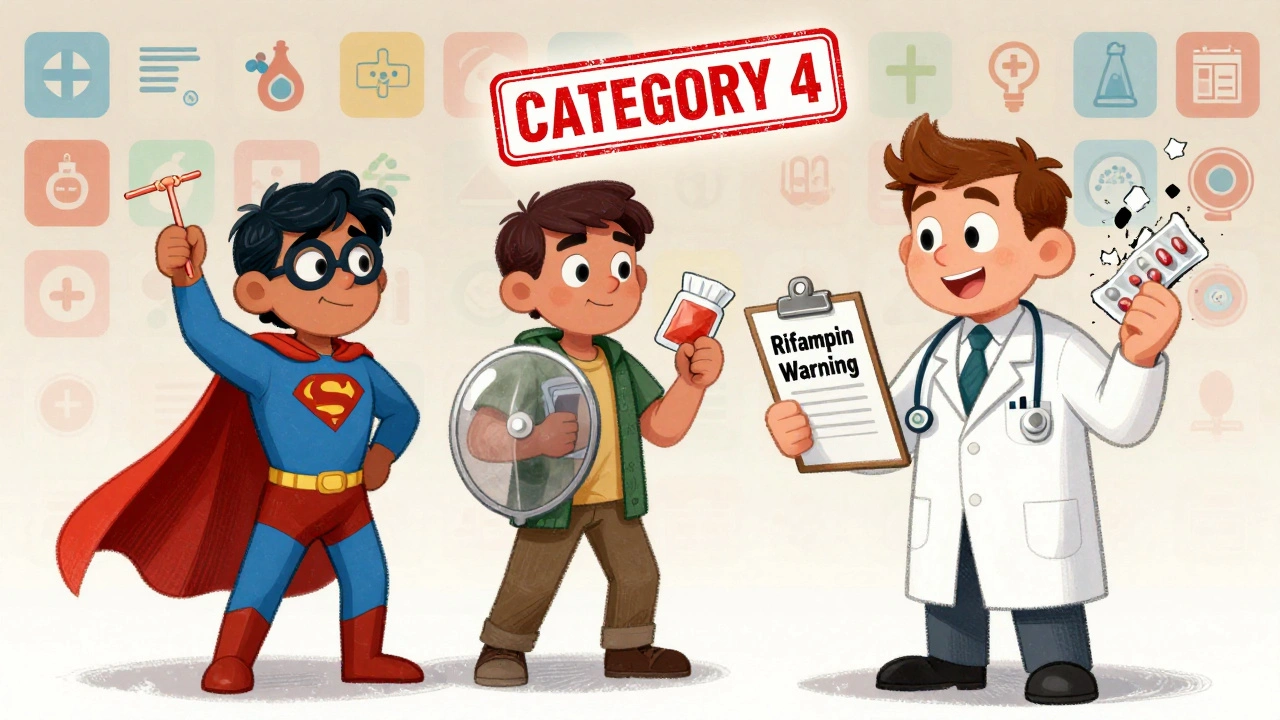
What Backup Contraception Works?
You don’t need to stop your pill. You just need to add something that doesn’t rely on your liver to work. The gold standard is a copper IUD. It’s hormone-free. It lasts up to 10 years. And once it’s in, you don’t have to think about it. It’s 99% effective, no matter what antibiotics you take. Condoms are another solid option - especially if you’re not ready for a long-term method. They’re not as effective as IUDs on their own, but when used consistently and correctly, they cut pregnancy risk dramatically. And they protect against STIs too - something birth control pills don’t do. Hormonal methods like the implant (Nexplanon) or the shot (Depo-Provera)? The data is mixed. One 2023 study followed 47 women using Nexplanon while on rifampin. No pregnancies. But the sample was small. Experts still recommend extra caution. The implant has higher progestin levels, so it *might* hold up - but it’s not guaranteed. And forget about the patch or the ring. They’re just as vulnerable to rifampin as the pill. Same hormones. Same enzymes. Same risk.What Do Guidelines Say?
The science is clear. So are the rules. The CDC says combined hormonal contraceptives (the pill, patch, ring) are Category 4 when used with rifampin. That means: unacceptable health risk. Don’t use them together. The American College of Obstetricians and Gynecologists (ACOG) says bluntly: non-rifamycin antibiotics do not reduce oral contraceptive effectiveness. So if your doctor prescribes amoxicillin for a sinus infection? You’re fine. No backup needed. The problem? Most doctors don’t know this. A 2017 survey found that only 42% of primary care doctors consistently warn patients about rifampin’s effect on birth control. And 28% told patients to use backup contraception for *all* antibiotics - which is unnecessary and confusing. You have to be your own advocate. If you’re prescribed rifampin, ask: “Will this affect my birth control?” Don’t wait for them to bring it up.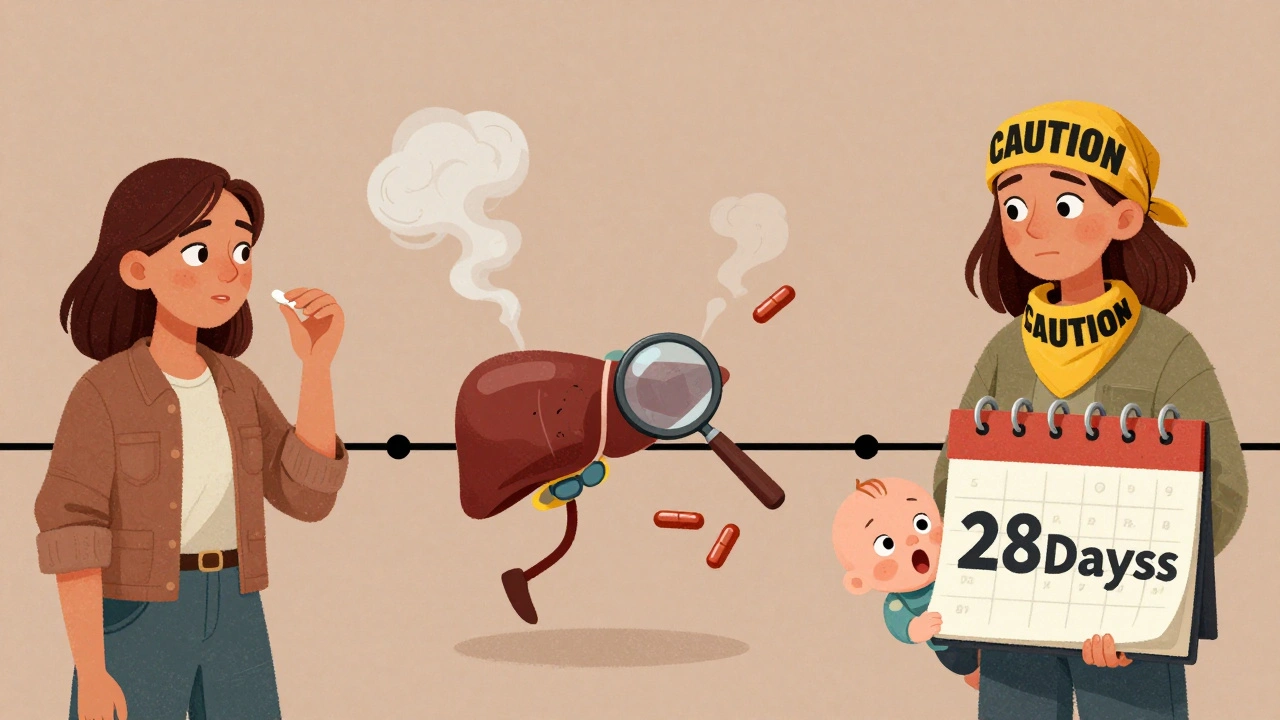
Why This Matters More Than You Think
Tuberculosis affects 10 million people a year worldwide. In places like sub-Saharan Africa, where TB is common and access to contraception is limited, this interaction isn’t just a medical footnote - it’s a public health crisis. Women on TB treatment may not have easy access to IUDs or condoms. They might not even know the risk. Unintended pregnancies in this group can lead to complications, stigma, and even abandonment. Even in places like Australia, the U.S., or Europe, the gap between knowledge and practice is wide. A 2022 study found that 63% of women prescribed rifampin got no proper counseling about contraception. That’s not a mistake. That’s a system failure. And it’s not just about pregnancy. Missing your period or spotting unexpectedly can cause anxiety, confusion, and unnecessary medical tests. Women end up going to the ER thinking they’re having a miscarriage - when all they needed was a conversation about antibiotics.What Should You Do?
If you’re on birth control and your doctor prescribes rifampin:- Ask for a copper IUD. It’s the most reliable option.
- If you can’t get an IUD, use condoms every time - for the full course of rifampin plus 28 days after.
- Don’t switch to another pill, patch, or ring. They won’t help.
- Don’t assume other antibiotics are dangerous. Only rifampin and possibly rifabutin are risky.
- Keep track of your cycle. Breakthrough bleeding doesn’t mean the pill is working - it might mean it’s failing.
The Future Is Changing
Researchers are looking for TB treatments that don’t use rifamycins. One new 4-month regimen using rifapentine and moxifloxacin is being tested - and if it works, it could replace rifampin in many cases. That would solve this problem for thousands. Meanwhile, drugmakers are now required to test new birth control products against rifampin before approval. The FDA and EMA both demand it. That’s progress. But it’s not fast enough. For now, the rule is simple: if you’re taking rifampin, your birth control pill is not enough. You need backup. And you need it for the full 28 days after the last dose. Don’t gamble with your body. This interaction isn’t a myth. It’s not a rumor. It’s science - and it’s been known for over 50 years.Does rifampin affect all types of birth control?
No. Rifampin only affects hormonal birth control methods that rely on estrogen and progestin - like the pill, patch, and ring. It does not affect non-hormonal methods like the copper IUD or condoms. Hormonal implants like Nexplanon may still work, but there’s not enough data to be certain, so backup protection is still recommended.
How long after stopping rifampin should I wait before relying on birth control again?
You must use backup contraception for 28 days after your last dose of rifampin. Even though the drug leaves your system in a few hours, the liver enzymes it activates take 2-4 weeks to return to normal. Stopping backup too early puts you at risk of pregnancy.
Are there other antibiotics that cause contraceptive failure?
Rifampin is the only antibiotic with proven, consistent evidence of causing contraceptive failure. Other antibiotics like amoxicillin, azithromycin, or tetracycline have been linked to pregnancy reports in the past, but controlled studies show no real effect on hormone levels or ovulation. Don’t assume all antibiotics are risky - only rifampin (and possibly rifabutin) require backup contraception.
Can I just take a higher-dose birth control pill to counteract rifampin?
No. Increasing the dose of your current pill won’t reliably fix the problem. Rifampin speeds up hormone breakdown so much that even higher doses may not stay in your system long enough to prevent ovulation. The safest and most effective solution is to use a non-hormonal backup method like a copper IUD or condoms.
What should I do if I had unprotected sex while taking rifampin?
If you had unprotected sex while on rifampin or within 28 days after stopping it, consider emergency contraception (like the copper IUD or Plan B). The copper IUD is the most effective option and can be inserted up to 5 days after unprotected sex. It also provides long-term protection. Contact your doctor or clinic immediately - don’t wait.
Is it safe to get pregnant while on rifampin?
Rifampin is not known to cause birth defects, but tuberculosis itself can be dangerous during pregnancy. If you become pregnant while on rifampin, work closely with your doctor. You’ll need to continue TB treatment - stopping it is riskier than continuing it. Your provider will monitor both your health and your baby’s development carefully.



14 Comments
lol i took amoxicillin last year and got pregnant so yeah totally the antibiotic's fault 🙃
This is why I stopped trusting doctors. They don’t even know what’s in their own textbooks. Meanwhile, I’m Googling my meds like a criminal.
Rifampin’s enzyme induction is one of the most well-documented drug interactions in pharmacology. It’s not a myth. It’s biochemistry. If you’re on birth control and get prescribed this, push back hard. Your body isn’t being dramatic-it’s being metabolized.
The real tragedy isn’t the interaction-it’s how little we do to educate people. This isn’t just about pills and liver enzymes. It’s about access, equity, and whether a woman’s autonomy is treated as an afterthought in medical protocols.
Copper iud is the real MVP here. No hormones no stress no guessing. I got mine after my tb treatment and honestly it changed my life. no more daily pills no more panic when i take antibiotics. just chill and live
I don’t care what the science says. If my doctor didn’t tell me, then it’s his fault I got pregnant. And now I’m mad at America for not making this common knowledge.
so let me get this straight... the only antibiotic that ruins birth control is the one that saves lives from TB... and we’re supposed to be mad? 🤡
I’ve seen this happen in rural clinics overseas. Women on rifampin don’t even know what a condom is, let alone an IUD. This isn’t a ‘personal responsibility’ issue-it’s a global healthcare failure. We need better systems, not just better pamphlets.
I’m so glad someone finally wrote this. I was on rifampin for 3 months and had no idea. Got pregnant on day 2 of being off it. Thought I was just stressed. Turned out my liver was still on a caffeine binge. 🤯 Thank you for the clarity.
Use condoms. For 28 days after. No excuses.
The irony is that rifampin’s mechanism of action-inducing hepatic enzymes-is precisely what makes it so effective against intracellular pathogens. One might argue that evolution has conspired against contraceptive efficacy. A biological paradox, really.
You know who else knew about this? The pharmaceutical companies. They’ve been hiding it in fine print for decades. They don’t want you to know because then you’d demand better options. And they don’t want you to have choices.
This is life-saving info. I’m from Nigeria and I’ve seen friends get pregnant while on TB meds. No one told them. I’m sharing this with my whole family. Thank you for writing this.
I’m not mad at the science. I’m mad that my OB-GYN didn’t even blink when I told her I was on rifampin. I had to Google it myself. 🤦♀️ And now I’m on an IUD and I hate how much it costs. But at least I’m not pregnant.