
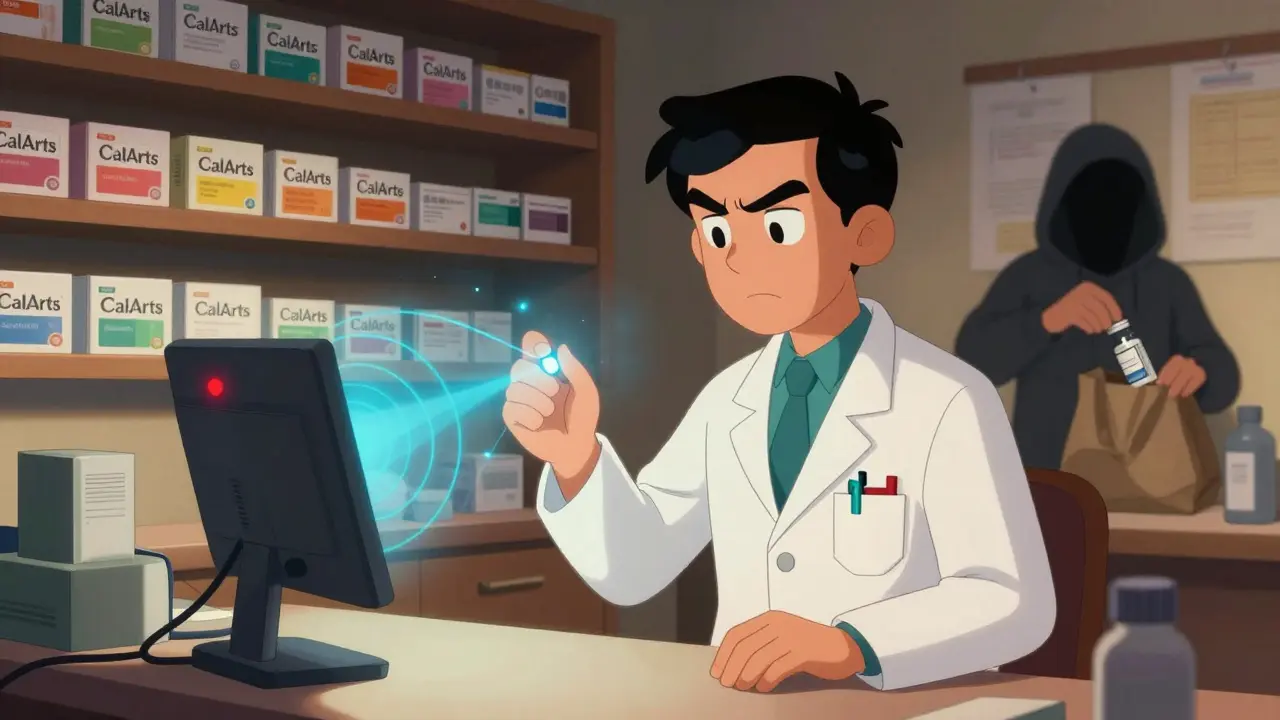
Every year, millions of people around the world take medications they think are safe. But what if those pills weren’t made in a licensed factory? What if they were mixed in a garage, packed in fake boxes, and shipped across borders with no quality control? This isn’t science fiction. It’s happening right now. In 2024, law enforcement agencies uncovered over 6,424 incidents of counterfeit drug activity across 136 countries. These weren’t just random seizures-they involved 2,428 different medicines, including cancer drugs, heart medications, and even insulin. And the people most likely to catch these fake drugs before they reach patients? Pharmacists.
Why Pharmacists Are the Last Line of Defense
Pharmacists aren’t just dispensers of pills. They’re the final checkpoint in a long, complex supply chain. A counterfeit drug might slip past customs, bypass wholesalers, and even make it into a hospital’s inventory. But when it lands on the pharmacist’s counter, that’s where the real test begins. The Partnership for Safe Medicines calls pharmacists “the last line of defense.” Why? Because they’re the only ones who can physically inspect the medication, check packaging, verify lot numbers, and ask the right questions before handing it to a patient.
Counterfeiters have gotten smarter. They now replicate blister packs with near-perfect accuracy. Some fake insulin vials even have the same holograms as the real ones. Others use recycled original packaging and refill them with cheap chemicals. A 2023 case in Europe involved counterfeit blood pressure pills that contained nothing but sugar and chalk. Patients didn’t get better-they got sicker. That’s why training isn’t optional anymore. It’s life-or-death.
What Modern Training Looks Like
Training programs today don’t just teach pharmacists to look for misspelled labels anymore. That method worked in 2005. Today, you need more. The International Pharmaceutical Federation (FIP) and the World Health Organization (WHO) launched a global curriculum in 2021, tested with 355 pharmacy students across Cameroon, Senegal, and Tanzania. After the training, students improved their ability to identify counterfeit drugs by 68%. That’s not a small jump-it’s a game-changer.
But education isn’t just for students. Practicing pharmacists need ongoing training too. One widely used program is TrainingNow.com’s 45-minute Medicare Fraud, Waste, and Abuse (FWA) course. It’s mobile-friendly, audio-guided, and gives continuing education credits. Pharmacists can complete it during a lunch break or while waiting for a prescription to fill. It doesn’t just cover fraud-it teaches how to spot red flags like prescriptions from unlicensed online sellers or drugs priced 70% below wholesale cost.
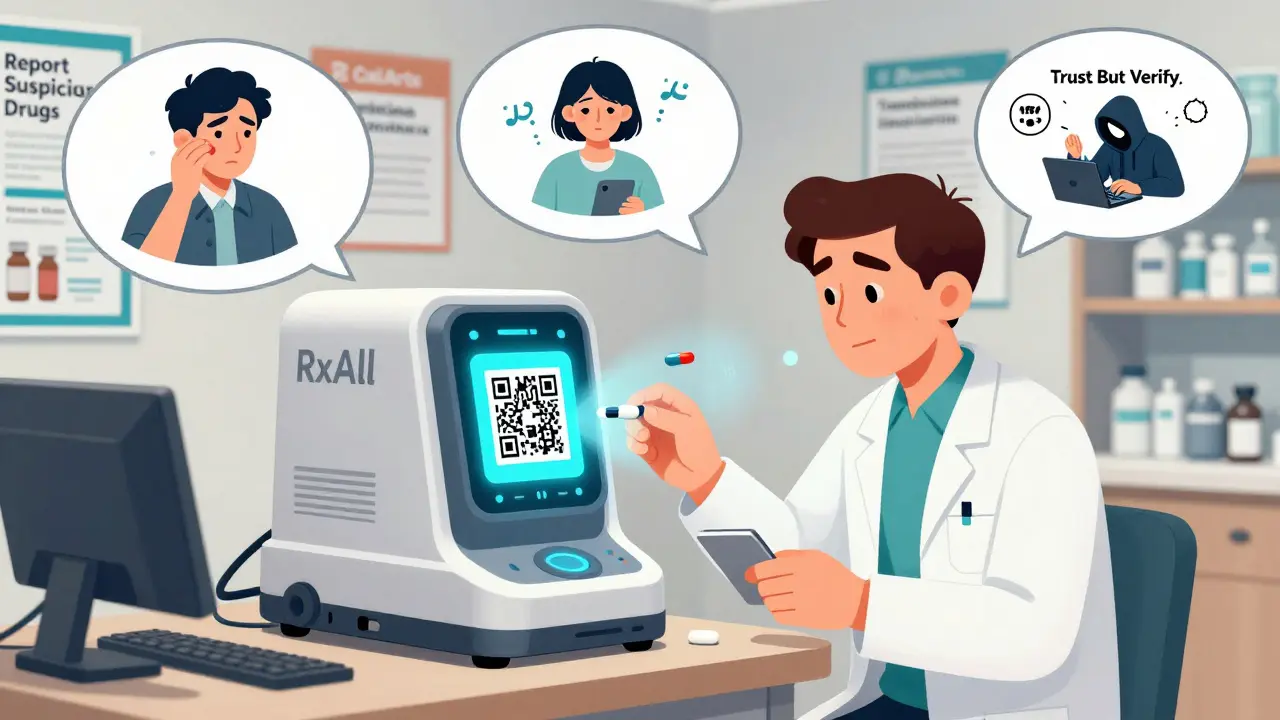
Then there’s RxAll. This isn’t just another online course. It’s a handheld device that uses spectral analysis and AI to scan a pill or capsule and tell you in seconds whether it’s real. The device compares the chemical signature of the drug against a database of verified medications. If a counterfeit metformin tablet has a slightly different crystalline structure, the device flags it. In community pharmacies, this has cut verification time from 15 minutes (calling manufacturers, checking lot numbers) to under 10 seconds. And confidence? It’s gone up. Pharmacists who use these tools report feeling “empowered,” not overwhelmed.
What Pharmacists Need to Watch For
Here’s what you need to be suspicious about:
- Medications priced way below the wholesale acquisition cost (WAC). If it’s 60% cheaper than what you’d expect, it’s probably fake.
- Unusual packaging-slightly off fonts, mismatched colors, or missing tamper-proof seals.
- Drugs coming from unknown or unlicensed distributors. Always verify the supplier through the manufacturer’s official website.
- Specialty drugs like biologics or oncology treatments sold through non-authorized channels. These are high-value targets for counterfeiters.
- Online pharmacies that don’t require a prescription or don’t have a licensed pharmacist on staff.
Pfizer’s Anti-Counterfeiting Program has stopped over 302 million counterfeit doses since 2004. How? By training not just pharmacists, but customs agents, police, and pharmacy staff worldwide. Their message is simple: if something feels off, investigate. Don’t assume it’s fine because it came from a “reputable” source. Counterfeiters use fake websites that look like real ones. They even create fake FDA logos.
Global Gaps and Real-World Challenges
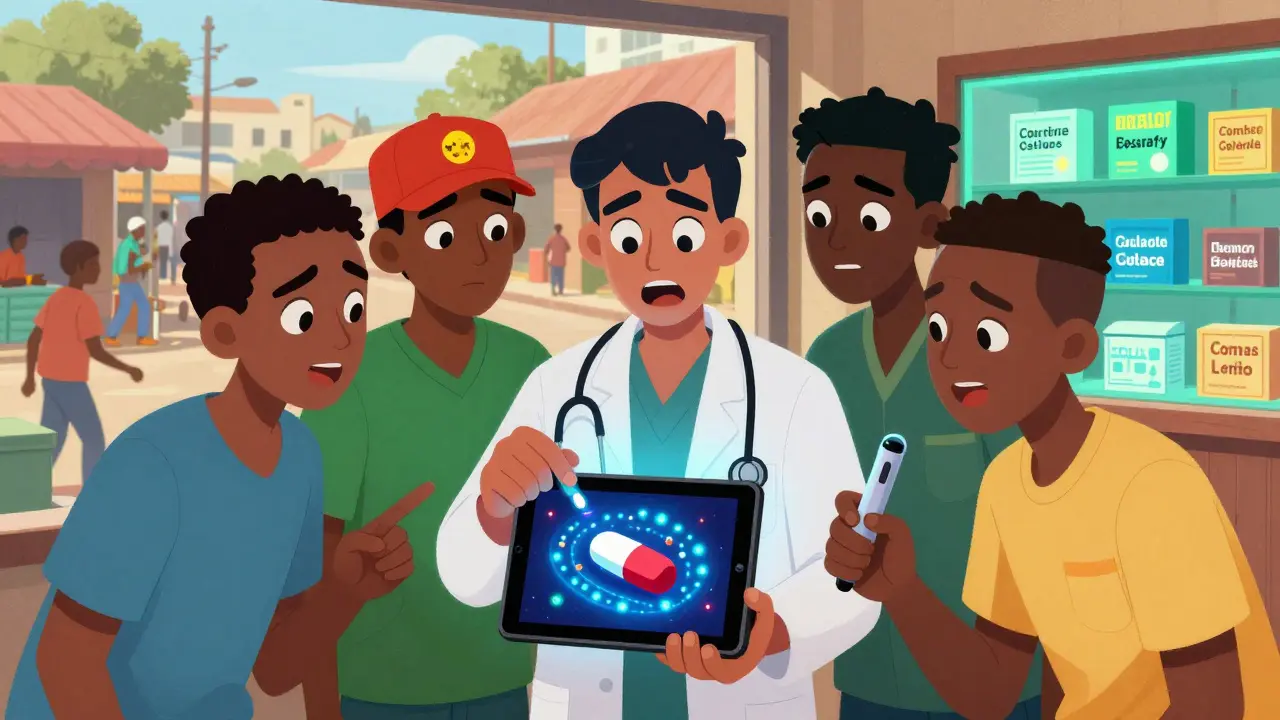
The U.S. has one of the most advanced drug tracking systems in the world thanks to the Drug Supply Chain Security Act (DSCSA). But in many countries, pharmacists still rely on handwritten logs and phone calls to verify authenticity. In parts of Africa and Southeast Asia, counterfeit drugs make up over 30% of the market in some regions. That’s why the WHO’s updated toolkit, due for release in late 2024, is so critical. It’s designed to help low-resource settings adopt low-cost verification methods-like simple UV light checks for fluorescent ink on packaging-and integrate them into daily workflows.
Interpol’s Operation Pangea XVI in 2025 showed the scale of the problem: 90 countries participated, 769 arrests were made, and over 50 million counterfeit doses were seized. Most of those were sold through fake online pharmacies. The biggest threat now? Social media. A single Instagram post can sell hundreds of fake ADHD pills to teens in just one day. Pharmacists need training not just to spot fakes, but to educate patients about the risks of buying meds online.
Technology Is Changing the Game
Remember when you had to call the manufacturer to check a lot number? That’s gone. Today’s tools are faster, smarter, and more accessible. AI-powered scanners can detect differences in chemical composition invisible to the human eye. Some devices even analyze the sound a pill makes when dropped on a surface-fake pills often have a different acoustic signature due to inconsistent fillers.
RxAll’s platform includes an online forum where pharmacists share real cases. One pharmacist in Texas reported a batch of fake glipizide that had the correct imprint but the wrong density. The scanner caught it. Another in Nigeria identified counterfeit malaria tablets because the packaging didn’t match the humidity level of the region-counterfeiters don’t account for environmental factors.
These aren’t gimmicks. They’re tools that reduce error rates. A 2023 study in Journal of the American Pharmacists Association found that pharmacies using AI-assisted verification had a 92% lower rate of dispensing suspected counterfeits than those relying on visual inspection alone.
What’s Next?
The threats are evolving. Counterfeiters are now targeting biologics-complex drugs made from living cells. These are harder to replicate, but not impossible. Fake insulin, monoclonal antibodies, and even gene therapies are showing up. Training programs are already updating to include these. The WHO’s new toolkit will add modules on detecting counterfeit biologics and oncology products.
Also on the horizon: patient education. Pharmacies using RxAll’s platform now include QR codes on packaging that link to videos explaining how to spot fakes. Patients are learning to check the lot number on the manufacturer’s site before taking a pill. That’s a powerful shift-from passive dispensing to active protection.
Frequently Asked Questions
What are the most common signs of a counterfeit drug?
Common signs include unusual packaging-misspelled names, blurry logos, or mismatched colors. The pills themselves may look different: wrong shape, color, or size. Some fake drugs lack the expected imprint or have a chalky texture. If the price is far below market rate, especially for high-demand drugs like insulin or cancer treatments, that’s a major red flag.
Can pharmacists really tell if a drug is fake just by looking at it?
Sometimes, but not reliably anymore. Counterfeiters have improved their packaging and pill manufacturing to near-perfect levels. Visual inspection alone catches only about 30% of fakes. Modern training combines visual checks with technology-like handheld scanners or digital verification tools-to improve accuracy to over 90%.
Is counterfeit drug training required by law?
In the U.S., the Centers for Medicare & Medicaid Services (CMS) requires all pharmacists to complete Fraud, Waste, and Abuse (FWA) training within 90 days of hire. While the specific course isn’t mandated after 2019, most employers require it. In many countries, it’s not legally required-but professional boards and pharmacy associations strongly recommend it as part of ethical practice.
How can pharmacists in low-income countries access training?
The WHO and FIP have developed a free, mobile-friendly curriculum available in English and French, designed for low-resource settings. It includes offline modules, printable checklists, and simple visual guides. Many NGOs and regional pharmacy associations are also distributing low-cost UV lights and counterfeit detection kits to community pharmacies. Training doesn’t require expensive tech-just awareness and consistent practice.
What should a pharmacist do if they suspect a drug is counterfeit?
Isolate the product immediately. Do not return it to the supplier. Report it to your state pharmacy board and the FDA’s MedWatch system (in the U.S.). If you’re outside the U.S., contact your national drug regulatory authority. Document everything: batch number, supplier name, packaging details. Many counterfeit operations are dismantled because a single pharmacist took the time to report a suspicious batch.

14 Comments
I've seen some wild stuff in my 12 years as a pharmacist. One time, a batch of fake metformin came in with the right imprint but tasted like chalk. We called it 'sugar pills for diabetics' and laughed until we realized someone might've taken it. 😅 Tech like RxAll? Game changer. My pharmacy's been using it for 8 months now and zero counterfeits slipped through. Still, nothing beats good ol' eyeballing + a UV light. Stay sharp, folks.
It's remarkable how much responsibility falls on the pharmacist, really. We're not just filling scripts-we're gatekeepers of human health. The fact that counterfeiters can replicate holograms and packaging so well is terrifying. But also fascinating. I wonder if this arms race between detection and deception will ever end, or if we're just playing whack-a-mole with science.
Nigeria's got 40% fake meds. And you think this is a US problem? Nah. We don't even have proper supply chains. Pharmacies here use WhatsApp to verify batches. One guy sent a pic of a pill and said 'is this real?' No scanners. No training. Just luck. The WHO toolkit? Good idea. But who's gonna pay for the UV lights? The government? LOL.
So... we're trusting AI to tell us if a pill is real? Cool. Next they'll be using facial recognition to check if the patient is 'legit'. Meanwhile, the real problem is Big Pharma's monopoly pricing. If insulin wasn't $300, people wouldn't risk buying off Instagram. But sure, let's keep pretending this is about safety and not profit.
I find it deeply concerning that we're allowing non-medical professionals to make decisions about drug authenticity. A handheld device? A QR code? These are not substitutes for rigorous pharmaceutical education. This is the slippery slope of tech replacing expertise. And don't get me started on 'lunch break FWA training'-that's not education, it's compliance theater.
Bro, I used to work in a pharmacy where we’d get shipments with the wrong logo. We’d just shrug and say ‘eh, close enough.’ Then one guy got sick from fake blood pressure pills. Dude ended up in the ER. Since then? I’m the guy who brings the UV light to every shift. I even got my own little lamp I call ‘The Truth Beam.’ 🌟 It’s not glamorous. But it works.
Let me tell you what’s REALLY scary. The FDA doesn’t even track every single batch anymore. There are loopholes bigger than your local Walmart parking lot. And now we’re supposed to believe that a $200 scanner is going to fix this? Meanwhile, the same corporations that make the real drugs are the ones lobbying to keep the supply chain opaque. This isn’t about safety. It’s about liability.
From a pharmacoeconomic standpoint, the marginal utility of AI-assisted verification significantly outperforms traditional visual inspection paradigms, particularly in high-volume, low-resource environments. The spectral signature divergence in crystalline matrices of counterfeit metformin, for instance, demonstrates a >90% specificity in detection when calibrated against WHO reference libraries. The scalability of this approach is non-trivial.
I love how RxAll lets pharmacists share real cases. Last week, a coworker spotted a fake insulin vial because the cap didn’t click right. She didn’t say anything until after her shift. Then she posted it on the forum. Now we all know what to look for. That’s the power of community. We’re not just workers-we’re a network. And yeah, I cried a little. 😊
You think the government’s fighting counterfeit drugs? HA. The same agencies that ‘seize’ fake meds are the ones that let the big pharma companies patent generics for 20 years. Then they charge $500 for a vial. The real counterfeiters? They’re just filling a gap created by greed. This whole system is a scam. And you’re all just playing along.
I read the whole thing. Honestly? Boring. We already know fake drugs are bad. Do we really need 10 paragraphs about UV lights? Can we just ban online pharmacies and call it a day? I mean, I get it. But this feels like a textbook chapter nobody asked for.
You know what’s wild? The fact that we’re still teaching pharmacists to look for misspelled labels. That’s like teaching someone to spot a fake Rolex by checking the font on the dial. The real ones are flawless now. What we need is mandatory hands-on training with real counterfeit samples. Not videos. Not quizzes. Actual pills. Let them hold the fakes. Let them smell them. Let them feel the difference. That’s how you train.
The shift from visual inspection to spectral analysis is a paradigm shift in community pharmacy practice. The 92% reduction in dispensing errors aligns with the predictive validity of AI-driven diagnostic frameworks. What’s often overlooked is the psychological impact: pharmacists report higher job satisfaction when equipped with tools that reduce cognitive load. This isn’t just about safety-it’s about professional dignity.
^^^ David, you just described my exact feeling. I used to dread the 3pm rush. Now? I’m like, ‘Bring it.’ I’ve got my scanner, my checklist, and my trusty UV light. I even have a little trophy on my counter: ‘Pharmacist of the Year’ for reporting a fake cancer med. No joke. That one saved three lives. So yeah. I’m proud.