
When you suddenly feel like the room is spinning, your ears are ringing, and your hearing feels muffled, it’s not just dizziness-it could be Meniere’s disease. This inner ear disorder doesn’t just come and go; it rewires your life. You start avoiding crowds, skipping meals out, and checking food labels like a scientist. But here’s the truth: what you eat might be the most powerful tool you have to take back control.
Why Salt Makes Your Vertigo Worse
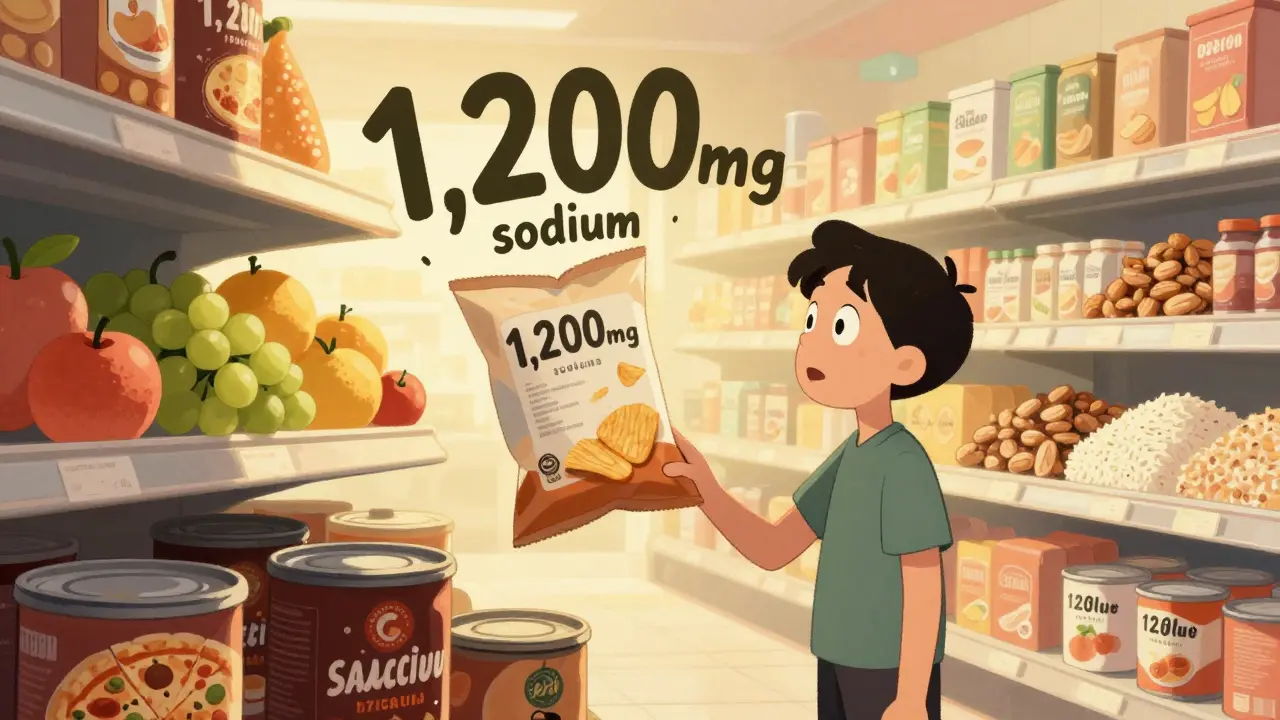
Meniere’s disease is caused by excess fluid buildup in the inner ear, called endolymphatic hydrops. That fluid pressure messes with your balance and hearing. And sodium? It’s the main driver. Every gram of salt you consume pulls water into your bloodstream-and eventually, into your inner ear. The more sodium, the more fluid. The more fluid, the worse your vertigo, tinnitus, and hearing loss get.It’s not just about the salt shaker. About 77% of the sodium in your diet comes from packaged foods, restaurant meals, and processed snacks. A single slice of pizza can have more than 1,000 mg of sodium. A cup of canned soup? Often over 800 mg. That’s already half your daily limit before you even sit down for dinner.
Research from a 2024 study in Acta Otolaryngologica tracked 50 people with moderate to severe Meniere’s who cut their sodium to 1,500 mg per day and drank 35 ml of water per kilogram of body weight daily. After six months, their hearing improved by an average of 12.3 decibels. Their dizziness attacks dropped by nearly 60%. Tinnitus got noticeably quieter. This wasn’t a placebo. These were measurable, objective changes in ear function.
How Much Sodium Is Really Safe?
You’ll hear different numbers from different doctors. Some say 1,500 mg. Others say 2,000 mg. The American Heart Association recommends no more than 2,300 mg for the general public-but for Meniere’s, that’s too high.The sweet spot? Stick to 1,500-2,000 mg per day. That’s about three-quarters of a teaspoon of table salt. To put that in perspective:
- One tablespoon of soy sauce = 900 mg
- One slice of deli meat = 500-700 mg
- One bag of microwave popcorn = 400-600 mg
- One store-bought granola bar = 150-250 mg
That means if you eat two slices of bread, a sandwich with deli meat, and a bag of chips, you’ve already hit your limit. No room left for cheese, salad dressing, or even a handful of nuts.
Some experts, like Dr. Richard Miyashita from Tokyo Medical University, argue that keeping sodium under 3,000 mg isn’t enough. His research shows that at this level, your body releases more aldosterone-a hormone that tells your kidneys to hold onto salt and water. That’s the opposite of what you want. Lowering sodium below 2,000 mg helps reset this system.
Hydration: Drink More Water, Not Less
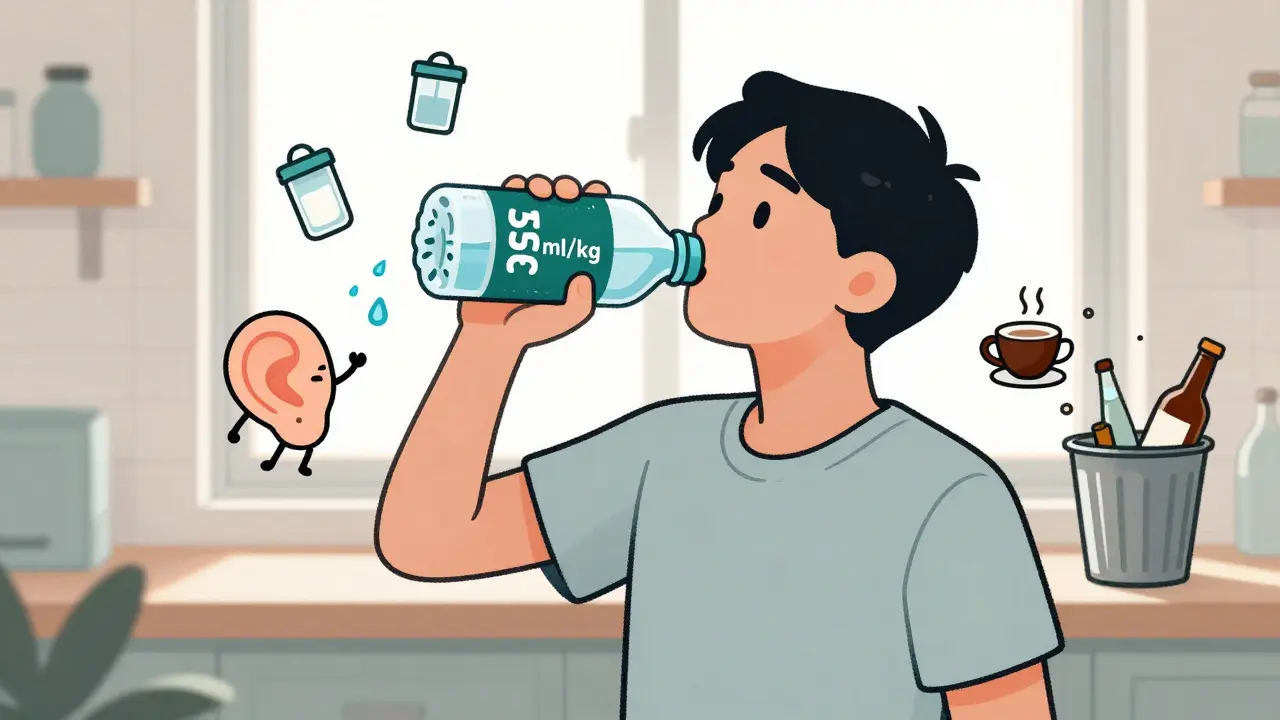
You might think, “If fluid causes the problem, I should drink less.” But that’s a trap. Dehydration triggers your body to hold onto whatever fluid it has-even in your inner ear. It’s like squeezing a sponge tighter instead of letting it breathe.The 2024 study didn’t just cut sodium. It also told participants to drink 35 ml of water per kilogram of body weight. For a 70 kg person, that’s about 2.5 liters a day. Spread it out. Don’t chug it all at once. Sip throughout the day. Keep a bottle nearby. Your body needs steady hydration to flush out excess sodium and keep inner ear pressure balanced.
Water isn’t the only fluid that counts. Herbal teas, broths (low-sodium), and water-rich fruits like melon and cucumber help too. Avoid alcohol and caffeine. Both are diuretics that dehydrate you, then trigger rebound fluid retention. They also narrow blood vessels in the inner ear, cutting off oxygen and making symptoms worse.
What to Eat (and What to Avoid)
You don’t have to eat bland food. You just have to be smart.Best choices:
- Fresh fruits and vegetables (no added salt)
- Unsalted nuts and seeds
- Plain rice, quinoa, oats
- Lean meats, poultry, fish (fresh or frozen, no marinades)
- Low-sodium dairy (check labels-some yogurts have 200+ mg per cup)
- Herbs and spices: garlic, ginger, lemon juice, black pepper, paprika, cumin
Avoid these like the plague:
- Processed meats: bacon, ham, salami, hot dogs
- Soup, sauces, and condiments: soy sauce, ketchup, mustard, Worcestershire sauce, salad dressings
- Fast food: burgers, fries, pizza, tacos
- Canned vegetables and beans (unless labeled “no salt added”)
- Pre-packaged meals: frozen dinners, instant noodles, microwave meals
- Snack foods: chips, pretzels, crackers, salted nuts
When you shop, read labels. Look at the “Sodium” line on the Nutrition Facts panel. A food with more than 200 mg per serving is high. Aim for under 100 mg per serving. And remember: serving sizes are tiny. That “low-sodium” soup might say 140 mg per serving-but the can has two servings. That’s 280 mg right there.
How to Stick to It (Without Losing Your Mind)
This isn’t a diet you do for a week. It’s a lifestyle. And it’s hard.People who quit often say it’s not the food-it’s the social pressure. Birthday cakes, office lunches, family dinners. You feel like the odd one out. But here’s how to make it work:
- Keep salt shakers off the table. Out of sight, out of mind.
- Buy spices and salt-free seasoning blends. Try Mrs. Dash or homemade herb mixes.
- Call restaurants ahead. Ask for no salt on your food. Most kitchens will accommodate.
- Meal prep on Sundays. Cook plain chicken, rice, and veggies. Portion them out. No temptation during the week.
- Keep low-sodium snacks on hand: fresh fruit, unsalted popcorn, raw veggies with hummus (check the label).
- Track your sodium for a week with a free app like MyFitnessPal. You’ll be shocked at how fast it adds up.
One study found that 22% of people gave up on the diet because it felt too restrictive. But those who stuck with it? 68% saw major improvement in symptoms. That’s better than most medications.
How This Compares to Medication
Doctors often prescribe diuretics like hydrochlorothiazide to flush out fluid. They work-but they come with side effects: low potassium, dizziness, dehydration, even kidney stones. And they don’t fix the root cause. They just mask it.Dietary changes? Zero side effects. You don’t need a prescription. You don’t need to visit a clinic. You just need to change what’s on your plate. And the best part? It helps your heart, your blood pressure, and your overall health too.
Some patients try injections-steroids or gentamicin-directly into the ear. These can stop vertigo, but they carry risks. Gentamicin can permanently damage hearing. Steroids help temporarily. Neither is as safe or sustainable as a low-sodium diet.
What’s Next? Research Is Evolving
The 2024 study was a game-changer. For the first time, we have solid, peer-reviewed data showing that combining sodium restriction with precise hydration improves hearing and reduces vertigo. This isn’t anecdotal. It’s measurable.Right now, the NIH is running a large trial called the Meniere’s Dietary Intervention Trial (NCT04567891). They’re comparing 1,500 mg vs. 2,300 mg sodium limits over a year with 300 patients. Results are due in late 2025. But even without those results, the evidence so far is strong enough that every major medical group-from the American Academy of Otolaryngology to the British Ménière’s Society-recommends it as the first step.
If you have Meniere’s, you’re not just managing a disease. You’re retraining your body. Every meal is a chance to reduce pressure in your inner ear. Every glass of water helps balance the system. And every time you choose fresh food over processed, you’re choosing better hearing, fewer dizzy spells, and more control over your life.
Can I ever have salt again if my symptoms improve?
Even if your symptoms get better, going back to a high-sodium diet usually brings them back. Meniere’s is a chronic condition, and sodium sensitivity doesn’t go away. Think of your diet like insulin for diabetes-it’s not a cure, but it’s essential for control. Some people find they can tolerate up to 2,000 mg daily once stable, but most do better sticking to 1,500 mg long-term.
Does drinking more water help even if I eat salty food?
No. Drinking water won’t cancel out high sodium. Your body absorbs salt quickly, and excess sodium pulls fluid into your inner ear regardless of how much water you drink. Hydration helps your body flush out sodium-but only if you’re not overloading it in the first place. The goal is to reduce sodium intake, not rely on water to fix it.
Are low-sodium products really better?
Not always. Many “low-sodium” products replace salt with other additives like monosodium glutamate (MSG), potassium chloride, or hidden sugars. Always check the ingredient list. “No salt added” is better than “reduced sodium.” Look for products with under 100 mg per serving. And remember: serving sizes are misleading. A “low-sodium” soup might have 140 mg per serving-but the can has two servings.
Can I eat out at restaurants on this diet?
Yes-but you need to be strategic. Choose grilled or steamed proteins, plain vegetables, and rice or potatoes. Ask for no added salt, no sauces, no butter. Request dressing on the side. Avoid soups, salads with croutons, and anything described as “seasoned,” “marinated,” or “savory.” Most chefs will accommodate if you explain it’s a medical requirement. Call ahead if you’re unsure.
How long until I see results from the diet?
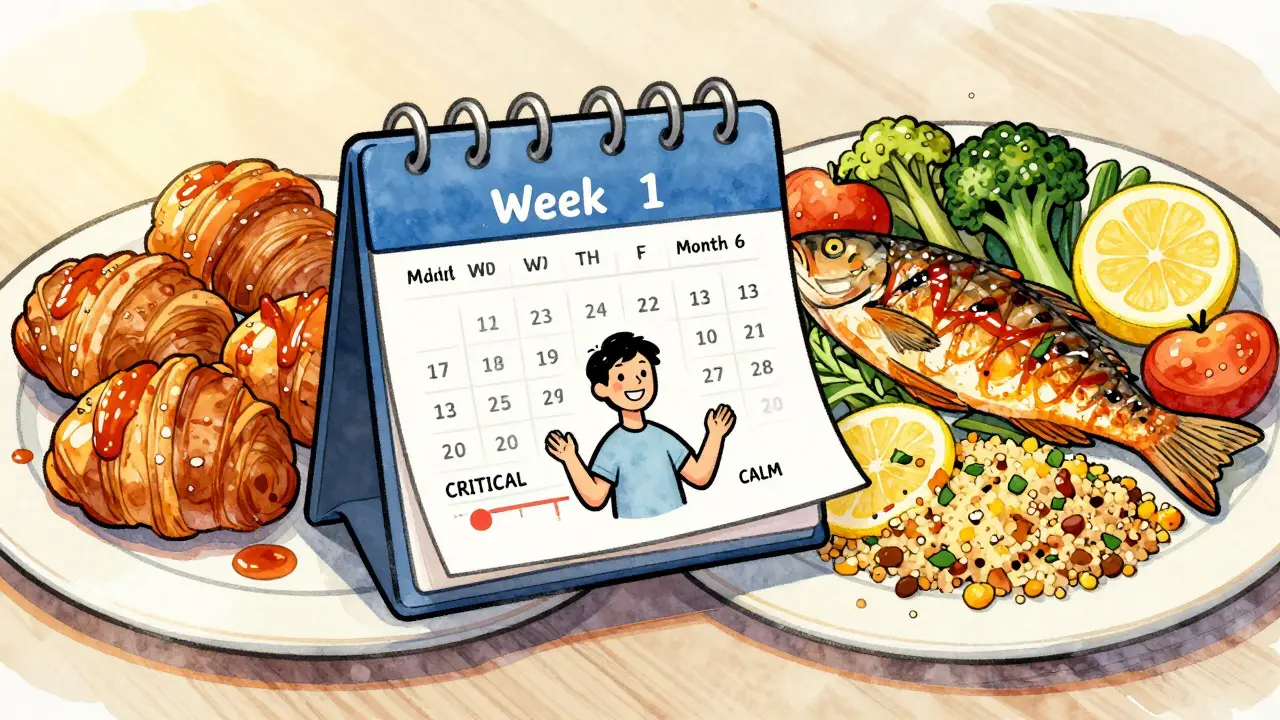
Some people notice less dizziness within two weeks. Hearing and tinnitus improvements often take 2-6 months. The 2024 study showed clear results at six months. Patience is key. This isn’t a quick fix-it’s a long-term reset of your inner ear’s fluid balance. Keep track of your symptoms in a journal. You’ll see patterns you didn’t notice before.



9 Comments
I’ve had Meniere’s for 8 years-this diet changed my life. I used to have 3-4 vertigo attacks a week. After six months of sticking to 1,500 mg sodium and sipping water all day? Zero attacks. Zero. I even got my hearing tested-up 10 dB in my left ear. No meds. No surgery. Just food. Don’t let anyone tell you it’s not real. I was skeptical too-until I lived it.
Yeah, but what if you’re just not that salty? I’ve tried this. I ate nothing but kale and boiled chicken for three months. My vertigo didn’t change. Maybe it’s not sodium-it’s stress. Or hormones. Or ghosts. I don’t know. But I’m not giving up my bacon.
The pathophysiology of endolymphatic hydrops is well-documented in otolaryngology literature. Sodium-induced osmotic gradients increase endolymphatic volume, which mechanically distorts the cochlear and vestibular apparatus. The 2024 Acta Otolaryngologica cohort study demonstrated statistically significant reductions in symptom frequency (p < 0.01) under sodium-restricted conditions. However, individual variability in aldosterone response and renal sodium handling may modulate therapeutic efficacy. Further stratification by baseline aldosterone levels is warranted.
THIS IS THE MOST IMPORTANT THING YOU’LL EVER READ. I WAS ON THE EDGE OF QUITTING MY JOB BECAUSE I COULDN’T STAND BEING AROUND PEOPLE. I STARTED THIS DIET. I ATE A BANANA FOR LUNCH. I DRANK WATER. AND SUDDENLY-I WASN’T SCARED TO WALK OUT THE DOOR. I’M CRYING RIGHT NOW. IF YOU HAVE MENIERE’S AND YOU’RE NOT DOING THIS, YOU’RE LETTING YOUR LIFE BE STOLEN BY A BAG OF CHIPS. STOP. JUST STOP.
You can do this! I used to eat pizza every Friday. Now I make cauliflower crust with no-salt tomato sauce and sprinkle it with garlic powder. It’s fun! I even got my whole family into it. My kid says my ‘magic food’ doesn’t make me dizzy anymore. You’re not alone. We’re all in this together. 💪🥗
Hydration as a regulatory mechanism is counterintuitive, yet biologically sound. The body’s osmoregulatory response to chronic hypohydration induces antidiuretic hormone elevation, exacerbating endolymphatic accumulation. Thus, consistent, moderate fluid intake may facilitate renal sodium excretion, mitigating pressure gradients. The intervention’s success lies not in restriction alone, but in systemic homeostasis.
I respect everyone’s journey with this. For some, it’s a miracle. For others, it’s not enough. And that’s okay. I’ve been on both sides. I still eat a little salt-maybe 1,800 mg-but I track it. I don’t judge people who can’t stick to 1,500. I just wish more doctors would talk about this before jumping to injections. This is foundational care. It deserves to be the first conversation, not the last.
In Japan, they’ve been teaching low-sodium diets for Meniere’s for decades. My grandmother had it. She ate miso soup once a week, made with dashi and almost no salt. She lived to 92. In the U.S., we treat everything like a problem to fix with a pill. Here, it’s about rhythm-food, water, rest. It’s not just medicine. It’s culture.
Everyone’s acting like this is some groundbreaking revelation. I’ve been telling people this for ten years. The fact that you need a study to prove that salt makes you dizzy is embarrassing. And don’t get me started on ‘low-sodium’ products-they’re just sugar bombs with extra chemicals. You’re not being clever. You’re being manipulated by food corporations. Wake up.