
Have you ever stood in the pharmacy aisle, holding a generic prescription in one hand and wondering if it's truly the same as the brand-name version? It's a question that keeps many patients up at night. We all want the best health outcomes, but we also want to save money. The price difference is often stark, sometimes 80% or 90% cheaper. But does that savings come with a hidden cost to your long-term safety? The answer isn't a simple yes or no. It involves decades of data, regulatory standards, and some surprising findings from recent medical research.
Understanding the Basics: What Makes a Generic?
Before we look at the safety data, we need to understand what we are actually comparing. When you buy a generic medication, you are getting a product that contains the same active ingredient as the brand-name drug. It must have the same strength, dosage form, and route of administration. In the United States, the Hatch-Waxman Act is the legislation passed in 1984 that established the modern generic drug approval pathway set the rules for this. This law allowed companies to bypass the expensive clinical trials required for new drugs if they could prove their version worked the same way in the body.
The core concept here is Bioequivalence is a regulatory standard requiring generic drugs to demonstrate similar absorption rates to brand-name drugs. The U.S. Food and Drug Administration (FDA) is the federal agency responsible for regulating food, drugs, and medical devices in the United States requires that the 90% confidence interval for the ratio of geometric means for both area under the curve (AUC) and maximum concentration (Cmax) falls within 80% to 125%. This means the generic can absorb slightly faster or slower than the brand, but not by much. On paper, this looks like a tight standard. In practice, however, "tight" is a relative term when you are dealing with human physiology over years of use.
The Data: What Long-Term Studies Actually Show
While the approval process focuses on short-term bioequivalence, the real test happens over years. Patients with chronic conditions like hypertension or diabetes take these medications daily for decades. Do the small differences in absorption matter over time? A landmark study published in Scientific Reports in 2020 offers a massive dataset to answer this. Researchers analyzed nearly all insured persons in Austria from 2007 to 2012. They tracked 17 branded versus generic versions of medications for chronic metabolic illnesses.
The results were striking. For antihypertensive medications, branded drugs were associated with 53.8 deaths per 1,000 patient-years. In contrast, generics were associated with 30.2 deaths per 1,000 patient-years. The five-year cumulative survival rates were 77.8% for branded medicine users versus 85.9% for generic users. This suggests that, in this specific large-scale analysis, generics were not just equivalent but potentially superior in safety outcomes regarding mortality and major adverse cardiac events. The authors concluded that generic medications were at least similar, and in some cases superior, to their branded counterparts regarding mortality.
However, data isn't always uniform. Another analysis from 2018 conducted by Ohio State University looked at the geographic origin of manufacturing. They found that generic drugs manufactured in India were linked to 54% higher rates of severe adverse events compared to equivalent drugs produced in the United States. This finding was driven primarily by mature generic drugs that had been on the market for a long time. When comparing Indian-manufactured generic ciprofloxacin to U.S.-manufactured versions, the Indian versions showed a 62% higher rate of severe adverse events leading to hospitalization. This indicates that the "generic" label might hide significant variability based on where the pill is made.
The Narrow Therapeutic Index Problem
Not all drugs are created equal. Some medications have a very narrow margin between a therapeutic dose and a toxic dose. These are known as Narrow Therapeutic Index (NTI) drugs. For these medications, even a small variation in absorption can lead to serious health consequences. The standard 80-125% bioequivalence window might be too wide for these specific cases.
Dr. Aaron Kesselheim of Harvard Medical School highlighted this in a 2019 editorial. He noted that while most generics perform equivalently to brands, critical differences exist for NTI drugs like Warfarin is an anticoagulant medication used to prevent blood clots, Levothyroxine is a synthetic thyroid hormone used to treat hypothyroidism, and certain anti-epileptics. A 2017 study of levothyroxine generics showed 12.3% higher rates of thyroid-stimulating hormone (TSH) level fluctuations compared to the brand Synthroid. For a patient managing thyroid levels, a fluctuation like this can mean feeling sluggish or experiencing heart palpitations. It is not a life-or-death scenario for everyone, but it significantly impacts quality of life.
Manufacturing Variability and Authorized Generics
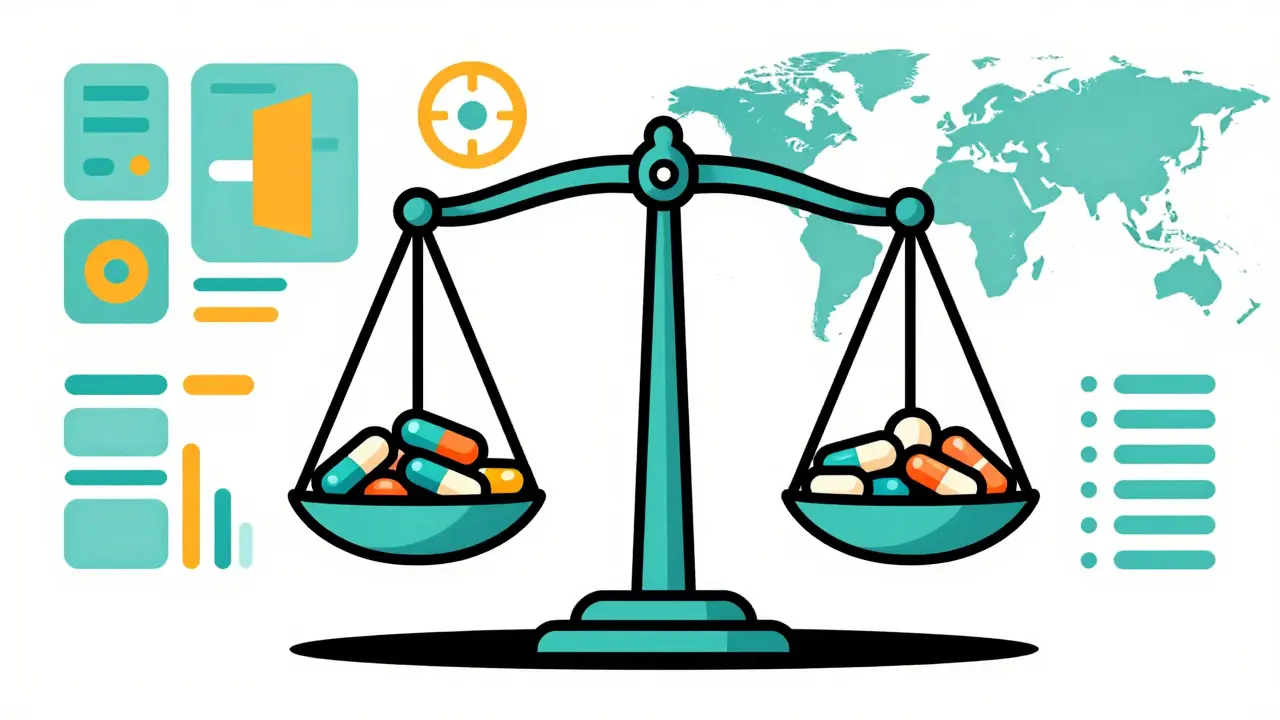
Here is a twist that often confuses patients. Sometimes the difference isn't between "generic" and "brand," but between different manufacturers. An authorized generic is a brand-name drug sold under a generic label by the same manufacturer. A sophisticated analysis published in PMC (2018) compared adverse event reporting patterns between brand drugs, authorized generics, and traditional generics.
For amlodipine, 29.54% of adverse event reports were for the brand, 14.26% for the authorized generic, and 56.20% for traditional generic versions. The Reporting Odds Ratios showed significant differences between brand and generic for multiple comparisons. However, when comparing authorized generics versus traditional generics, there were fewer statistically significant findings. This suggests that many perceived differences between brands and generics might actually reflect differences between manufacturers rather than the brand/generic distinction itself. If the same company makes both, the quality is likely identical. If different companies make them, the quality control processes might differ.
Patient Experiences vs. Clinical Data
Real-world user experiences often tell a different story than the clinical trials. On Reddit discussions in the pharmacy community, patients frequently share anecdotes of seizure frequency increasing after switching from brand Lamictal to generic lamotrigine. One highly-upvoted post described a patient whose seizure frequency increased from 1-2 per month to 8-10 per month after the switch, returning to baseline after switching back. Conversely, a thread on PatientsLikeMe analyzing 3,842 patient reports on hypertension medications found 78.4% of users reported identical effectiveness between brand and generic versions. Only 12.6% reported decreased effectiveness with generics.
This discrepancy highlights the placebo effect and the nocebo effect. If a patient believes the generic won't work, they might perceive it as not working. However, for those with sensitive conditions, the physiological difference is real. The FDA's Adverse Event Reporting System (FAERS) database shows 1,247 adverse event reports mentioning "generic drug ineffective" between 2018-2022 compared to 289 for brand-name drugs. While this number is higher for generics, it must be interpreted with caution given the vastly higher volume of generic prescriptions.

Regulatory Standards and Future Monitoring
The FDA maintains rigorous standards for generic drug approval, requiring manufacturers to conduct stability tests demonstrating product longevity at least equivalent to the brand-name version. The agency also continues post-marketing surveillance of approved generics. However, critics argue this monitoring may be insufficient for detecting long-term safety issues. In January 2022, the FDA issued new guidance for "complex generic drug development" addressing challenges with drug-device combinations like inhalers and long-acting injectables. These complex generics require more than just bioequivalence testing because the delivery mechanism affects how the drug enters the body.
Healthcare systems globally continue to prioritize generics for cost savings. In 2022, generics accounted for 92% of all prescriptions filled in the United States while representing only 23% of total drug spending. This economic pressure drives the market, but it also necessitates a robust safety net. The ongoing debate underscores the need for more sophisticated long-term safety monitoring systems capable of detecting subtle differences that might emerge over extended periods of use.
Comparing Safety Profiles
To visualize the differences in safety reporting and study outcomes, consider the following comparison based on the data discussed:
| Metric | Brand-Name Drugs | Generic Drugs |
|---|---|---|
| Approval Standard | Clinical Trials Required | Bioequivalence (80-125%) |
| Mortality (Austria Study) | 53.8 per 1,000 patient-years | 30.2 per 1,000 patient-years |
| Severe Adverse Events (Ohio Study) | Baseline | 54% higher (Indian Mfg.) |
| NTI Drug Fluctuations | Lower | 12.3% higher (Levothyroxine) |
| Prescription Volume (2022) | 8% | 92% |
What Should Patients Do?
If you are worried about switching, talk to your doctor. For most medications, the generic is a safe and effective choice that saves you money. For NTI drugs, you might ask if you can stay on the brand or stick to one specific generic manufacturer. Consistency is key. Switching back and forth between different generic manufacturers can cause more instability than staying with one brand. Check the manufacturer on your bottle. If you notice side effects, report them to the FDA. Your feedback helps build the data that keeps everyone safe.
Are generic drugs exactly the same as brand-name drugs?
Generics contain the same active ingredients and must meet the same safety and quality standards, but they may differ in inactive ingredients and absorption rates within the 80-125% bioequivalence range.
Why are generic drugs cheaper than brand-name drugs?
Generic manufacturers do not have to repeat the expensive clinical trials required for brand-name drugs, allowing them to sell the medication at a significantly lower price.
Can I switch between different generic manufacturers?
While generally safe, switching manufacturers can cause slight variations in absorption. For sensitive conditions, sticking to one manufacturer is often recommended.
What is a Narrow Therapeutic Index drug?
These are medications where a small difference in dosage can lead to treatment failure or toxicity, such as warfarin or levothyroxine.
Do long-term studies show generics are safe?
Most long-term studies indicate generics are safe and effective, though some research suggests variability based on manufacturing origin and specific drug types.



11 Comments
us made is best lol 🇺🇸💊 why trust foreign stuff when we have our own
another study another day when they admit the truth
This article really breaks down the complexities of the pharmaceutical industry for us. It is fascinating to see how the Hatch-Waxman Act shaped the market structure. Many people assume generics are always the exact same as brands without looking closer. The bioequivalence standard allows for some variation in absorption rates within the body. That 80 to 125 percent window seems small on paper but matters in practice for some. The Austrian study showing lower mortality for generics is quite surprising to read. It challenges the assumption that brand name means better safety outcomes for patients. However, the manufacturing origin data from Ohio State is concerning for everyone. Higher adverse events with Indian manufactured drugs need more scrutiny from regulators. Quality control processes definitely vary between different facilities globally and locally. Narrow Therapeutic Index drugs require extra caution during switches for stability. Patients on warfarin or levothyroxine should monitor their levels closely with doctors. The authorized generic concept is something most people do not understand well enough. It is essentially the same product but sold under a different label by the maker. Consistency in manufacturer is probably the most important factor for stability over time. We need to keep pushing for better transparency in where these pills come from.
Great breakdown here James thanks for sharing the detailed info 🙌💊
listen to your body ok and dont ignore the side effects
Everything is a spectrum really we do not need binary choices :/
We should all support each other in making these health choices together :)
just stick with the brand if you can afford it
The pharmaceutical alchemy involved here is truly a spectacle of modern commerce.
thats so true tho i switch sometimes and feel diff
They want us to believe the generics are safe!!! They control the data!!!