
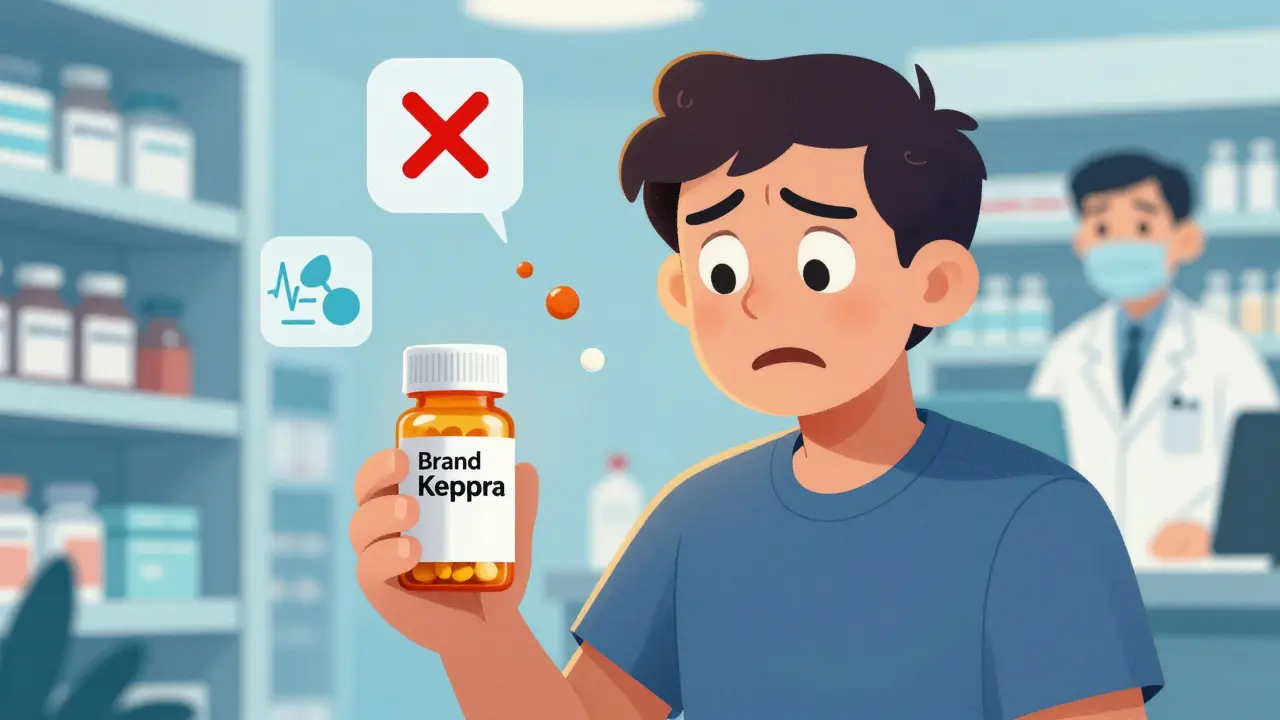
You’ve been on your brand-name medication for years. It works. You feel stable. Then, your pharmacy hands you a different pill - same name, different color, lower price. Your insurance pushed it through. But something feels off. Maybe your seizures returned. Or your blood levels spiked. Or you broke out in a rash you haven’t had since 2018. You’re not imagining it. And you’re not being difficult. You just need to talk to your doctor about staying on the brand.
Why Brand Medications Still Matter
It’s true: generics are required by the FDA to have the same active ingredient, strength, and dosage form as the brand. They’re tested to be bioequivalent - meaning they should work the same way in your body. But bioequivalent doesn’t always mean identical. The FDA allows generics to vary by up to 20% in how quickly they’re absorbed. For most drugs, that’s fine. For others - like warfarin, levothyroxine, or anti-seizure meds - even small changes can throw your whole system off. Studies show that patients switching from brand to generic anti-epileptic drugs have a 23% higher risk of seizure recurrence. People on warfarin see a 17% increase in emergency visits after switching between generic versions. Why? Because these drugs have a narrow therapeutic index. That means the difference between too little and too much is tiny. Your body doesn’t care if the pill was made by Pfizer or Teva - it only cares if the amount of medicine in your blood stays steady. And it’s not just about the active ingredient. Generics can use different fillers, dyes, or preservatives. If you’re allergic to lactose, gluten, or FD&C Red No. 40, you might react to a generic version even if the active drug is perfect. About 7% of patients report allergic or intolerant reactions to inactive ingredients in generics. That’s not rare. That’s significant.When It’s Okay to Ask for the Brand
You don’t need to justify your health. But you do need to be specific. Here are the only two valid medical reasons your doctor will support:- You had a clear reaction - rash, stomach upset, dizziness - after switching to the generic, and it went away when you went back to the brand.
- You’re on a drug with a narrow therapeutic index, and your lab results or symptoms show instability after switching.
How to Prepare for the Conversation
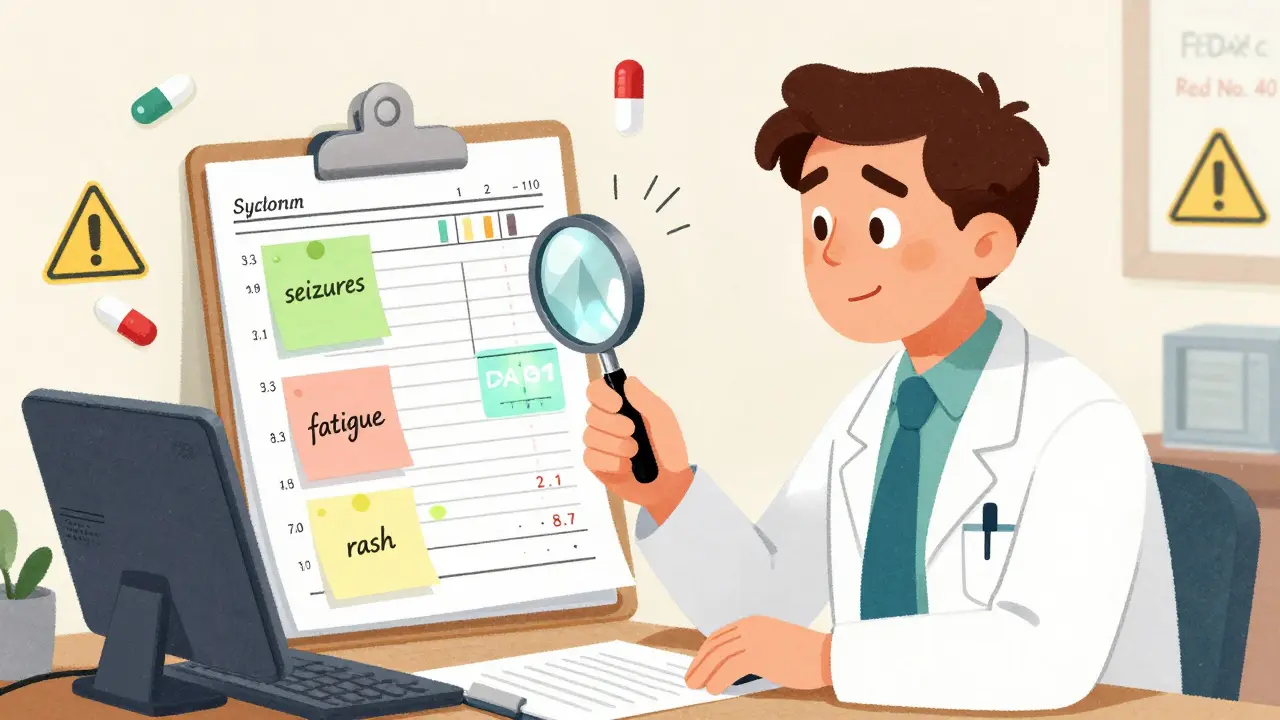
Walking into your appointment unprepared is like showing up to a job interview without a resume. Here’s how to show up ready:- Bring your symptom log. Write down dates, symptoms, severity (1-10), and what you were taking each day. Did your headaches start the week after the switch? Did your energy crash? Did your mood drop? Write it down. Numbers matter.
- Bring your lab results. If you’re on warfarin, thyroid meds, or seizure drugs, get copies of your INR, TSH, or drug level tests from before and after the switch. Highlight the changes.
- Know your pill. Look up your brand medication on the FDA’s Drugs@FDA database. Note the active ingredient and the ANDA number for the generic version. If the generic has a different inactive ingredient you’re allergic to, point it out.
- Ask for DAW-1. Tell your doctor to write “Dispense as Written” (DAW-1) on the prescription. This tells the pharmacy not to substitute. It’s a simple code that legally protects your right to the brand if there’s medical justification.
What Your Doctor Needs to Do
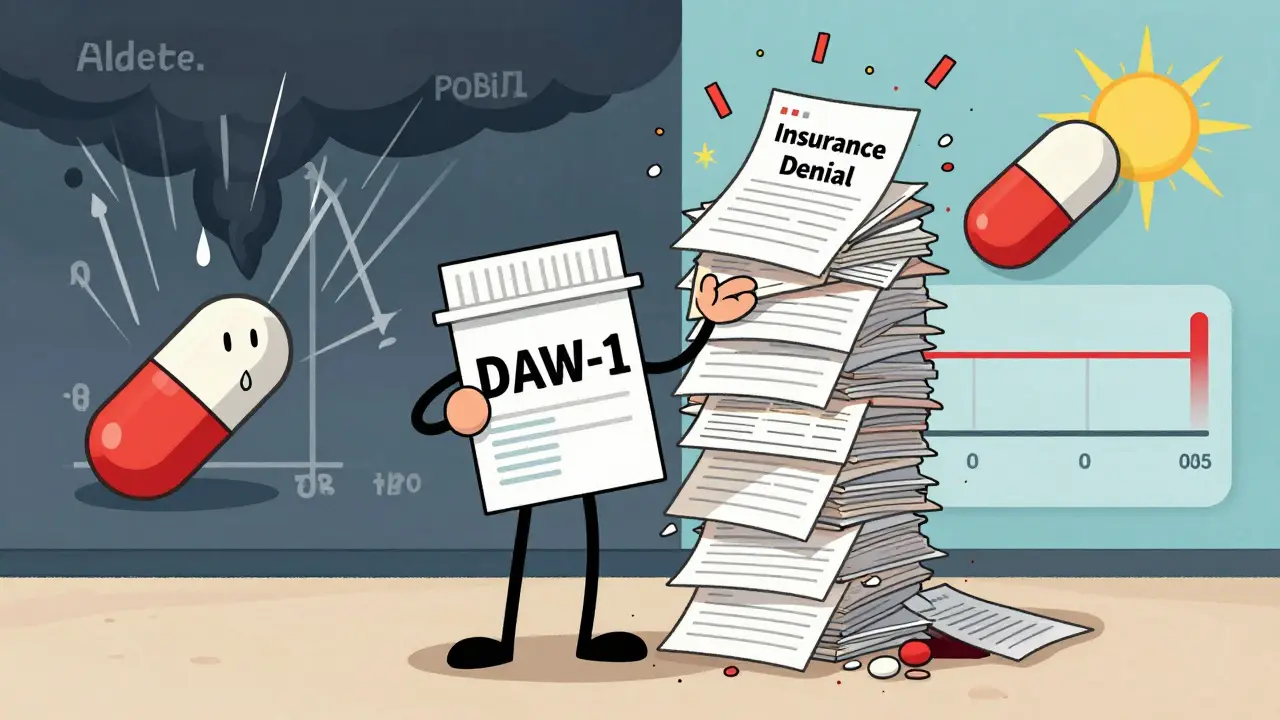
Your doctor doesn’t have to fight your battle alone - but they do need to do their part. Most insurance plans require prior authorization before covering a brand-name drug when a generic exists. That means your doctor has to fill out paperwork explaining why the brand is medically necessary. The good news? 72% of these denials are overturned on appeal - if you give your doctor the right info. Bring your symptom log, lab results, and pharmacy records. The more evidence you give them, the faster they can submit the request. Doctors hate spending 20 minutes on paperwork. But they hate seeing you sick even more. If you make it easy for them - by having everything organized - they’re far more likely to fight for you.Insurance and the Real Hurdle
Here’s the truth: your insurance doesn’t care if you feel better. They care about cost. Generics cost 80-90% less. So they push them. 82% of commercial health plans in the U.S. automatically switch you unless your doctor blocks it. But you have rights. If your plan denies the brand, you can appeal. And appeals work - if you have documentation. Medicare Part D approves 57% of brand-name requests when clinical evidence is provided. Private insurers are similar. Ask your doctor: “Can you help me file an exception?” Then, ask your insurer: “What’s the process for a prior authorization appeal?” Most have a form online. Fill it out. Attach your records. Don’t give up.What to Do If Your Doctor Says No
Sometimes, doctors say no - not because they don’t believe you, but because they’re overwhelmed, or they’ve been told generics are “just as good.” If that happens:- Ask for a referral to a specialist - like an endocrinologist for thyroid meds, or a neurologist for epilepsy. Specialists are more likely to understand therapeutic equivalence issues.
- Request a second opinion. You’re entitled to one.
- Go to your pharmacy and ask for a copy of the generic’s inactive ingredients. Compare them to the brand’s. If there’s a difference you’re allergic to, bring that to your doctor.
Real Stories, Real Results
One patient in Melbourne switched from brand Synthroid to generic levothyroxine. Her TSH jumped from 2.1 to 8.7. She gained 12 kilos, felt exhausted, and couldn’t focus at work. She brought her lab results to her doctor. Two weeks later, she was back on brand. Her TSH normalized. The weight came off. Another had been on brand Lamictal for 10 years. After switching to generic, she had two seizures in six weeks. Her neurologist had never seen that before - but he believed her because she had the dates, the seizure logs, and the blood level drop. He wrote DAW-1. She hasn’t had another seizure since. These aren’t outliers. They’re common. And they happen because patients spoke up - with facts, not fear.What’s Changing in 2025
The FDA is tightening standards for complex generics, especially for drugs with narrow therapeutic windows. The CREATES Act is making it harder for brand companies to block generic access - but that doesn’t mean generics are perfect. And new biosimilars (not true generics) for biologic drugs are now entering the market. These are even trickier - they’re only required to be 90% similar. Meanwhile, pharmacogenomic testing is starting to show up in clinics. In the future, your genes might tell your doctor which version of your medication - brand or generic - your body handles best. But that’s still years away. For now, your voice is the most powerful tool you have.What to Do Next
If you’re on a brand medication and your pharmacy switched you without warning:- Call your doctor’s office. Say: “I think I had a reaction to the generic. Can we talk about staying on the brand?”
- Check your last lab results. If they’ve changed, print them.
- Write down your symptoms - even if they seem small.
- Ask for DAW-1 on your next prescription.
- If denied, ask for the appeal process. Don’t accept “no” without a fight.
Can I ask my doctor to keep me on a brand medication even if a generic is available?
Yes, absolutely. You have the right to request the brand-name version if you’ve had a negative reaction to the generic, or if your condition requires stable blood levels - like with thyroid, seizure, or blood-thinning medications. Your doctor can write a medical justification, and insurance will often approve it if there’s documented evidence.
Why do some people react to generic medications?
Generics must have the same active ingredient as the brand, but they can use different fillers, dyes, or preservatives. Some people are allergic or sensitive to these inactive ingredients - like lactose, gluten, or artificial colors. Even small differences can cause rashes, stomach upset, or reduced effectiveness in sensitive individuals.
What’s the difference between a generic and a biosimilar?
Generics are exact copies of small-molecule drugs, like pills for blood pressure or cholesterol. Biosimilars are similar - but not identical - versions of complex biologic drugs made from living cells, like insulin or rheumatoid arthritis treatments. They’re not considered true generics and may have more variability. Always check with your doctor before switching to a biosimilar.
How do I know if my medication has a narrow therapeutic index?
Common drugs with narrow therapeutic indexes include warfarin, levothyroxine, lithium, phenytoin, carbamazepine, and cyclosporine. These require precise blood levels to work safely. If you’re on one of these, even small changes in formulation can cause problems. Ask your doctor or pharmacist if your drug falls into this category.
What does DAW-1 mean on a prescription?
DAW-1 stands for “Dispense As Written.” It tells the pharmacy not to substitute the brand with a generic, even if one is available. Your doctor must write this code on the prescription, usually by checking a box or writing it in. This is the legal way to ensure you get the brand if there’s a medical reason.
Can I appeal if my insurance denies my brand medication?
Yes, and you have a good chance of winning. About 72% of appeals are approved when you provide documented evidence - like lab results, symptom logs, or proof of prior reaction to generics. Contact your insurance company for their appeal form, attach your records, and ask your doctor to support it in writing.
Is it true that generics are always cheaper and just as good?
Generics are cheaper - often 80-90% less - and work well for most people. But they’re not always “just as good” for everyone. For drugs with narrow therapeutic indexes or for people with allergies to inactive ingredients, the brand may be safer and more effective. Cost savings shouldn’t override individual health outcomes.




9 Comments
Okay but let’s be real - if your insurance is trying to swap your seizure med for a generic that’s basically pharmacy-grade wishful thinking, you’re not being dramatic, you’re surviving. I had a cousin who went from brand Lamictal to generic and ended up in the ER with status epilepticus. The pharmacy didn’t even *tell* her it switched. She thought she was just ‘having a bad week.’ Spoiler: she wasn’t. The FDA’s 20% absorption wiggle room? That’s not a feature, it’s a goddamn landmine for people with narrow therapeutic windows. If your body’s a precision instrument, don’t let Big Pharma turn it into a Tamagotchi.
You people are so entitled. If you can’t afford the brand, you shouldn’t be on the medication at all. This isn’t a luxury car - it’s a pill. If generics weren’t safe, the FDA wouldn’t approve them. People who cry about ‘inactive ingredients’ are just looking for an excuse to avoid responsibility. My cousin took generic levothyroxine for 12 years and never had an issue. Maybe you just need to stop being so fragile.
It is imperative to underscore, with unequivocal precision, that the pharmacokinetic variability inherent in generic formulations - particularly those classified under the FDA’s bioequivalence threshold of 80–125% Cmax and AUC - presents a clinically significant risk profile for patients under narrow therapeutic index (NTI) regimens. Empirical data from peer-reviewed pharmacovigilance studies (e.g., JAMA Neurology, 2021) corroborate a statistically significant elevation in adverse event incidence following substitution. Therefore, it is not merely prudent, but medically obligatory, to advocate for DAW-1 designation when clinical instability is documented via serial therapeutic drug monitoring. Failure to do so constitutes a breach of the standard of care.
I’m from India, and here generics are the only option - and they work fine for most. But I read this and I get it: for some, it’s not about money, it’s about biology. Your body isn’t a spreadsheet. If you feel different after a switch, that’s real. I think doctors should be required to explain the difference between generic and brand to patients before switching. Not everyone knows about fillers or DAW-1. This post should be mandatory reading.
bro i switched to generic keppra last year and my brain felt like wet cardboard for 3 months. i didnt even connect it until i saw this. i went back to brand and boom, i could think again. no one believed me till i showed my seizure log. now my doc just writes daw-1 and calls it a day. dont let em gaslight you. your body knows.
Wow. A 10,000-word essay on how to beg for a pill your insurance doesn’t want to pay for. Congrats. You’ve turned healthcare into a bureaucratic obstacle course. Next up: how to petition your toaster for artisanal bread.
Ugh. Another one of these ‘I’m special and my body is magic’ rants. If you can’t handle a generic, maybe you shouldn’t be on meds at all. The system works fine for 95% of people. You’re just being a drama queen. Also, your spelling is trash. Fix it.
THIS. This right here. I spent 8 months fighting my insurance for my brand warfarin. I had INR spikes every time they swapped. I printed every lab result. I had my doc write a 3-page letter. I appealed twice. And guess what? They approved it. Not because I screamed - because I showed up with facts. You can win this. Don’t let them make you feel guilty for wanting to stay alive.
Just wanted to say thank you for writing this. My mom’s on lithium and they tried to switch her last year. She got dizzy, confused, started crying for no reason - we thought it was dementia. Turns out, her blood levels dropped 40%. We didn’t know about DAW-1 until I found this. Now she’s back on brand. She’s herself again. I wish I’d known this sooner. You’re not alone. Keep fighting.